Festival Música de Mundo Review: Could this be Portugal’s best festival? A hidden gem 100km south of Lisbon.
For music curators, building a dance floor that carries a consistent vibe across experimental programming is an increasingly distant dream. Well, guess what? I found it, and there isn’t a minimal techno track in sight.
Young, old, white dreads, black cornrows, trans, religious, disabled—this dance floor comes without checking the program, and they embrace every second.
Warning: Please do not go to this festival if you stand the risk of gentrifying it (i.e. are not self-aware, can’t speak any Portuguese or will only drink an oat-milk flat white!)
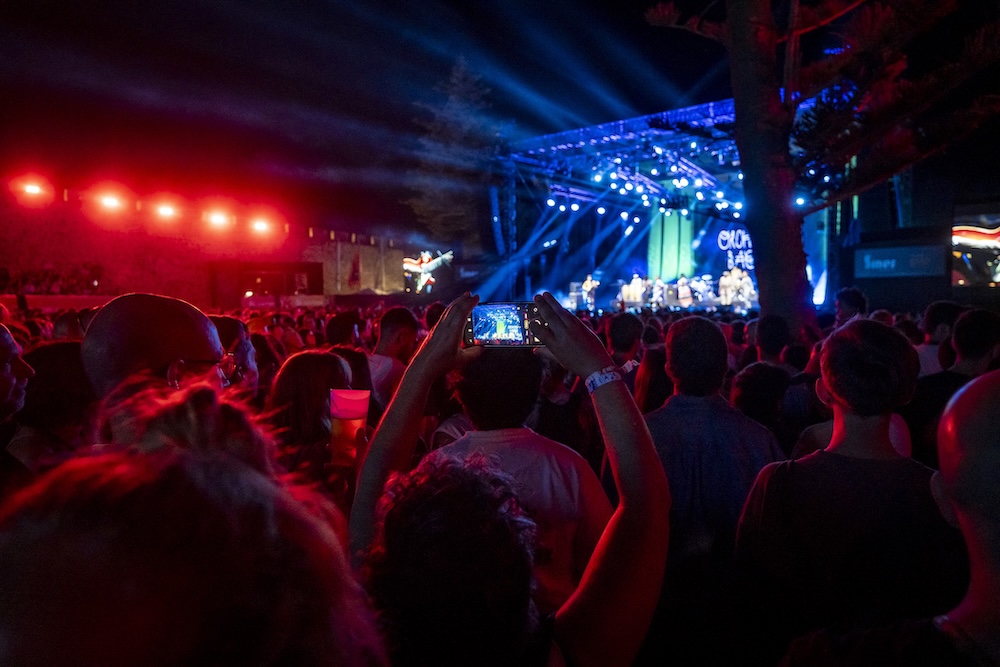
This year was the 25th anniversary of the relatively unknown Festival Música de Mundo (World Music Festival, FMM) in Sines, just south of Lisbon. For electronic music heads, on the surface this might seem like your average family/crusty world music festival, but when you feel the energy of a high-paced Cape Verdean funaná band pumping out chesty 4/4 kicks at 6am on one of the best beaches in Portugal to 15 000 people, you’ll understand the true identity of this diverse and impactful festival.
Thought these types of experiences only exist in South America? Think again. And the best part? It’s almost entirely free entry.
The answer to the title question lies in the detail of what a festival really is. Modern electronic music lovers might point towards high-quality sound, the best in underground DJ talent and 24-hour programming, but the beauty of the FMM lies in the truer sense of the word. Festivals are ancient concepts where humans come together to celebrate culture and exchange ideas. In this way, the unique offering of accessible, late-night and diverse culture, the FMM takes the biscuit.

Portugal’s stunning coastline opens up for a festival for all audiences
An hour and a half south of Lisbon, just past the new retirement home developments of Madonna, George Clooney and Richie Hawtin, you can find two idyllic beach towns with perfect sandy beaches, panoramic Atlantic views, jaw-dropping cave coastlines and a genuine local Portuguese vibe in their centres.
Amazingly, the governmental municipality for Sines & Porto Covo has not just been opening up their best beaches and historic sites to host the extremely progressive FMM since 1999; they’ve been running the whole show.
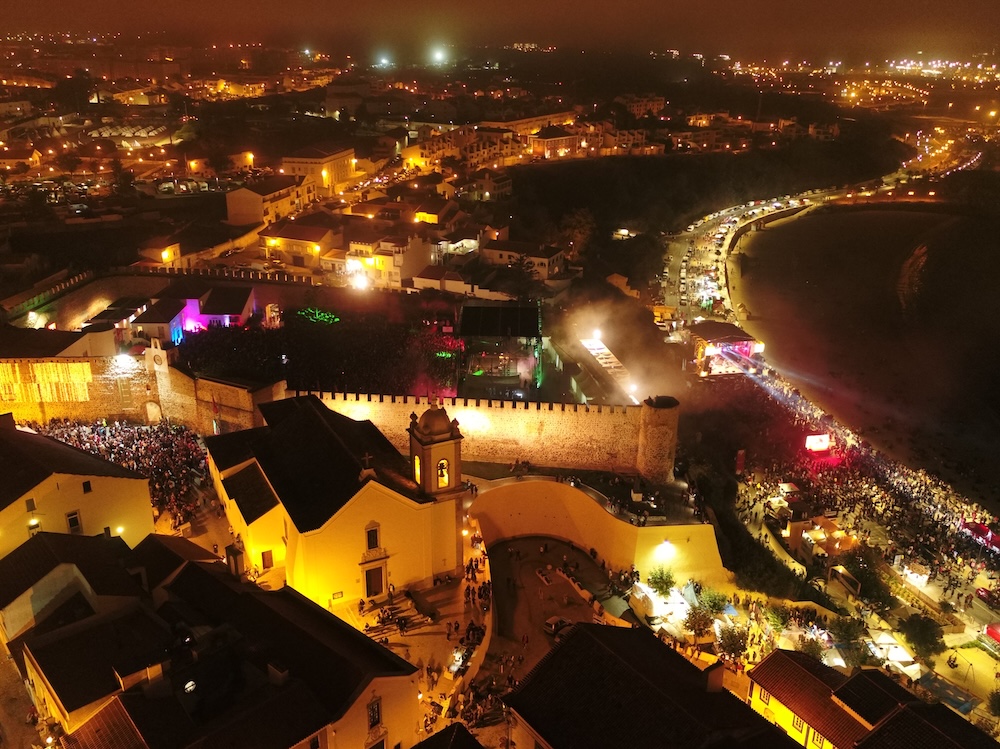
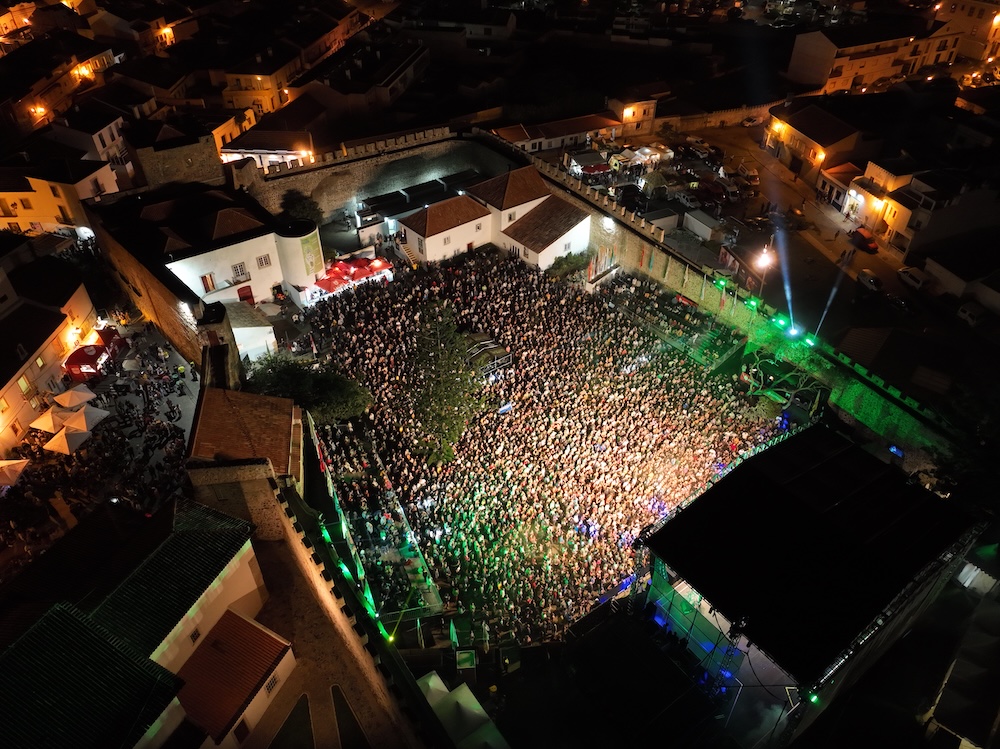
The FMM, is spread across 9 days, the first weekend hosts 3-4 live acts each evening in the central square of Porto Covo. The second week features an expanded program in Sines that climaxes with a two stage set-up in the historic castle and down below it on the city’s main beach (hosting 6500 and 15 000 people respectively). The latter is one of the best vibes of any dance floor in Portugal, with it being completely free to the public. There’s Arab techno and Mongolian dubstep live acts pumping out tunes until 6am, when the crusties & Brazilians take over with their bluetooth speakers.
A governmental program we can all learn from?
The FMM’s programming is as progressive as the camping policy, with a diverse musical offering spread out so the audience can flow through the scenic location at a leisurely pace, enjoying all the acts and sights without the need to rush from stage to stage. The authorities also take a very liberal attitude during the period with camping and after-parties (on a free-party vibe) permitted almost anywhere and at any time, as well as buskers & local businesses being allowed to operate for extended hours.
Aside from the scenic backdrop, the curation of the festival is a real stand-out feature, with an extremely diverse and progressive, albeit sometimes amateur line-up. It’s almost entirely populated with live international acts from former Portuguese colonies, other under-represented African and Middle Eastern communities as well as many French live acts. This year British afrobeat jazz band Kokoroko and Max Romeo’s testimonial were the unwritten headliners, and there was a high representation for marginalised communities including several Palestinian acts, which brought a strong response from the crowd in frequent pro-Palestine chanting and flag-bearing.
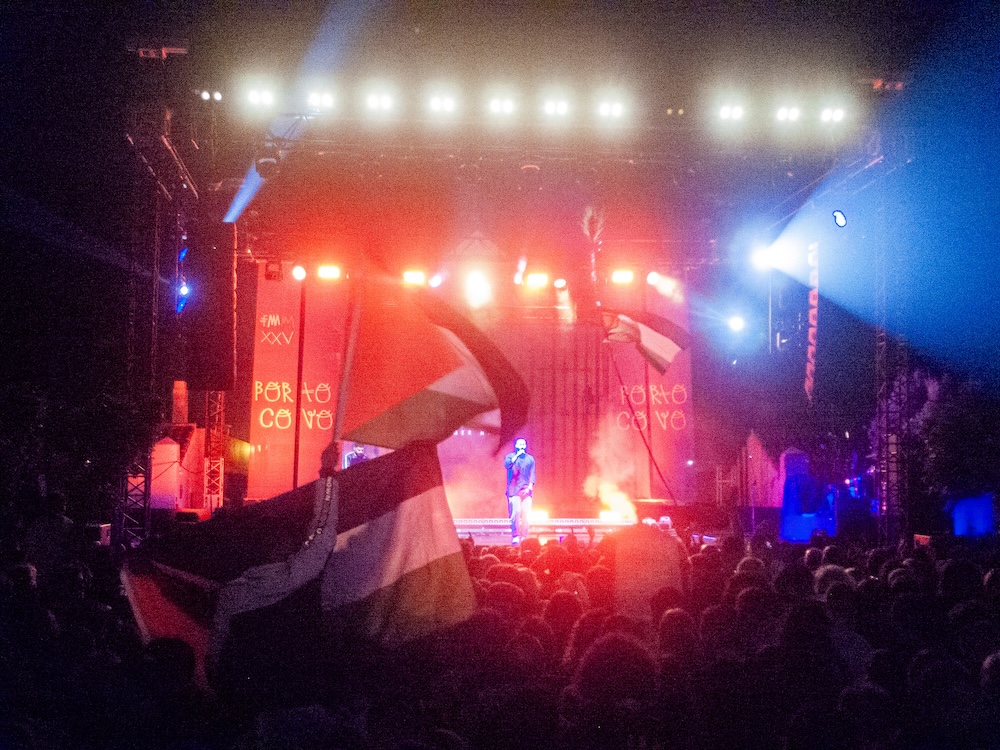
The program is even more intriguing once you realise that the Mayor of Sines, Nuno Mascarenhas (58), is actually the overall director of the festival. A tradition started when the previous mayor (who belonged to the communist party) approached head programmer Carlos Seixas (73) with the idea in 1999. Speaking with both the mayor and Seixas, it’s clear the municipality (local council) has more than just a financial role in this project.
A festival in danger?
Despite both the current mayor, Mascarenhas and curator, Seixas brushing it off, the festival’s future does seem in peril. With Mascarenhas being caught up and arrested during the corruption scandal that mistakenly led to the Prime Minister’s resigning in 2023 as well as entering the last six months of his final term, there’s added tension around the local election looming in November this year. The far-right party won this seat in the general election, indicating a genuine takeover risk, which could jeopardise the reported 1.5M€ in local investment the festival received this year. But Seixas & Mascarenhas remain confident that the festival will remain fully funded, with Seixas even saying “the community won’t let it happen”.
When pressed on the future plans of the festival, Seixas, perhaps naively, says “he’ll never run a festival without municipal support”. But when asked about a possible independent off-shoot organisation he replies “what will be will be”. A suitably ambiguous answer for one of the leaders of a festival where the funding streams are a little bit like that.
Both the mayor and Seixas skillfully skirt around many of my financial questions as well as dancing around the question of the main sponsor being a fossil fuel company, both with the seasoned ease of careers in politics. After repeated questioning Seixas & the press office were only able to offer approximate total budgets, saying this year “was around 1.7M€” (last year’s was estimated at 1.5M€) and couldn’t provide any accurate info from the previous 25 years which strikes a bit unusual for a publicly funded operation.
The duo are also perhaps a bit disillusioned when questioned about the decadence of the festival. In the current cost of living crisis, it doesn’t take a genius to think of something better to spend public money on than massive LED screens for the toilet waiting line or the lavish open bar & canapés backstage for artists, staff, friends and family which leaves one wondering if it needs to remain open the entire week.
Despite the high-quality button shirts synonymous with upper-class Portuguese culture, there seems to be a good awareness of the surrounding festival scene. Seixas directly references Boom Festival as one that is staying silent on the ongoing genocide in Gaza, beginning our conversation with the words “to stay silent is to die”. It’s clear his motivations are humanitarian, repeatedly coming back to his main points of “it’s about freedom” and even going as far as to inform me that Portuguese idol and inspiration for the festival – Vasco da Gama – was “a bandit, killing everybody” before hurriedly telling me not to include it in the article.
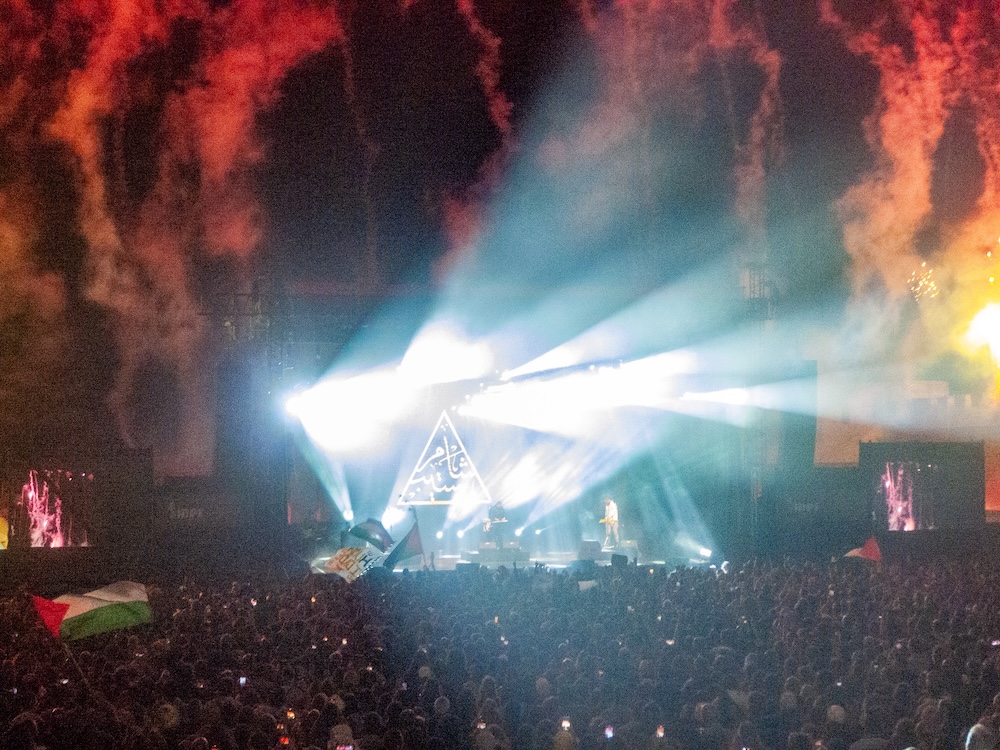
The production level of the festival is also very high, with a great level of sound and lighting across all official stages. Portuguese, Cape Verdean producer & musician Fidju KiTxora holds it in high regard after playing here for the second time this year, saying “they respect the fee” and the “conditions that they give logistically (are) not so common in Portugal”. You can really tell, with the sound engineering being, dare I say, exceptional, with many of the acts being produced to a higher level than their pre-recorded material might suggest. It should also be noted for music purists that, especially earlier in the week, there’s a sometimes amateur standard that can produce the occasional stray note or out-of-key track which can be jarring for the musically attuned.
The audience is definitely hungry for it though, there’s a palpable appetite for high-energy shows, humanitarian and political speeches, and this thirst extends to the atmosphere of learning and a willingness to dance to something new. Given it’s highly unlikely festival-goers will recognise all the acts on any given day, it’s inevitable that everyone will come across something new each day of the festival. And it’s really reflected in the vibe of a diverse, predominantly Portuguese crowd, in which you can feel the openness and desire to experience new sounds and ideas.
One of this year’s taglines ‘This is what freedom sounds like’ really rings true.
The crowd, while white for the most part, seems to be a diverse cross section of the Portuguese population, with the almost entirely free entertainment enabling families, young people, as well as the occasional elderly or disabled attendee, who can often be seen by themselves in the crowd, being given the priority of a tree to lean on. Good news for them and the vertically challenged – the crowd’s height is totally manageable, unlike my last experience at Horst.
Acknowledged and permitted free-party vibe
After the scheduled program finishes, the community takes over with a hippy (maybe even ‘psytrance-y’?) element. This culture is often synonymous with Portuguese electronic music culture, and even though the first weekend of the FMM is at the same time as Boom Festival, there’s still plenty of dreadlocks in attendance – although gratefully, none swinging around at face level.
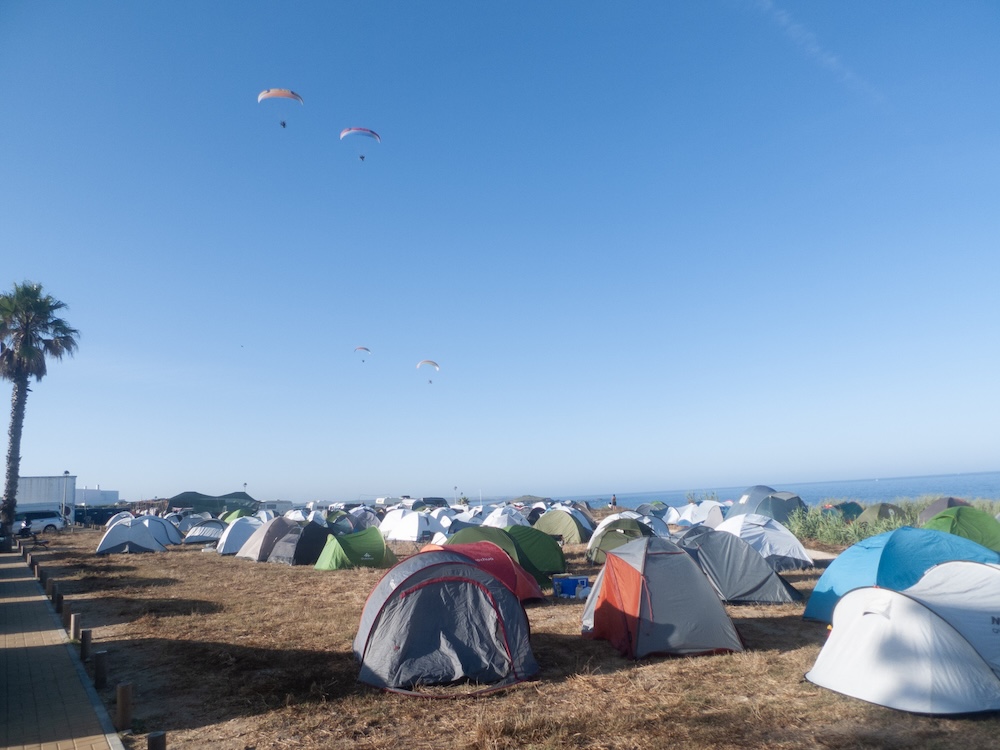
The after-parties range from Brazilians playing baile funk on portable speakers, to crusties banging out jump-up drum’n’bass on a PA hooked up to their vans, to more wholesome fire and drumming circles with harmonicas & electronic keyboards, and lastly to the trance DJs arguing with the cops to keep their sets going past mid-day while people are trying to enjoy the beach. Fidju describes it as “polite anarchy” which does somehow capture the vibe which stretches into the festival staff with some bar staff attempting to keep serving beers despite an electronic board catching fire 5m behind them.
The local residents naturally seem to have mixed opinions, with some businesses proudly saying it’s their busiest week of the year, while others tell foreigners in festival garms that their bar is now closed, despite still having 20 locals inside. One middle aged resident (while totally pickled at 5:30am) complains to me about the lack of toilets creating a “dirty city” and that she even saw a couple having sex on a car outside her house, before her husband steps in and reminds us that it’s only 4 days, and they both go on to agree that it’s worth it for the culture.
It’s natural that there are logistical teething problems with an event like this. The official population of Sines is only 15 000 (the same capacity as the beach stage). Despite it being impossible to capture actual figures due to the event being free entrance, it’s an easy assumption that the beach town more than doubles in size for the week. The policing, while liberal in movement regulations, does carry a tinge of the right wing direction of the municipality. There were several complaints about brutality, beatings and racial profiling going around the festival, with our photographer even being temporarily detained for rolling a CBD joint (which is legal in Portugal).
As yet un-gentrified?
As with many Portuguese phenomena, much of the essential info on the festival is communicated through word of mouth. The communication, while very strong in some areas, is not totally complete, with some essential info difficult to find on the website. It therefore leaves the punter needing a link in or someone to explain it to them before heading down, which can be frustrating, but is actually a very effective anti-gentrification measure.
And you really feel it in the crowd, it’s a very, very Portuguese crowd dense with locals of all backgrounds, immigrants from former Portuguese colonies coming to see their national acts and a high population of Italians, Spanish and luckily very few British and French.

Some of the paid castle shows – despite being only 25€ – are predominantly white, but this changes during the community-specific shows. I have to say it was amazing to see Mozambique guitarist Roberto Chitsonzo have his performance totally disrupted by a group of Mozambicans chanting so loud they forced him to change his show from seated to a traditional dance circle. After speaking with other Portuguese attendees, we agree we don’t really see cultural mixing like this in what can sometimes be viewed as a culturally conservative country.
The Verdict

You should absolutely go! It might not have the floorless electronic music programming of Waking Life or the visual elements of a modern AV festival, but the FMM is really leading the way with its progressive programming and cultural mixing in an authentic Portuguese vibe.
If you’ve ever attended the Santos Populares festival in Lisbon, you may have enjoyed the scale and spectacle of the city-wide street festival – imagine that same vibe but with actually good music and some fun stuff thrown into the mix, both of which bring the energy of the attendees up to a higher echelon.
But don’t tell anyone about it! If you do go, please be respectful of the locals, environment and try to learn some Portuguese first. Do not under any circumstances ask for a flat-white in a local cafe, or stop by a real estate agent to check on the apartment prices. Please don’t gentrify this hidden Portuguese gem!
In a world where rural politics is taking a sharp right turn all over the world, this regional festival is showing us how we can use our voices to broadcast a message of hope, equality, musical and cultural exploration in a time of misinformation and fear. This year the castle had a banner beaming down over the beach reading ‘freedom sounds like this’ with every act that’s played the festival since 1999 written on the backside. From Tony Allen to Pharoah Sanders, Femi Kuti to DJ Marfox, the FMM likely booked them first.
The structure of the organisation, being municipality-run really is something to learn from. But somehow the ambiguity of the finances, corruption scandal and canapés in the backstage bar adds a different shade – one thing is for sure, the funding and budget would have to be much more transparent in a larger municipality.

It seems like this festival was created on an agreement between two privileged Portuguese men in the late 90s over a few glasses of wine in Sines Castle and relies heavily on public money – but why the hell not? Should we be angry that they use their influence to create one of the most accessible, progressive and diverse festivals in the region?
After all, it was started by a communist party mayor and was continued for the last 12 years by a socialist one… How left is left?
Photo credits: caught up and arrested | Fidju KiTxora | Fiju
Nuno Pinto Fernandes 2, 8, 10
Alexandre Marin 5, 6, 7
Sami Galbi 9






Must Reads
David Holmes – Humanity As An Act Of Resistance in three chapters
As a nation, the Irish have always had a profound relationship with the people of Palestine
Rotterdam – A City which Bounces Back
The Dutch city is in a state of constant revival
Going Remote.
Home swapping as a lifestyle choice
Trending track
Vels d’Èter
Glass Isle
Shop NowDreaming
Timothy Clerkin
Shop Now