Silicon songster: a playlist by Kaj Duncan David
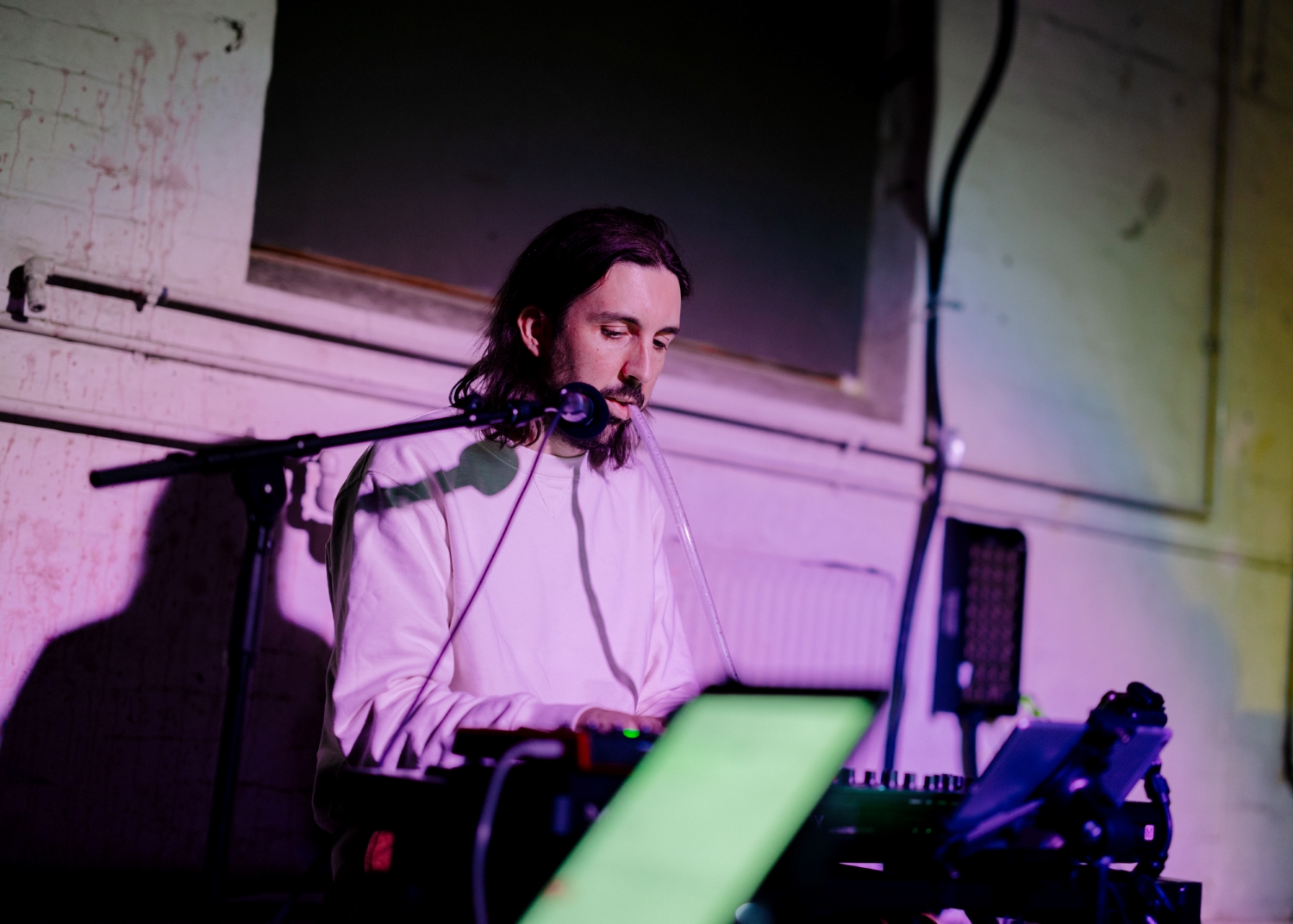
Contemplating AI / machine intelligence and the wonder of synthetic voices with British-Danish experimental composer Kaj Duncan David via his latest album and an illuminating playlist
AI in 2025; braindead ‘ask grok’ requests, viral anthropomorphic slop – mainly dogs dancing to eurodance, which admittedly can be quite fun – and uncanny valley perversions which just don’t look, sound or feel quite right. A botched phrasing here, an extra thumb or two there, one person arbitrarily morphing into another for no apparent reason. AI’s supposedly faultless sense of possibility, undercut by strange inaccuracies and glaring errors. Hilarity and horror in equal measure. The future as low-grade pisstake.
I’m sure some disingenuous tech bros are figuring out an apocalyptic upgrade in an undisclosed location somewhere but for now, AI is not the future, it’s a strange, highly flawed, often laughable simulation; something beautifully skewered by the recent videos of director Sergio Cilli depicting AI actors, to highlight one valuable parody of this current state of affairs.

That’s why an imaginative, existential, challenging interpretation of AI’s implications – and of wider technological quirks and quandaries – is an encouraging, worthwhile prospect.
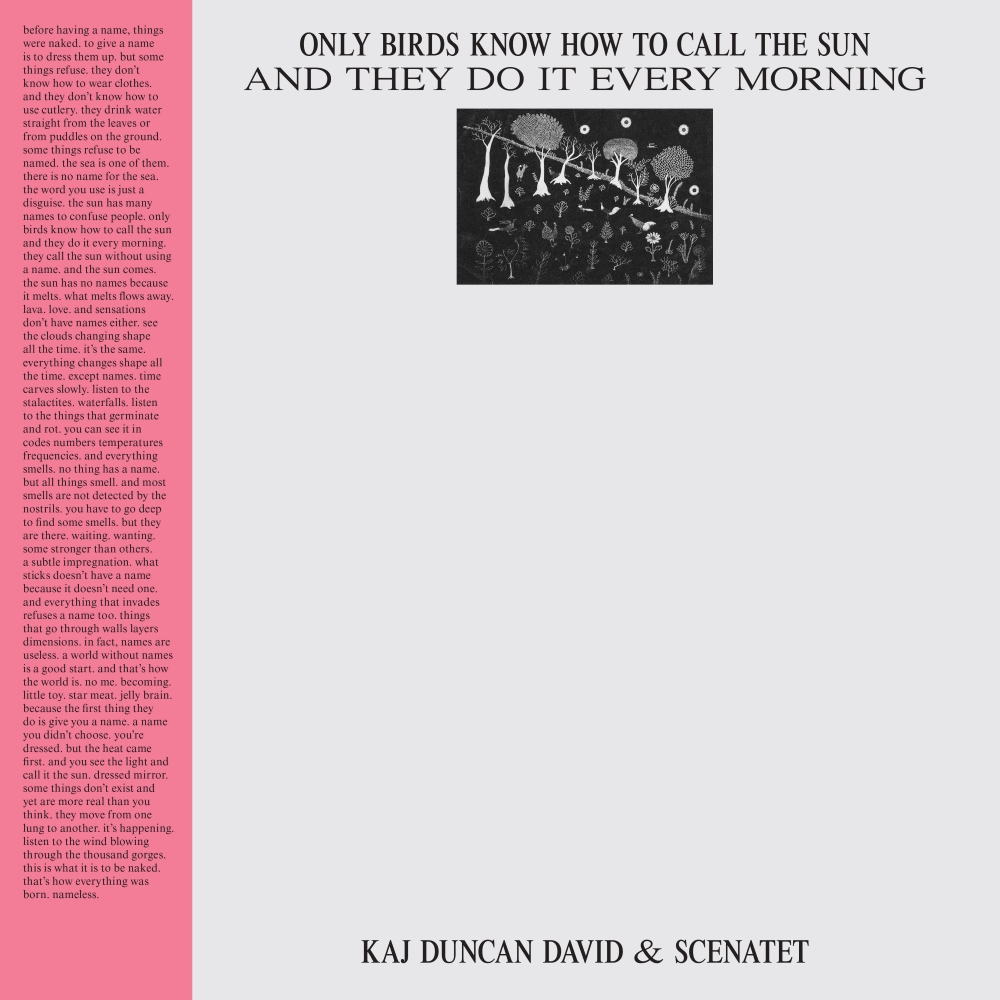
That’s not to say Kaj Duncan David’s poetically titled album ‘Only Birds Know How to Call the Sun and They Do It Every Morning‘ – released earlier this year on Hyperdelia and made with the Danish contemporary ensemble Scenatet – is about AI per se. Instead, it’s a record that encompasses expansive ideas and concepts centred on ‘language, human development, machine intelligence, altered states of consciousness & more’. Nevertheless, it’s a piece of work that speaks to our AI-enabled present, through music which feels fluid, indeterminate and alive.
A British-Danish composer based in Berlin, Kaj Duncan David has a background rooted in classical music, music theatre, and electronic music. Inspired by trance, psychedelia, Brazilian music, as well as specific lodestars including Talk Talk and Alice Coltrane, Kaj incorporates computer music, minimalism, speculative philosophy and science fiction into multi-disciplinary projects across music, theatre and dance.
After his debut 2021 album ‘All Culture Is Dissolving’, Kaj released ‘Only Birds Know How…’ in the Summer and it’s taken us a while to get our heads around it. Described as ‘a psychedelic reimagining of how language develops‘, Kaj defines the record as a ‘a sort of science fiction concept album depicting a consciousness forming and the states this subject passes through in the process of discovering the world‘.
Like hearing cognitive development in real time – with lots of vocoder – it’s a one-of-a-kind listening experience. You might file it next to Laurie Anderson, James Ferraro, Sun Araw, Holly Herndon and Visible Cloaks – if you must – but really this is strikingly unique, curiously compelling music. The sad, beautiful, strange sound of machines learning to speak as we do, set to warped “sci-fi chamber music” of beauty, wonder and melancholy. With ‘Only Birds Know How…’, Kaj seems to infuse AI and machine intelligence with human idiosyncrasies and slippage, while at the same time imbuing human expression with alien, futuristic properties.

The music of Kaj Duncan David on ‘Only Birds Know How…’ reminds us that machine intelligence can be creatively contemplated and reframed, not merely presented as a harbinger of doom through unemployment, brain rot and tech firm omnipotence. It also serves as a reminder that human expression is shaped by trial and error, ambiguity, and at times, ineffability; valuable qualities that can’t be airbrushed.
We’re flawed and so is the technology we’ve created and cultivated, but the outlook might be better if we embraced the messy imperfections and winding paths of human existence, rather than trying to mask and streamline them in evermore elaborate and ultimately self-defeating ways.
Actually, I’m not sure if this is the best way to phrase all this. Let me just fire up Gemini / GPT / Grok.
While that’s loading, here’s a discerning, conceptual playlist put together especially for us by Kaj, based on synthetic voices, an important facet of his recent work. Read on for Kaj’s introduction and dive in below for an illuminating foray into sounds by the likes of Pete Drake, Holly Herndon, Jennifer Walshe, Ben Vida, Hyperdawn & more.
‘I’m interested in synthetic voices because they evoke the borderland between human and machine, lending an uncanny or sci-fi quality to that intrinsically human activity: singing. I’ve chosen eleven examples of music that have inspired me whilst working on my own albums and projects over the last few years using synthetised and made-to-sound-synthetic voices. Consequently, some of the pieces in the playlist make use of purely synthesised voices, while the rest feature human voices that are made to sound synthetic in some way, either through effects or editing or conceptual conceit.’
‘Only Birds Know How to Call the Sun and They Do It Every Morning‘ by Kaj Duncan David & Scenatet is out now on Hyperdelia. Listen HERE.
Topics
This is from a great Black Truffle release called ‘Speech Poems / Fruity Music‘, by Swiss musician and visual artist Anton Bruhin. The tracks are all these very short concrete poems and songs made using only the speech synthesiser in Fruity Loops. Bonkers and cute in equal measure.
-
 Anton Bruhin - 5th Poem
This is from a great Black Truffle release called ‘Speech Poems / Fruity Music‘, by Swiss musician and visual artist Anton Bruhin. The tracks are all these very short concrete poems and songs made using only the speech synthesiser in Fruity Loops. Bonkers and cute in equal measure.
-
 Peter Ablinger - Deus Cantando
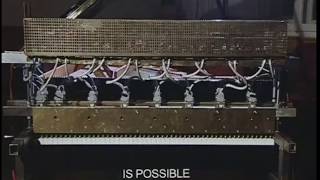
Austrian composer Peter Ablinger created a series of works turning speech melody into piano music. In this iteration of the concept he developed a computer-controlled player-piano that is able to synthesise speech by translating its spectral content into complex cluster-chord sequences.
-
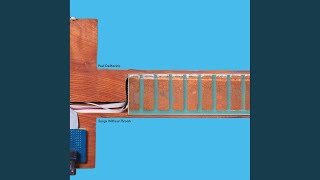 Paul DeMarinis - Mind Power
DeMarinis created a lot of weird work with synthetic voices alongside DIY and circuit-bent instruments. Some of the pieces from the period between 1978 and 1995 are collected on this great album called ‘Songs Without Throats’, another Black Truffle release. There is so much going on in this seemingly simple track. The speech melody of the synthetic voice recordings used, form the rhythmic and melodic basis of the wonky bassline and other musical materials.
-
 Ben Vida - Slipping Control Part 1
From a great album called ‘Slipping Control‘ on Shelter Press featuring the voices of Tyondai Braxton and Sara Magenheimer performing text scores that are input into Vida’s modular setup, which translates the voices into bouncy, vocal-like synth-utterances. Other tracks make the connection very transparent. This example is more obscure, but I love the main synth part that sounds so voice-like due to its nasal quality.
-
 Paul Lansky - Idle Chatter
This is a classic electronic piece from 1984 by a pioneer in the field of voice synthesis. It uses an algorithm called LPC for speech synthesis that was developed in the late ’70s using psychoacoustic coding to exploit the masking properties of the ear. This technology was a precursor to perceptual coding compression techniques used in the MP3 format.
-
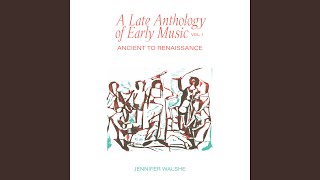 Jennifer Walshe - Hildegard Von Bingen: In Principio Omnes, from Ordo Virtutum
From Walshe’s fascinating album ‘A Late Anthology of Early Music Vol. 1: Ancient to Renaissance‘, where she trained a neural network on acapella recordings of her voice, from which she generated synthetic vocal music. Being from 2020, the result is extremely weird, as the technology was still in its infancy, a fact that Walshe employs conceptually to great effect.
-
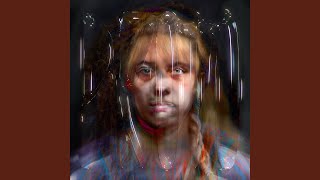 Holly Herndon - Fear, Uncertainty, Doubt
This is just a really beautiful song by another artist who is making music with AI-generated voices and doing work thinking about the grander implications for musicians. In the case of this track, from the album ‘Proto‘ from 2019, the voice is Herndon’s own going through a vocoder.
-
 Stine Janvin - Like Last Night
Stine Janvin is a really interesting vocal performer who released this record called ‘Fake Synthetic Music’ on PAN in 2018. As the title suggests, her voice is sampled, cut up, looped etc. to create a sort of vocal imitation of modular synth music. I love how radical some of the tracks are in their abrasiveness.
-
 Pete Drake - Talking Steel Guitar
On my recent album I worked with a talk box. Pete Drake’s ‘singing guitar‘ is considered a very early example of the same instrument. What I like about this otherwise questionable record is the dissonance between the cheesy old time music with the retro-computer-esque voice.
-
 Monasunne - Ever May You Fade
This is from a beautiful album released a few weeks before mine, also on Hyperdelia. Monasunne and I shared the bill at a release concert in Berlin and their music is just as good live as it is on the record. The voices sing in Old English.
-
 Hyperdawn - Say It So
I just love this song by my friends Vitalija and Michael, the duo behind Mancunian band Hyperdawn, who make extensive use of modulated voice on their two albums. ‘Say it so‘ is from their second LP ‘Steady‘ from 2023 on Them There Records.
-
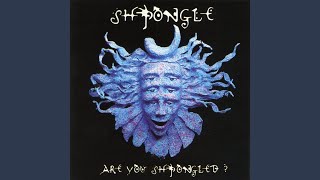 Shpongle - Divine Moments of Truth
Had to include this gem from legendary psytrance supergroup Shpongle. It’s such a great track, from their 1998 debut ‘Are You Shpongled?‘. Not only are there weird voices in buckets all over the place, but there’s a beautiful ode to psychedelic compounds that gets me every time, sung by a vocaloid synth.











Must Reads
David Holmes – Humanity As An Act Of Resistance in three chapters
As a nation, the Irish have always had a profound relationship with the people of Palestine
Rotterdam – A City which Bounces Back
The Dutch city is in a state of constant revival
Going Remote.
Home swapping as a lifestyle choice
Trending track
Vels d’Èter
Glass Isle
Shop NowDreaming
Timothy Clerkin
Shop Now