Addressing Systemic Barriers: A Conversation with Marge from Track One
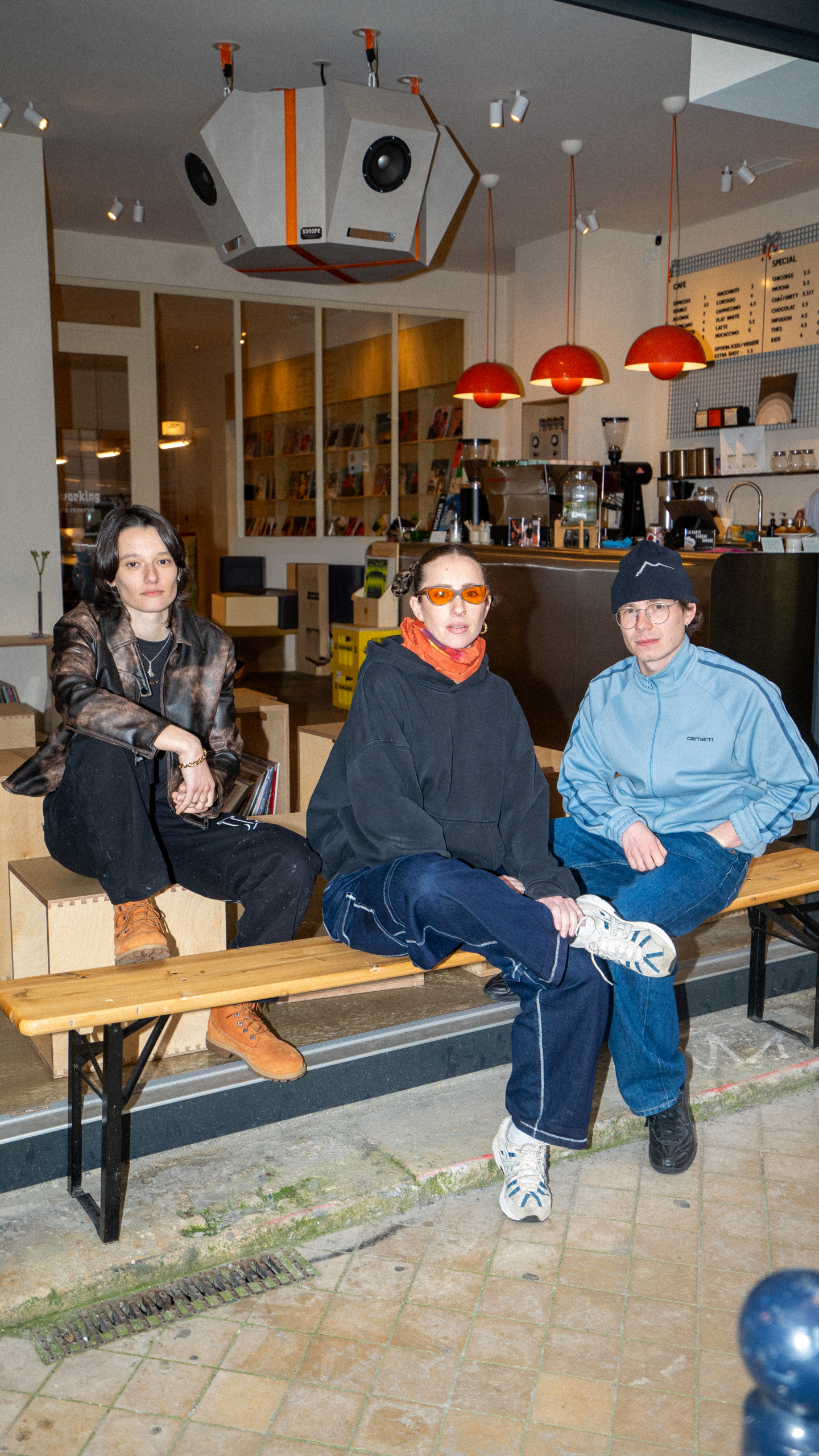
Carving a place for themselves amidst the broader musical landscape, with education at the forefront.
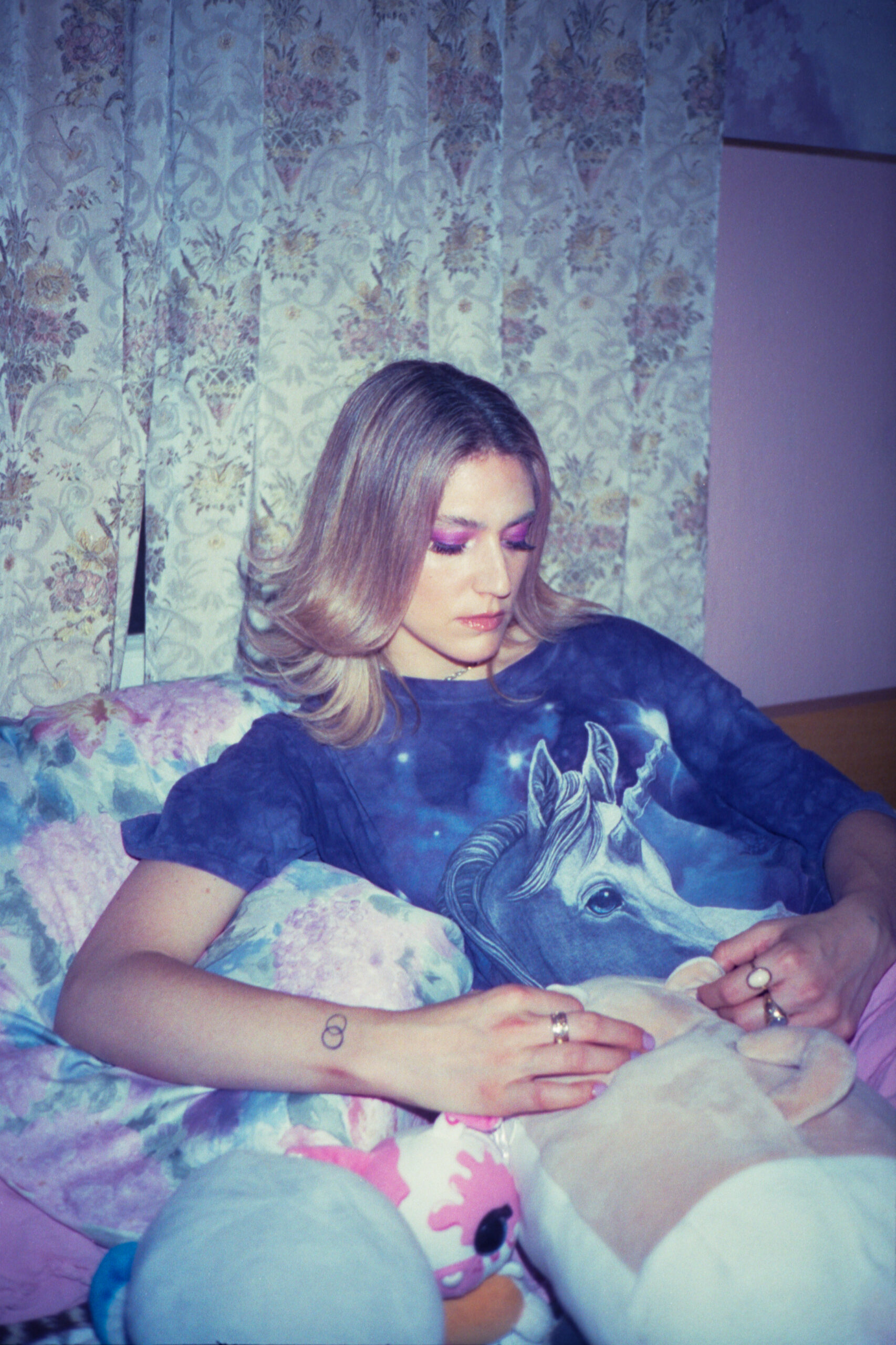
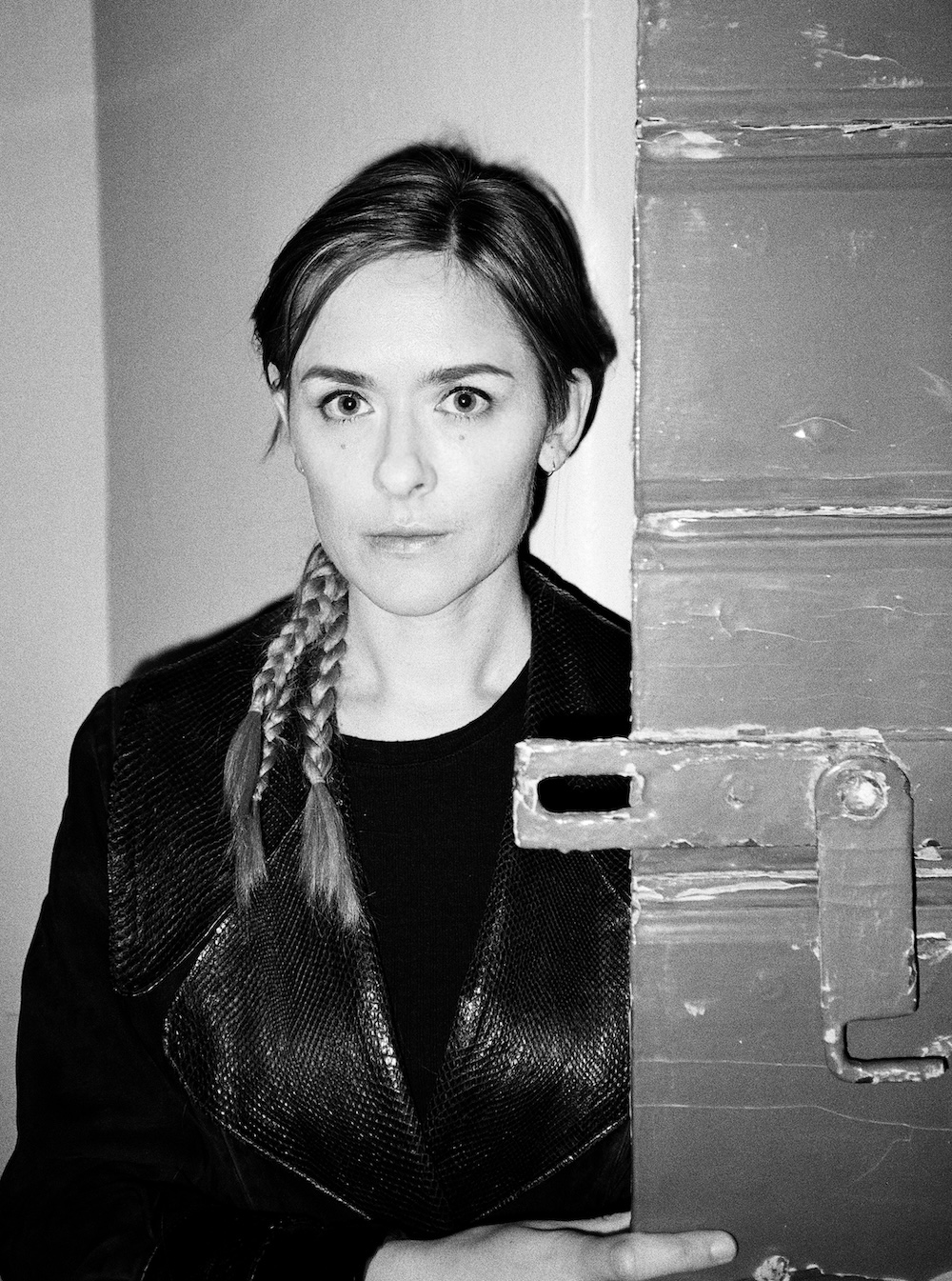
A DJ and producer, Marge recently co-founded Track One with Camille Doe and Émilien—an initiative dedicated to making music production more accessible to the FLINTA community.
In this interview, she reflects on the development of the project, her journey as an artist, and her perspective on today’s music production landscape.
This conversation is available in English here and in French on Le Type, as part of a partnership between the two media outlets to promote the Bordeaux music scene.
What made you want to create Track One, and to design it specifically for FLINTA people?
Marge: The project really came together in two stages. On one hand, I wanted to start running workshops in Bordeaux, because there wasn’t any initiative where producers could actually meet. I also wanted to learn from others. So I thought it would be interesting to organize small-group sessions focused on specific topics.
I then asked Camille Doe to lead this first workshop. At the same time, Camille was already running classes on Twitch for FLINTA people. Others could join too, as long as they made a donation of around ten euros to an association and provided proof. The next day, she called me back and said, “Are you thinking of starting something on your own? Because I am too. So why don’t we do it together?”
That’s how Track One was born. We naturally focused on FLINTA people, even though the idea isn’t to completely exclude others—we may well invite men at some point. But about 90% of the project is about giving an initial push to those who don’t dare to get started, just like it was difficult for us at the beginning.
Camille is already well established and recognised in this field, while I’m still one step below, and I know how hard it can be to feel like you belong. So the idea behind Track One is really to highlight and support those people, because it’s often easier to take that first step among ourselves before diving into the wider scene.
As an artist and a woman in music, what obstacles have you encountered in the industry?
Whether as a DJ or a producer, I’ve rarely come across a field as harsh and lacking in kindness as the artistic world. As a DJ, I faced a lot of sexism: doors closing, or on the contrary opening only because I’m a woman, without any real interest in the artist behind it. It reflects everything we already know about sexism and psychological violence. That was the first phase of my career.
When I moved into production, I again experienced a very difficult start: you have to prove yourself even more, carve out a place in the studio, be accepted by labels, manage to be heard… and even when you are, it’s often criticism rather than encouragement. That’s also why I wanted to support people who don’t even imagine they could get into production. Because once you’re in it, you realize that everyone is legitimate to create music. It’s something very subjective—you just have to be aware of it and dare to go for it.
Personally, I was surrounded almost exclusively by men while learning—apart from Camille. We’ve been collaborating for years: she really pushed me to produce, to create, and she shared a lot of her knowledge about production with me. But aside from her, it was mostly men who taught me how to produce, how to work in the studio… It really shows how much determination it takes to get into it. I tried to find women to support me in that learning process, but it was very difficult—especially in Bordeaux, where there are so few of them.
Can you tell us about the workshop format and what you hope to pass on to participants?
I think the program will evolve a lot, especially in the first year, when we’ll be testing different formats to see what works best. Above all, what we want is to spark vocations and, on our own scale, address systemic barriers.
The idea is to say: if you’ve never considered it before, maybe with us you can start to. Maybe a simple introductory workshop won’t take you very far, but at least you’ll have tried.
In the longer term, our goal would be to see musical projects emerge from this program. But the main priority is already to bring FLINTA people together, to create connections and build a network. We’ll start with an introductory workshop, then move on to more advanced sessions, opening the program up to all levels.
We don’t want to focus only on beginners, but to build a broader community of FLINTA producers, encouraging collective learning. So there will be workshops on more specific topics across France, as well as talks and discussion sessions. We’d also like to organise studio jam sessions, to demystify that space—which can be intimidating, especially when you lack confidence. The idea is to create moments without pressure, without a specific goal. And eventually, we’d also like to put on parties and events.
The first workshop lasted four hours and was led together with Camille. The goal was to take the time to share our experiences in music production—both hers, with her background, label releases, and overall experience, and mine as well. We also want to understand why participants are there and what they want to learn.
Concretely, we’ll take the time to open Ableton, explain what it’s used for, go through different ways of producing, and cover the basics. Four hours is quite intense, but working in small groups will allow us to support participants as best as possible.
What do you hope to see emerge from Track One in terms of musical diversity?
There won’t be just one musical style. Given our backgrounds and what we’re familiar with, there will naturally be a strong focus on electronic music. That’s also where our network is and where we most want to drive change.
But I also want to open up production to other practices, like beatmaking or scoring for film, where women and FLINTA people are still highly underrepresented. I already have a few ideas for collaborations, particularly around film-related projects. The goal is also to introduce these formats, because they can seem inaccessible at first—you can easily feel like they’re not for you, when in reality, they are.
I also do a bit of film scoring and sound design myself, and I know that everything starts with that mental shift: telling yourself it’s possible. I want to open Track One up to these broader perspectives on production. At first, though, we’ll mainly focus on electronic music, simply because that’s where we have the most experience and the strongest network.
“Whether as a DJ or a producer, I’ve rarely come across a field as harsh and lacking in kindness as the artistic world.”
Who are your partners and allies in Bordeaux for this project?
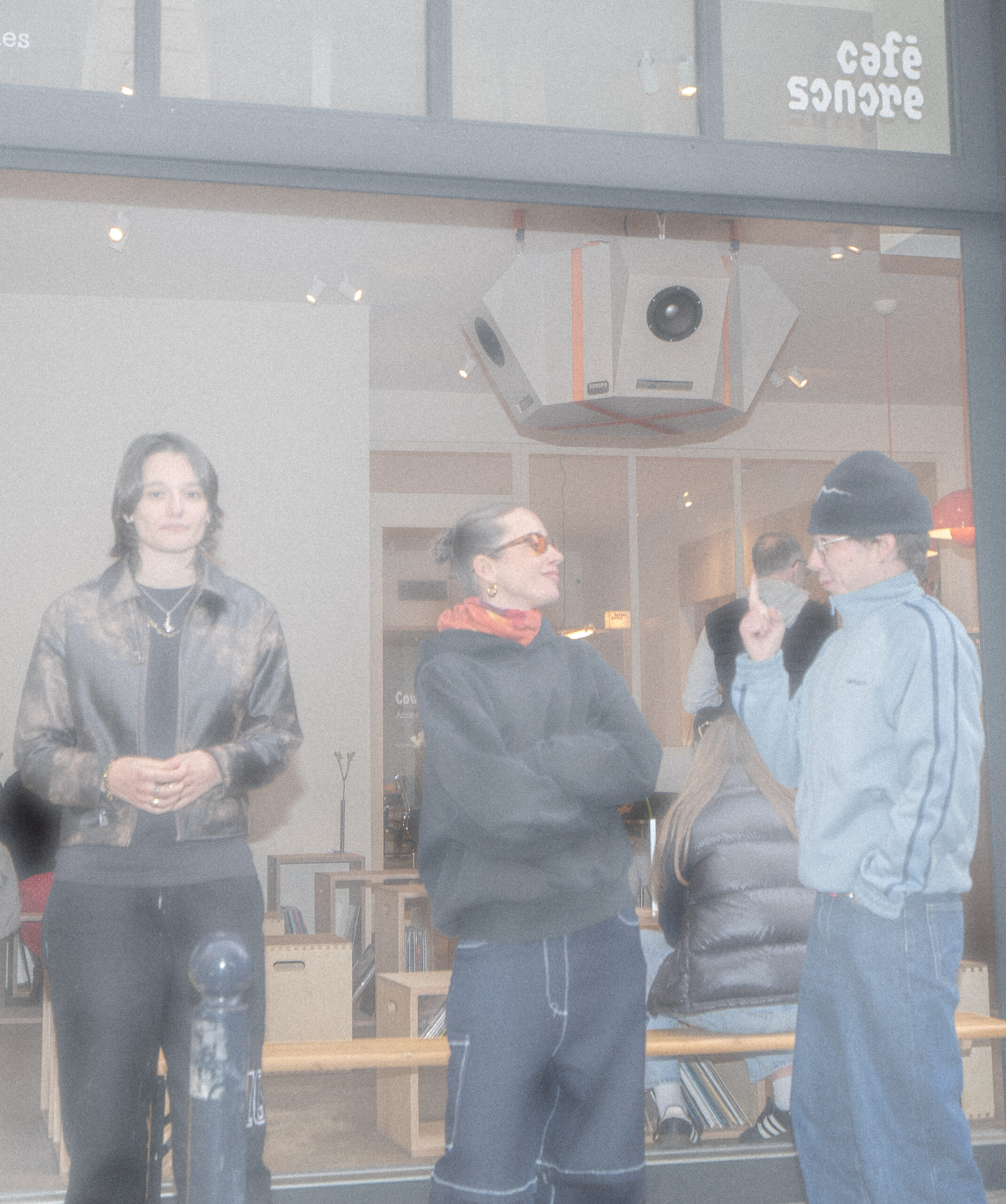
Our first key partner is Café Sonore and Bureau Sonore, who support us in particular by providing a studio—a really beautiful space—which also allows us to introduce it to people who wouldn’t normally have access to it. On the media side, we’re working with Le Type.
More broadly, we also have direct support from Ableton, which is very positive—we’re one of the French initiatives being highlighted by the brand. We’ve also been approached by other people and organisations, although nothing has been confirmed yet at this stage.
What are your plans to expand Track One and reach even more creators?
For now, we haven’t really advanced much on that yet—it’s very recent. The project came together quite spontaneously, even though it’s well structured, especially because we’re working with Émilien. He handles all the art direction, visuals, and communication strategy. It’s really valuable to have someone dedicated to the project who brings both time and expertise.
We’ve managed to build something solid, but it’s still very new. There’s a real desire to develop it further—we’ve already had very positive feedback. Now we need to structure what comes next. I think it will happen quite naturally, through collaborations. We’ve already been contacted by venues to host workshops, so the growth should happen gradually, step by step.
Read the interview in French on Le Type


Must Reads
David Holmes – Humanity As An Act Of Resistance in three chapters
As a nation, the Irish have always had a profound relationship with the people of Palestine
Rotterdam – A City which Bounces Back
The Dutch city is in a state of constant revival
Going Remote.
Home swapping as a lifestyle choice
Trending track
Vels d’Èter
Glass Isle
Shop NowDreaming
Timothy Clerkin
Shop Now