Less Options: More Surrender
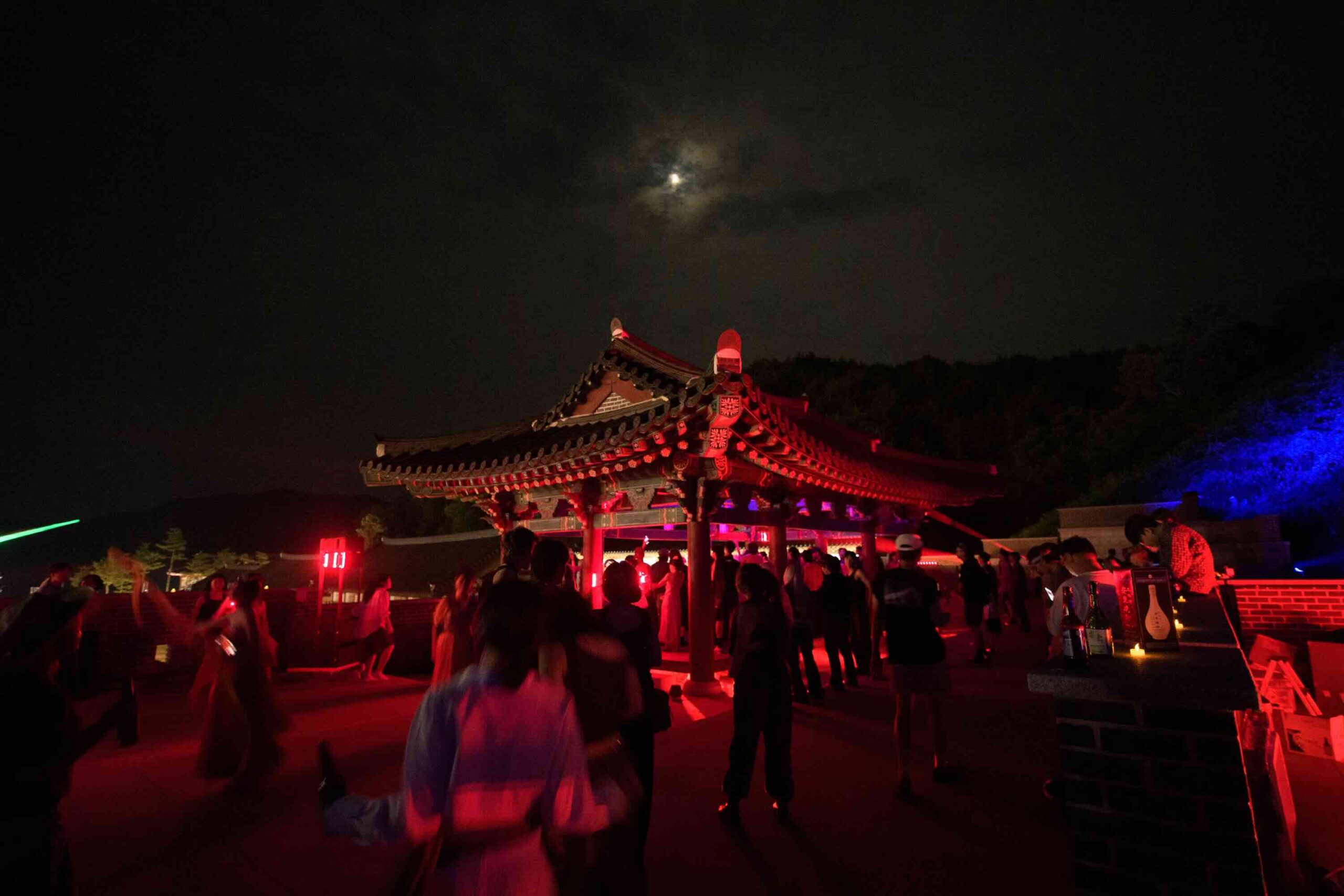
A different kind of dancefloor in Korea.
In an ever-changing world seemingly ruled by social media trends, never has offline presence felt more substantial than today. Trends come and go, but there is a recurrent issue mirrored all over the world: an anti-embodiment movement.
We see dancefloors filled with cellphones in hand, people chasing line-up names instead of trusting venue’s curation, and people immersed in their Instagram lives. Attention is scattered, and everything around us keeps pulling it away.
There is no time to slow down and, and gradually, embodiment and flow have become a luxury on the dancefloor.
This is also real in Seoul, an oasis of music talent, fun, exciting, and still largely unexplored by foreign media. Seoul shines at night, and while during the day people follow their rushed 9 to 5 lifestyles, their hierarchical social relations and monochrome dressing, at night Seoul gets wildly different, but it never stops being fast.
What during the day is rushed commutes to work and quick meals becomes, during the night is rushed experiences, rushed look-arounds and rushed drinks. One does not have to walk far to drop into several venues in one single evening. Nightlife here is driven by guestlists, so you can visit up to six clubs without paying entry or buying a drink. Thrilling for tourists and dancers, but harmful for clubs and DJs who want to offer the experience of “music buildups”, let alone community.
In Seoul, too many choices translate into weaker dancefloor embodiment. The dancefloor becomes temporary, attention is fragmented and energy resets instead of deepening. But what happens when we remove movement and choice from clubbing?
There is a small electronic festival in South Korea, located in Andong, which earlier last year caught my attention. It’s called Hahoe Festival, in tribute to the traditional Hahoe masks. By tiptoeing into traditional Korean principles, it introduces the idea that build-ups and embodiment are led by welcoming uncertainty, dancing and flowing through it. Uncertainty in how the venue will look like, how the event will unfold and how the music will resonate in the body for long periods of time.
Simply put, traveling four hours to the festival’s location requires a certain level of intention and attention. It’s like an initiation process in a ritualistic ceremony, where people need to be fully in to reach the climax of altered states. And there is no other choice once you are kilometers away from home, surrounded by strangers in a massive replica of a Korean village with meters-high murals, a tower and all. The experience is, for Koreans and foreigners, equally bizarre, equally new.
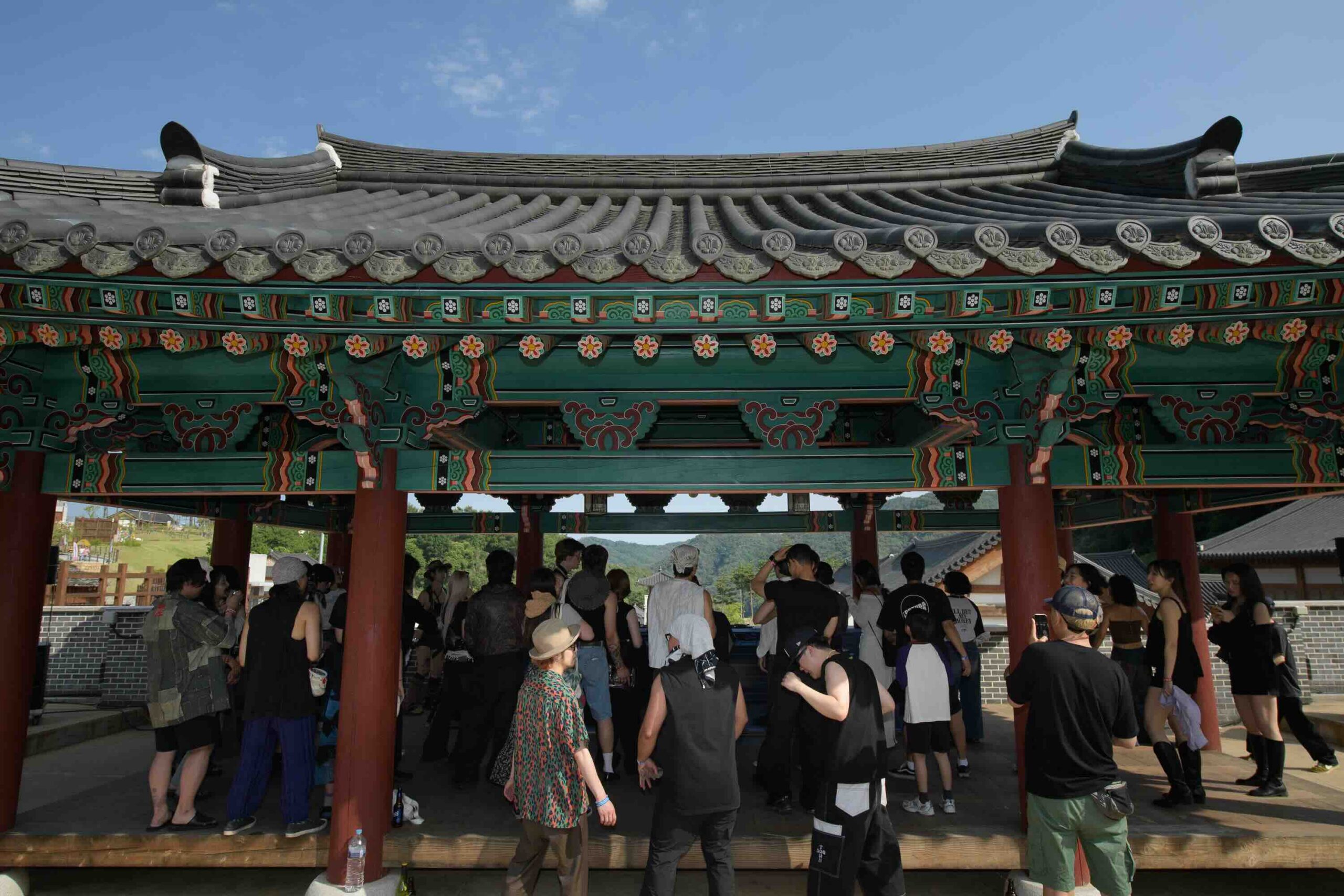
As you reach the threshold of the evening, once the architecture feels no longer unfamiliar, after hours of drinking Andong soju, sharing Korean food and dancing to excess, connections begin to build. The stranger next to you is no longer a stranger, but the person you shared a cigarette with at the bus stop, or the one queuing behind you in the toilet.
As the hours pass, the limited number of attendees start, almost by nature, bonding with each other, and in some sort of “mystical burst of energy,” uncertainty is replaced with surrender. You are no longer the Mexican writer from Seoul, but another dancer who decided to attend Hahoe Festival because something in it resonated with you. And as you look around and recognize that everyone else is in the same position as you, surrender kicks in, flow kicks in, belonging kicks in.
In the background, with sounds from some of the best DJs from Korea, Radio Revolution, Xanexx, Jimin, 2ndfloor, E3, you give in to the craze, same as everyone else. “It’s only one night, why not go crazy, let’s give it all”. This continues until 8am, when our shuttle buses drive us back home to Seoul.
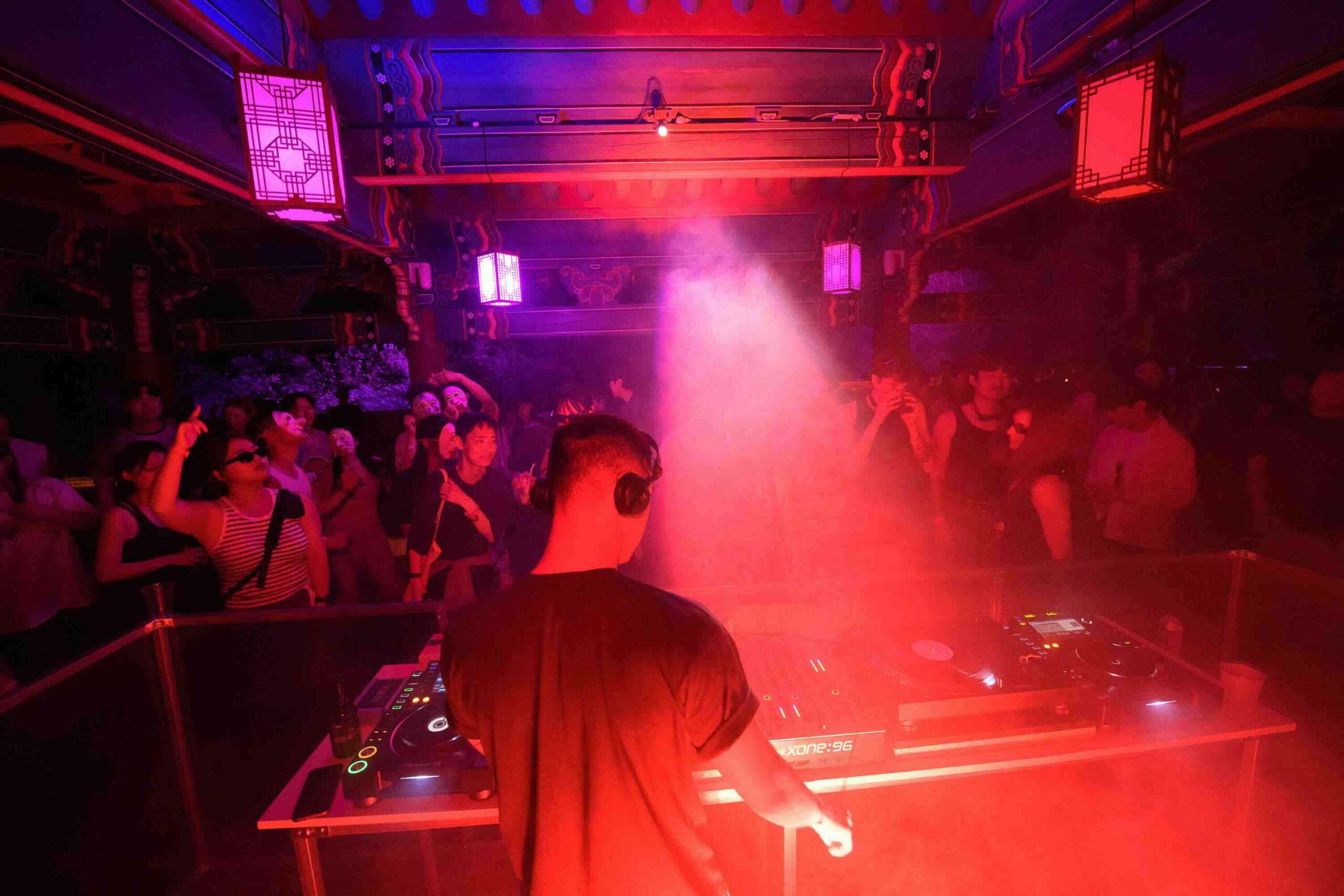
Later, after the festival, as I got the opportunity to chat with one of the organizers, I learned how Hahoe Festival is intentionally encouraging people to build energy together and release it through flow, and that this comes from their own experiences in Itaewon’s clubbing scene. Selecting Andong as a location, the communal eating spaces that make people share tables, the music levels that allow conversations to be heard, the height of DJ booths that make dancers mingle with the DJs, the limited number of tickets to create an intimate party, and the lack of VIP areas are ways for them to reduce options for us and encourage connection.
In the end, more choices do not always equate to more meaning — sometimes what we need is exactly the opposite.




Must Reads
David Holmes – Humanity As An Act Of Resistance in three chapters
As a nation, the Irish have always had a profound relationship with the people of Palestine
Rotterdam – A City which Bounces Back
The Dutch city is in a state of constant revival
Going Remote.
Home swapping as a lifestyle choice
Trending track
Vels d’Èter
Glass Isle
Shop NowDreaming
Timothy Clerkin
Shop Now