Silence Requires Nerve: Thirty Years of the Chill Out Space
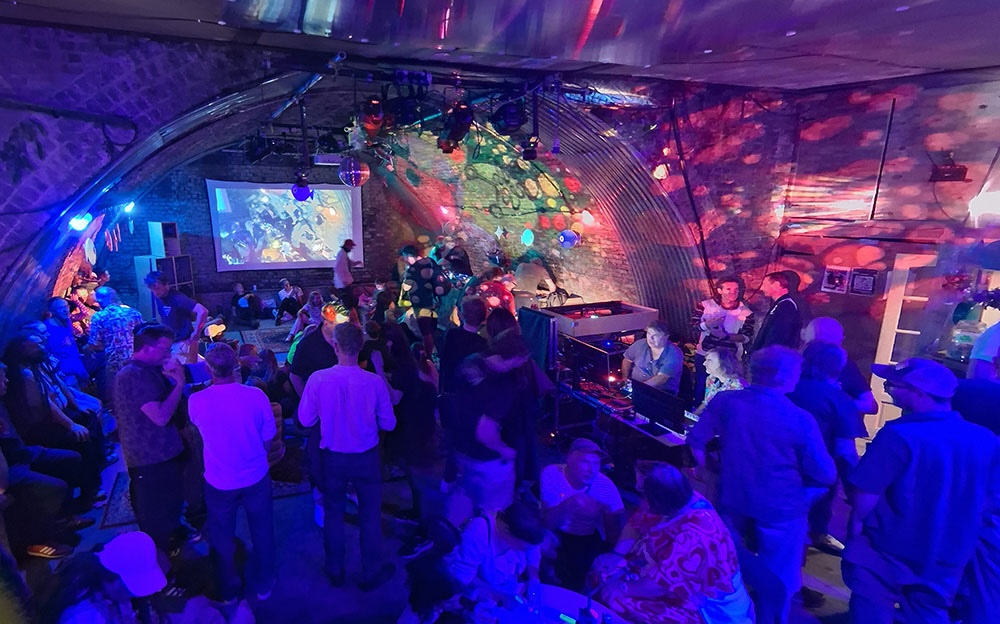
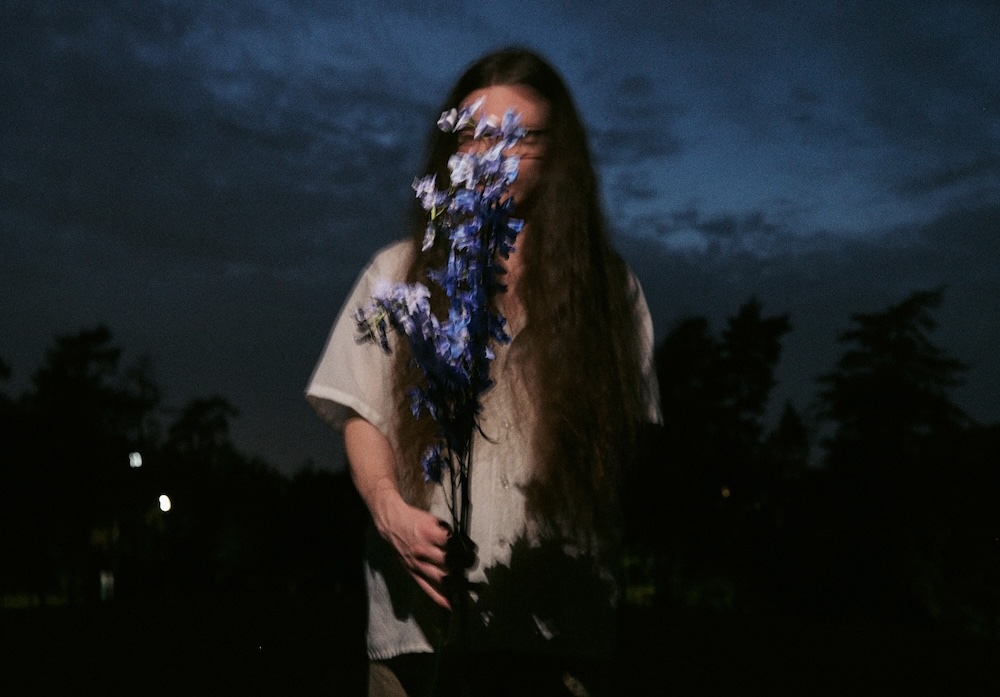
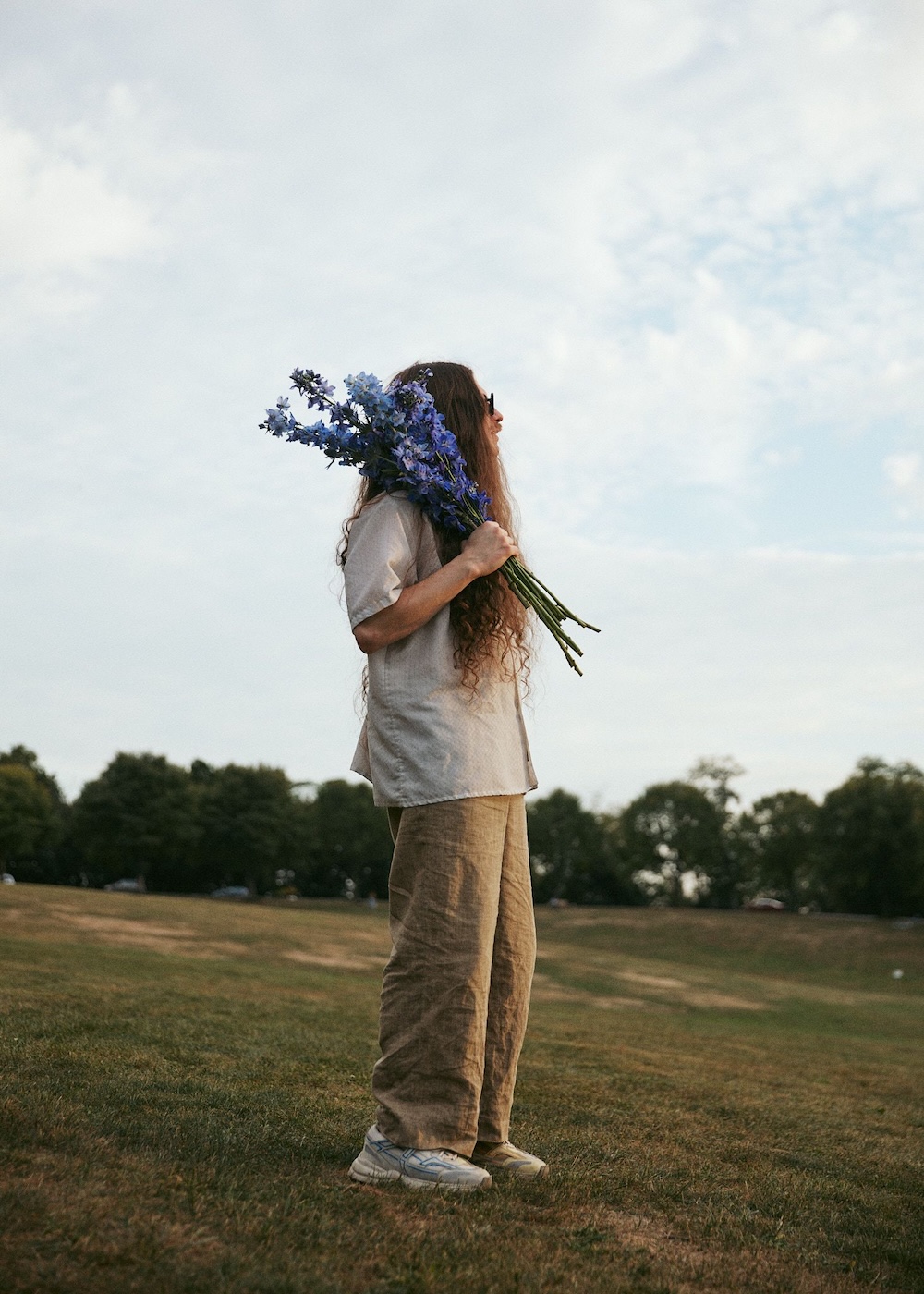
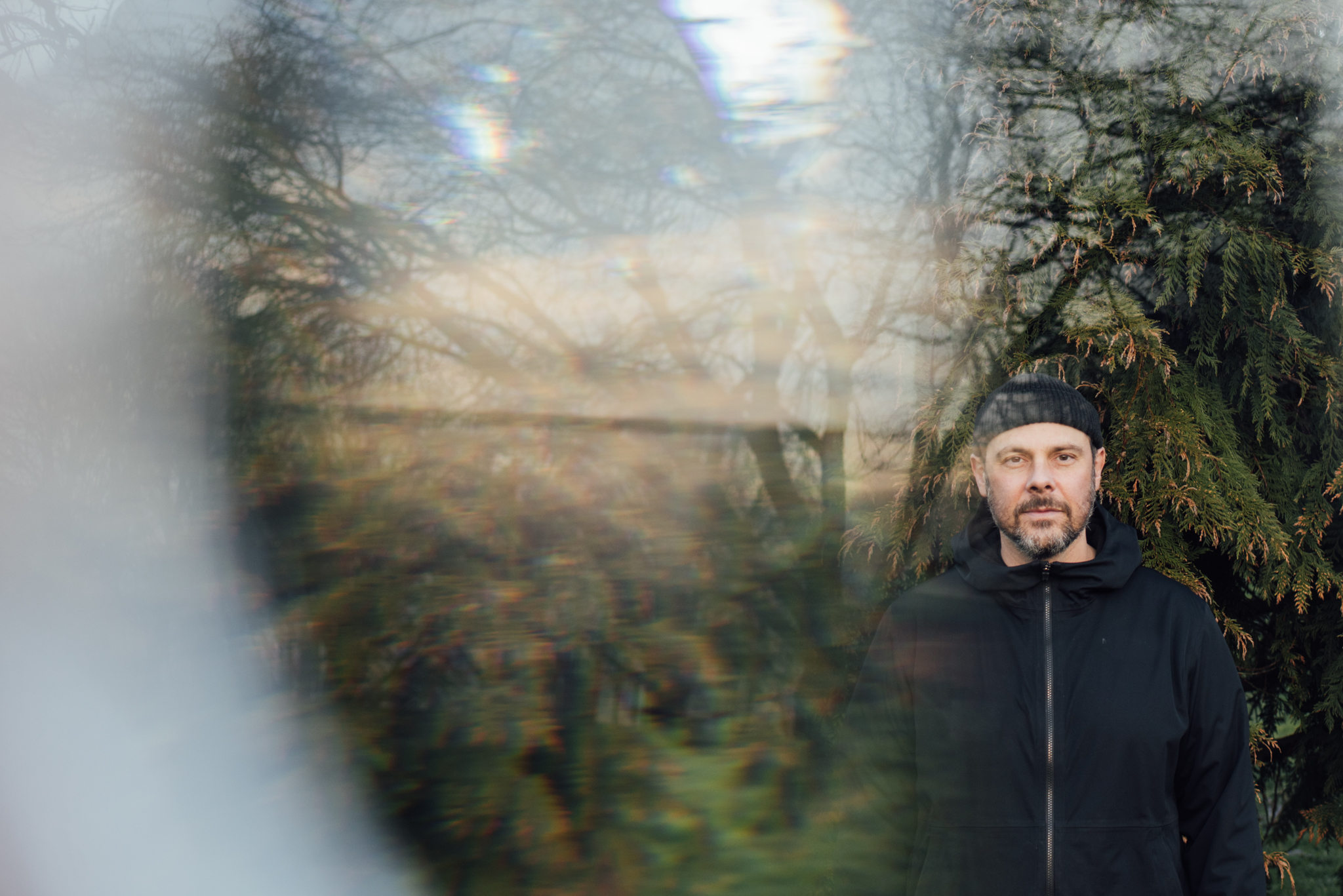
Thirty years after Telepathic Fish made the chill-out room the main attraction, Field Maneuvers’ ambient tent is exploring the same question with a new group of artists. This year, Strictly Kev, Mixmaster Morris, Syphen, o•rbyss, Luvandula, Tia Cousins, Ed Curtis, and Zeobat each bring their own answer.
Most raves have a ‘loud’ room, but few offer a truly good quiet space. At Field Maneuvers, a “No Frills Rave” that puts sound first and keeps everything else simple, this year’s quiet room makes you wonder what its real purpose is.
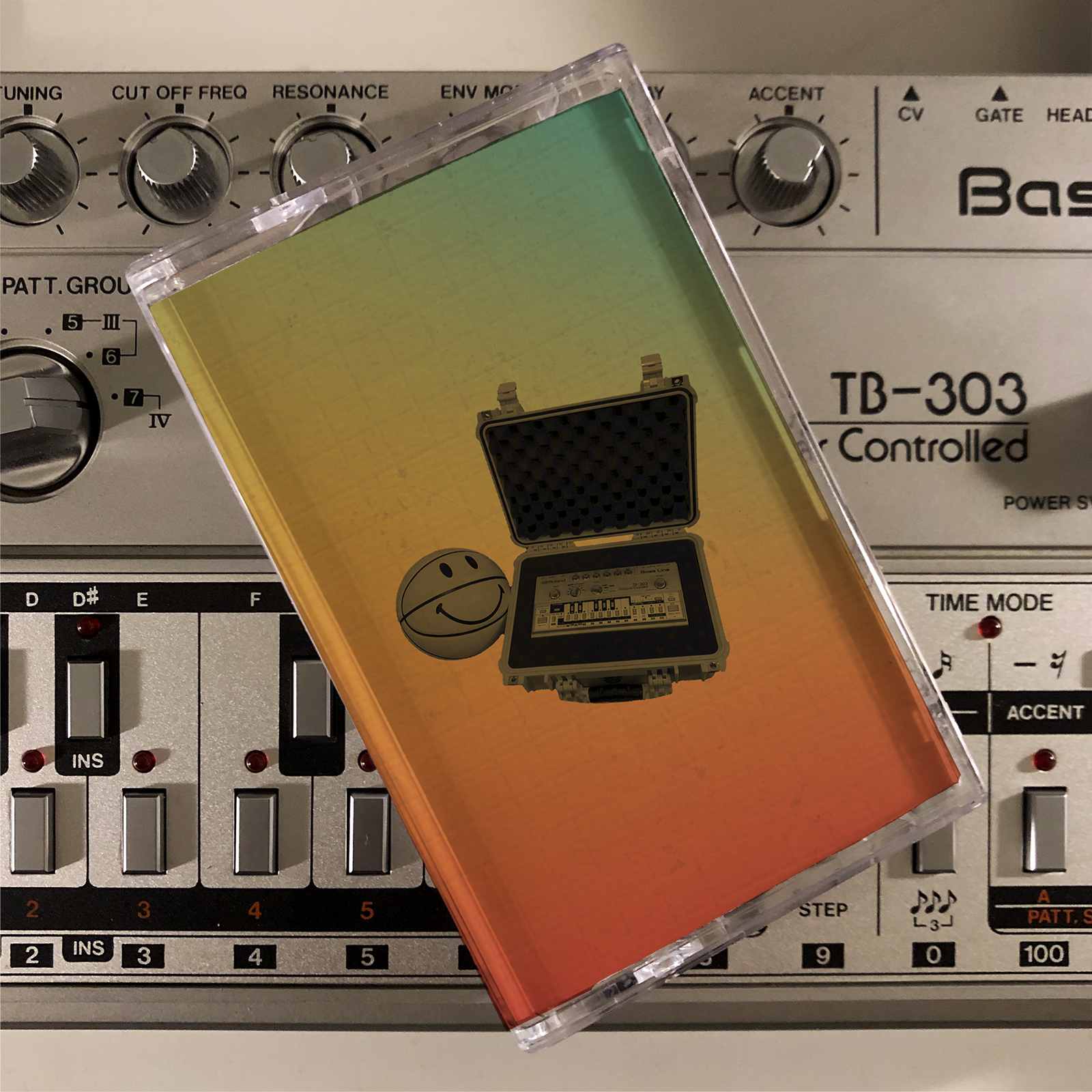
The story starts thirty years ago in a Brixton squat, where a group of art students called themselves Telepathic Fish. Strictly Kev, also known as DJ Food and a co-founder of Telepathic Fish with Chantal Passamonte (Mira Calix), David Vallade, and Mario Aguera, remembers when the chill-out room took centre stage – Kev recorded a Seeds Mix which you might wanna get on as you read on…
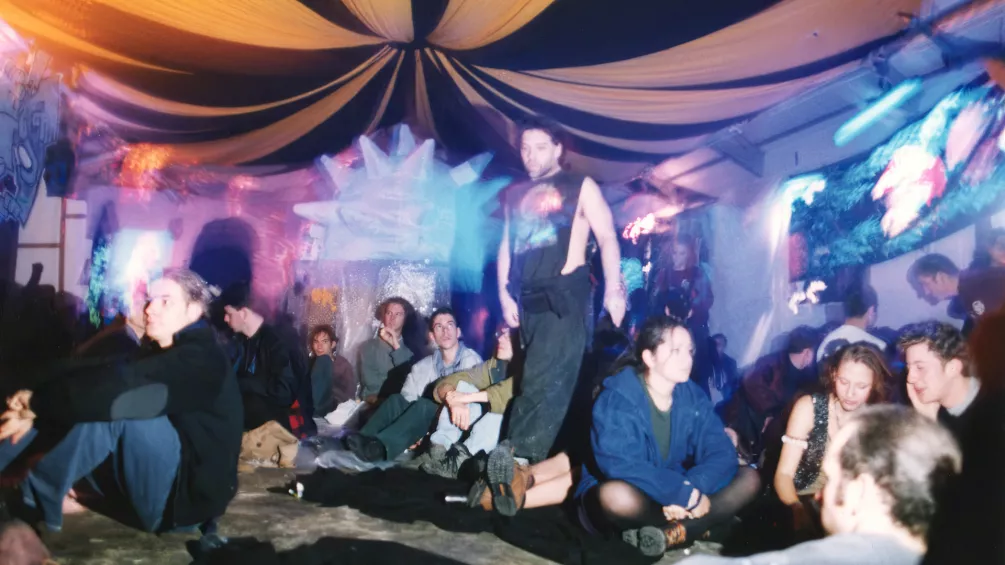
At their Ambient Tea Party in 1993, the whole night revolved around it.
“There was a groundswell in the music at that time, so much so that you could easily sustain the whole night with it as the focus without the main room domination of the 4/4 kick drum,” he says. It wasn’t just about taste, but about a room full of people – “indie to hip hop to metal to dance culture” – who wanted a wider mix of sounds.
Mixmaster Morris was running rooms like it elsewhere at the same time. He remembers an early Telepathic Fish night in London that still had a foot in both camps – a chill-out room and a room doing dance music – before he “kind of took it over,” introducing the crew to Richard James (Aphex Twin) and Coldcut’s Matt Black.
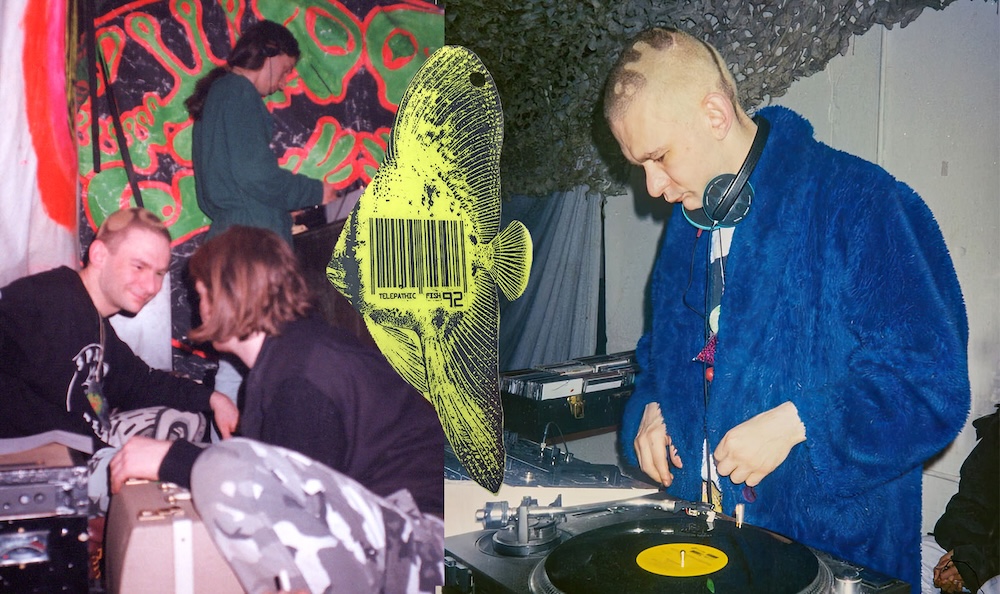
In Germany, at the XS Club under Frankfurt Opera House, he’d already pushed the format further still: whole nights built entirely around the chill-out room, no main room at all. “It was trippy,” he says. “There were live sheep walking around, because the KLF’s Chill Out had just come out.”
Those early rooms were anything but passive. Stacked TVs were showing trippy videos, UV fish on the ceiling, and Coldcut’s Matt Black creating early computer visuals. Kev calls it “100% deliberately designed,” built on the same instinct that now inspires Ed Curtis’s flags and Zeobat’s Hope Scrolls: if people aren’t dancing to flashing lights, you have to put more effort into the room to keep their attention. Morris is characteristically less reverent about its intent: “We weren’t doing physiological research; we were decorating a dirty, dark room to keep the trippers occupied.” He wasn’t hands-on with the build itself, crediting David Vallade for the artwork and Matt Black for the projections – “it was very good though, although I wasn’t involved in putting the room together.”
Over the years, Kev has also learned the value of restraint. “Silence and space in composition requires nerve,” he says, crediting graphic design for teaching him that negative space can be powerful. “I suppose the ultimate chill out set would be in a library.” Even Morris, quick to deflect credit, agrees with the diagnosis: “That was Strictly Kev’s, Seeds Mix, not mine! He’s right though, silence takes nerve. When you take things away, it forces people to actually listen.”
The question of distraction existed before smartphones. Kev’s recent Seeds Mix for us is called ‘Leave your phone at home and discover paradise after a forage in the forest’ – a fitting match for Zeobat’s Hope Scrolls, even though they’re decades apart. “All we had to distract us back in the 90s were our friends, the music, the lights and any intoxicants we decided to imbibe,” he says.
"The phone is a legitimate addiction IMO… I think we're going through an age where a lot of people will look back and wonder what the hell they were doing walking down the road filming diatribes into their phone."
Morris takes a slightly different view of the same tension: “We didn’t have phones back then, but people still found ways to be entirely absent. The difference back then was you had to actually show up in the room to zone out.” He’s not entirely anti-phone either: “It’s easy to get sucked into a social media wormhole, but it’s where a lot of the important conversations are happening.”
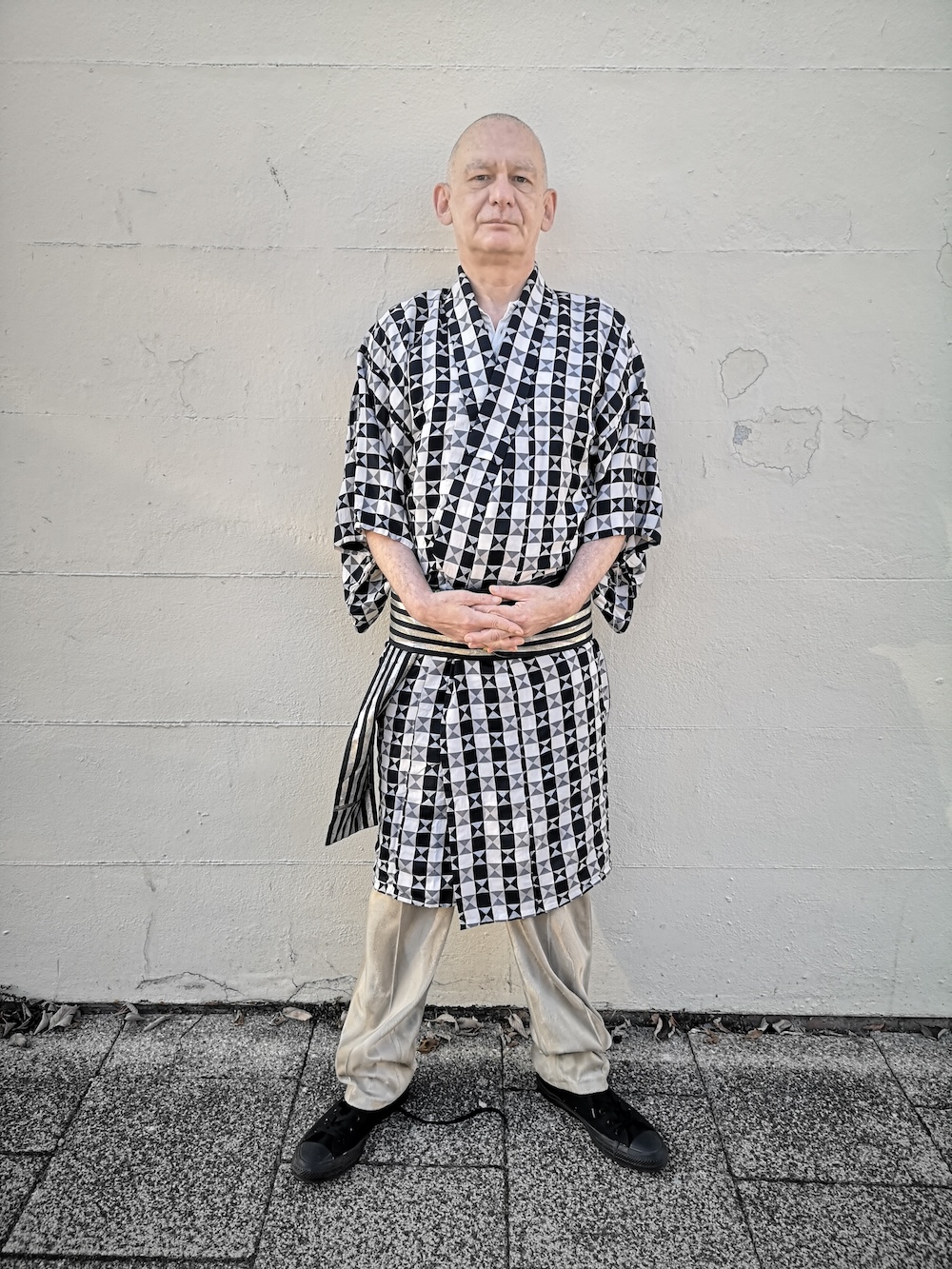
When asked if today’s ambient rooms – like bedding at A Loose Ting, vibrating mattresses at Berlin’s Overflow, or horizontal crowds at New York’s Planetarium nights – are truly continuing the tradition or just repeating it, Kev is clear: revivals only matter if they add something new. “This music was always futuristic, forward-looking… new eras bring new ideas,” he says. He points out that squats are mostly gone now, so people have to get creative, like setting up an ambient sauna in a Peckham train arch. Morris is more circumspect about the current wave, largely because he hasn’t seen much of it firsthand: “I haven’t been to any of the new places. Lots of interesting new events in LA, Japan, Germany, everywhere but here really.” He’s noticed old records finding new audiences – “they’re starting to play some of the records I played 30 years ago” – and would happily join in: “I would like to play in some of the new wave of ambient clubs. There are listening parties all over London, but they’re not playing ambient albums.”
Both men circle back to Chantal Passamonte, later Mira Calix, as the person who actually held it together. “Chantal was the actual engine; the rest of us were just playing records,” Morris says. “I think she would laugh at the current reverence for it all, and then immediately build something far weirder and more forward-thinking to challenge it.”
As for the word itself, Morris doesn’t mourn it fading: “If that albatross is finally dropping off, it’s about time.”
“People are burned out by the modern world and desperate for any excuse to sit down. Call it chill out, ambient, whatever you want – the need to sit down, be quiet, and listen to deep, beautiful music together never actually went away.”
This brings us back to this year’s tent, where a new generation of artists are exploring these same questions in their own way, highlighting how ambient rooms serve various festival audiences and artistic visions.
This year, four very different crews are shaping the room. Syphen curates it as a destination, with a live saxophone and vocal set from Tears of Eros, an “experimental mind-altering set” from Blood of Aza, euphoria from Yawning Portal, and a “synchronous harmony” from TAAHLIAH.
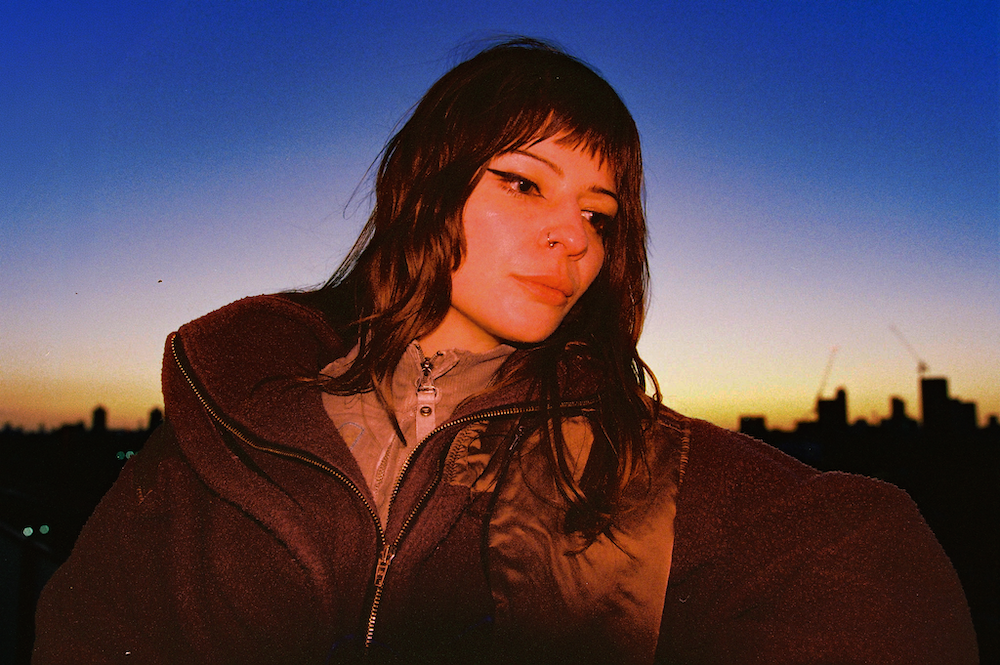
o•rbyss founder Jae Stevens aka Luvandula sees the space as a conversation with the dancefloor outside – not just a service area or an exit, but “another way of being inside” the rave.
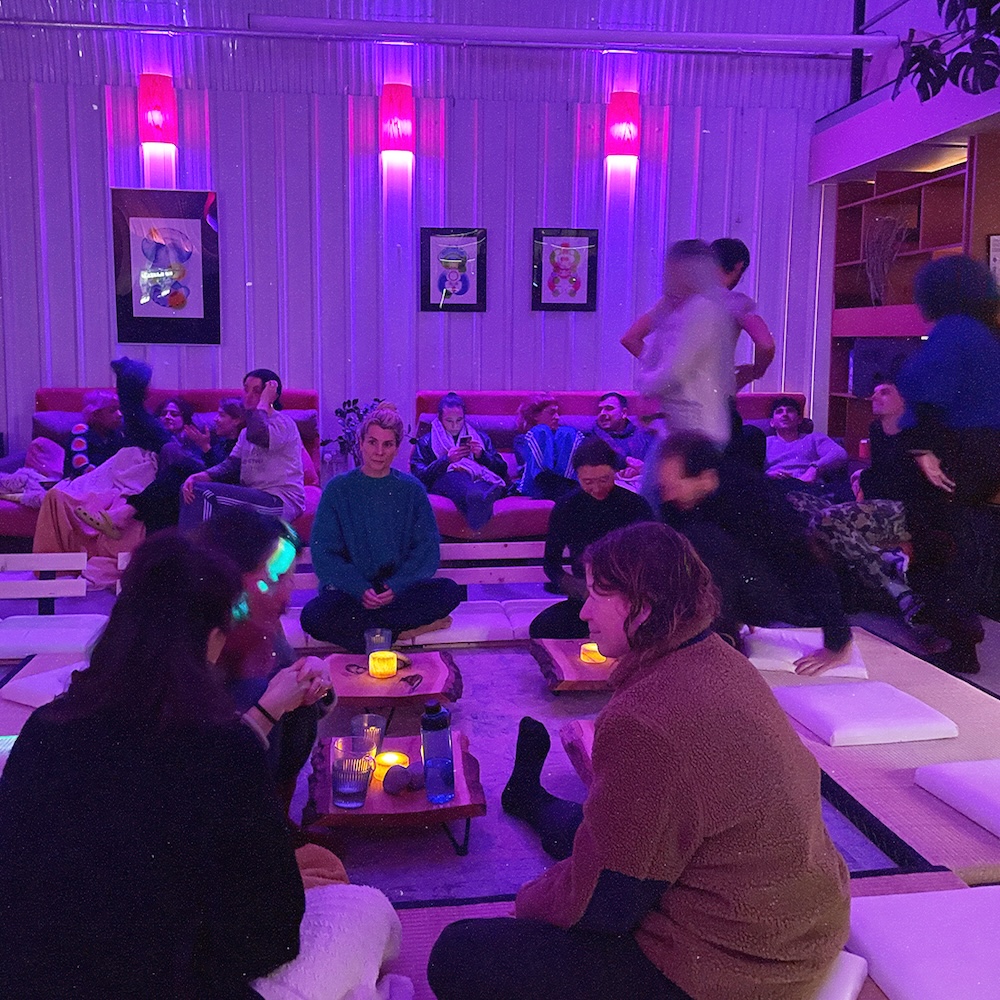
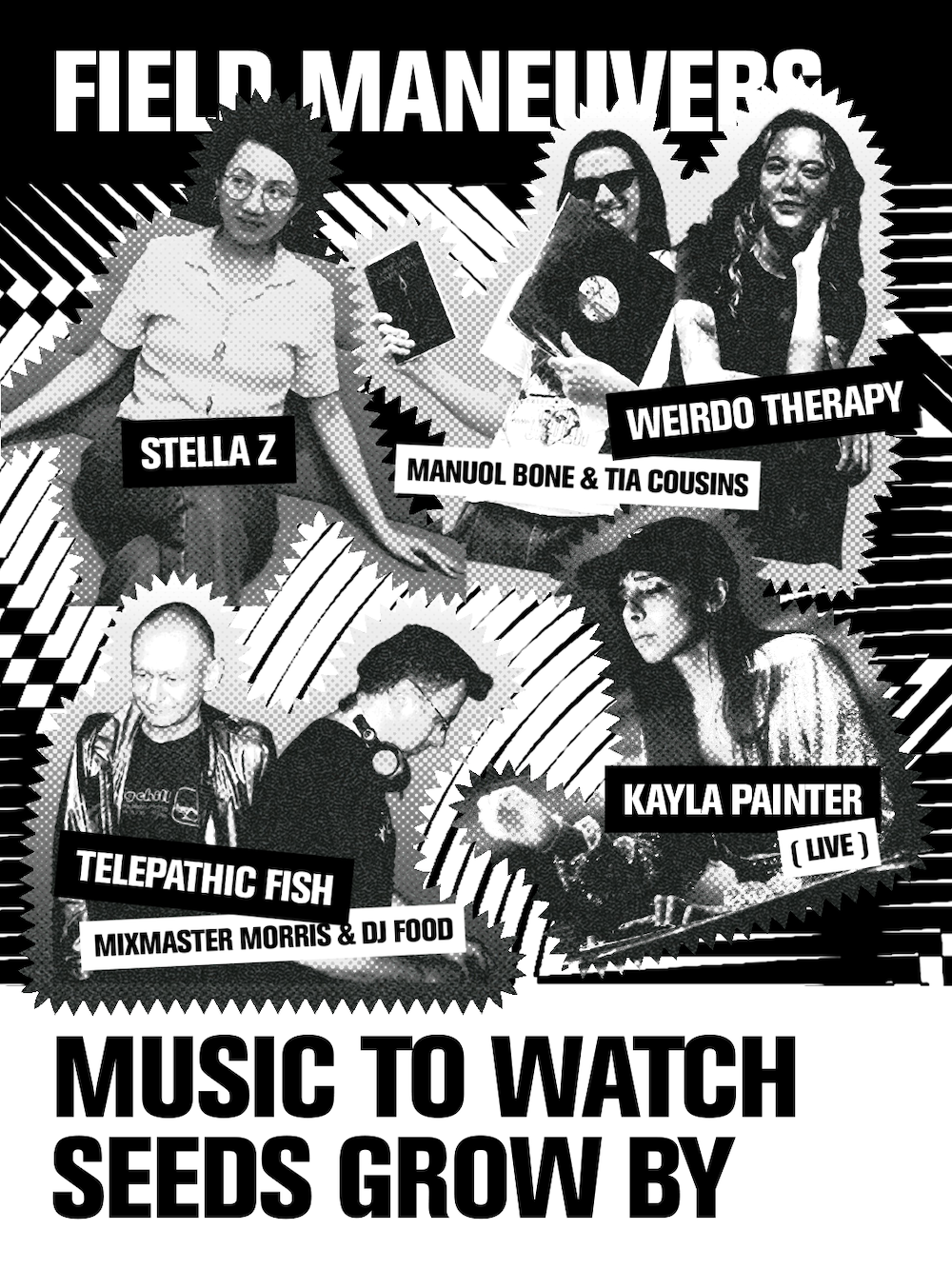
You might know Tia Cousins on these pages. She’s better known for playing FM’s rave stages than its ambient one – she’s played it once before. This year at FM, we’re presenting Music To Watch Seeds Grow By for the first time at a festival outside of its BoG incarnation at Watching Trees. When asked if the tent is a counterpoint, a comedown space, or a destination, she doesn’t want to choose: “I don’t think I’d want to pin it down to one thing – a comedown space sounds a bit too passive and a ‘destination in its own right’ sounds a bit too grand for what I’d actually be doing in there. I’d rather it just felt like an option people could wander into, no pressure either way.” Meanwhile, Ed Curtis is decorating the tent with four large patchwork flags made from a lifetime of images, and Zeobat is making something different: a metre-tall wooden phone you crank by hand to scroll through three metres of paper memes.
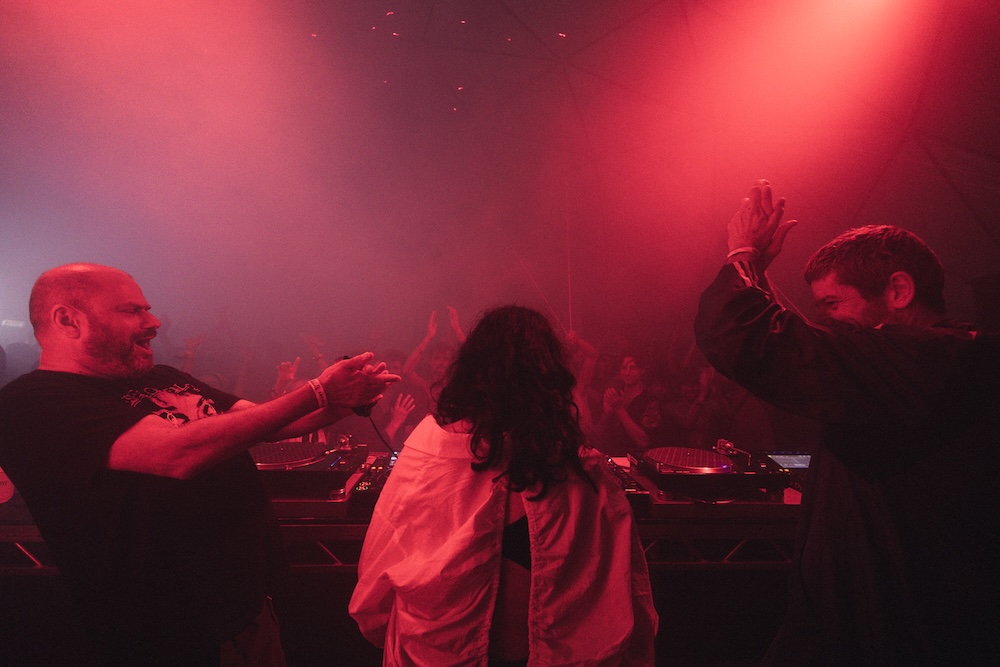
Tia says that coming from the rave side of the festival, rather than the ambient one, changes her approach. “When playing a rave set you need to read the room & adapt quite quickly; I always think about what kind of sounds have been missing from the festival & try to deliver that,” she says. “An ambient tent is the opposite – you can take people on a different kind of journey to a rave set. I see it as a place to relax, unwind and think.” She’s mentioned before that she likes the effect of clearing a dancefloor – filtering the crowd if you like – but doesn’t think that skill applies here: “It’s a different skill completely. Clearing a floor works because the people who are left choose to stay – there’s a kind of decisiveness to it. An ambient room’s not really about anyone opting in or out in the same way; it’s more about whether you can hold everyone’s attention without them asking for it. I’d say it’s more difficult than a dancefloor-oriented set.”
When asked what the ambient tent is for at a rave that focuses on soundsystems, Luvandula says the answer isn’t simple. “o•rbyss an be a counterpoint to the rave, and it can offer a place to come down, regulate or reconnect, but we want it to feel like a destination in its own right rather than a service area for the dancefloor.” They believe the two spaces work together – “after hours of rhythm, a drone can feel enormous.”
Syphen is more direct: “Definitely a destination. If you’d like to experience a sense of sonic duality to the rest of the festival, checking out the ambient tent should be on your list for sure.” While o•rbyss focuses on absorbing and stretching the energy from the dancefloor, Syphen’s approach is almost the opposite – less about reacting, more about drawing from within: “You’re more pulling from your own heart and pouring that into the room vs sensing a vibe of the room and playing to that.”
You can see this difference throughout the day. Syphen expects “the earlier evening hours of the tent to have a more experimental tinge to what ambient can be whilst the later hours will flow into a mellowing of expression” – sets designed for people to come and go, with each entry offering “a different emotion.” Luvundula describes the same openness in more communal terms: “the room is breathing and changing, and you are challenged to flow with that movement.” Tia also plans to read the room: “I think that in a way, I’d approach it in the same way I would any festival set & will think about what sounds I haven’t heard yet and the time of night. I guess people’s perception of the range of sounds that should be played in an ambient set varies a lot more, so I see a lot more flexibility. I personally wouldn’t attach ambient to a specific sound & see it more as a feeling.”
Syphen says, “Ambient as a practice looks like shadow work. It looks like pulling everything out from under the surface and staring dead straight at it to make peace with it.” Luvundula describes a “collective decompression without requiring withdrawal from community” – the idea that “you can rest without leaving the party and you can be quiet without being alone.”
No one sticks to strict genre boundaries, rejecting the idea that having a beat means a track isn’t ambient. Syphen tests tracks by asking, “whether or not I want to listen to this song horizontally or vertically.” Luvundula points to dub, downtempo, and softer techno as proof that rhythm and drift can work together. Their influences are similar in spirit, even if not in name: Luvundula’s mentions queer-coded paths through artists like SOPHIE and Björk, while Syphen looks to Portishead’s Dummy, Boards of Canada’s Gyroscope, and Max Richter’s Sleep – an album made with a neuroscientist around the frequencies of the womb.
But none of this happens in an empty space. The room, or vessel, is carefully designed and cared for. This year, two people are shaping the tent in very different ways – one fills the walls with a lifetime of images, while the other turns phone habits into a shared ritual.
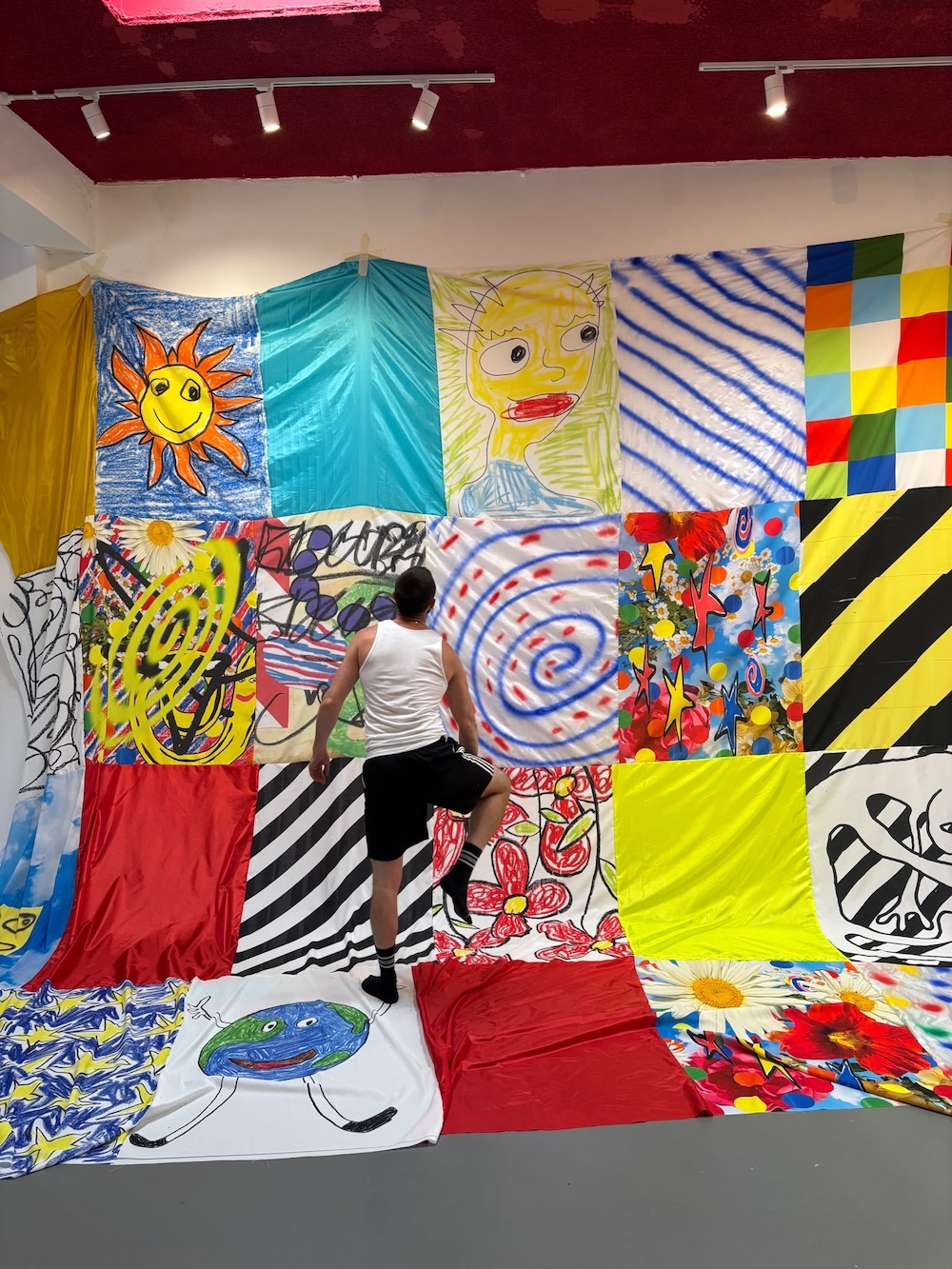
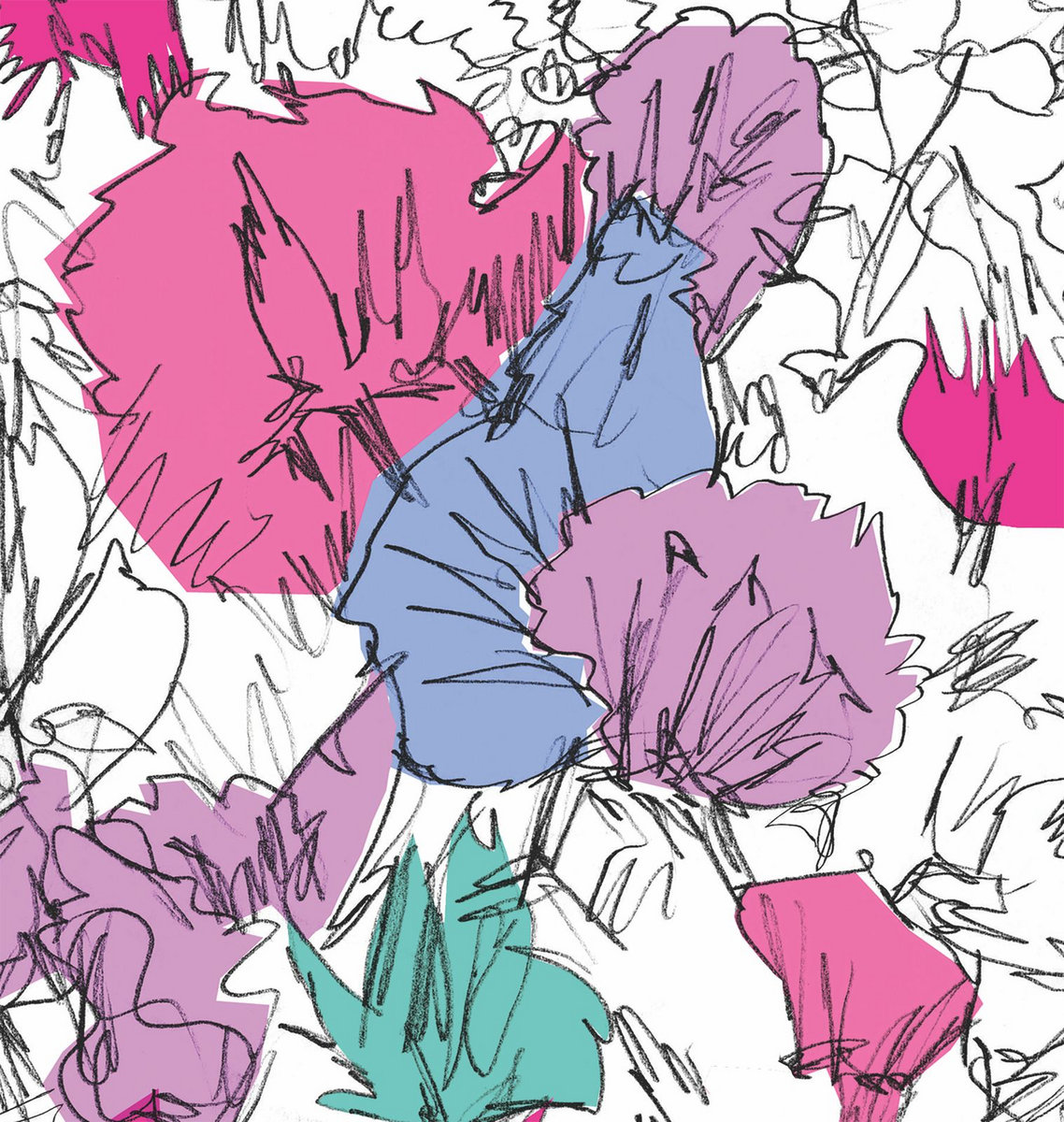
Ed Curtis is in charge of the look of the space, and admits it’s an unusual style for an ambient tent: “It’s loud, busy, colourful and full of things fighting for your attention.” His installation includes four large patchwork flags made from 24 fabric panels and nearly 100 individual artworks – drawings, collages, old graphics, new pieces, a childhood sketch, and photos of flowers from his parents’ garden – all stitched together like a quilt of fragments that “were never meant to belong together.” Instead of hanging them flat, he suspends them overhead: “I kept thinking about the dens I used to make as a kid with blankets thrown over chairs, a place that felt separate from the outside world, somewhere safe, and full of possibility.”
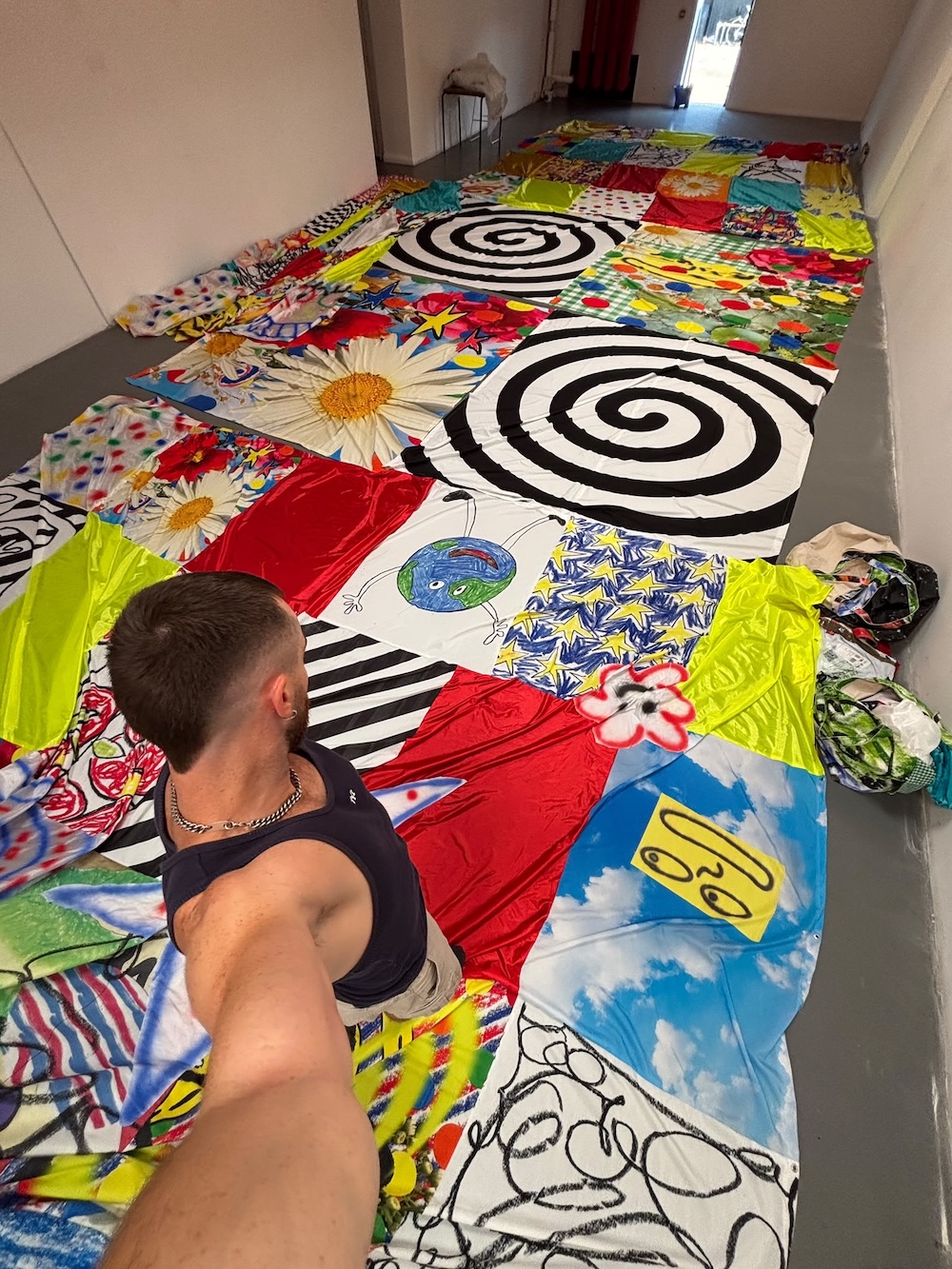
Even though the imagery is busy, both the design and the room share the same goal: Curtis wants people to walk in and instantly “feel like they’d entered somewhere completely different,” which aligns with what Luvundula and Syphen are trying to create with sound.
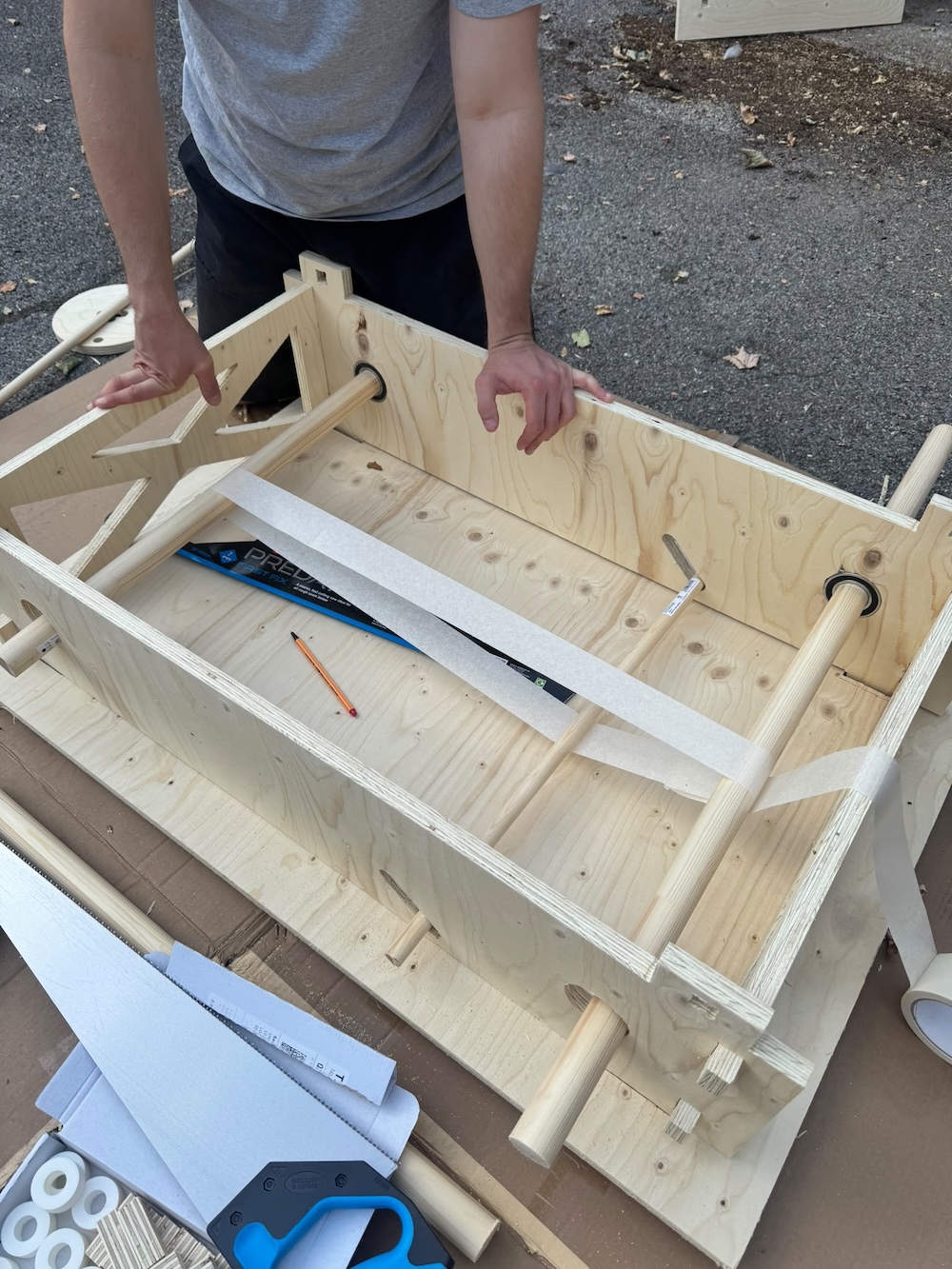
Along with the sound and the flags, Zeobat is adding another focal point: The Hope Scrolls, a hand-cranked meme machine that looks like a giant wooden phone. “The joke is kinda in the mismatch of context,” says Zeobat’s Maria. “Doomscrolling was never really about the content, but the frictionless UI dopamine loop that keeps your thumb moving. So the scrolls take that exact gesture and make it deliberately inconvenient.” Her collaborator Rob is more direct:
"There's a cloying trend in music festival communications towards a primacy of the offline… it spends more time telling people how to live and less time letting them salvage the present."
The Hope Scrolls don’t ask anyone to put their phone away – Maria calls it “a love letter to one of the best things smartphones gave us,” just rebuilt for a crowd instead of a thumb. If ambient can hold attention against the main stage, the bar, and everything else, all three answers meet in the middle. Luvundula, “It doesn’t always grab you or insist that you look towards a stage. It creates conditions in which attention can wander, deepen and return.”
Syphen adds, “If you see ambient as a main attraction vs background music, I think it’s quite easy just to lay back and become part of the full experience, phone in pocket.” Tia puts the weight elsewhere, on the room itself: “I think the environment does a lot of the heavy lifting, especially at a rave – nobody’s walking into a tent expecting silence and stillness unless the space itself is telling them that’s on offer. Once someone’s actually sat down though, I think ambient does the rest. It’s getting them to sit down in the first place that’s the hard part.”
In the end, that might be the real reason for the room: it’s not just a rest stop or a place to come down, but a second space within the festival. As Luvundula says, it’s a place where something can stay with you “without demanding to be named.” It’s the same courage Kev and Morris ventured into thirty years ago, now passed to a new generation – the confidence to leave space and trust that people will fill it themselves.
"It's getting them to sit down in the first place that's the hard part."
Field Maneuvers 2026 happens on 20-24th August.
Seeds will be helming the Saturday night with the following seedlings:
The chill out space runs all weekend with all the other beautiful plant like friends above.
Lit a handful of tix lef on fieldmaneuvers.com



Must Reads
David Holmes – Humanity As An Act Of Resistance in three chapters
As a nation, the Irish have always had a profound relationship with the people of Palestine
Rotterdam – A City which Bounces Back
The Dutch city is in a state of constant revival
Going Remote.
Home swapping as a lifestyle choice
Trending track
Vels d’Èter
Glass Isle
Shop NowDreaming
Timothy Clerkin
Shop Now