We Oscillate, We Modulate:
The Interconnected Worlds of Andreas Tschopp

Richard Greenan of Kit Records provides an allusive, impressionistic guide to a remarkable album of surreal jazz by the Swiss musician Andreas Tschopp. An essential read and one of the best features we’ve run in our track by track series.
Editor’s Note: We don’t usually go in for award ceremonies and the like. But following the consideration of Andreas Tschopp’s What If We Align Our Breath for Best Alternative Jazz Album and Best Alternative Music Performance at the Grammies (!), it seemed as fine an excuse as any to give some belated space to Richard Greenan of Kit Records for a fascinating track by track guide to the album. Join him below for a deep dive into a wildcard contender for album of the year.
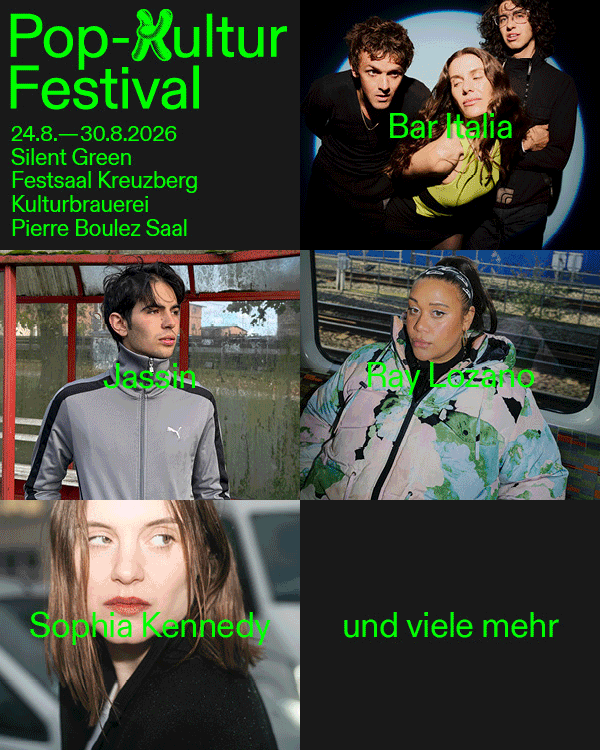
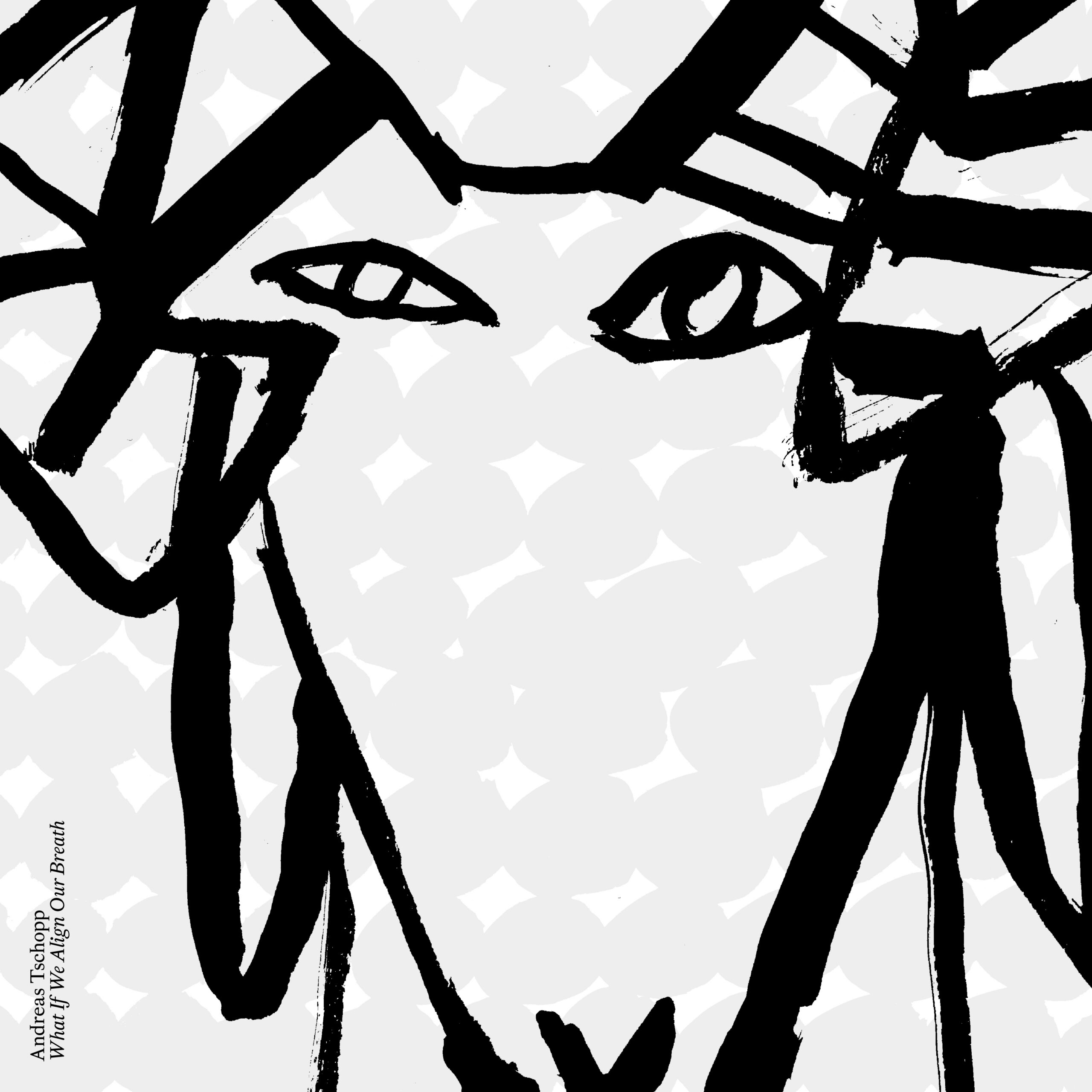
In mid-2025, Swiss experimental trombonist Andreas Tschopp’s album What If We Align Our Breath floated gently into my inbox. The album marries contemporary jazz with South African kudu (antelope) horns and homemade ocarinas, locating a soundworld quite unlike anything I’d heard before.
And yet it felt anciently familiar – like rounded castle steps worn down by untold numbers of feet, or the cold, clammy contact of dough kneaded beneath your knuckles. In the months following, I had the pleasure of working with Andreas and his team on a physical incarnation of the record. But I’m still scratching my head over his strange ability to rubber band between time and place. Read on as I try to join the dots…
1. ‘The Lake Will Give You Everything You Need’
As with the first germs of life that bubbled in the dark, the album begins in wetness: kudu horns leaking a primordial, soupy hum, like steam exhaling from an arcadian spring.
I was sitting by the fireplace and had put a big kettle on the fire to make hot water for washing up. The water began to boil and the kettle to sing. It sounded like many voices, or stringed instruments, or even like a whole orchestra … It was as though there were one orchestra inside the tower and another one outside. Now one dominated, now the other, as though they were responding to each other, I sat and listened, fascinated. For far more than an hour I listened to the concert, to this natural melody. It was soft music, containing, as well, all the discords of nature. And that was right, for nature is not only harmonious; she is also dreadfully contradictory and chaotic. The music was that way too: an outpouring of sounds, having the quality of water and of wind so strange that it is simply impossible to describe it.
Carl Jung, Memories, Dreams, Reflections.
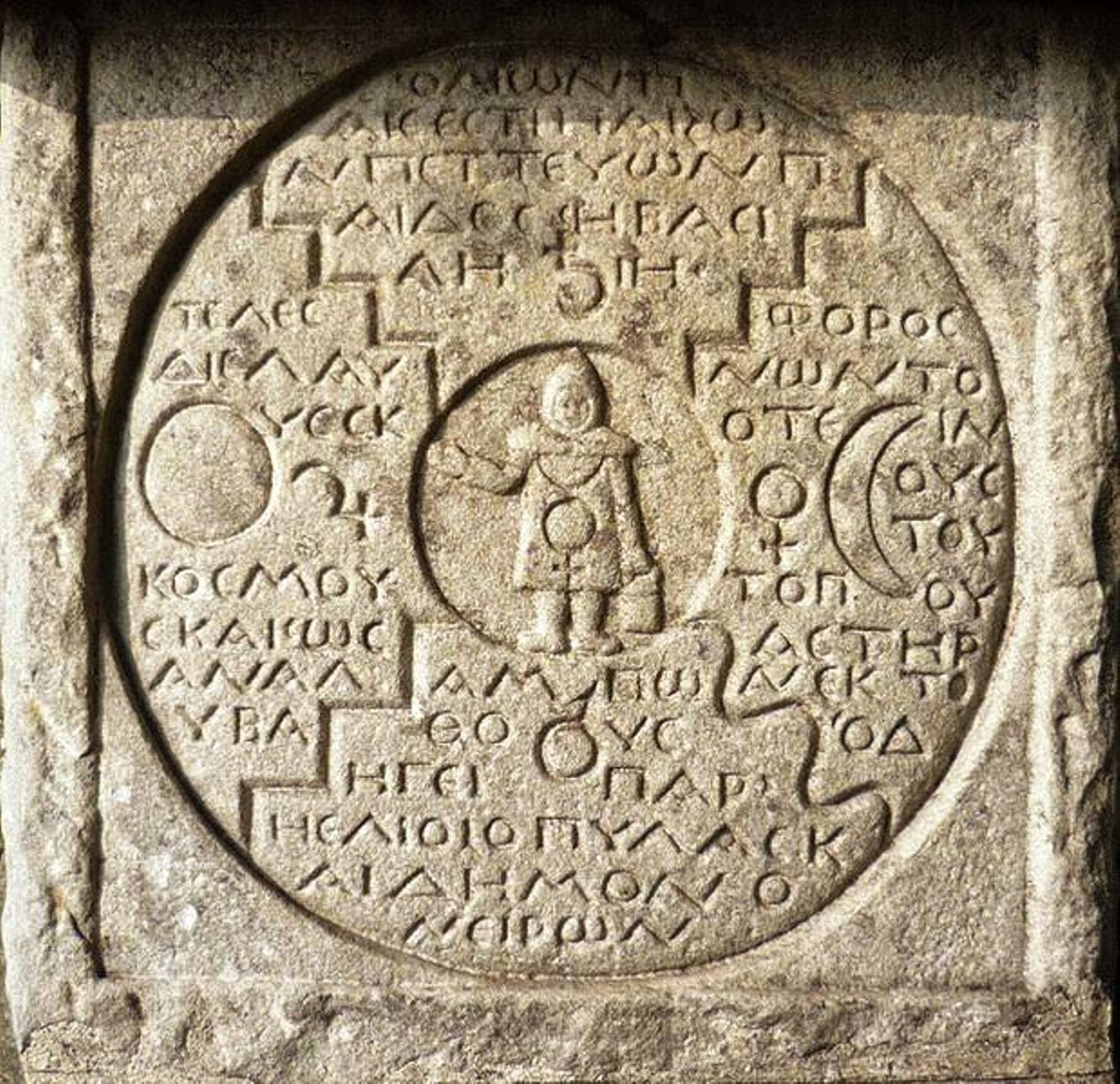
Carl Jung’s Bollingen Stone, carved with symbols and quotations that encapsulate his core ideas around alchemy and the collective unconscious.
2. ‘Sounding the Voice’ (feat. Koleka Putuma)
Staccato breath brings wrinkles to the lake’s surface, like wind coughing and tutting over a field of grass. Koleka Putuma’s voice speaks to limbs and ears stretching and feeling for the first time, savouring the exquisite mundanity of life.
Remember what it was like to be sung to sleep. If you are fortunate, the memory will be more recent than childhood. The repeated lines of words and music are like paths. The paths are circular and the rings they make are linked together like those of a chain. You walk along these paths and are led by them in circles which lead from one to the other, further and further away. The field upon which you walk and upon which the chain is laid is the song.
John Berger, Field.

Koleka Putuma by Iskeem Semincibi.
3. ‘The Poetry of the In-Between’ (feat. Shane Cooper)
Thick, black, sludgy. Shane Cooper’s double bass makes an appearance on track three, hanging like a shapeless, pregnant cloud at the heart of a huge oil painting.
But what most puzzled and confounded you was a long, limber, portentous, black mass of something hovering in the centre of the picture over three blue, dim, perpendicular lines floating in a nameless yeast. A boggy, soggy, squitchy picture truly, enough to drive a nervous man distracted. Yet was there a sort of indefinite, half-attained, unimaginable sublimity about it that fairly froze you to it, till you involuntarily took an oath with yourself to find out what that marvellous painting meant.
Herman Melville, Moby-Dick.
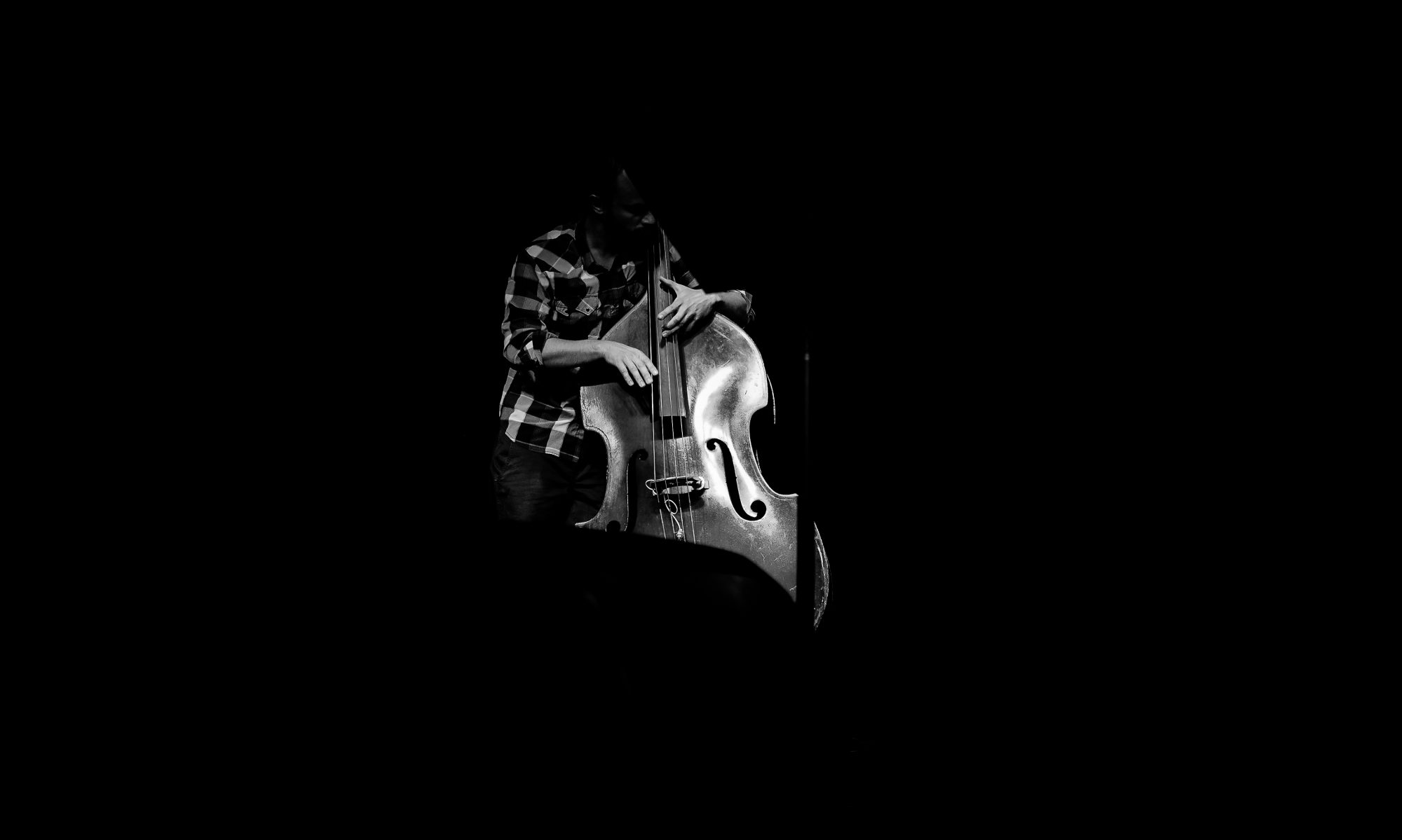
Shane Cooper by Barry Christianson.
4. ‘Iqhude: A Tale of Horns and Bones’
We chose this moving track as our second single from the album. Chirruping pipes are offset by melancholy horn calls. Then come the trombones, with such juicy chords; everything moves as one like a murmuration of starlings.
A blackness moved on the valley, below the dark pines that grew on the opposite mountain. Andrews strained his eyes; at the edges of the patch, there was a slight ripple; and then the patch itself throbbed like a great body of water moved by obscure currents. The patch, though it appeared small at this distance, was, Andrews guessed, more than a mile in length and nearly a half mile in width.
John Williams, Butcher’s Crossing.

Single design by Bureau Strada.
5. ‘I Am Because You Are’
Undulating messages jostle ever higher in this soaring piece of unspoken communication, each note drawing a sense of hope and meaning from its position within the group.
By holding my mirror out of the window I see
Clear to the end of the passage.
There’s a person down there.
A prisoner polishing a doorhandle.
In the mirror I see him see
My face in the mirror,
I see the fingertips of his free hand
Bunch together, as if to make
An object the size of a badge
Which travels up to his forehead
The place of an imaginary cap.
(This means: A warder.)
Two fingers are extended in a vee
And wiggle like two antennae.
(He’s being watched.)
A finger of his free hand makes a watch-hand’s arc
On the wrist of his polishing arm without
Disrupting the slow-slow rhythm of his work.
(Later. Maybe, later we can speak.)
Hey! Wat maak jy daar?
–a voice from around the corner.
No. Just polishing baas.
He turns his back to me, now watch
His free hand, the talkative one,
Slips quietly behind
–Strength brother, it says,
In my mirror,
A black fist.
Jeremy Cronin, Motho Ke Motho Ka Batho Babang (A Person Is a Person Because of Other People).
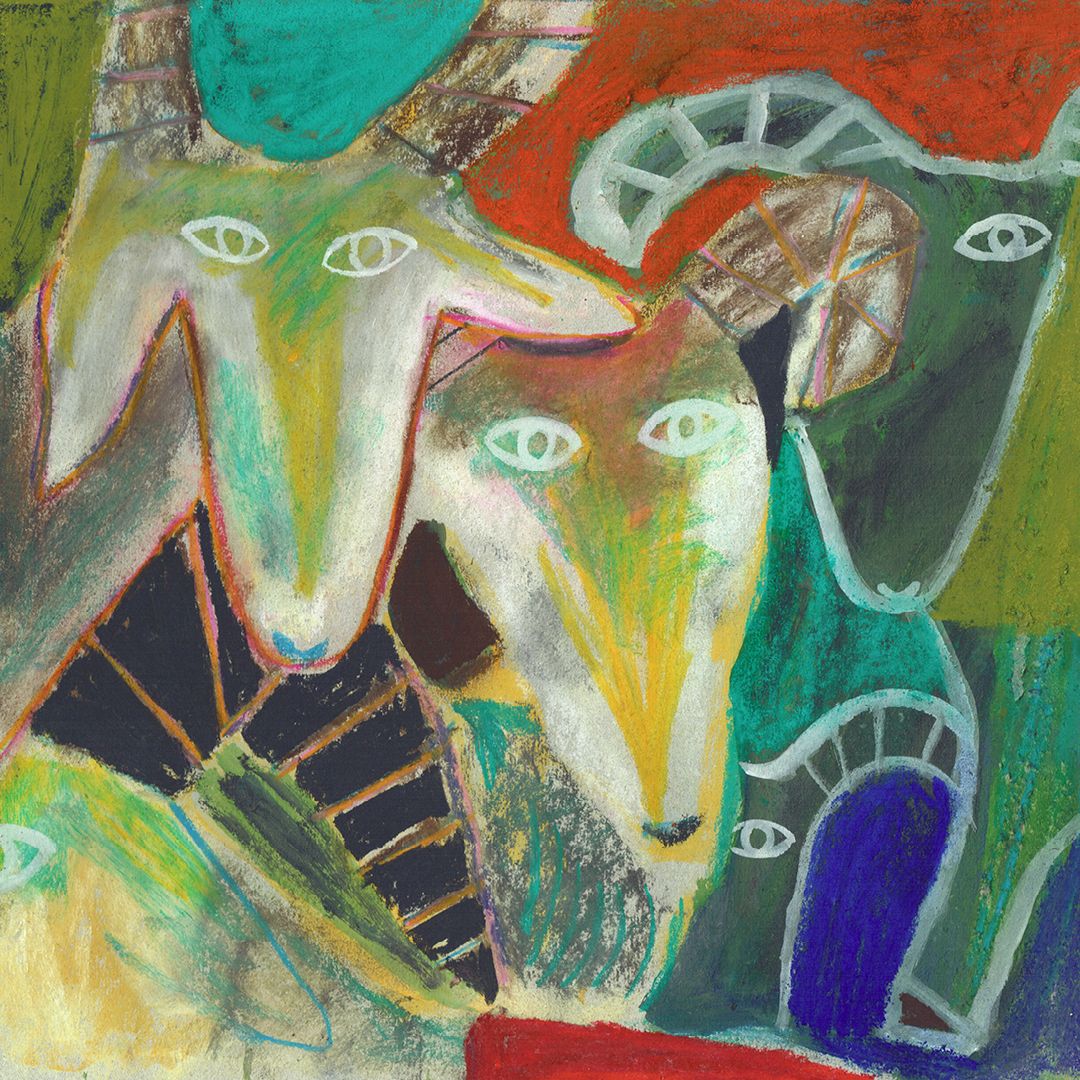
Album art by Molly Fairhurst.
6. ‘Portals’
Time seems to dilate as I listen to ‘Portals’; long horn breaths link scattered memories and locations, like muffled oaths spoken through tin cans and lengths of string.
This is a gardener this is a man of faith this is feverish ground
Two small burning hands
held close to her breast
head on her knees burrowed beneath the earth
my young bulb asleep beneath the roots of bluebells
This is fevered ground
this is how the earth swells
this is the soil’s hot breath meeting the chill
See the small gelatin skull feel the soft ridges of the spine
hear the bloom of each pore
This is the form I once knew
this was the form
Where were you when I turned her eyeless face east said the man of faith
Where were you when I rooted lilies for eyes said the gardener
This is the bruised tongue this is the boneless answer this is the tightly coiled
whisper.
Sindiswa Busuku-Mathese, Mother’s Lyric (i).
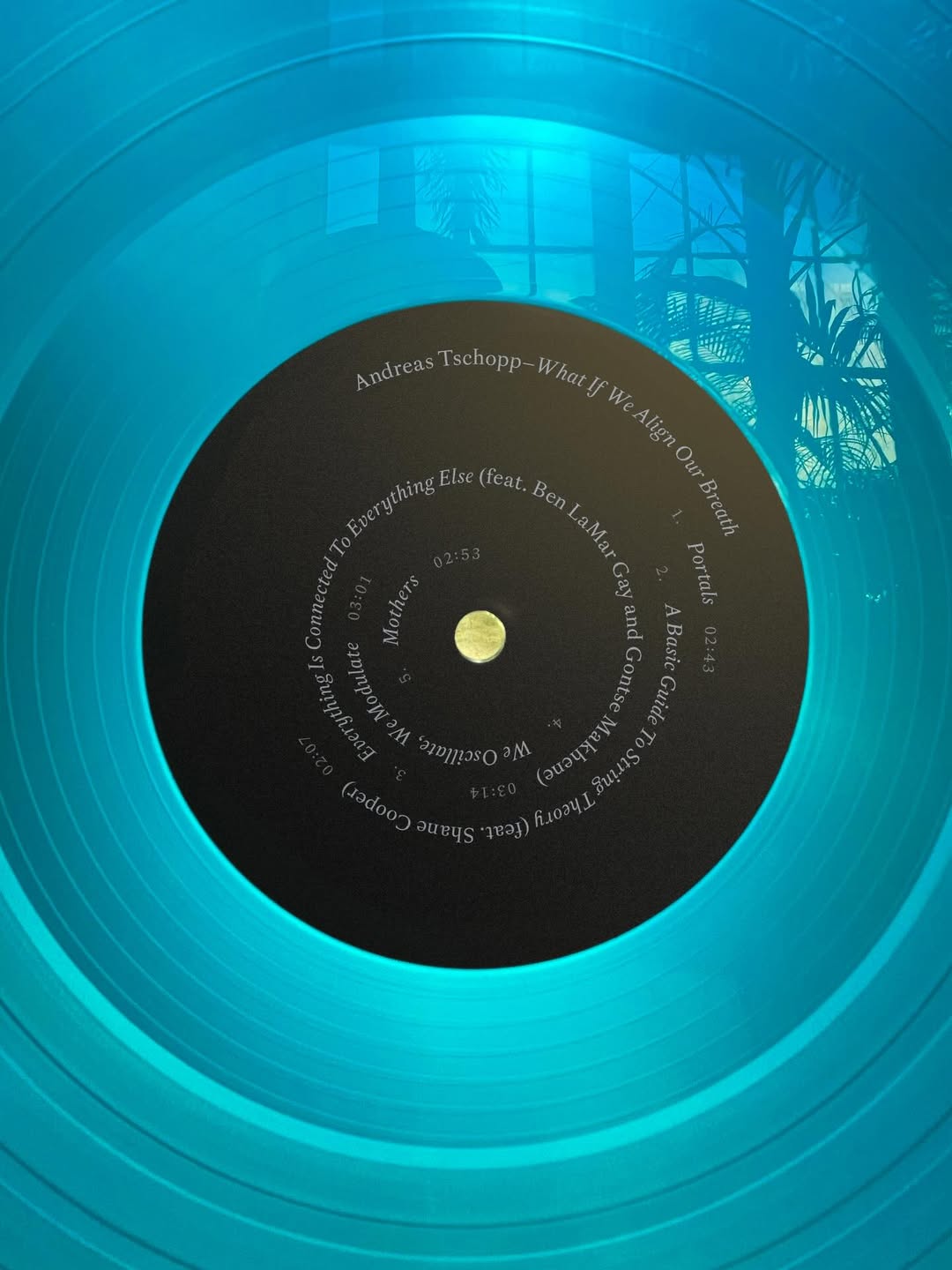
Label design by Bureau Strada.
7. ‘A Basic Guide to String Theory’ (feat. Shane Cooper)
Our lead single. The melody in this track feels lighter than air – breath rising and spinning like a sycamore seed caught in a thermal.
He stopped and looked about him. There was nothing to be seen everywhere, absolutely nothing except a few very small snowflakes descending from the white above to the white below, and the silence all around took its power from what it did not say. And as his gaze faltered in the white void blinding him, he felt his heart stirring, pounding from the climb – the cardiac muscle, whose animal shape and pulses he had observed, wickedly spied upon perhaps, amid the crackling sparks of the X-ray chamber. And that stirring sent a wave of emotion over him: a simple and reverent sympathy with his heart, his human heart, beating all alone up here in the icy void, with its questions and riddles.
Thomas Mann, The Magic Mountain.
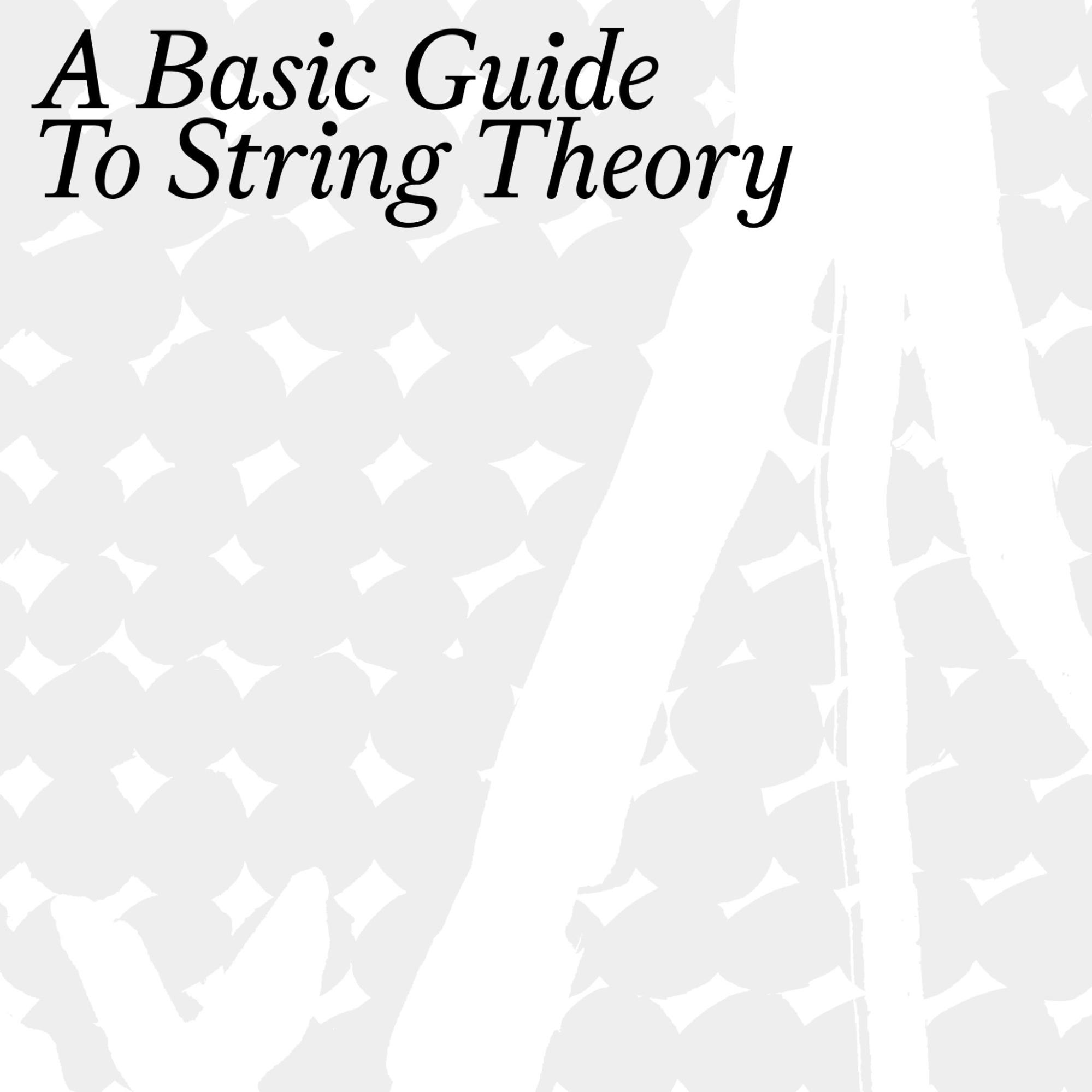
Single design by Bureau Strada.
8. ‘Everything is Connected to Everything Else’ (feat. Ben LaMar Gay & Gontse Makhene)
Here we have perhaps the album’s most complex arrangement: interlocking walkways of horns, bubbling udu drums (courtesy of Gontse Makhene) and Ben LaMar Gay’s cornet, which floats on top like a mournful soprano.
A map of Esmeralda should include, marked in different colored inks, all these routes, solid and liquid, evident and hidden. It is more difficult to fix on the map the routes of the swallows, who cut the air over the roofs, dropping long invisible parabolas with their still wings, darting to gulp a mosquito, spiraling upward, grazing a pinnacle, dominating from every point of their airy paths all the points of the city.
Italo Calvino, Invisible Cities.
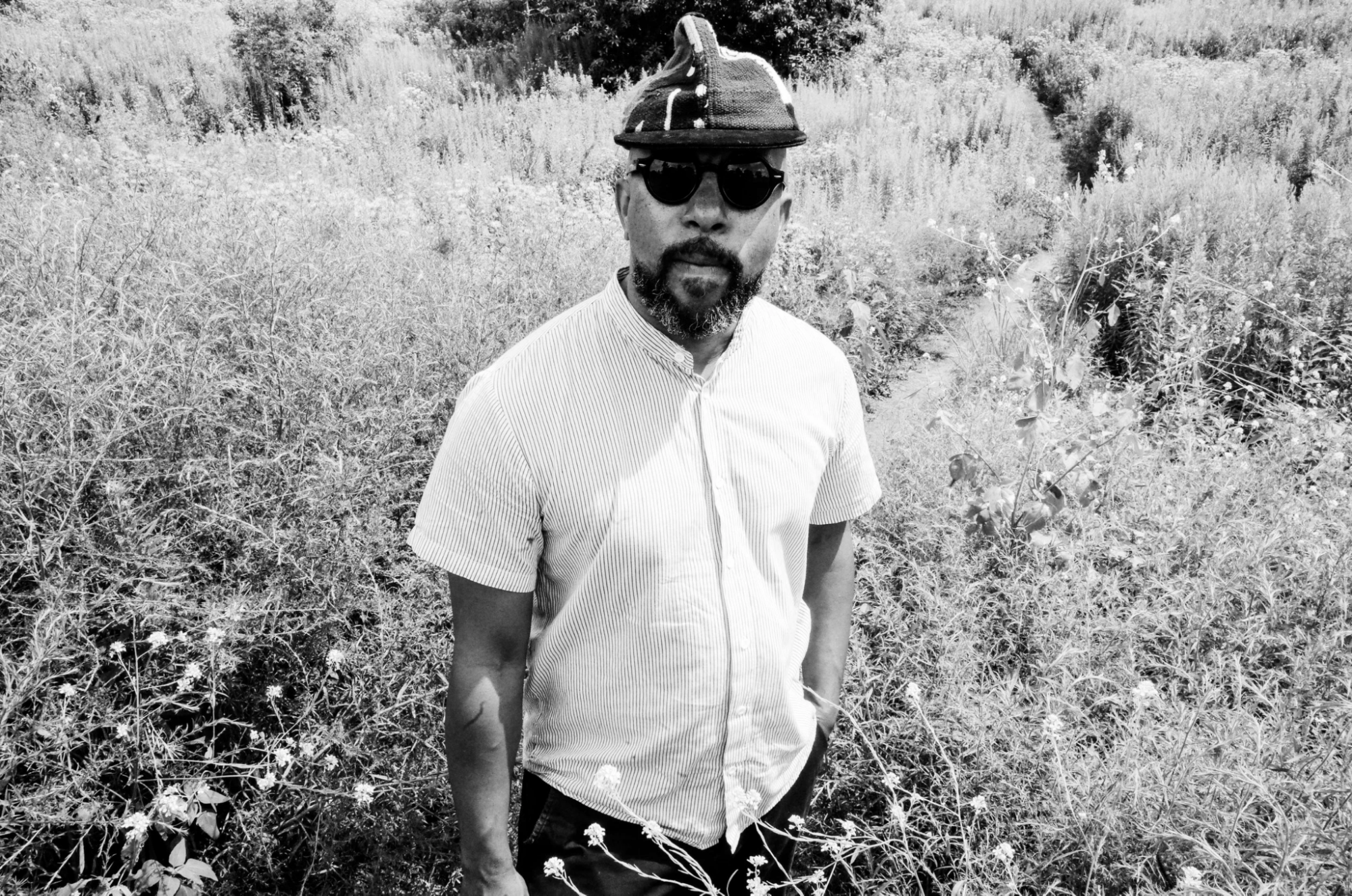
Ben LaMar Gay by Alejandro Ayala.
9. ‘We Oscillate, We Modulate’
Languidly unfurling one moment, leaping unexpectedly the next – this piece hops from stately to erratic, exhalations fractured and rearranged across the page.
r-p-o-p-h-e-s-s-a-g-r
who
a)s w(e loo)k
upnowgath
PPEGORHRASS
eringint(o-
aThe):l
eA
!p:
S a
(r
rIvInG .gRrEaPsPhOs)
to
rea(be)rran(com)gi(e)ngly
,grasshopper;
E.E. Cummings, r-p-o-p-h-e-s-s-a-g-r.
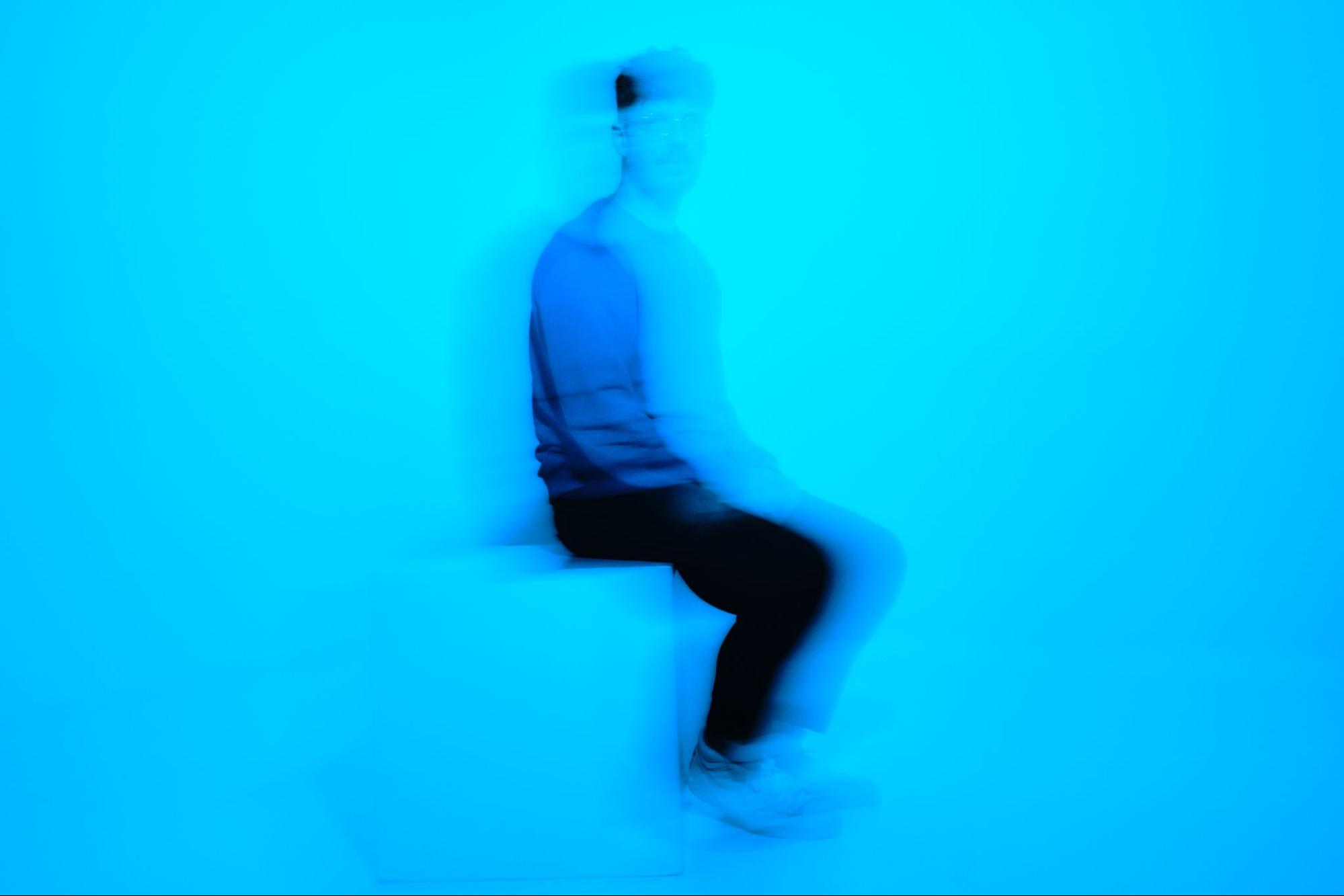
Andreas Tschopp by Jérémie Luke Dubois.
10. ‘Mothers’
The record’s closing moments resemble its beginning, chimes and molten horn calls smeared in the half-light. But this time the plumes of breath are elegiac; memories of a little hand at your hem, tugging you to the next room.
The warmth is leaving
your shirt, hanging
over the back of the chair. Slowly
it is giving back everything
it had of yours.
Gabeba Baderoon, The Art of Leaving.
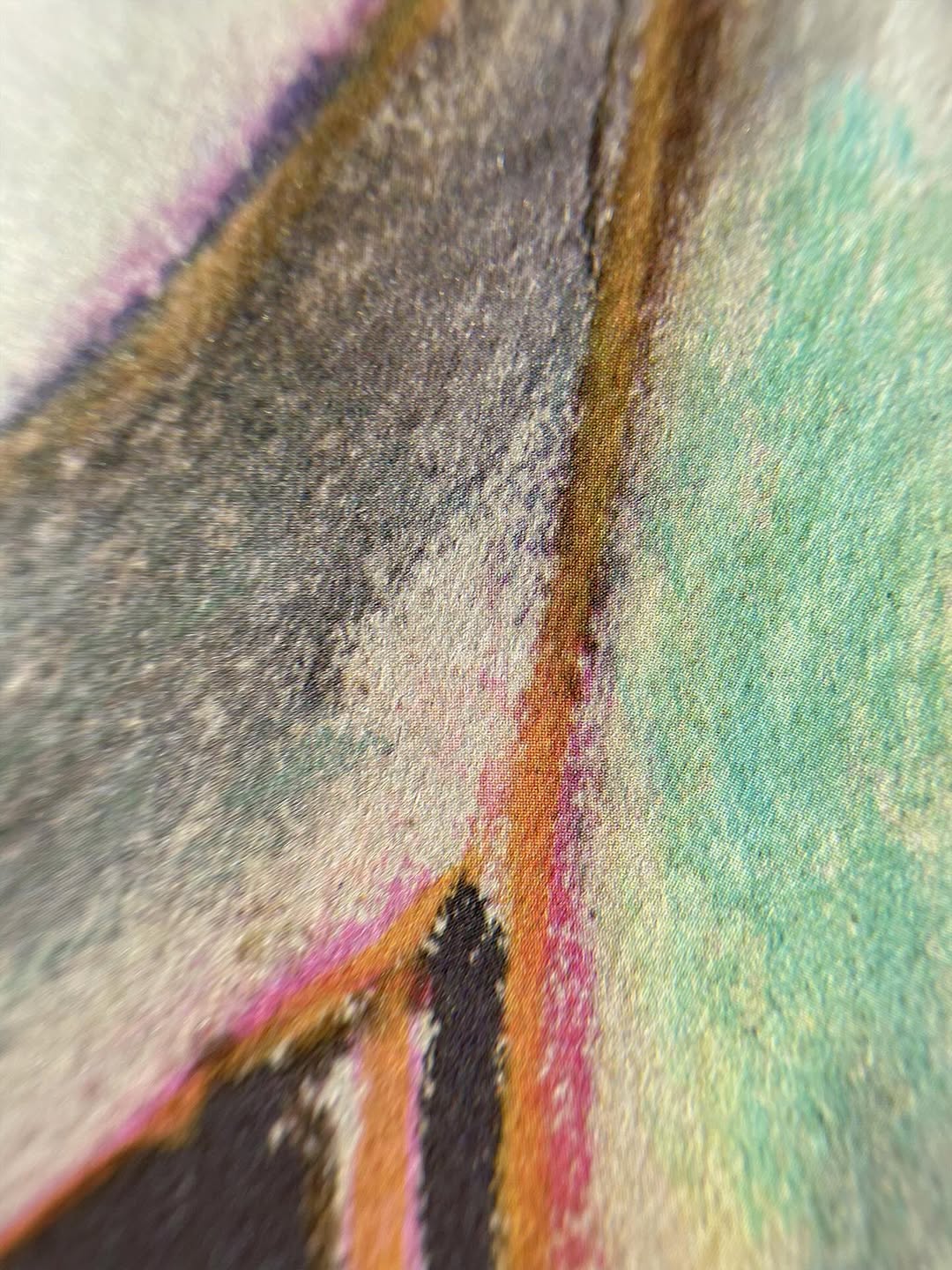
Sleeve detail by Valentin Kaiser.









Must Reads
David Holmes – Humanity As An Act Of Resistance in three chapters
As a nation, the Irish have always had a profound relationship with the people of Palestine
Rotterdam – A City which Bounces Back
The Dutch city is in a state of constant revival
Going Remote.
Home swapping as a lifestyle choice
Trending track
Vels d’Èter
Glass Isle
Shop NowDreaming
Timothy Clerkin
Shop Now