Seeds Mix #11: Patricia Wolf’s Wander in the Garden
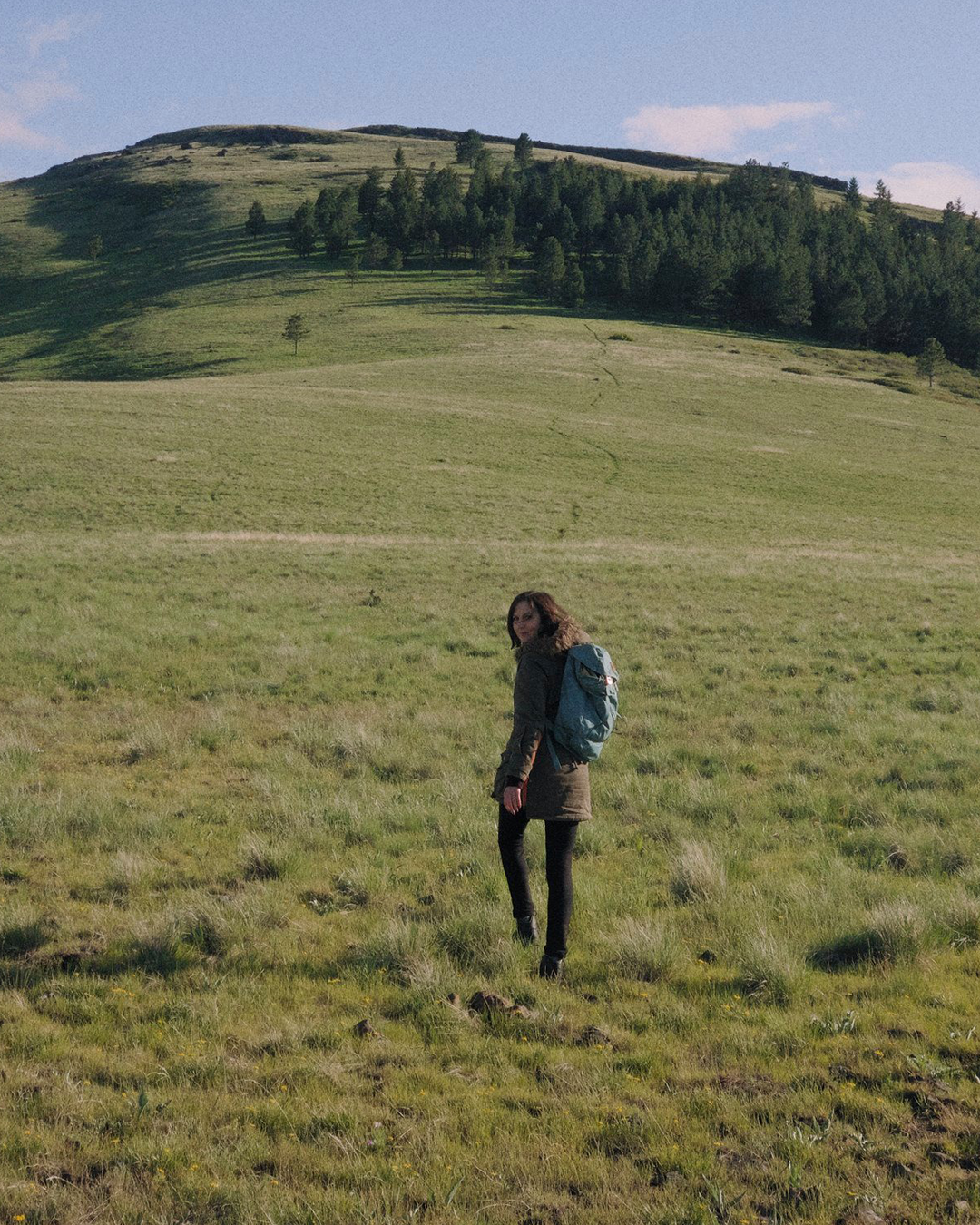
Patricia Wolf makes music from the inside of an ecosystem.
Her recent release on Music To Watch Seeds Grow By; Yarrow (the 9th edition in the series) emerged from weeks spent at the Rocky Mountain Biological Laboratory in Gothic, Colorado, working alongside ecologists studying plants, pollinators, and the slow pressures of a changing climate.

The album maps a Yarrow’s life from root to seed: the conditions needed to grow, the quiet underground, the moment a flower opens to something that might carry it further. Field recordings from those Colorado summers are woven through the compositions, leaving room, as Wolf puts it, for the natural sounds to come through – her way of sharing an emotional inner life when thinking about these environments.
For this mix, Wolf turned her attention to morning. Imagining this year’s Watching Trees festival crowd coming down from a long night of dancing – we talked her through in the afterglow of this year’s edition. Wolf built A Wander in the Garden for that specific threshold hour – somewhere between nine and ten, when birdsong starts to reassert itself and the body wants something slow, expansive, and unhurried.
The anchor track arrived first: the Cosmic Tones Research Trio’s Photosynthesis, from which everything else grew. What follows is a walk through an imaginary garden with several climates – shade beneath a linden tree, open meadow thick with yarrow and field poppy, a pine grove smelling of warm sap, an orchard of cherries and mulberries just beginning to ripen.
If she had to name the plant that holds this hour best, Wolf chooses lavender: something with a direct line to the nervous system, a quiet insistence on calm.
A Wander in the Garden feels like it was made for a specific time of day – that early morning threshold before the world fully wakes. What does that hour feel like to you, and what does the garden sound like then?
When I made this mix I was thinking about your Watching Trees festival and while I was unable to be there, I had fun with this mix pretending that I was in charge of the music in the morning when people would be waking up after a long night of dancing. With that in mind, the time might be somewhere between 9 and 10am, many hours after sunrise, but still early enough to feel like morning. The garden wouldn’t be silent then, but natural sounds would be more prominent. People in the garden would notice birdsong, the sound of the wind in the trees, the sound of animal footsteps and calls.
You imagined an audience just coming down from a night of dancing. How does that change what you reach for musically? Is there a particular plant or part of the garden that holds that same quality of gentle landing?
After a night of physical exertion and heavy mental stimulation it is nice to listen to something more calm, slow, and expansive. If I had to choose a plant in my imaginary garden to pair with this relaxing experience, I’d choose lavender. It has a powerful calming effect on the nervous system.
Was there a specific moment on the walk – a particular turning, or a sound — that the mix grew out of?
I was listening to the Cosmic Tones Research Trio’s new album and when I heard their track “Photosynthesis” I knew that I had to use that one for this mix. From that track the mix grew and grew.
If the garden at that hour had a temperature, a colour, a smell – what would they be?
This garden would be quite large and would have a few different microclimates to allow for many species of plants to grow. Since this is a wander through the garden, I imagined the garden to be a dynamic one .The area beneath the old linden tree would be fragrant with its blossoms. It would also be cool and dark in the shade. Then, in an open meadow, there would be a large variety of native wildflowers with bumblebees, butterflies, and honey bees flying from flower to flower. That area would be a bit warmer since it’s exposed to the direct sun. It would be a multicoloured space with Yarrow, Everlasting-Pea, Wild Chamomile, Cleavers, Columbine, Creeping Thistle, Field Poppy, and many other flowering plants. When the wander takes you to the pine grove, the warm smell of sap can be detected. A bit further on is an orchard with cherries, apricots, apples, plums, figs, mulberries, and pears. The mulberries and cherries are fragrant and ripening. You can smell their fruit and take some to eat.
Birds and plants share the same early morning – birdsong is often the first sign that something is growing, moving, returning. How do you hear birds in relation to the garden? Do they feel like part of it, or visitors to it?
I have a strong belief that all life on this planet is interdependent and entwined. Birds rely on plants in many ways; sometimes for food, sometimes for nesting, sometimes as a place to hide. In turn, many plants rely on birds for seed dispersal. Did you know that a seed that has passed through the digestive system of a bird or animal has a significantly higher chance of germinating? Resident bird species will likely use the garden year-round, but migratory birds will only use the garden as a temporary stop as they travel to their intended destination.
What’s the first plant you notice when you step outside in the morning, and does it ever find its way into what you make?
Imagine that I am at this festival, and the first plants that I notice are the old, strong oaks. I like to think of the entire ecosystems when working on music inspired by nature. In that way, oaks have found their way into my work.
Seeds need darkness before they need light. Do you think music made for early morning carries something of that same in-between quality – not quite night, not yet day?
I think that music and art made on the cusp of something should carry a bit of all that it encompasses. The transition from night to day is a mutable time and should transform gradually.
How do environmental sounds – birdsong, wind through leaves, the first insects – find their way into what you make?
I do field recording and am very attracted to listening to the natural world. I like to release the field recordings without music, but sometimes I get a strong feeling when I am on a particular excursion or while listening back to the recordings and feel inspired to compose music to it. I like to play with the bits of empty space in the recording and leave room for the natural sounds to come through. It’s my way of sharing my thoughts and emotional inner life when I am thinking about these environments.
Tracklist:
The Cosmic Tones Research Trio – Photosynthesis
Andrew Pekler – Waterway Rhythm
Andy Aquarius – Under Der Linden
Slowfoam – Divine Morpho, Shimmering (feat. RAN PARK)
Luke Wyland – Pollinators
Bonnie Prince Billy – Willow, Pine and Oak
Saloli – Butterfly
John Carroll Kirby – Messages in Water
Maxime Denuc – Papillons
Graintable – Rain in the Trees
Phil Geraldi – Chorus in Green
Green-House – Under the Oak
Yu Su – Ripe Fruits
Olof Dreijer – Fern Valley



























Must Reads
David Holmes – Humanity As An Act Of Resistance in three chapters
As a nation, the Irish have always had a profound relationship with the people of Palestine
Rotterdam – A City which Bounces Back
The Dutch city is in a state of constant revival
Going Remote.
Home swapping as a lifestyle choice
Trending track
Vels d’Èter
Glass Isle
Shop NowDreaming
Timothy Clerkin
Shop Now