Diagonale des Yeux on tape, distance and singing off-key together
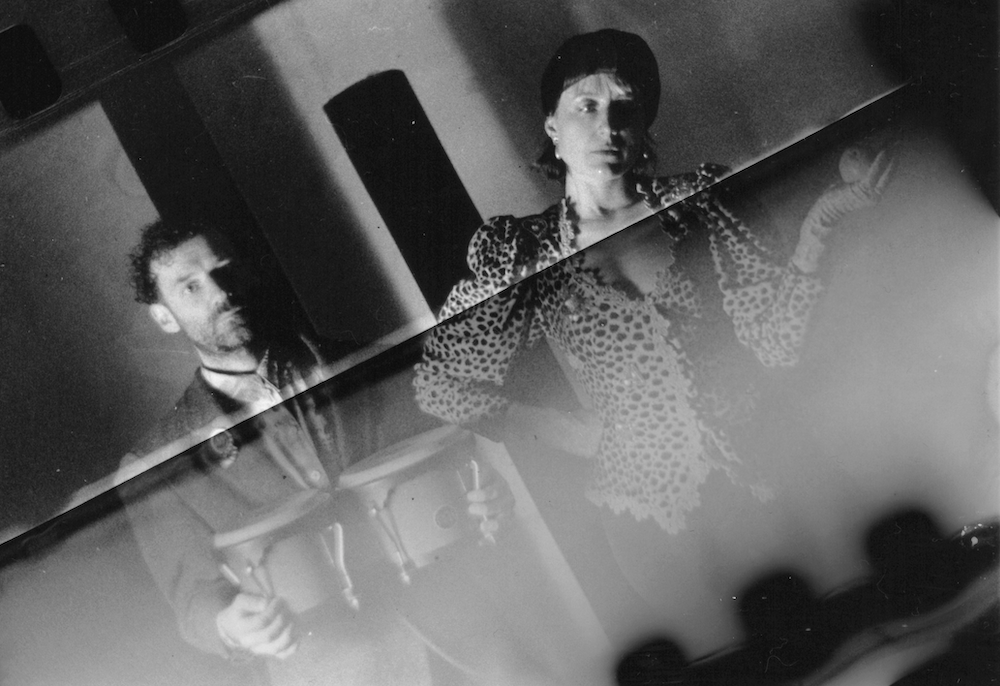
“Machines and people can sound perfect, but only people can sound as bad and funny as humans.”
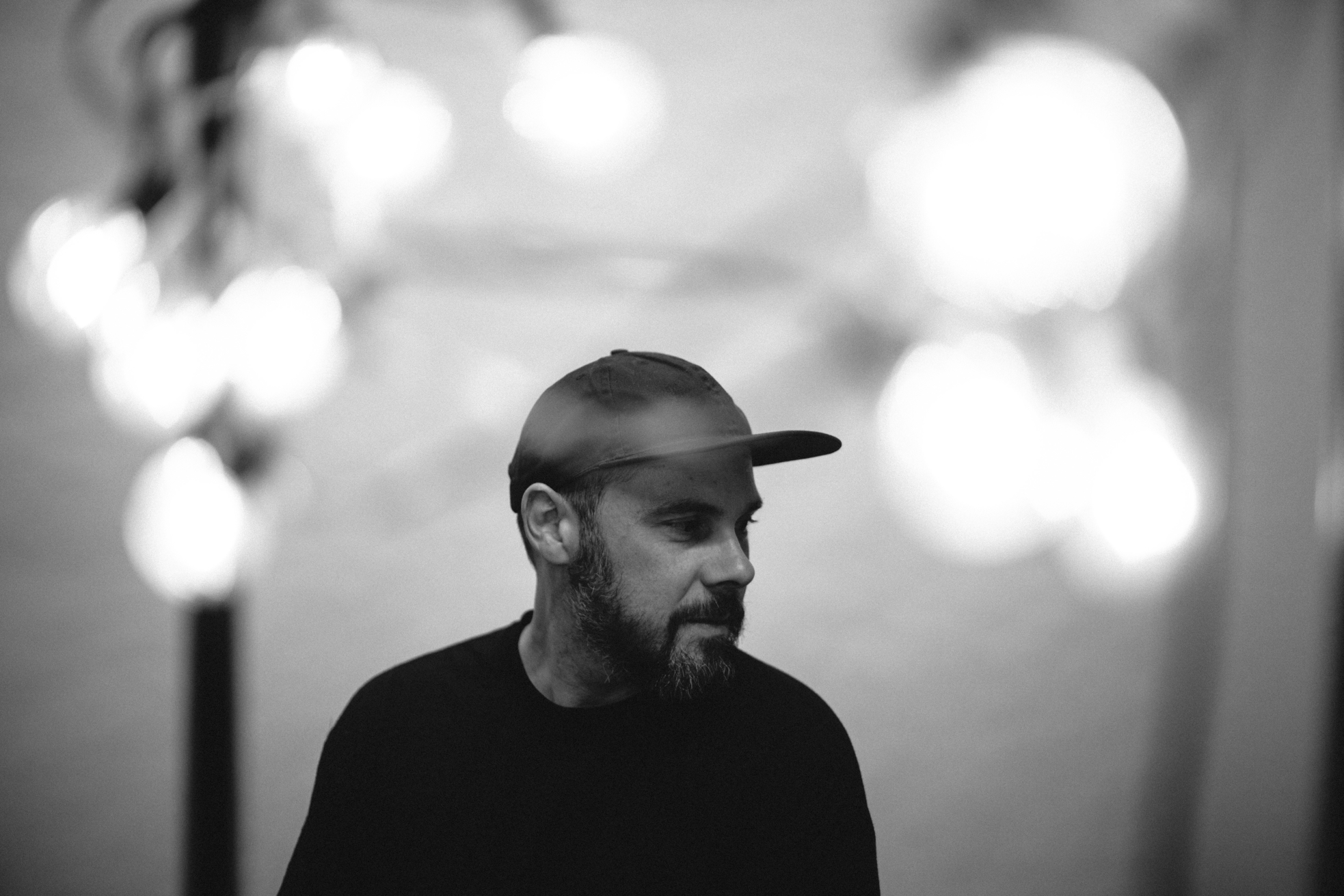
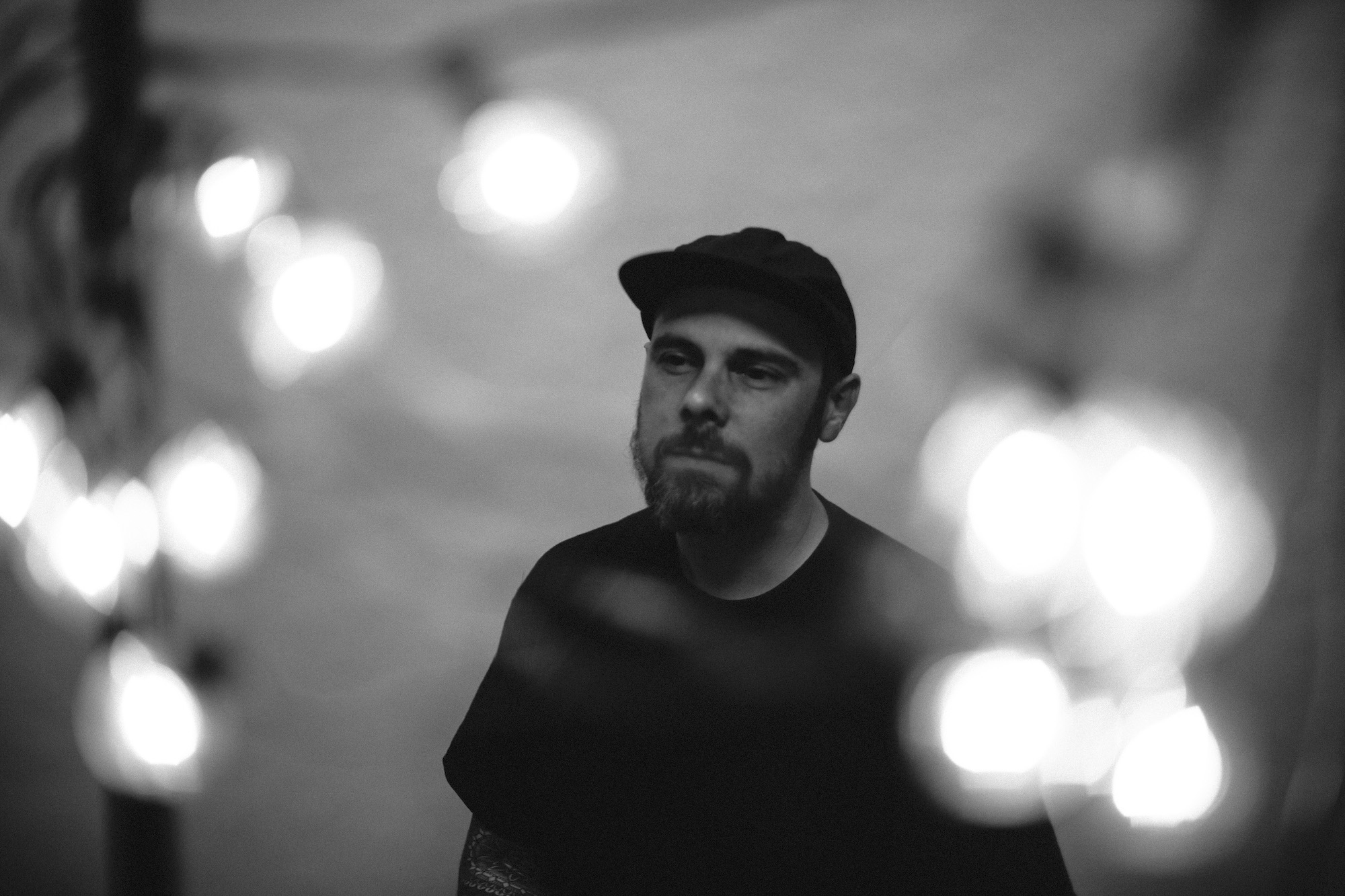
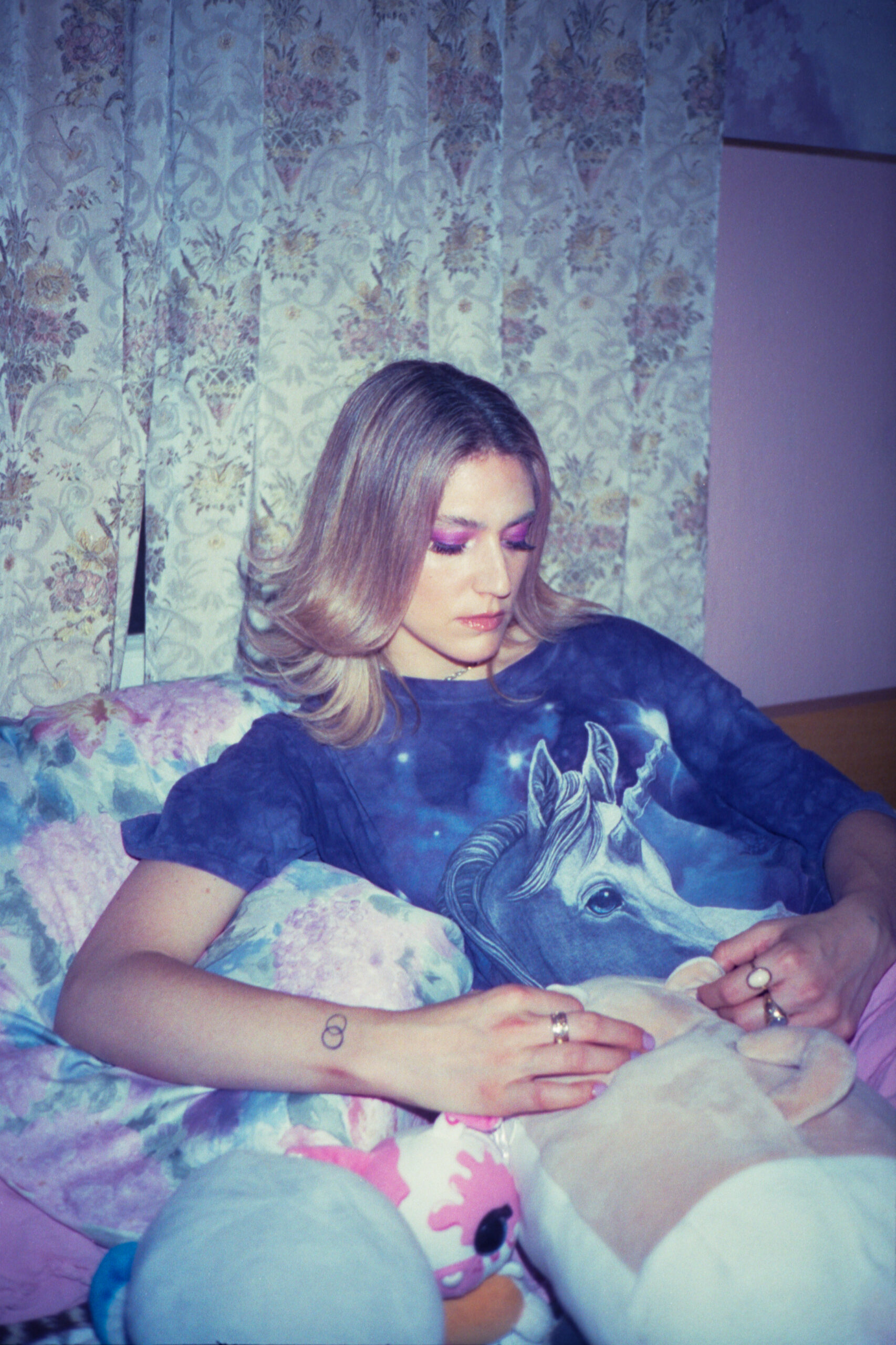
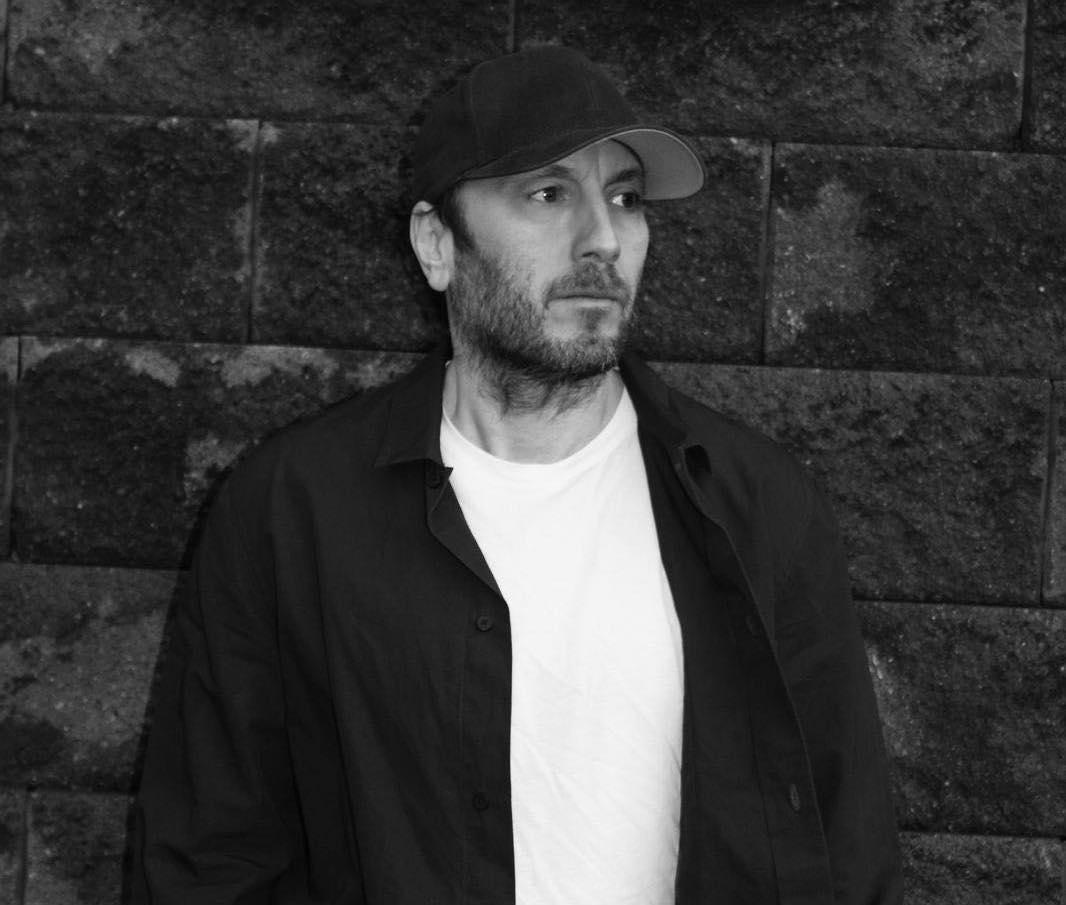
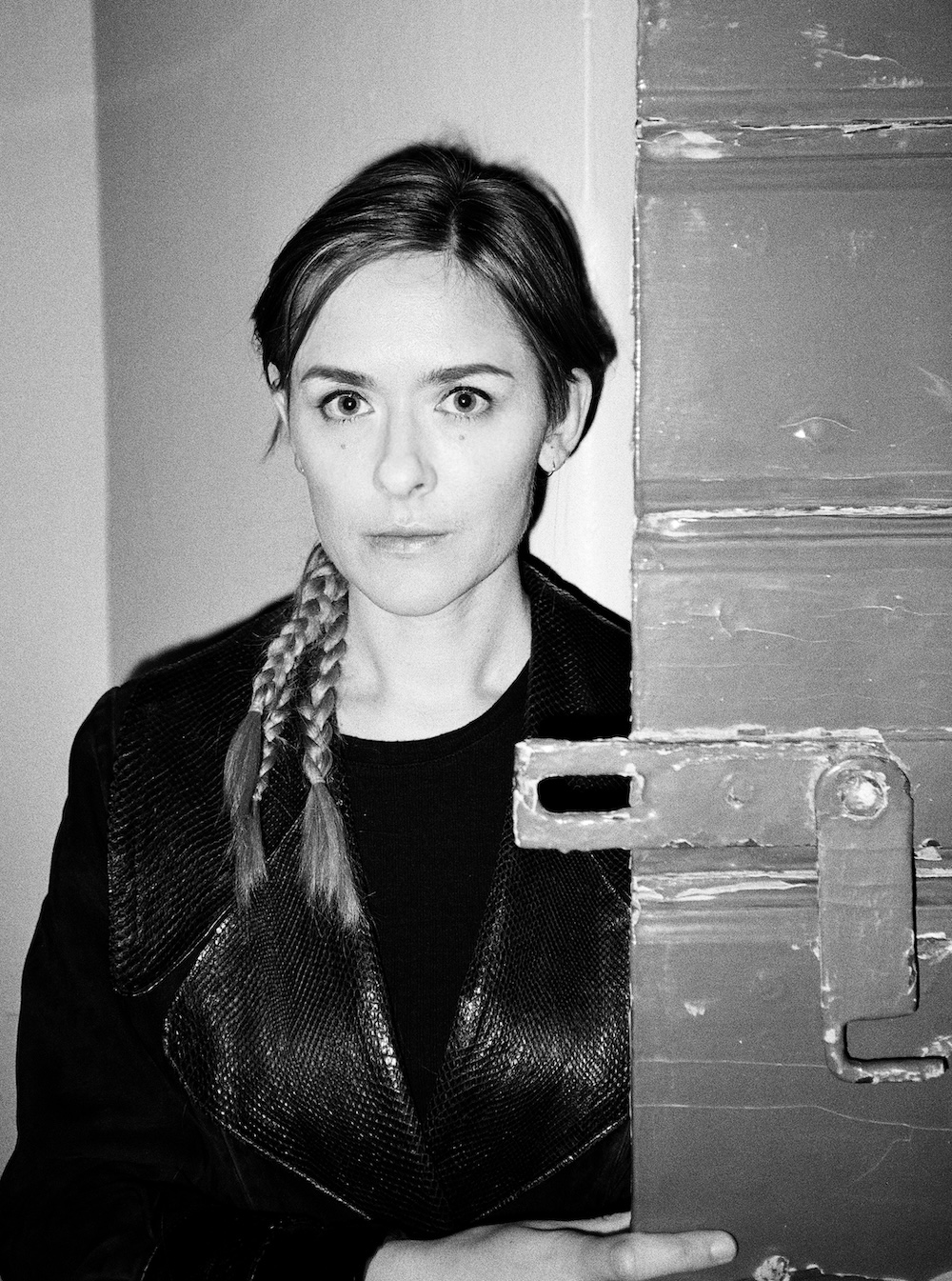
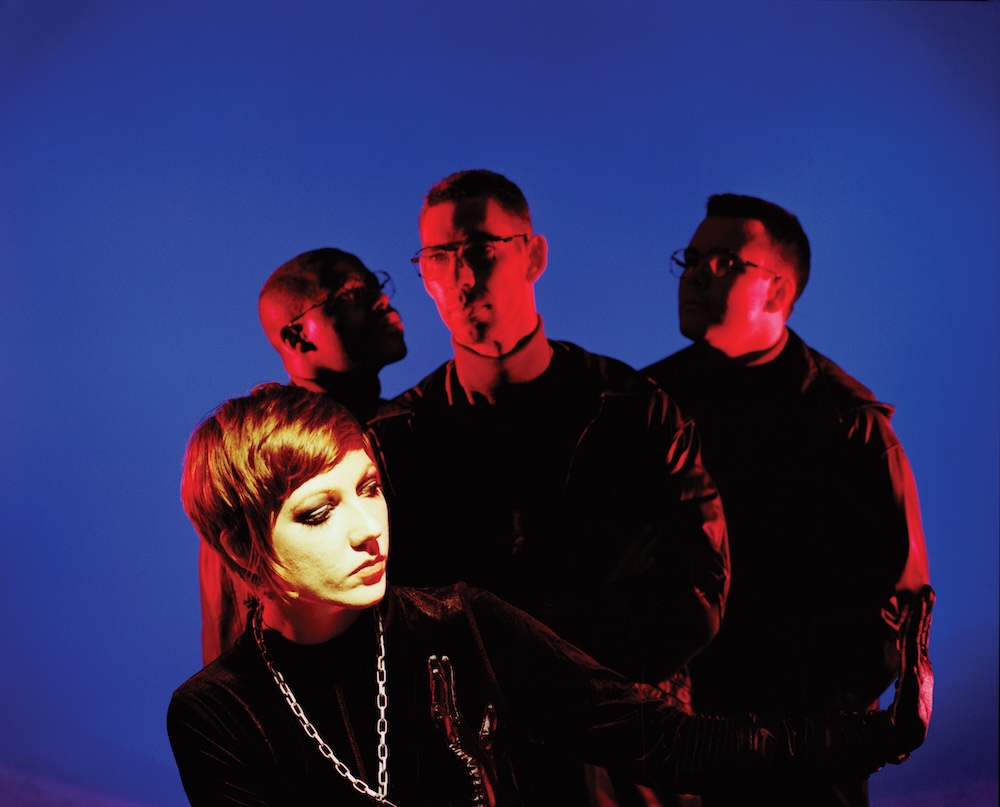
Diagonale des Yeux is the duo of Laurène Exposito (EYE, Knekelhuis’s longest-running artist) and Théo Delaunay (Parasite Jazz, Panoptique, De Klok, Violent Quand On Aime), teaming up for the first time. They released their debut ‘Madeleine’ earlier this year.
EYE is more claustrophobic, “100% bedroom emo music.” Madeleine is different. The album blends cabaret, 1980s French underground pop, and modern lo-fi, drawing inspiration from artists like Nini Raviolette, The Residents, and Honeymoon Killers. It features choirs, harmonies, drama, and catchy hooks in the vein of Cindy Lee.
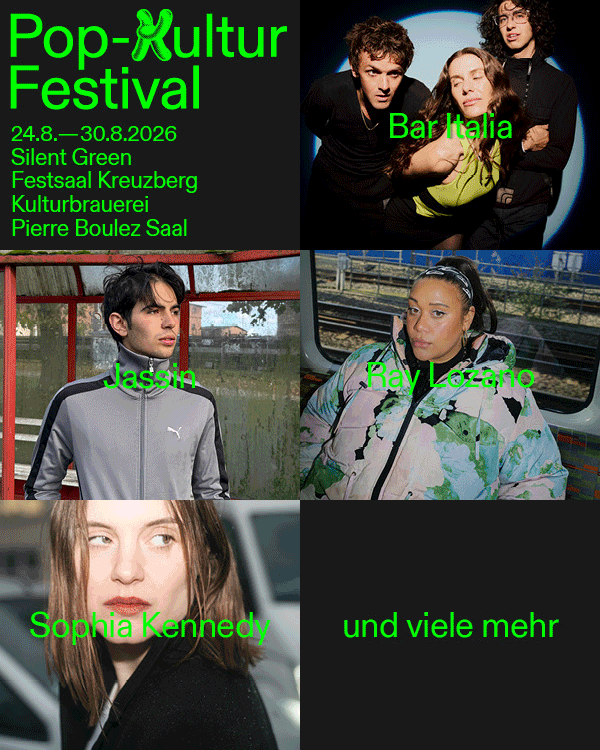
Laurène and Théo live a thousand kilometres apart and recorded the album wherever they could spend a week together – sometimes with very little equipment, sometimes with a full hard rock band’s gear. They finished the album in a friend’s studio over a long summer. They chose tape instead of digital and preferred old machines to new ones. Only people, not perfect recordings, can sound this bad and this funny at the same time. “We thought it would never end.”
The lyrics run on their own stricter version of exquisite corpse – one fixed rule and one moving rule per poem, each line handed to someone with no idea what the line before it said. The languages shift the same way: instinct, not a plan. A Nino Rotta lullaby is the reason “Nana Niña” ends up in Spanish – Laurène needed words that ended in A, and Spanish just turned up.
You move between a lot of projects – Parasite Jazz, Panoptique, De Klok. When you and Laurène started making this record together, did it feel like a new mode of working, or did it slot into something familiar?
Théo : It was a new mode, as it always is. There were things I would do alone that I dreamt of doing with someone. Like writing a song, choosing what’s next and how to make it weird and nice. Not being afraid of emotions and trying new characters, new voices.
EYE has its own very defined world. When you started building Diagonale des Yeux with Théo, were you protective of keeping the two projects separate, or were you curious to see what would leak through?
Laurène: I really wanted to distance myself from EYE, which is a frugal project, both intentionally and unintentionally. A bit claustrophobic and self-centred, 100% bedroom emo music. These past few years, I’ve been enjoying shouting on stage. I gained confidence, sharpened my vocal cords, enriched my hat collection. I guess I was ready to sing differently, compose differently. Maybe it’s the same for Théo? Sometimes it’s crystal clear what comes from which one of us; sometimes it’s not, which is good.
What was the first thing you made together that made you think this could actually be a record?
Laurène: We recorded our first 3 songs in a row. Until then, we were kind of stuck with fixed roles: Théo on drums and me on synths and/or vocals. Once we moved beyond these static roles, everything got better.
Théo: And it kept on happening every time we set up a studio somewhere for a week… At some point it was enough tracks and excitation to send to Mark.
The production on Madeleine is very particular – tape, living rooms, that deliberate roughness. How much of that was a decision you came in with, Théo, and how much did it come out of the sessions themselves?
Théo: Machines and people can sound perfect, but only people can sound as bad and funny as humans. Also, older machines are closer to humans in that sense. We live 1000km away from each other, which is not a deliberate thing, but it was good to do the songs with what we had in each environment, sometimes not much, sometimes a hard rock band’s backline. The recipe was different every time. Then it was summer, and we squatted in our friend Martin’s studio for final triangle and vocal overdubs, and mixing. It was like a new playground with old, still-functioning music tools. We thought it would never end.
The languages shift across the album. Is that a way of making the lyrics harder to fix in place, or does it come from somewhere more instinctive?
Laurène: Definitely instinctive. With Nana Nina, for example, I had this Nino Rotta track in mind, “Ninna Nanna”, that Théo had me listen to. After that, I had nothing in mind but words ending in an A! Spanish came naturally.
With the lyric-writing – the exquisite corpse approach – was there a line you wrote that landed somewhere you genuinely didn’t expect? One that made you want to change the rules?
Théo: Actually, our game already has more rules than cadavre exquis. You can’t fail if you want to play it, and it always lands in places you don’t expect. You have a moving factor and a fixed factor for each poem, so the lines are all connected even though written by a different, half-amnesic person. The fixed rules shape the poem, and you decide new fixed rules every time you start one, and the moving factor shapes the line. It changes every line.
The Knekelhuis context brings a certain audience with it, Laurène. Do you think about that when you’re making something, or does the label relationship only become real once the music is finished?
Laurène: Knekelhuis is my home since the very beginning of EYE, a central pillar of my life. The relationship IS real apart from the music thing. I feel anchored and free at the same time. It’s a matter of mutual respect and esteem; I hope so! There’s no game plan; I share my trials and tribulations with Mark, music included!
There’s a theatricality to what you do – something almost performative in how the vocals sit. Is that something you’re conscious of, or does it only become visible when someone else points it out?
Laurène: Well, I guess I’m becoming more and more conscious about it and being confident enough to play with it. With EYE, the contrast between recorded and live vocals is obvious. With DDY, I wanted to dig deeper into the choir/harmony/drama stuff, inspired by bands like Zero Percent APR, who are, in my very objective opinion, the best band that ever existed on this planet. I haven’t finished dissecting their vocals yet, plus they keep on releasing new music every year with new names. Enough to keep me busy on rainy Sundays.
The choir thing keeps coming up in how people describe your sound. Where does that pull come from for each of you?
Théo: That was the plan: choirs. It seems like it leaked through the album description.
Laurène: As we said before, we really wanted to explore new singing in a way we never did with our solo acts. Or even have the possibility of doing it with other people. I guess we were ready to face the shame of singing off-key or sounding really awful, and pushing limits too. Verrry interesting.




Must Reads
David Holmes – Humanity As An Act Of Resistance in three chapters
As a nation, the Irish have always had a profound relationship with the people of Palestine
Rotterdam – A City which Bounces Back
The Dutch city is in a state of constant revival
Going Remote.
Home swapping as a lifestyle choice
Trending track
Vels d’Èter
Glass Isle
Shop NowDreaming
Timothy Clerkin
Shop Now