Highlighting those we don’t see enough: a conversation with Pelles Melles
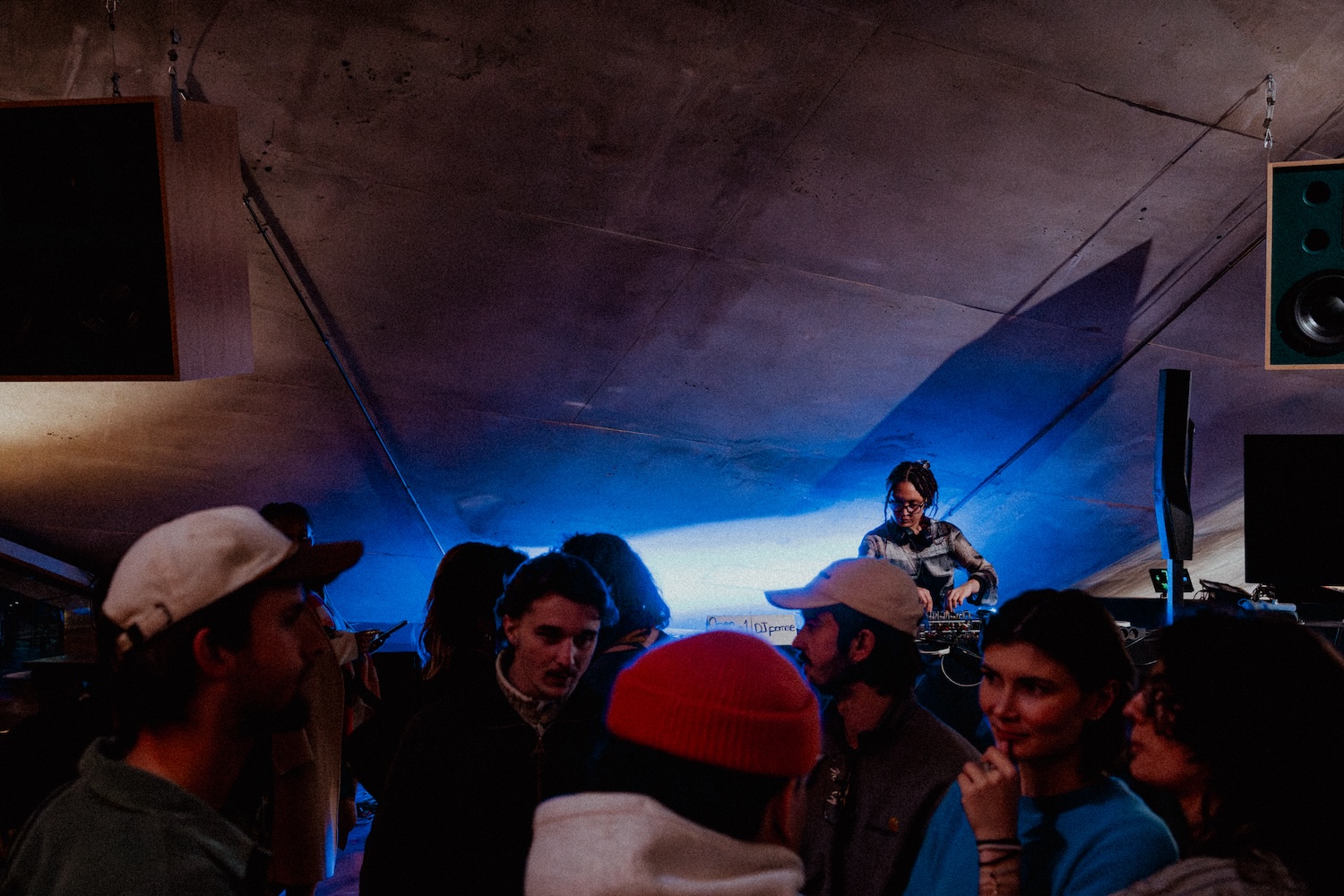
An interview with Clara and Charlotte, members of Pelles Melles, a Bordeaux-based FLINTA collective working to increase the visibility of FLINTA DJ artists within the local electronic music scene.
In this conversation—available in French on Le Type and in English on Ransom Note as part of a partnership between our two media outlet—they discuss the origins of the initiative, its growth within Bordeaux’s electronic scene, and the issues of visibility, gender parity, and solidarity running through the local music landscape.
Le Type: How would you describe the place and representation of FLINTA people within Bordeaux’s electronic music scene? What observations pushed you to create this collective, and what need were you looking to fill within this community?
Clara: In Bordeaux, we’ve noticed that it’s often the same collectives being booked, the same styles being represented too. The goal with Pelles Melles is precisely to have something concrete: more parity in lineups, highlighting the ones we don’t see enough.
There aren’t enough women booked on stages in Bordeaux. At the very least, they’re not visible enough, not considered legitimate enough. The idea with Pelles Melles is to give them more credibility, more space, when there are artists doing truly incredible things. Our goal is to show that we’re a nice mix of musical styles and skill levels, and that everyone has their place.
The aim is to help FLINTA artists get more visibility, but also to support them, stay in solidarity, and answer the questions that can come up quickly when you’re a DJ and often fairly alone. So the goal of Pelles Melles isn’t just about bookings: it’s also a reminder that there’s strength in unity.
Charlotte: We want to push these artists to gain legitimacy and confidence to be able to do this. In the collective, some have been mixing for years but haven’t necessarily played in front of an audience yet, because they didn’t feel legitimate or didn’t know how to go about it — for example, how do you put together a press kit? Those are the kinds of things we want to help them with.
Le Type: How do you translate the values you champion, like mutual support or collective strength, into concrete action?
Clara: We have a WhatsApp group organized into subcategories, built around the idea of listening to and helping each other. The topics are pretty varied: it can be job offers or gigs (date proposals to play, ed.), an FAQ on technical or communication questions, information to share about collectives or venues to avoid, or news around panel discussions, debates, movements.
There are also calls for testimonials about events, good and bad. And we also organize open decks with Bien Public and Medusyne. Medusyne actually handles the whole booking and administrative side. When collectives or events reach out to us, we do the curation, we receive the press kits, we select DJs, and once the artists are booked, Medusyne takes over for everything else. That gives us a framework, and also lets us build a connection with an organization that’s already established and visible.
Charlotte: We also have a partnership with Amplitudes Radio. We did it once already and it should likely happen again. Three DJs from Pelles Melles had the opportunity to record a set on their radio, which gave them visibility. And we also try to create moments together, afternoons where we mix together, give each other tips, and share our ways of mixing.
Le Type: Open decks play an important role in your activities. What role do they play in the emergence of new artists?
Clara: Partly, yes. Open decks are perfect because they act as a bridge to what comes next. You wouldn’t necessarily think of it this way, but they’re little springboards, small bits of visibility we offer them. At every open deck, there are photos and videos that we send them, which they can then use in their press kits.
For example, Streia, who just arrived in Bordeaux after several years in Mexico where she learned to mix, took part in the very first open deck we organized. She has a fairly unique style that’s still not very present in Bordeaux — we invited her onto Amplitudes Radio, which gave her even more visibility. Today, she DJs for Barrio Fino, and she also played on the Red Bull stage for Fête de la Musique. A lot has developed around her, and she’s kind of a textbook example of what this can create.
Charlotte: We also highlight all the girls’ dates, so people know who’s playing where and when, and to give them visibility. When Pelles Melles was created and we opened the Instagram account, we didn’t really know how far it would go or how much enthusiasm it would generate. In the end, we found ourselves booked at big events in Bordeaux, alongside collectives that have been well established in the scene for years. You can really feel there’s genuine enthusiasm around this community. It’s promising.
Clara: Even though I’ll eventually move on one day, the community needs to keep running on its own. And to tell ourselves that, no matter what happens, being part of a community helps with credibility and visibility. There are also people who want to get involved in the organizing side, and so on.
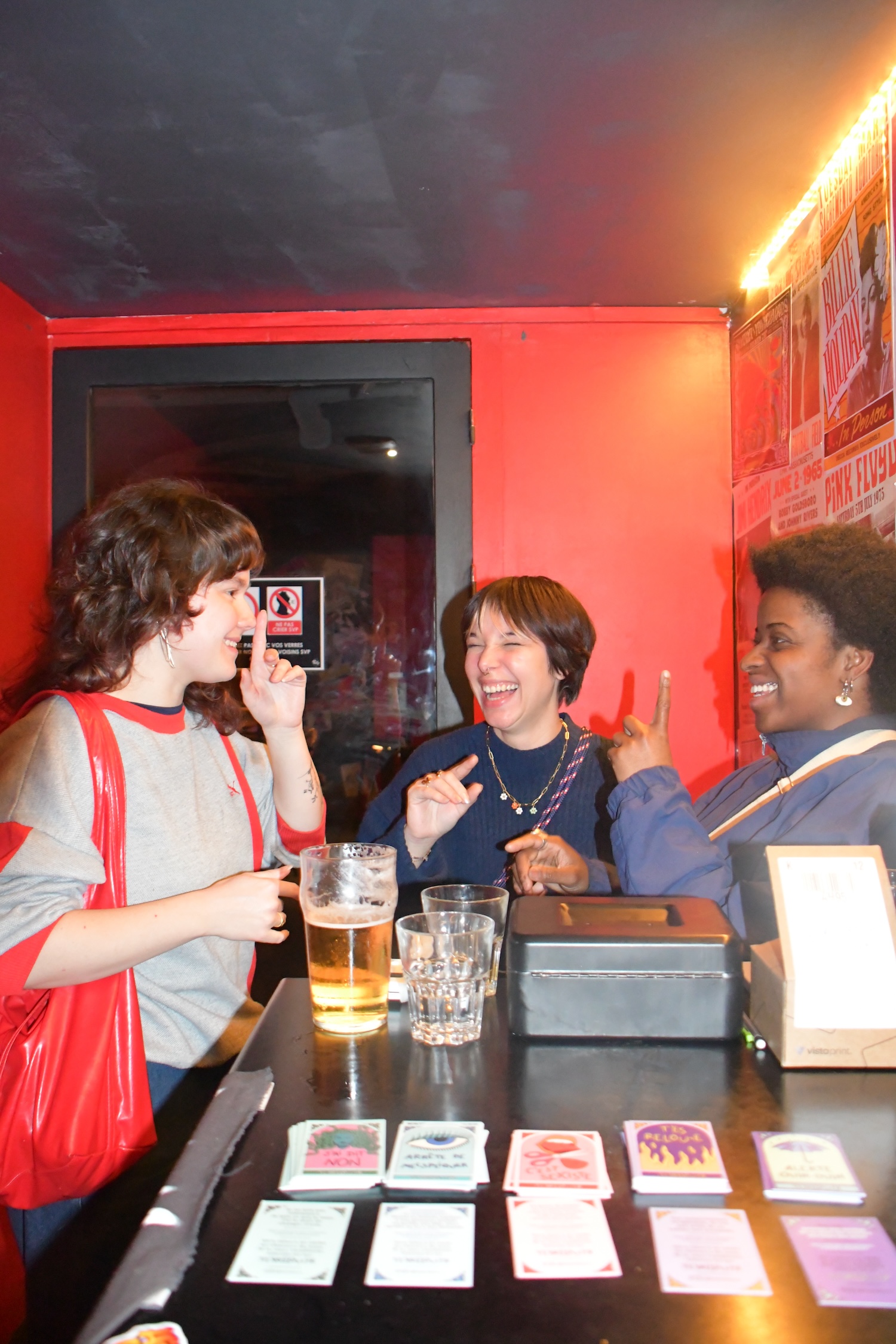
Le Type: We’ve seen a number of local (Track One), national, and European initiatives emerge in recent months aiming to encourage the representation of FLINTA artists in the electronic scene — how can synergy between all these projects be encouraged?
Clara: We can build bridges and collaborations. For example, with Track One, which is more focused on production, we could imagine workshops for those who want to get started. We could also do city-to-city pairings.
When we launched Pelles Melles, there wasn’t really a community of FLINTA DJs, and a few months later, initiatives started popping up in Lyon, and also in Nantes with a friend who created a 100% FLINTA collective (its own community). The idea is also to ask: why not create links between all of this? And the more (collectives) communities that appear, the more it shows there’s a real need and real interest.
Charlotte: Medusyne is also working on this. It’s part of their goals, highlighting the FLINTA scene in Bordeaux. And when we created Pelles Melles, they didn’t see us as competitors or anything like that at all. On the contrary, they saw us as an additional force.
We met and asked ourselves: “How can we collaborate? How can we join forces?” Each entity has its own distinct identity, which makes it possible to build bridges between our different communities. I think the more of us mobilizing for this cause, the more positive the outcomes will be on all these issues.
Le Type: Do you see the association evolving toward music production as well?
Clara: No, I don’t think we’ll go in that direction, because that’s not our strength. We’d rather leave that space to those who are already skilled in that area. Track One handles that, and I really hope they grow it to the fullest.
Pelles Melles is a network of sisterhood, sharing, promotion, springboarding, federating, and curation. We’re not a booking agency, we’re not a production company, we’re not a label. It’s a community.
Le Type: How do you translate these values of gender parity into concrete action in your events and initiatives?
Charlotte: We co-organized our first night at Bien Public on June 13th with the Bordeaux-based collective Marée Basse. We booked two Pelles Melles members, Marc and Enola, who are fairly well known in Bordeaux, and two Marée Basse members, Barbara and Jacqueline.
Through Marée Basse, we also invited Ams, who’s from Paris and was our headliner. The idea was really to offer a night with a 100% female lineup and to showcase several artists. That’s also why there were five of them playing. Not bad, right?
Le Type: What are your main sources of motivation today, and what successes have you had in growing the collective?
Clara: I think our biggest success is that we now have more than sixty people in the WhatsApp group. There are exchanges every day, and it’s really alive. The successes are also when we see FLINTA artists from Pelles Melles starting to get booked more, or when opportunities circulate among members.
For example, the other day, someone was looking for gigs and another person immediately shared a lead she had. And then there’s also our first night at Bien Public with Marée Basse. It was our very first event, and despite competing with Madame Loyale on the same night, we managed to turn a profit. So we were really happy.
Charlotte: I think it’s great to see the girls in the group coming up with all kinds of ideas. You can really feel there’s genuine enthusiasm around Pelles Melles. Some of them even reach out to venues to pitch the collective, explaining our goals and motivations.
As a result, we’re starting to get contacted about how to book Pelles Melles members. A lot of things are developing along the way, and we’re just here to support that momentum and help make it happen. And that’s really wonderful.
Le Type: How do you picture the collective evolving, and the place of the FLINTA community in the Bordeaux music scene, over the coming years?
Clara: I’d really like this to last. There are artists who inspire us a lot, like Mayou Picchu or Girls Don’t Sync. There are four of them, they tour a huge amount, they have a real identity, and I tell myself Pelles Melles could move in that direction: playing dates all over and representing the Bordeaux FLINTA community.
The idea is also to show that things are happening in Bordeaux, that it’s not just cultural venues closing down, but also a scene that’s moving, with initiatives and artists. We’re here, and we want people to come see us. And ultimately, the goal is really parity on lineups, with a real place for women and minorities.
There’s also all the work around VHSS (sexual and gender-based violence and harassment), which allows testimonials to be gathered and helps things move forward. The music scene remains a complicated environment, so we need to keep pushing toward more equality, respect, and care.
Charlotte: And equality that’s real, not just for show. Because often, you see girls booked to do warm-up sets or closing sets. The idea is really for everyone to be put on equal footing, matched to their careers and performances — not always pushed into the background, if I can put it that way.
Clara: The future is about continuing to keep things moving. There’s so much inspiration, we’re overflowing with ideas. Now, the hardest part is putting them into practice. Because we tell ourselves: we’re inspired by so many things… but how do we actually make them happen? Who takes care of what? Scheduling, art direction, communications, and so on. How do we set all that up? I think, really, everyone has her own strengths and skills. And it’s about saying: you know how to do this, do you want to be part of it?
And above all, we talk about DJ communities, but we’re also starting to talk about communities in stage design, sound engineering… We’re meeting other people who realize that, in certain very male-dominated fields, Pelles Melles can also be a source of inspiration for those who want to build more gender equality in other lines of work. Serving as an example is part of it too. Our goal is really that there’s strength in unity: we’re not competitors, everyone should get their share of the cake.




Must Reads
David Holmes – Humanity As An Act Of Resistance in three chapters
As a nation, the Irish have always had a profound relationship with the people of Palestine
Rotterdam – A City which Bounces Back
The Dutch city is in a state of constant revival
Going Remote.
Home swapping as a lifestyle choice
Trending track
Vels d’Èter
Glass Isle
Shop NowDreaming
Timothy Clerkin
Shop Now