Pharaoh Chromium: Between Innocence and Anger
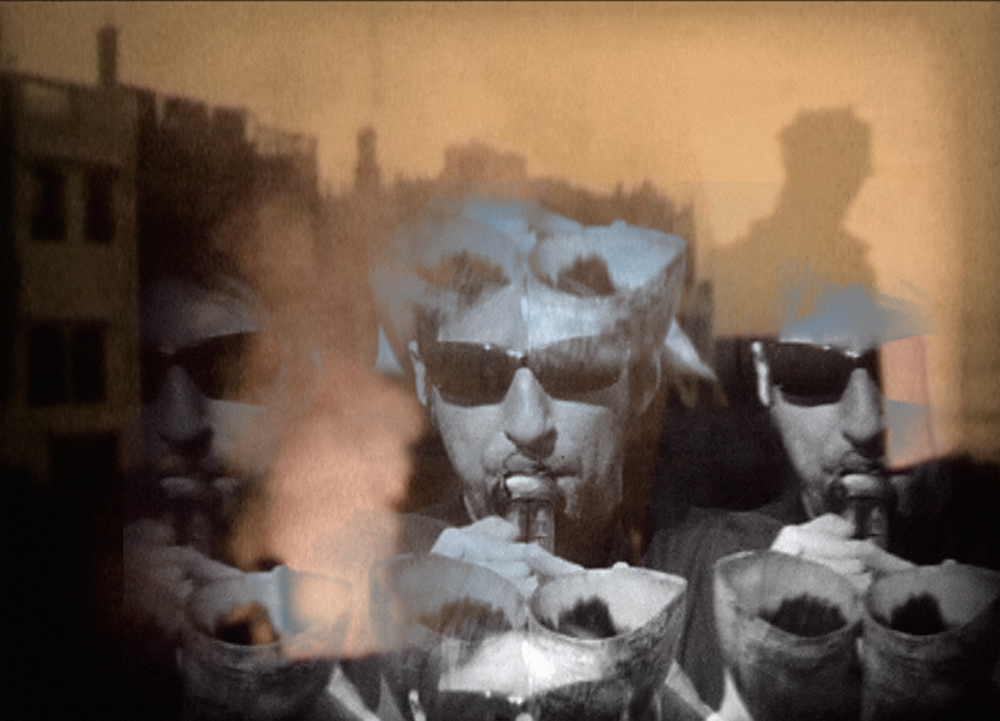
Ghazi Barakat’s new album finds an unlikely bridge between a forgotten Omani revolution and the ongoing catastrophe in Gaza.
In the summer of 2023, German-Palestinian musician Ghazi Barakat – recording as Pharaoh Chromium – was working on a session of flutes, EWI, and belly-dance-inflected beats, instrumentals still waiting for a context he hadn’t yet found. That context arrived unexpectedly, in the form of Chants Révolutionnaires d’Oman, a 1975 record of children’s revolutionary songs from the French label Expression Spontanée, documenting the Dhofar Liberation Front’s decade-long Marxist uprising against the Sultanate of Oman.
What followed was Chronicles From The Arab Cold War, out earlier this year on Discrepant – an album that refuses to use footage or field recordings from the war on Gaza itself, and instead channels the voices of Omani children from a revolution half a century gone. Side A carries hope; Side B, recorded through the escalation following October 7th and featuring trumpeter Philipp Selalmazidis, turns darker and more funerary, adult voices replacing the children’s as the record moves from innocence toward confrontation.
It’s the third instalment in Barakat’s long engagement with the Palestinian cause, following Gaza (2015) and Jean Genet à Chatila (2018) – though, as he explains below, this one very nearly didn’t get made. We spoke to him about historical parallels, survivor’s guilt, Orientalism, and what it means to position listening itself as an act of witness.
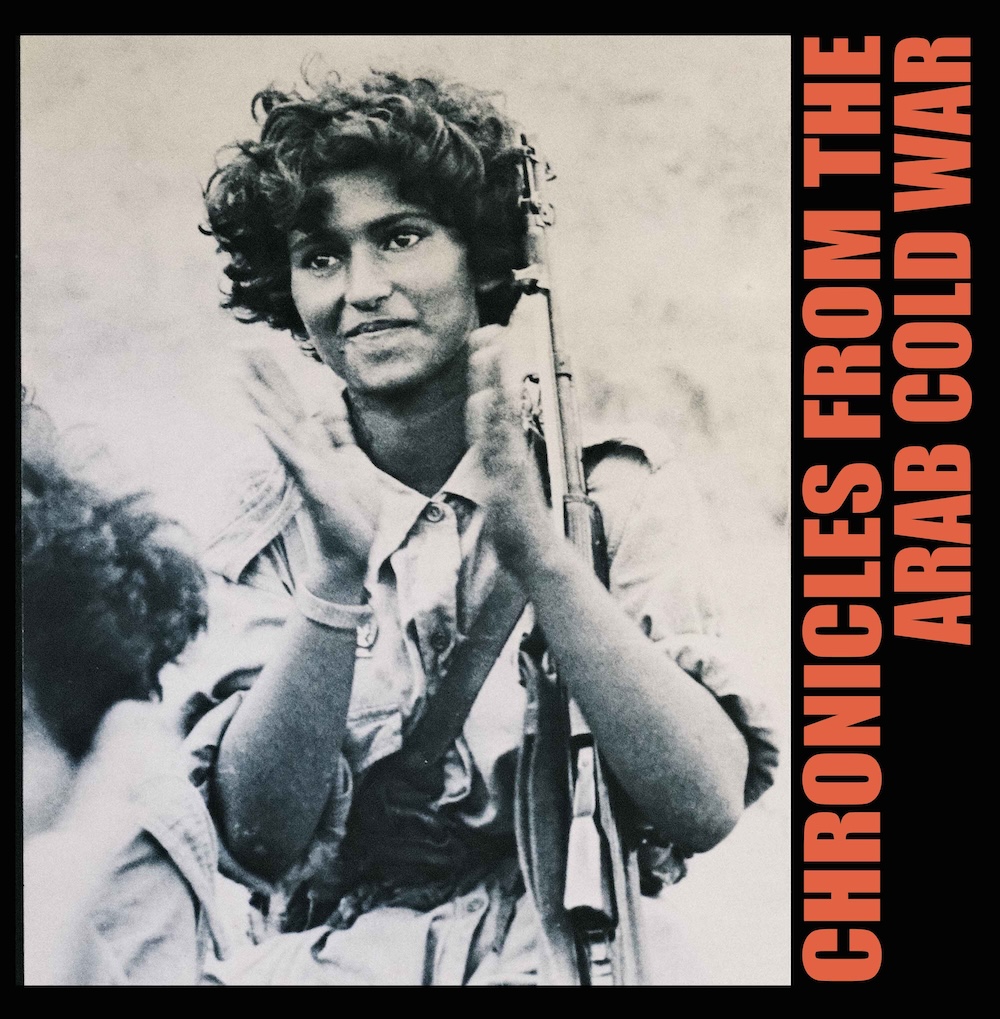
We sat down with Ghazi Barakat (Pharaoh Chromium) to discuss the deep historical contexts, unexpected musical discoveries, and profound personal grief that shaped the creation of the new album, Chronicles From The Arab Cold War. What follows is an unedited look into the artistic and political framework behind the music, in the artist’s own words.
The Dhofar Liberation Front’s struggle (1963-1976) might seem distant from today’s conflicts, yet you’ve drawn a direct line between them. What specific parallels between the Arab Cold War period and the current situation in Gaza made this historical connection feel urgent and necessary for you?
The first parallel is that the PLO was directly involved in the creation of the DLF, and some PLO members were on the ground in Dhofar while the conflict was taking place. Most Omanis who came up with the concept of liberating this particular province studied in Beirut and Cairo in the late fifties and early sixties; they were part of the general feeling of liberation and emancipation engulfing the globe at the time. Another parallel is that during the whole ten years of this revolutionary experiment, they were under siege and aggressed by the British army, the Jordanian army, the Iranian forces of the Shah, and the forces of Omani King Qaboos.
The British involvement has had, and still has, a huge impact on the whole region. I think the United Arab Emirates were founded around that period, partly to counter the danger of an emancipated Arab entity there.
You mentioned that the Chants Révolutionnaires d’Oman record from Expression Spontanée appeared “unexpectedly” and provided the frame for instrumentals that were waiting for their context. Can you describe that moment of discovery, what was it about those Omani children’s voices that unlocked the album’s direction?
I had just acquired a couple of Colette Magny records released on the label and showed them to a good friend of mine. He told me he had a great record that was also released on Expression Spontanée.
I immediately got a hold of a copy, and while listening to the album, I started playing these recently made sessions simultaneously. It felt like a match made in heaven. Often music is just music until you put it into context, that happened a few months before October 7th.
I also thought it would be interesting to make an album of an album from an artistic point of view.
The sleeve notes explicitly state that you avoided “exploiting recordings from an ongoing genocide.” This is a crucial ethical decision. How did you navigate the responsibility of creating work about Gaza without using direct documentation, and what role do the Omani children’s voices play in “channelling hope” instead?
In 2017, I released an album about the 2014 war on Gaza, and I used a lot of field recordings and audio material from and about the region. I wanted to produce something that made the listener feel what it would be like to be stuck there. It took me a year to mentally and psychologically recover from that conflict. When I finally had the courage to confront the material, it had a therapeutic effect on me and also released a lot of anger I’ve carried around my whole life about this issue.
The military response to the October attacks was so extreme and brutal that I was too heartbroken and devastated to even think about being creative about what was happening to this 4,000-year-old city and its citizens. At one point, I was so disillusioned that I could barely get out of bed. But I would still listen to what was a work in progress at the time.
It also became clear that the highest casualties were children. Since the Omani children acknowledge the Palestinian struggle in their songs, I felt that these were the soulmates of the kids in Gaza, and also a possibility of hope for the future of Palestine. Mahmoud Darwish wrote that all Palestinians suffer from an incurable disease: hope.
Although a lot of my work deals with dystopia, deep inside I'm a utopian.
Among the instrumentation, flutes, EWI, trumpet, there’s mention of “belly dancing beats.” This feels both culturally specific and potentially subversive. What does this rhythmic element bring to a work about revolution and resistance?
In terms of my work in general, it’s not about what kind of music I make, but about what I can do to music as a medium.
I mainly use the same beat on the entire record, and it felt more like a case study of all the things you can do to one loop. I think through a belly dance beat, you immediately associate it with the region and its culture, and I needed some infectious grooves to inject some life into the music. But also, when you hear that beat slowed down, it sounds like gamelan music played by some heavy noise rock band like Swans. So it is colouring the mood to underline the political nature of the work.
It’s also a continuation of a project I had with Paul LaBrecque that used a lot of ethno-musical recordings. Between 2017 and 2020 we released three albums, two under the name Crème de Hassan and one as LaBrecque/Barakat called Terminal Desert.
The album’s structure moves from hope and children’s voices on Side A to “darker, more funerary” territory with adult voices and “ideological rhetoric” on Side B. Was this progression intentional from the start, or did it emerge organically as events unfolded?
I use the Omani record sequence almost chronologically to follow the development of its subject. In the end, the republic of Dhofar failed and dissolved. You can say that the Palestinian struggle has lost many battles in the last 80 years and that the situation has become worse than ever, so the narrative is trying to highlight that fact.
The description notes suggest the trumpet adds a unique weight and urgency to Side B. How did this collaboration develop, and what did Philipp bring to the sessions?
To clarify, some of the specific phrasing in the initial press text was an interpretation of my exchange with Gonçalo of Discrepant, rather than my direct words, but the trumpet is absolutely an instrument that translates emotions in a unique way.
Philipp is the main reason I was able to finish the record. I had the idea to add some trumpet early in the project, and I knew Philipp was experimenting and practicing trumpet with an electric tamboura box. I contacted him and played the raw material I was working on, and he agreed to participate. Then, every Tuesday in November, December 2023, and January 2024, he would come around and contribute to the pieces. That forced me to prepare something beforehand and play him the mixes of parts he had already played on to show him that I was on it, although doing anything but feeling miserable at the time felt wrong.
The EWI, an electronic wind instrument, occupies an interesting space between traditional wind instruments and synthesis. In a work so concerned with voice and witness, how does this hybrid instrument function for you?
It has a function maybe similar to what a soundtrack does for a movie, it is tonal and melodic, even when someone like me is using it. Sometimes I call it my little 1001 Nights weapon, since I play a lot of arabesques on it. Although I’m definitely on the anti-colonial side of politics, I have a soft spot for orientalism and its clichés. Lawrence of Arabia is my favourite movie.
Also, by using “wind” instruments like the EWI and the Rauschpfeife, I have to use my mouth and breath, which is akin to talking.
The phrase “Listening as an Act of Witness” has been used to describe the experience of this record. In an age of image saturation and doom-scrolling, what does it mean to position listening as a form of bearing witness?
Again, those specific framing words came from the label’s text rather than mine, and I’m not even sure if someone who doesn’t know my work or read the press release would automatically make the connection to Gaza.
But I did have survivor’s guilt in many ways. My cousin, a woman living in Gaza, lost her 25-year-old son to a quadcopter strike on a press vehicle where he just happened to be walking by. His remains were given back in three bags: the head, the arms, and the rest. We are friends on Facebook, and when she likes something I post, I know she is alive.
The album is probably more like experiencing the ups and downs of following these events closely if you are intimately connected to the place.
This album follows Gaza (2015) and Jean Genet à Chatila (2018), forming an ongoing engagement with these themes. How has your approach evolved across these three works, and do you see Chronicles as a culmination or a continuation?
At the moment, I am working on a written oral history of some things I experienced in my lifetime that I intend to publish on Substack, which will be called The Unpalestinian.
The technical development seems to go from found spoken soundbites to field recordings in a war-like situation for the Gaza release, to spoken word and intimacy on the Genet piece, to rhythm and singing on Chronicles (which, by the way, is a nod to Chrome releases like The Chronicles of Gehenna and The Chronicles of Canaan).
I think it’s a continuation, since I already started a follow-up under the working title Arabocalypse. That will be an attempt to do something closer to an “opera,” using more prayers, rituals, and sung vocals from a variety of source materials, and go back to the Palestinian struggle, which is in effect the struggle of all Arabs for emancipation and self-determination, obstructed by the former colonial powers through the Balfour Declaration, the Sykes-Picot Agreements, and the creation of the state of Israel in Palestine.
The project is described as being positioned between innocence and anger. As a creator operating across these historical and personal landscapes, where do you locate yourself?
I think emotionally and politically, I am 100% Palestinian. The positioning and the arguments of most Germans, especially academics, intellectuals, and a lot of the German musicians in the experimental scene, is off the mark to me.
I think I learned early on to cope with contradictions, and since I chose subculture or counterculture as my battlefield of expression, controversy comes quite naturally. As a person, I can be quite gullible and naive. Anger for me is just grief and feeling helpless. All the three records mentioned are inspired by the aesthetics of propaganda, but solely to artistically express my personal views.
Chronicles From The Arab Cold War is out now on Discrepant.





Must Reads
David Holmes – Humanity As An Act Of Resistance in three chapters
As a nation, the Irish have always had a profound relationship with the people of Palestine
Rotterdam – A City which Bounces Back
The Dutch city is in a state of constant revival
Going Remote.
Home swapping as a lifestyle choice
Trending track
Vels d’Èter
Glass Isle
Shop NowDreaming
Timothy Clerkin
Shop Now