Good Rubbish: Tom Sharkett On Mistakes, Mentors & Going Solo
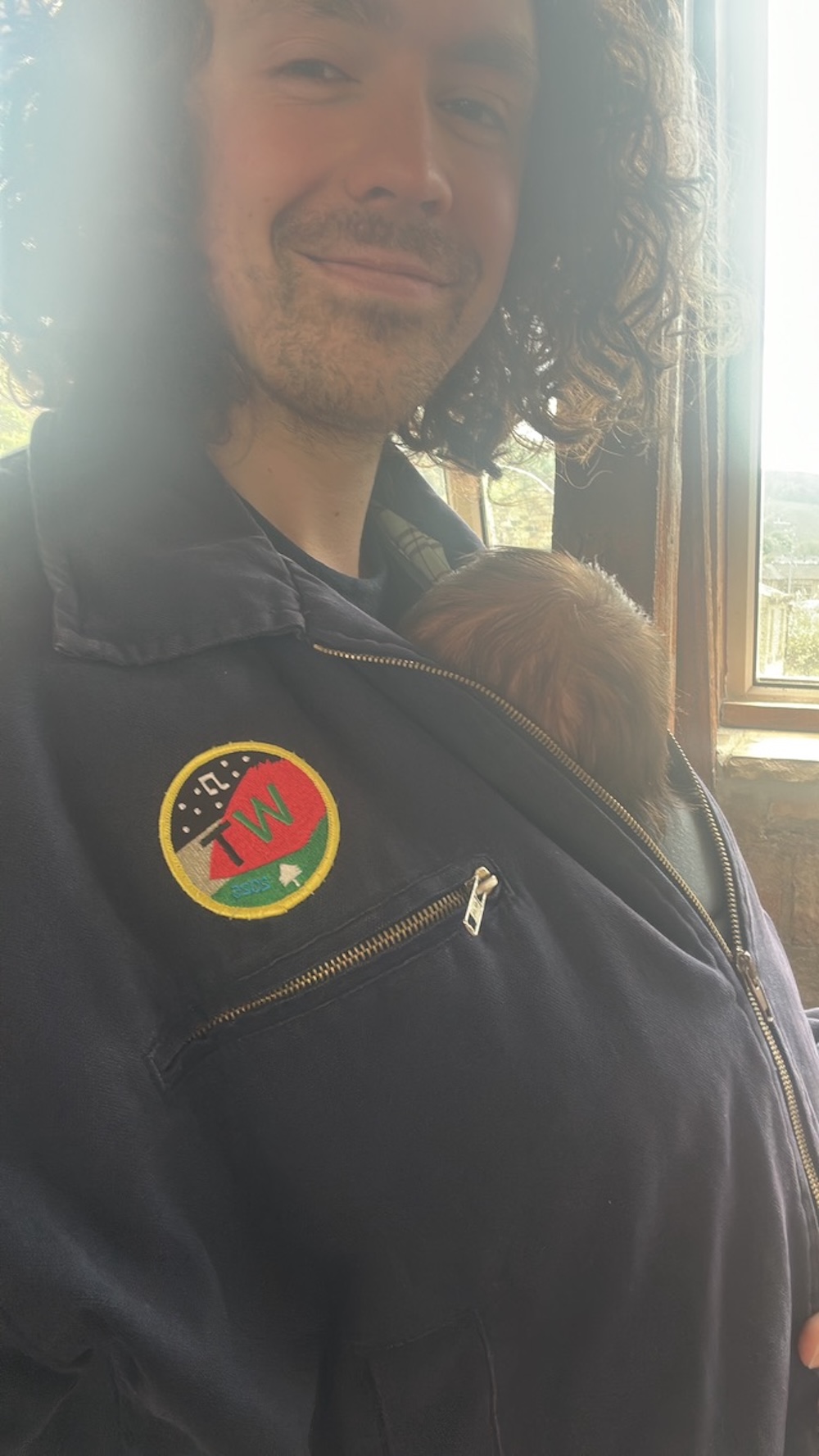
From W. H. Lung to Julie Byrne’s touring band to solo producer, all in the space of eighteen months — Tom Sharkett on making an electronic record that’s allowed to sound like a person playing it.
Tom Sharkett is talking to us from a house in the hills above Todmorden. He moved in the day before, his two-month-old son somewhere in the next room. It feels, he says, like exactly the right place to be — and that sense of things quietly, organically landing in the correct spot runs through everything else he has to say.
As a founding member of Manchester synth-wave band W. H. Lung, Sharkett spent years inside a five-piece machine. Then, in the space of about eighteen months, that machine started running alongside several others: a solo project under his own name, a touring slot in Julie Byrne’s band, an edit of LCD Soundsystem’s Home that found its way – via a play on Flo’s NTS show, an Instagram DM from DFA, and a call with label manager Sam – onto an official release with James Murphy’s blessing. Fatherhood arrived in the same stretch. His first two remixes as a new dad, he says, were made in the middle of the night with his son asleep on his lap, headphones on, “don’t worry.”
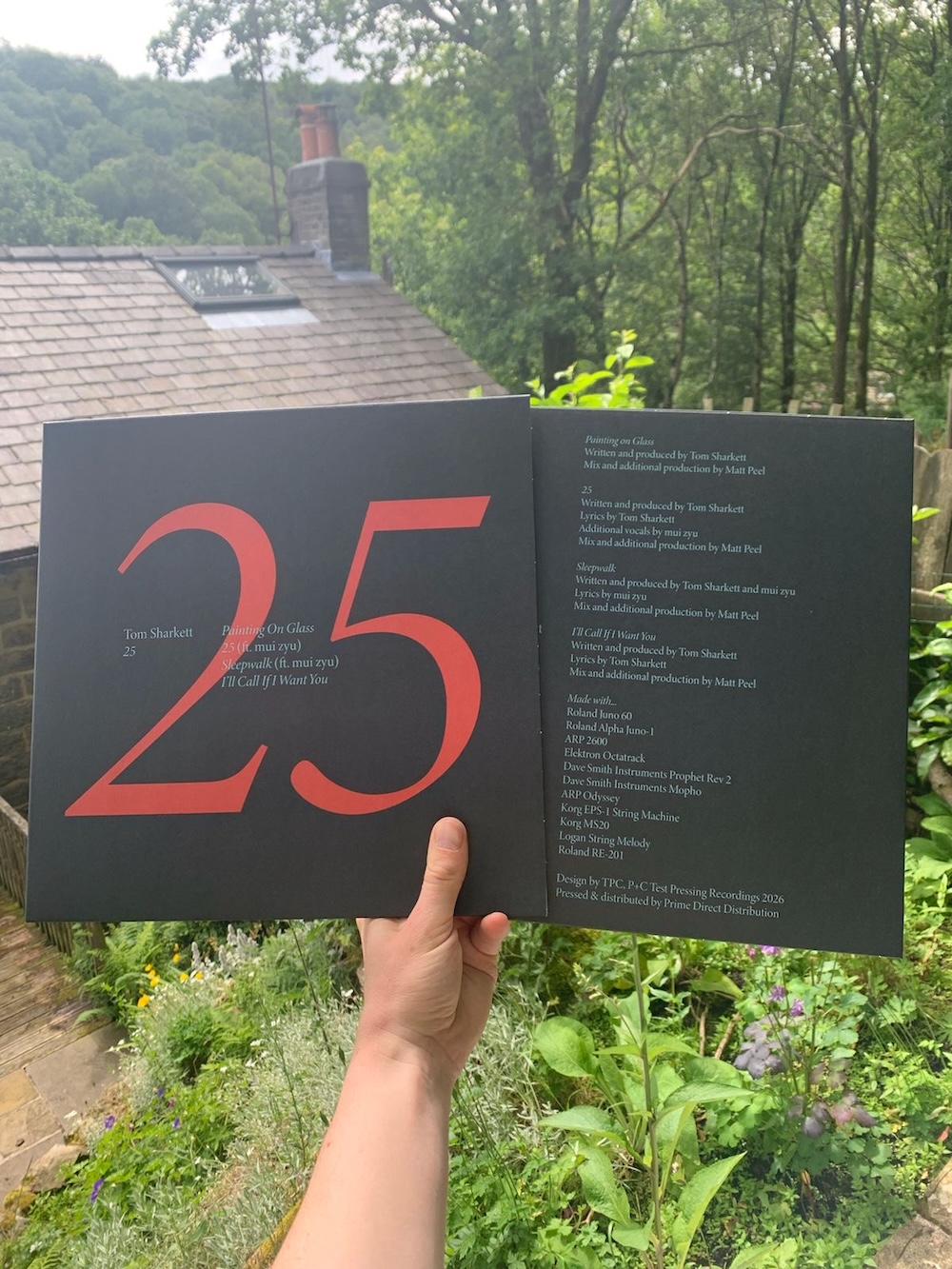
25, his debut 12″, is what happens when all of that gets pointed at one record. The rule was simple: everything hand-played, nothing tidied up. “I love how stuff sounds ‘good rubbish’ on older synth records before sequencers and midi entered the mix,” he says, “but it’s a lot easier said than done to not iron out any little blips when it’s so accessible to do.” It’s the same feeling, he reckons, as a DJ clanging a mix and fixing it live, faders up, rather than reaching for sync – “way more fun.”
That instinct sent him back into a conventional studio with Matt Peel, the producer who taught Sharkett almost everything he knows about recording, going back to when he was twenty and barely knew what his own pedals did. “I wouldn’t have wanted to go to anyone else but Matt,” he says. The songs existed before he walked in, but he wanted the vocals and the synths and drum programming tracked live, in real takes, the way he’d record with a full band rather than alone at a laptop.
Vocals are new territory for him, in fact – this is the first time he’s properly sung on a record, a confidence he says he simply wouldn’t have had five years ago. He shares that space with mui zyu, the London artist he met on tour with Julie Byrne.
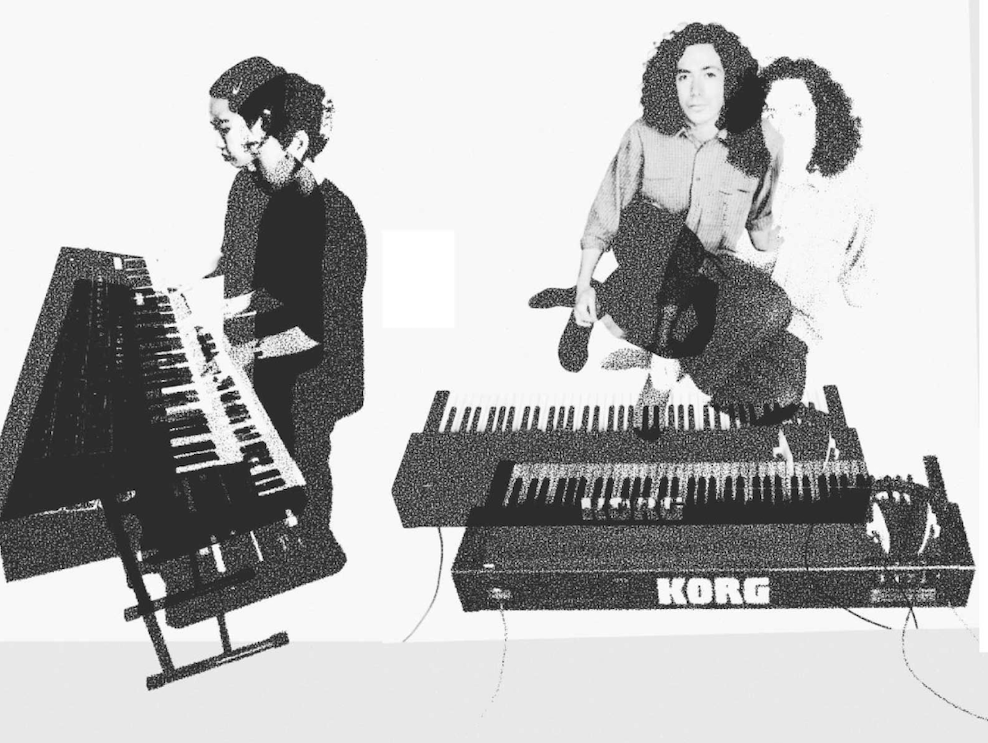
Sharkett is a touring member of Byrne’s band, an experience he describes almost reverently: she pushed him onto piano despite him not really being a piano player, and within a couple of gigs he was playing keys with her at Green Man and Crystal Palace Bowl. “She helped just unlock something in me,” he says – including, eventually, the pull toward writing proper songs of his own rather than purely instrumental work. Meeting mui zyu (Eva) on that same tour came down to something harder to plan for: trust, and then the “unexplainable thing of chemistry.”
With her, both were there from the first night.
Sonically, 25 sits deliberately between two poles he’s spent a long time listening across — Kraftwerk, Depeche Mode and New Order’s live electronic tradition on one side, Jessica Pratt and Aldous Harding’s song-first folk on the other, with Eno’s Another Green World hovering over the whole thing. People forget, he points out, how many actual pop hooks are buried in that record beneath its ambient reputation – St Elmo’s Fire especially, which for him is tangled up with memories of being twenty-three and starting the first Lung album. “I feel like lots of electronic releases are either club records, or lovely sounding but more of a vibe than an actual song,” he says, “and I wanted to do a bit of both with 25.”
Working alone has changed how he sees the band he came from. There’s freedom in it, he says, but also a new appreciation for what five people bring that one person can’t – even as he admits he’s happiest losing hours by himself, endlessly tweaking a synth patch or an EQ, which he thinks is exactly why remixing suits him. He’s done plenty of it lately, for Nation of Language, Heavenly, Fiction, City Slang, on top of the DFA release – and none of it, he says, washes off clean.
“There’s a lorra residue. You learn something from everyone you work with.”
This summer also found him and Raf Rundell soundtracking L’Inhumaine – the 1924 Art Deco film that reportedly caused a riot at its Paris premiere – live at our very own Watching Trees, a booking he said yes to before he’d even heard about the riot. “I was sold after our phone call,” he says, “especially with Raf.” The brief, as they set it, was to dig out the most sprawling, beat-less and unnerving material they could find, tempered with an almost frantic happiness rather than straight darkness – Raf’s dub siren, deployed at 2am, apparently worked a treat.
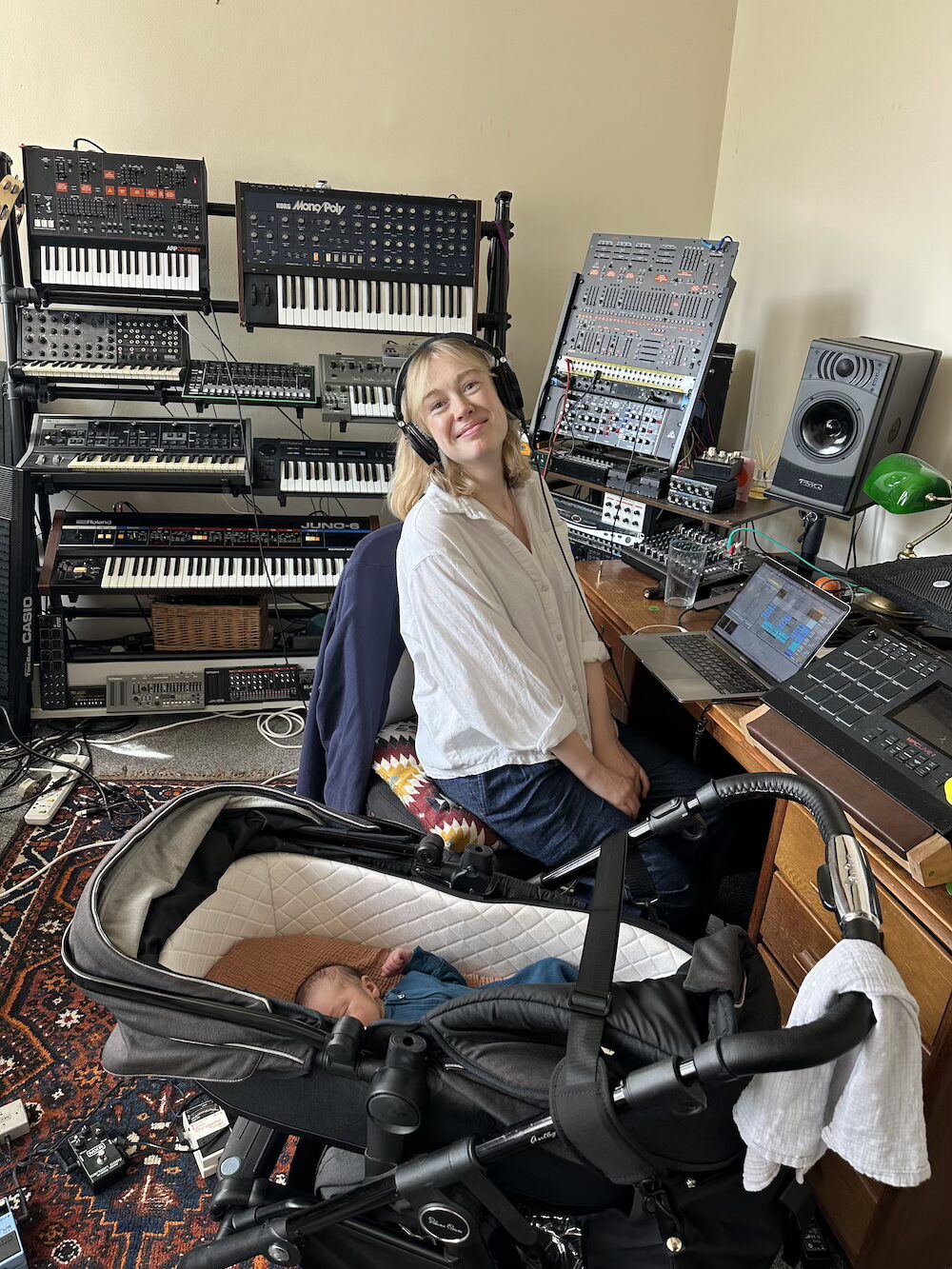
In recent years, he moved to Todmorden, in the hills, with his partner and their son. “It feels just properly like home,” he says. “There are also so many amazing musicians around doing great things, and the Golden Lion, of course, which really is an extended family for the people who live here.” Asked what mattered most this year outside of music, there’s no hesitation – his son, Sonny, “best thing in the world and inexplicably magical every day.”
And the question he was hoping we’d ask? Whether we’d like him to play Watching Trees again next year. Watch this space Tom, watch this space.
25 is released via Test Pressing Recordings.
Tom Sharkett played Watching Trees this year as he just said.
He plays at the Sold Out Love International this week and live @ Campo Sancho at the end of the month.









Must Reads
David Holmes – Humanity As An Act Of Resistance in three chapters
As a nation, the Irish have always had a profound relationship with the people of Palestine
Rotterdam – A City which Bounces Back
The Dutch city is in a state of constant revival
Going Remote.
Home swapping as a lifestyle choice
Trending track
Vels d’Èter
Glass Isle
Shop NowDreaming
Timothy Clerkin
Shop Now