Unconscious Refinement:
a playlist of influences by Craven Faults
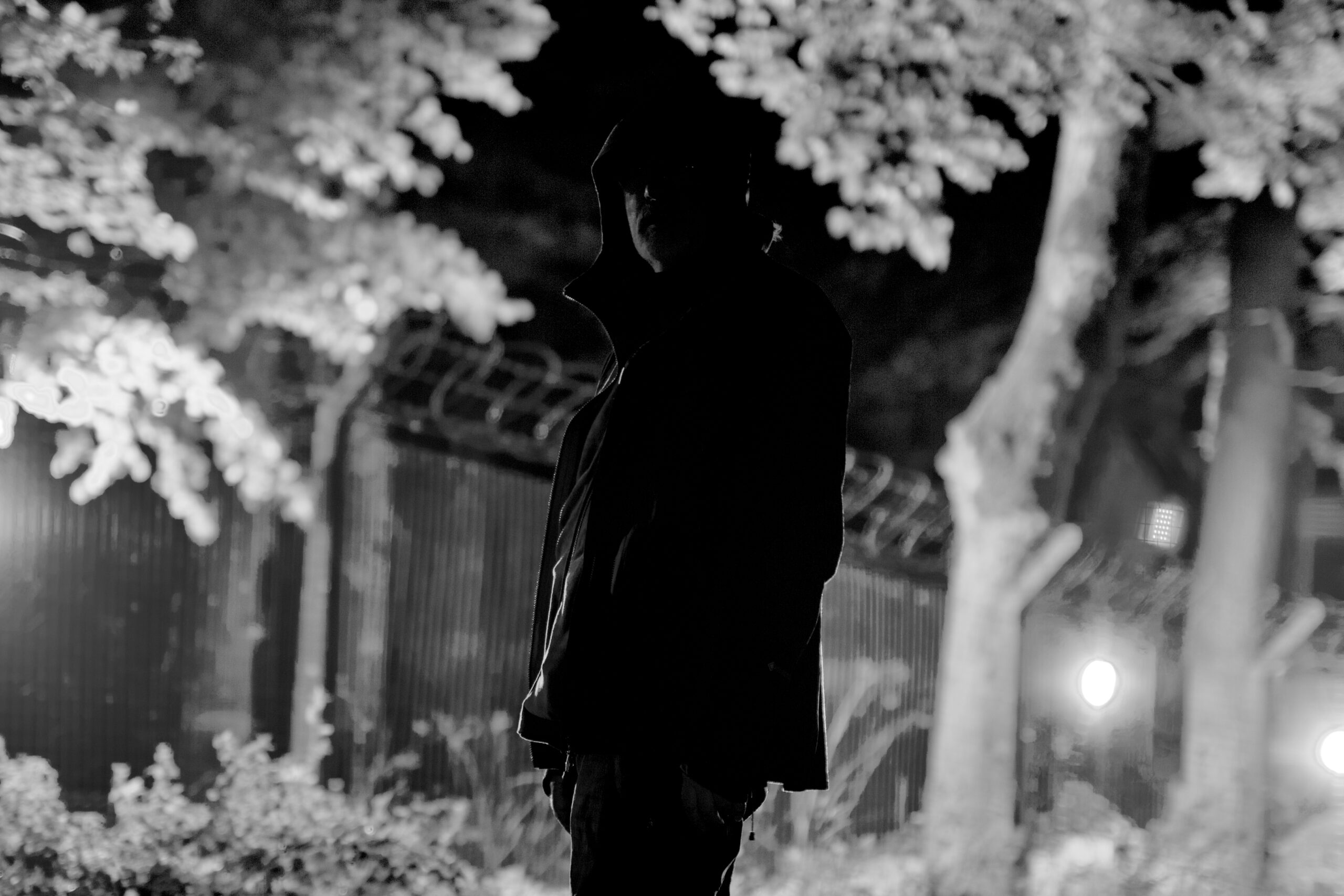
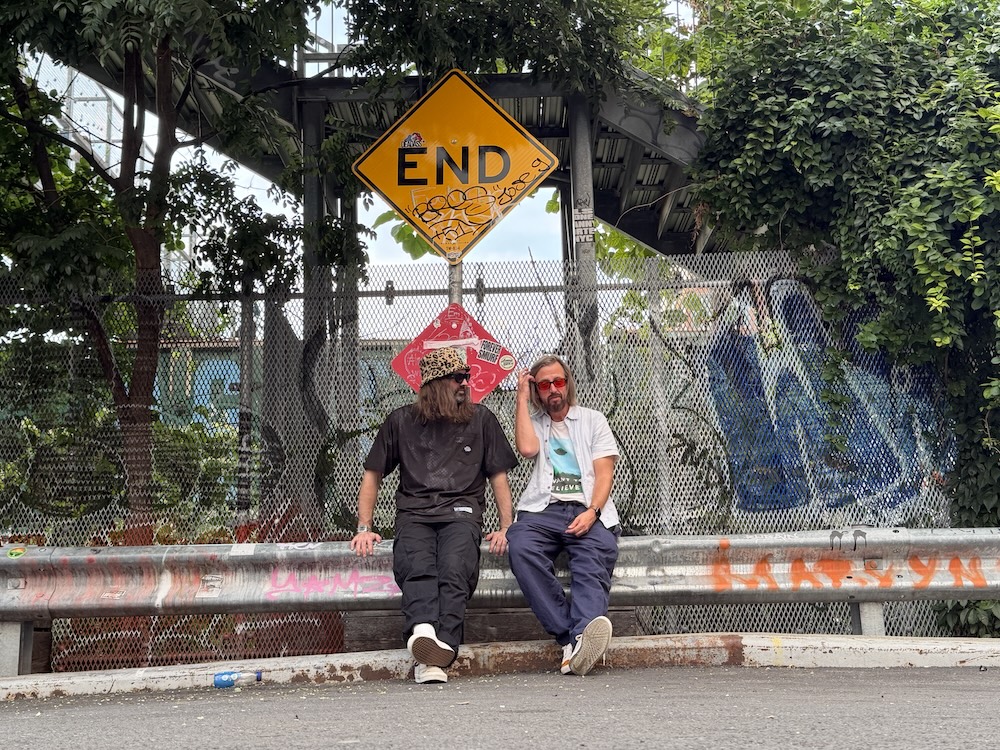
Craven Faults, North Yorkshire’s enigmatic answer to Tangerine Dream, sends out a rare communiqué from the project’s centre of operations, chronicling a lifetime of listening through a playlist of pioneering, pivotal influences, featuring essential music by Can, Terry Riley, Faust, Laurie Spiegel, The Beach Boys, Robert Wyatt & more.
The shimmering, entrancing analogue electronics of Craven Faults seems to emerge from a distinct iconography; mist gathering over the moors, a monolithic library of synthesizers, post-industrial relics, ghosts in the machine. Since 2020, the project has released an exhilarating series of records across the project’s own imprint Lowfold Works and The Leaf Label, while garnering recognition from the likes of Robert Smith of The Cure, who Craven Faults remixed last year. Appropriately based near an old mill in North Yorkshire, Craven Faults has amassed a cult following through potent, additive electronic music steeped in cultivated, autodidactic aesthetics and a firmly rooted sense of place.
This year, Craven Faults releases the project’s new album ‘Sidings‘. Judged by the accompanying text for the album, it’s a piece of work intended as a repository of North Yorkshire mythology and parallel timelines in music history, from the heyday of Gold Star Studios through the activity of Morton Subotnick’s San Francisco Tape Music Center to Lee ‘Scratch’ Perry’s Black Ark and beyond. In the concept and sound of the album, you could draw a line towards Edgar Froese & co, Pye Corner Audio, The Black Dog (RIP Ken Downie), and Steve Hauschildt, but across the eight tracks that feature, and across the music of Craven Faults more broadly, there are profound, original resonances coursing through each tone and signal.
Following the recent release of ‘Sidings‘ and ahead of a date supporting Mogwai at the Royal Albert Hall on the 25th March – for the Teenage Cancer Trust concert series curated by ‘the gothfather‘ Robert Smith (The Cure) – Craven Faults affords us a rare glimpse into the project’s mysterious, elemental world, with a discerning playlist of influences, charting a lifetime of listening through pivotal and pioneering music. Read on for a philosophical introduction from Craven Faults as well as choice picks and reflections, featuring the likes of Can, Terry Riley, Faust, Laurie Spiegel, The Beach Boys, Robert Wyatt, The Velvet Underground & more.
For more info and to have a listen to ‘Sidings‘, head here. And for more info on Mogwai + Craven Faults live at the Royal Albert Hall for the Teenage Cancer Trust, head here.
Methodologies / Process / “Feels” / Songwriting
How do we make music and where does it come from? What goes in will at some point come out. The art of creating a piece of music is a refinement of a lifetime of listening, an accumulation of ideas and influences, of substance and process, of character and communication. The music of Craven Faults is in some ways a result of the human intervention in the workings of machinery and technology, predominantly physical and tangible. My influences are not always obvious. I usually recognise them once I have finished a track, some small element which reminds me of something else, unconsciously inserted into the music. Maybe there are no clear influences in this playlist, but much of this music I have been listening to since I was in my teens and twenties, it exists within me.
Thought for the day
‘Music, to be personally involving and socially valuable, must be “out of time” and “out of tune”’
– Charles Keil, 1987
Topics
Five individuals improvising without parameters or guidelines. Experimenting, discovering new routes and new ways within their own basic Inner Space Studio, recording to two stereo tape recorders. The beauty in Can is the ability to edit themselves, to arrange and construct, discard
elements, retain others, to be focussed and create exceptional work. It isn’t just the sound of the finished tracks which have inspired me but also the work ethic that has gone into them.
-
 Can - Future Days (from Future Days, 1973)
Five individuals improvising without parameters or guidelines. Experimenting, discovering new routes and new ways within their own basic Inner Space Studio, recording to two stereo tape recorders. The beauty in Can is the ability to edit themselves, to arrange and construct, discard
elements, retain others, to be focussed and create exceptional work. It isn’t just the sound of the finished tracks which have inspired me but also the work ethic that has gone into them. -
 Terry Riley - Poppy Nogood and the Phantom Band (from A Rainbow In Curved Air, 1969)
Originally performed in 1968, this is the sound of a collaboration between one man, a saxophone and two tape recorders. This plays with repetition, slow changes, and a sense of the music unfolding over an unlimited duration.
-
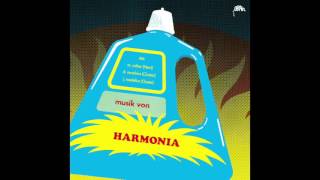 Harmonia - Watussi (from Musik von Harmonia, 1974)
DIY avant la lettre. A near perfect blending of character (Cluster and Neu!) – a synthesis. There is a density of sound, but un-forming and re-forming as the elements move disparately in the same direction, in and out, up and down, coiling around each other. Time and place, the early 1970s, Forst in rural West Germany, a basic recording facility in an old house.
-
 The Beach Boys - Surfs Up (from The Smile Sessions, released 2011)
Segments, sections, ‘Feels’, as Brian Wilson so succinctly termed them. This is a modular song originally from an album of modular parts, cross-referencing, repeating, uniting into a whole in 1966 / 67. An exercise in complex simplicity.
-
 Faust - Jennifer (from Faust IV, 1973)
Faust were an authority on mixing up beauty, noise, revolution, banality, peace and aggression, often all in the same song. Having the foresight to extract money from a major record label to build their own studio they amassed a catalogue best experienced on The Faust Tapes. Jennifer
dates from their time at Virgin Records and the Manor Studio, it contains all of the above. -
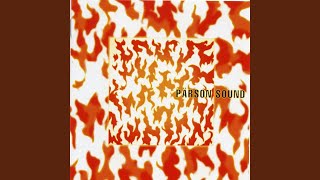 Parson Sound - Tio Minuter (from Parson Sound, released 2001)
What was going on in Sweden in the late 1960s, early 1970s? There are countless 21st century labels which could be attached to this music – DIY, lo-fi, free improv, etc, etc. A collision between the processes of Terry Riley and the noise of 1960s guitar bands. Unreleased at the time
(1967 / 8), these are basic recordings, two microphones in a room. They continued in this way as International Harvester and Trad Gras och Stenar. -
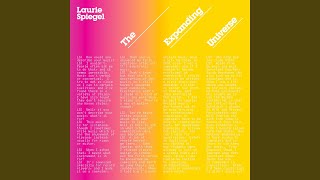 Laurie Spiegel - Patchwork (from The Expanding Universe, 1980)
A very early protagonist of computer controlled synthesiser music creation, albeit with punch-cards etc. Laurie Spiegel’s music retains a character and identity of unmistakable originality. Tonally, the sound of these synthesisers has often been inspirational. They sound simple, uncluttered and unburdened with multiple modulation techniques. Communication of an emotion through apparent simplified forms, the right notes in all the right places!
-
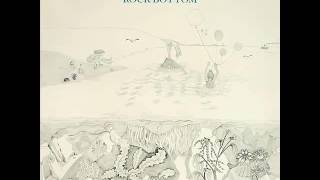 Robert Wyatt - Sea Song (from Rock Bottom, 1974)
We all have a hero somewhere. Robert Wyatt is one of mine. An extraordinary song from an extraordinary album. Few achieve such true originality.
-
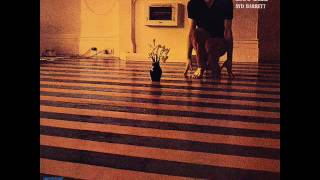 Syd Barrett - Octopus (from The Madcap Laughs, 1970)
Of all the artists on this list Syd Barrett is the one I have been listening to the longest. I knew nothing about him when I first heard his songs, I knew nothing about his health problems and behaviour, or the rumours and hyperbole which amassed after his ‘disappearance’ (no internet or
retro magazines back then), I just knew the music and songs, and they resonated with me greatly. -
 The Velvet Underground - Sister Ray (from White Light / White Heat, 1968)
Like Can but with competitiveness between the participants to see who can be the loudest, yet still retaining a sense of everyone pushing in the same direction. There is a density of sound, noise, with the heartbeat of percussion refusing to capitulate. Relentless.








Must Reads
David Holmes – Humanity As An Act Of Resistance in three chapters
As a nation, the Irish have always had a profound relationship with the people of Palestine
Rotterdam – A City which Bounces Back
The Dutch city is in a state of constant revival
Going Remote.
Home swapping as a lifestyle choice
Trending track
Vels d’Èter
Glass Isle
Shop NowDreaming
Timothy Clerkin
Shop Now