Matthew Herbert: “There should be no food banks”
The producer’s new album is built entirely from the items food banks are asked for most
In 2000 there were no food banks in the UK. Not few – none. That fact sits underneath everything on theukhasmorefoodbanksthanbranchesofmcdonalds.com, the new album from Matthew Herbert, whose title comes from a headline that stuck with him a couple of years ago.
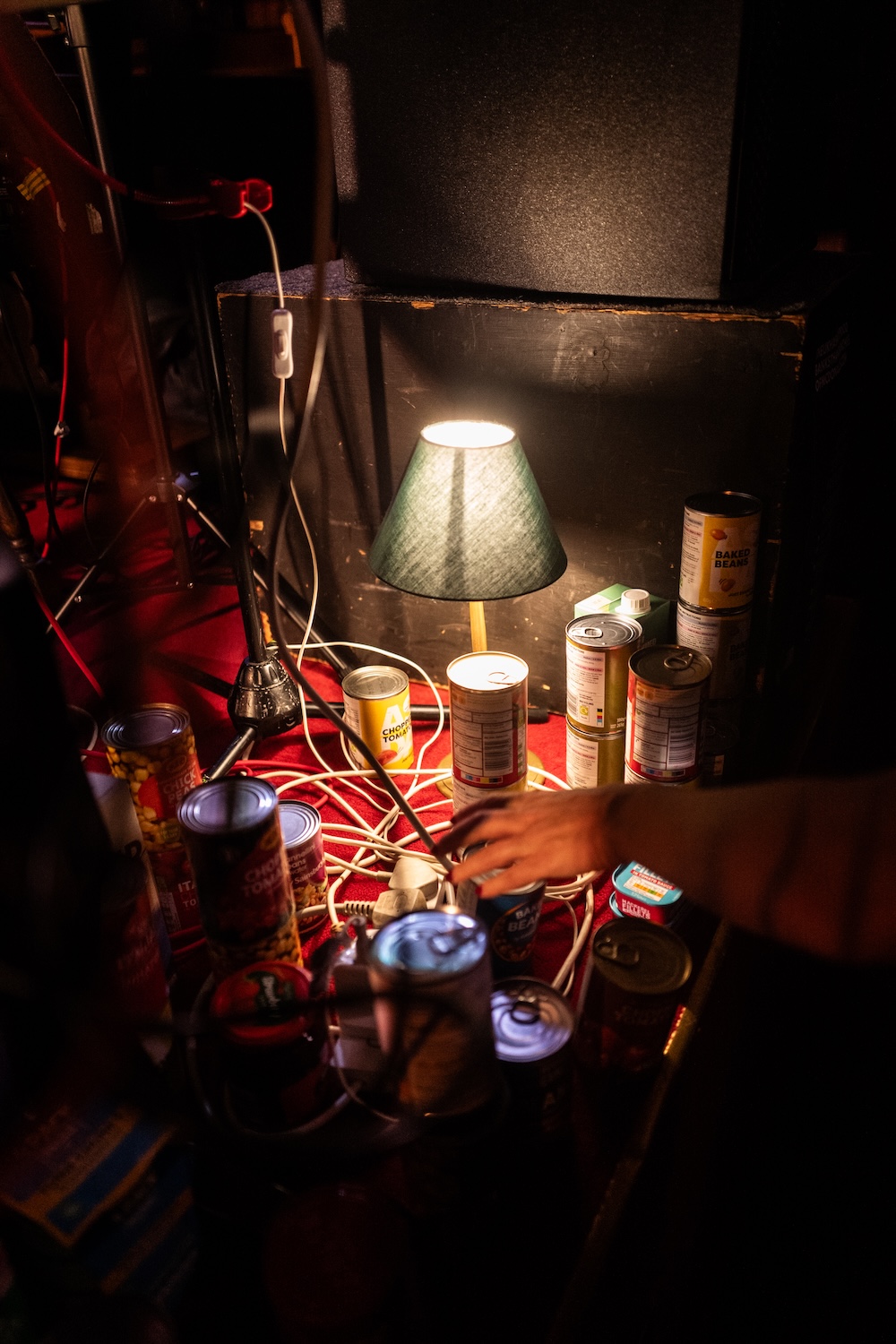
Herbert has spent three decades turning the physical world into music: the life cycle of a pig, a horse skeleton, a bomb going off in Libya. This time the microphone points at tins, packets, cartons, bottles, nappies and toilet roll — the items UK food banks are most often asked for. Each track is built from one or two of them. The whole record follows PCCOM, his personal rulebook for composing, which he describes as a way “to remind myself to keep going further with limited sounds rather than just accumulate loads of material,” a process “about simplifying and expanding at the same time.” No presets. No laziness. Responsibility for every decision.
What comes out is dancefloor music, built to work a room before it tells you what it’s made of. Herbert wants to “seduce people into dancing along, to implicate us all” — and the implication he’s most interested in is a delayed one. “You could potentially enjoy one of these tracks whilst dancing and then find out later what it was made of. That retrospective moment of recognition or discovery, I think, has a useful political charge.”
He’s drawn to the body as a political instrument: “putting your body on the line or in the way, or showing up.” Dancefloors, he says, are “a great place to find unity and compassion and to experience alternative perspectives, alternative bodies or alternative sounds. By being present you’re in dialogue with strangers, friends, the music, the DJ, the venue, the culture.”
The tracks are built to hold together and then come apart. “I’m trying to create pockets of satisfaction that one can get kind of locked into, hopefully, and then they start to erode or deviate somehow. I love the word ‘breakdown’ in the lexicon of dance music. I feel like we should be doing more breaking down than we do.” On the tinned fruit track it “completely disintegrates into its component parts before reassembling itself again.”
Some of the sounds surprised him. Stretching out the nappies produced “this really satisfying bonk kind of noise. Really percussive, but also with pitch.” The research behind the item list brought its own surprise: how many of the things food banks are asked for are for babies.
This isn’t the first time Herbert has pointed a microphone at food, but he draws a line between this and Plat Du Jour or One Pig. “Many of my food projects, like Listen Like a Banana, are about listening to what is behind the food, trying to render audible hidden stories. This project is more about trying to hear a broken system.”
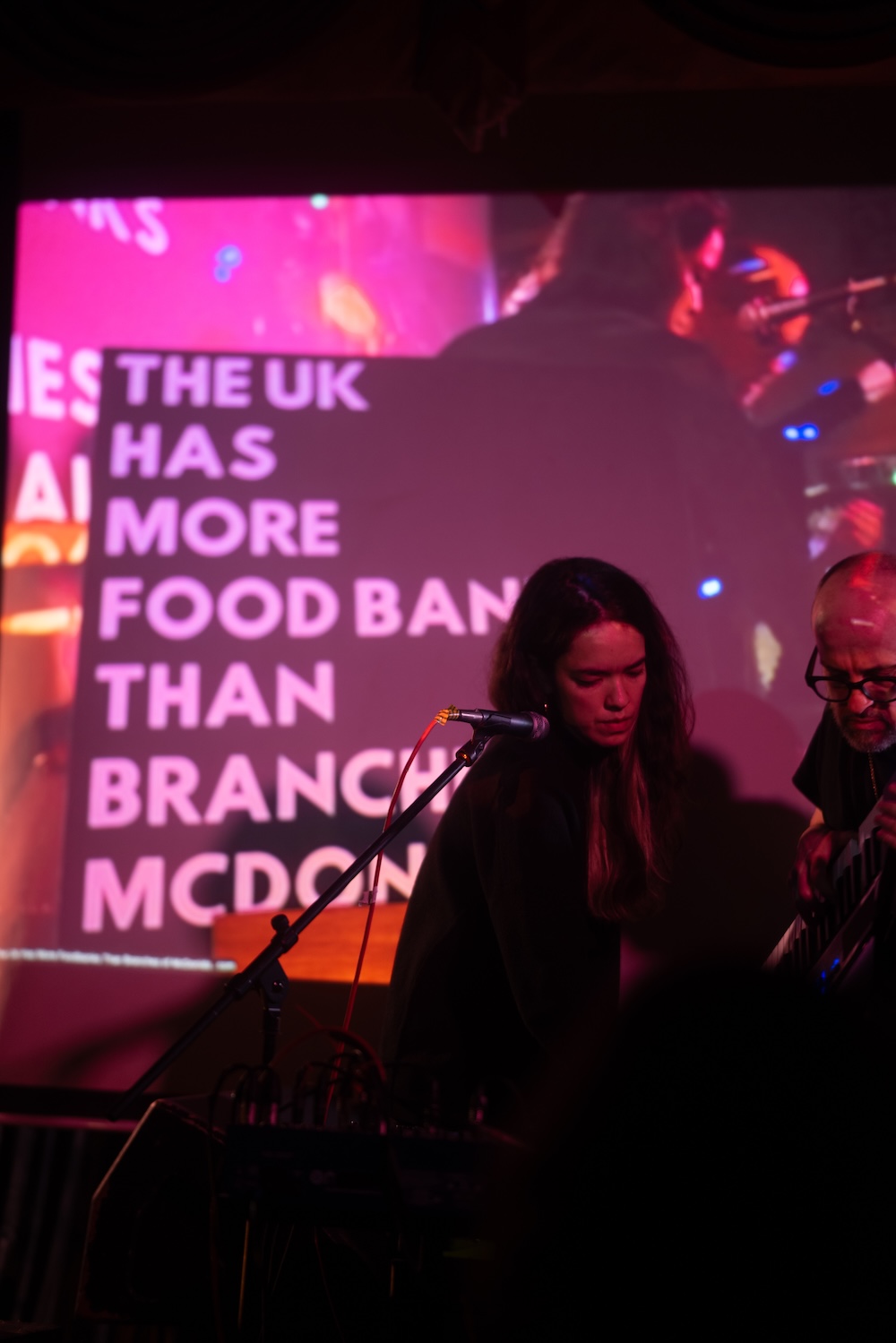
The system he means is austerity, and he’s clear it was chosen. “It’s at the root of so many issues we face now: the cuts and lack of investment at the time, from the Tories and the coalition, in people, in infrastructure.” He cites research attributing hundreds of thousands of excess deaths across the UK to austerity between 2012 and 2019. “How has this gone unpunished? How have we allowed a society so cruel, so unfair, so unequal to be constructed before our eyes? It’s like a terrible magic trick. They deliberately created a society that is profoundly vulnerable, and currently it’s only kept from collapsing by the extraordinary work of volunteers.”
He’s careful about what the record is for. “We need systemic change, not just better-funded charities. There should be no food banks.”
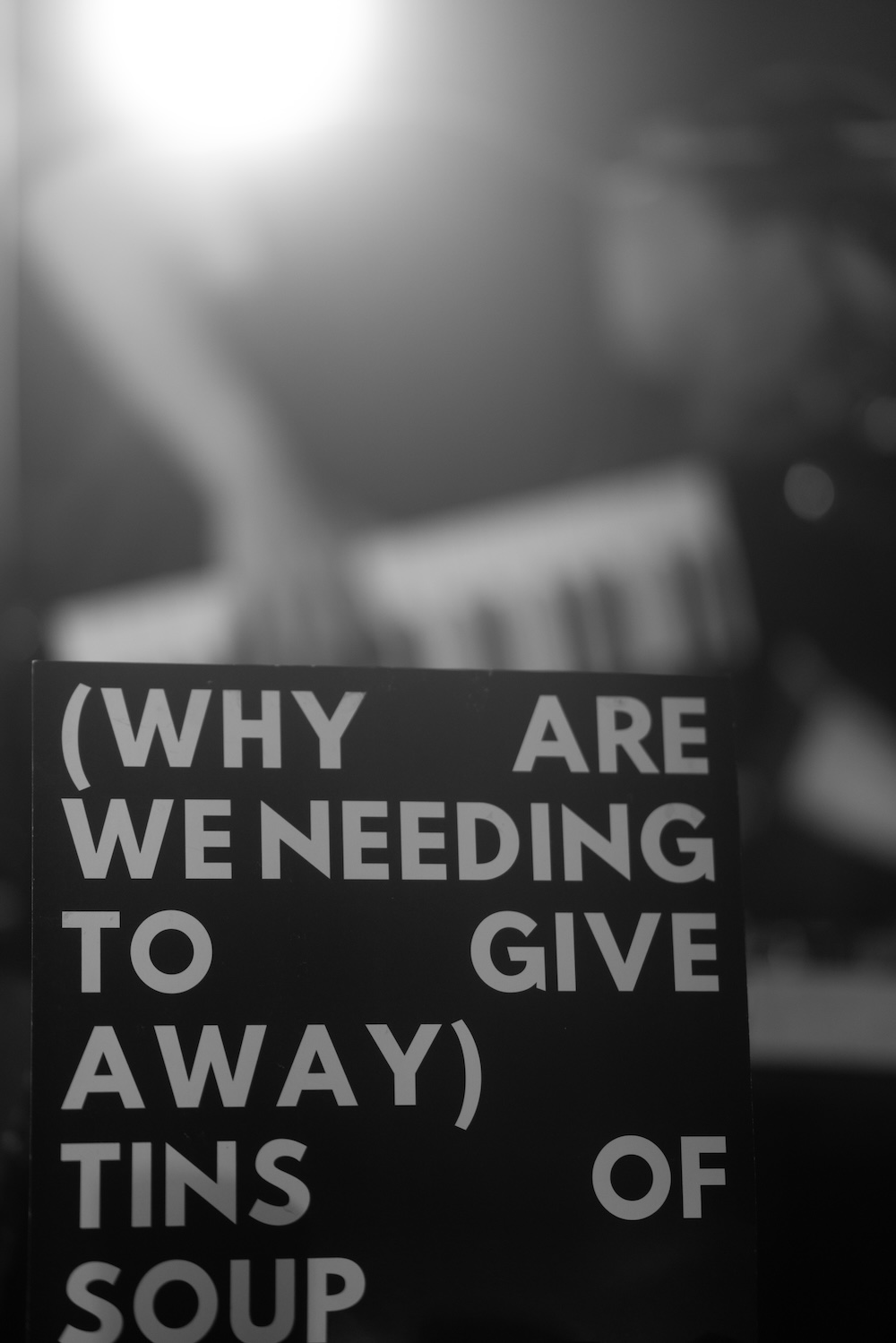
The track titles arrived late, and read like protest placards. “I suddenly realised that if individual tracks get streamed or have a life outside of the album, then the politics would be lost. I also liked the idea, similar to the title, that people have to talk about these issues as part of the work whether they want to or not.”
The album is a free download on Accidental, the label Herbert founded, with one request: give to a food bank or similar organisation near you, and write to your MP. There’s a tickbox, no proof required. “I didn’t want to feel like me and Accidental, the label, were policing or administering people. I also really didn’t want it to feel transactional. I wanted to build a relationship between the audience and the people on the ground doing the hard, difficult work. I wanted to get out of the way as much as possible. I’m here to point to the problem and to point to people who need the support.”
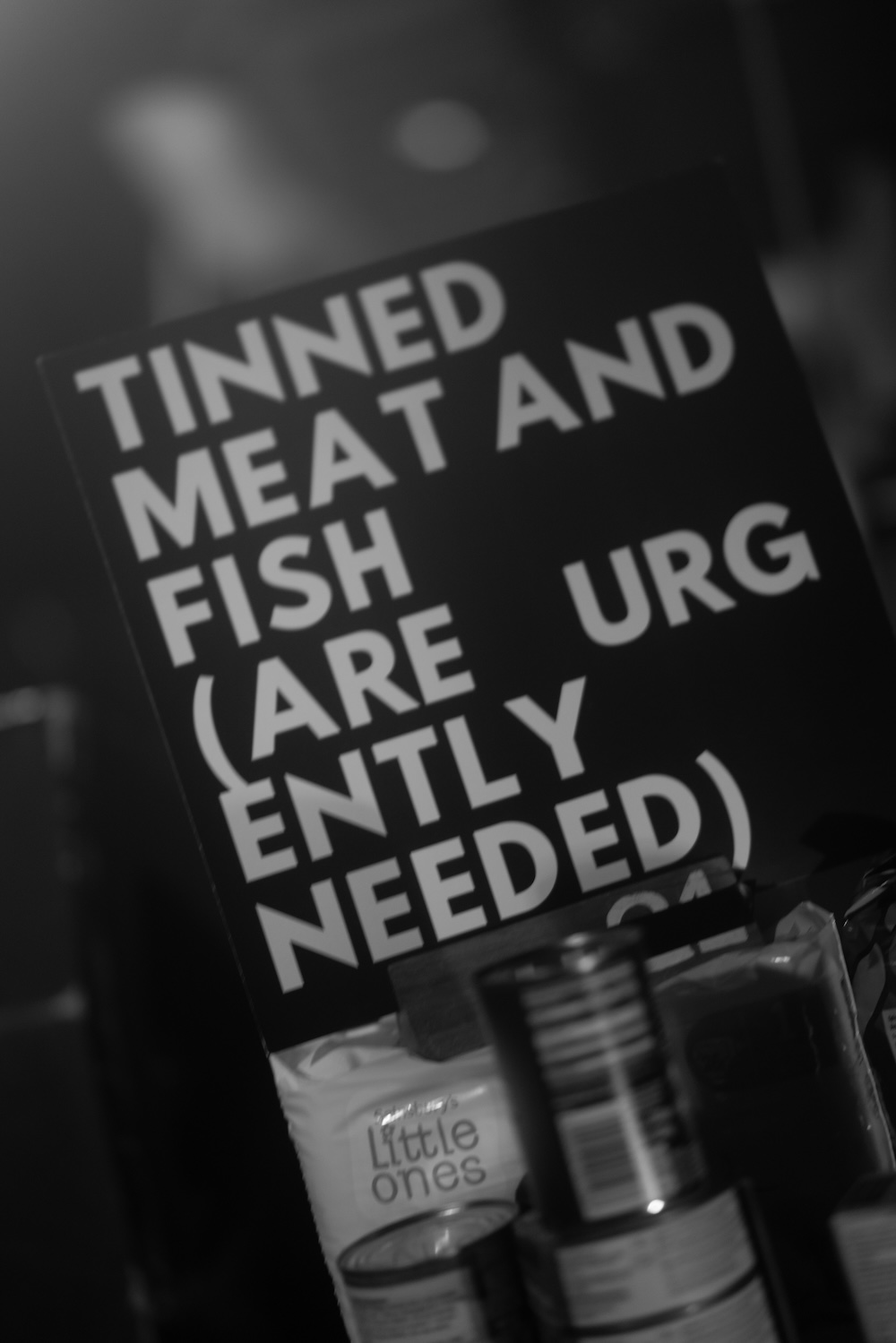
Getting the organisations themselves involved proved harder. “Truthfully, the vast majority of organisations we reached out to didn’t have the capacity to engage with us that much. I get it. They’re staffed by volunteers who are doing incredible but complex work in tricky circumstances. Some random dude wanting to make an instrumental techno record about it is pretty low down their list of priorities.” He singles out David Holt, chair of trustees at his local Canterbury Food Bank, as “particularly helpful and insightful.”
Since “pasta (is not a luxury)” landed in August, there have been “all sorts of interesting conversations with listeners. Less so with MPs!”
He’s also clear about why there aren’t more records like this. “I read the other day that the use of the word ‘I’ in lyrics has increased a lot over the last few years. I’m really disappointed by how narrow and apolitical the musical terrain has become in many genres, but it’s also incredibly hard to be an artist these days. 50% of UK musicians earn less than £10k a year. It’s a brutal profession and people are really struggling. I’m lucky I can give this record away because I have other work that can pay for it, but not everyone has that privilege.”
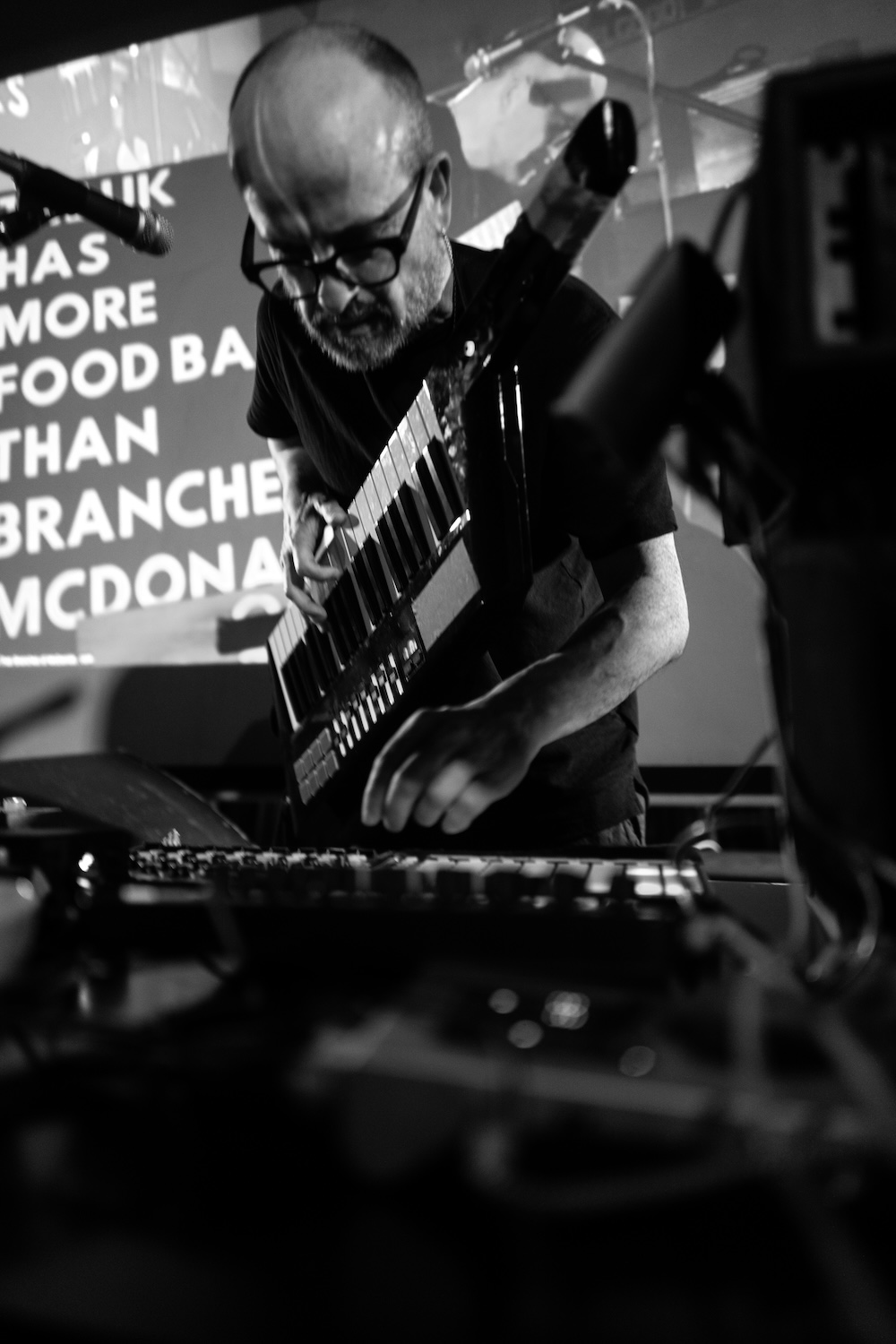
Performing it brings its own problem. “It’s not easy, as so many of the foods are tinned, so I’m working with the same size cans for a few of the tracks, meaning the textures can be similar. But modern music technology can also help with some pretty fun manipulation.” He sums up the live show more briefly: “basically me and the tins trying to fuck things up.”
theukhasmorefoodbanksthanbranchesofmcdonalds.com is out now on Accidental.
Also from Herbert: Doctor Rockit turns 30
The album arrives in the same year Herbert marks thirty years of his Doctor Rockit alias. A new 12″ on Accidental, out 4 September, is built around “Café De Flore”, the jazz-tinged 2001 track with the haunting accordion melody, on vinyl for the first time since its original release. It sits alongside early Clear Records material, “Cameras and Rocks” and “Looprode”, plus “Runner on Hastings Beach” and “Nicotine”, the latter written for a French short film and one of Herbert’s first steps into film scoring.




Must Reads
David Holmes – Humanity As An Act Of Resistance in three chapters
As a nation, the Irish have always had a profound relationship with the people of Palestine
Rotterdam – A City which Bounces Back
The Dutch city is in a state of constant revival
Going Remote.
Home swapping as a lifestyle choice
Trending track
Vels d’Èter
Glass Isle
Shop NowDreaming
Timothy Clerkin
Shop Now