Hope Draws The Map, Trust Is The Compass: Birds Of Pandæmonium in conversation
Two club veterans on covers, contradictions and the virtuous life.
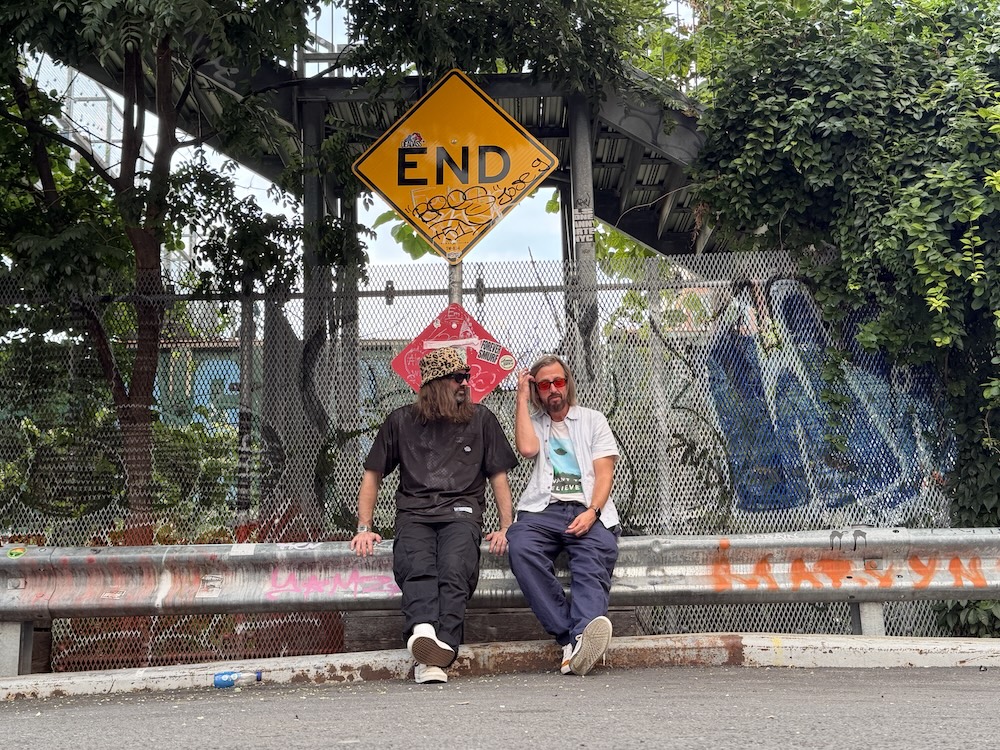
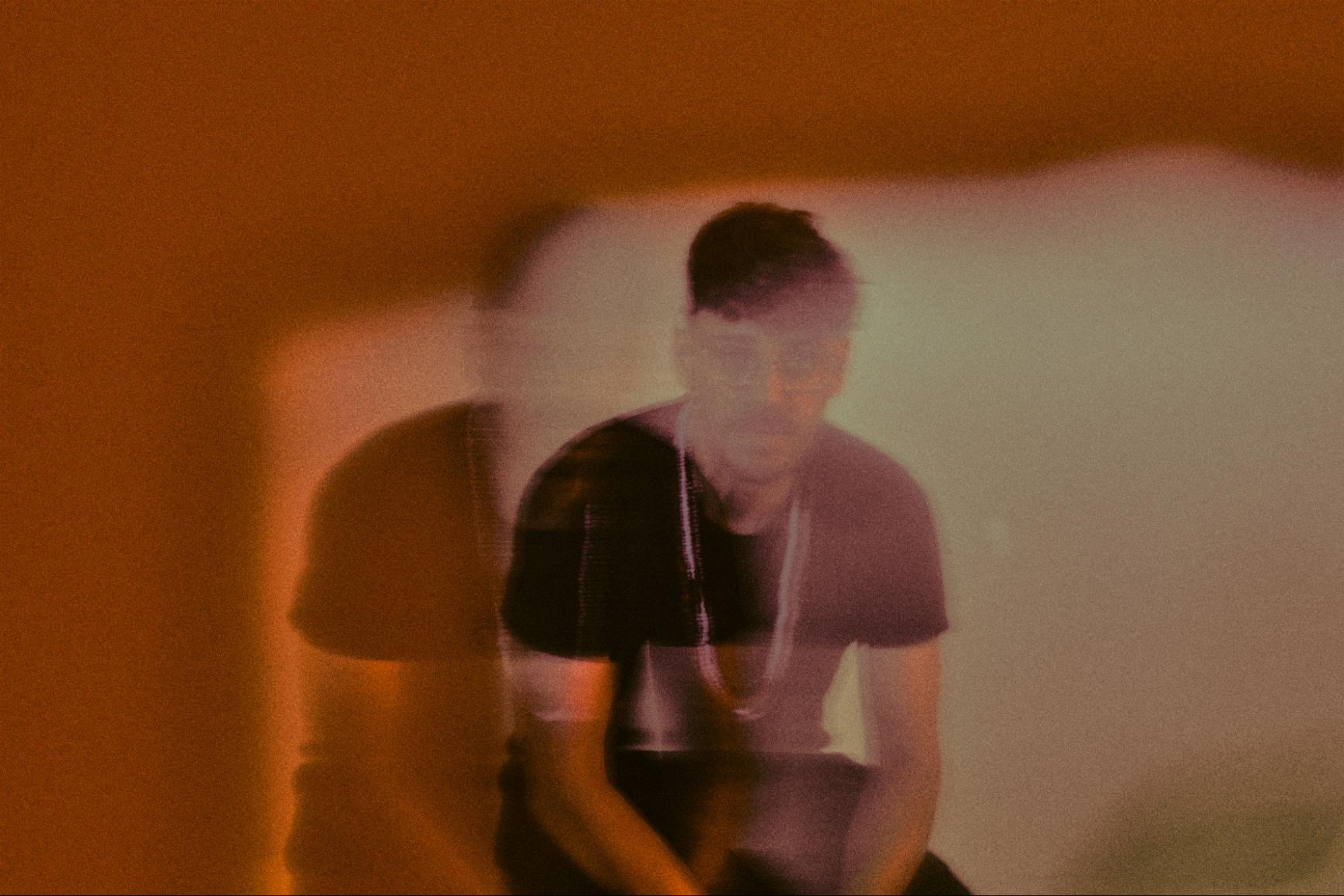
Birds Of Pandæmonium are Brooklyn’s Hazy James Armstrong and Tim Wagner, two musicians who met nearly 20 years ago through the city’s DJ and club scene. Armstrong was born in Inverness, grew up between Scotland, the Southern US, and the UAE, and came to the project through folk, guitar, DJing, synths, and drum machines. Wagner, from Long Island, plays guitar and keys with roots in country rock, disco, jazz and rhythm-heavy club music, and is known for 33Hz and Sunrise Hwy. Their partnership developed gradually: they first worked together producing the album by Armstrong’s previous band, and kept making music until Birds Of Pandæmonium took shape.
Their debut single, ‘Days Go By’, arrived during the 2020 lockdown on Wagner’s Our Starry Universe label, and became a mini-anthem of those early weeks through repeat plays on Lauren Laverne’s BBC 6 Music morning show. ‘Out For You’, an arena rock anthem with an electronic underbelly, followed. The method starts with acoustic sketches, then deconstructs them into something more layered, synth-driven, and textural, drawing on balearic beat, psychedelic textures, and gothic-leaning dream pop. Press comparisons run from Echo & the Bunnymen and Bowie to Talk Talk and Primal Scream, and the duo describe the music as “exploring the darkness while pursuing light.”

Their debut album, Eudæmonia, began soon after ‘Days Go By’. One of the earliest ideas to survive from those sessions was a track imagined as an early-90s remix of a shoegaze cover of Idris Muhammad’s ‘Could Heaven Ever Be Like This’. From there the record grew into more obscure covers and new originals shaped by reflections on life, grief and love. The title comes from eudaimonia, Aristotle’s concept of a virtuous life, which surfaced while reading Jeremy Lent. It suggested a descent through the underworld of a life lived too long in hedonic excess, and a return to something more balanced and integrated, with pleasure still part of it. The title also faintly echoes Screamadelica.
In this Artist to Artist, the pair interview each other about the record: moving past hedonism, William Blake’s contraries, covers from ‘Born Slippy’ to Radiohead, the brunch that got James writing again, and why Tim now cares more about trust than hope.
James: So we both came out of fairly hedonistic musical worlds, and now we’ve made a record called Eudæmonia. That’s partly about moving beyond hedonism. Do you think that’s just getting older, or did something more fundamental change in the way you think about music? And life.
Tim: Yeah, getting older is definitely a part of it, but maturing sounds a little too simple.
We came from a world; we were indoctrinated into a world where nightlife, parties and pleasure were central. And I don’t think we reject that.
I think the shift is more about asking whether pleasure is itself enough. So I don’t think Eudæmonia is anti-hedonism. It’s about integrating the pleasurable aspects of existence into something bigger.
I’m more interested now in music that contains this kind of beauty and darkness, rather than just escape. I think that’s evident on our record. There’s still a dancefloor pulse throughout the music, but it also carries emotional weight.
It’s the irony of two people from the club world making a record named after Aristotle’s concept of a virtuous life. It’s part of what makes the title work. Who are we to call this record Eudæmonia?
Tim: And to that point, the idea of eudæmonia is about making a fuller, integrated life. Did that idea reflect something you already had happening in your life? Or did making the record help you understand this moment in your life?
James: I think making it allowed me to articulate an emotional, inner shift that had been happening over a prolonged period of time. When did we start making this? Six years ago? Something like that. Or technically far longer, 14 or so years ago, if you think about Prayer.
It narrated the arc of growth I was experiencing: in the cover choices, in the programming of the record, in what I was writing about lyrically in the original songs.
It gave me a lens to put words to something that was happening and will continue to happen and evolve.
I guess it’s one of the things we either fight internally or just have, as people. We’re balls of contradictions, which exist sonically and lyrically throughout the record.
James: Our music does seem to exist between opposites, like euphoria, melancholia, electronic, organic, Balearic, gothic, things that are beautiful, things that are slightly unsettling. Do you consciously look for those tensions when you produce and write? Or does it just happen naturally when the two of us combine our tastes?
Tim: I think it’s mostly natural. I don’t think anyone sits down and deliberately makes something that is “Gothic Balearic.” That’s a very weird impulse. It just naturally happened. The contradictions come from our different backgrounds constantly colliding.
Dance music is especially good at that. Lots of great dance music is communal and uplifting while being incredibly melancholy underneath. The original ‘Born Slippy’ [Underworld] is a great example.
When we’re making a track, you might bring something really vulnerable and acoustic, and I’ll instinctively want to make it into something stranger and electronic. Or I’ll make something jazzy and Balearic, and you’ll bring a dark dance vibe back into it, like ‘A Love From Outer Space’ [A.R. Kane].
William Blake, who by the way is responsible for most of the art we used for this release, famously said that without contraries there is no progression. That’s his big famous quote, from The Marriage of Heaven and Hell, which is actually another title I pitched to you before we found Eudæmonia.
I really wanted to call it ‘The Marriage of Heaven and Hell,’ but that’s a little bit Billy Corgan.
James: Billy is one of my favourites.
James: And a lot of the album is covers, reimagined versions of other songs, but quite different from the originals for the most part. What is it that makes you want to pull a song apart and find a completely different way to do it?
Tim: If the original already exists and is great, there’s no reason for us or anybody to do a version of it. I’ve made that mistake before. I’ve done some covers that were verboten and got backlash for it.
And I will not cite them right now.
Sometimes the attraction is the chord progression or the melody. Our version of ‘Born Slippy’ came about because I was thinking about how the actual song is a one-note melody, like ‘One Note Samba’.
James: Right, I remember we were going to do a samba version of that originally, an acoustic samba version of the song.
Tim: It’s basically underneath all of that, the bare DNA at the very bottom of the entire song.
I think we preserve the emotional DNA of the songs we cover. We just rebuild it in a new and different way. Even ‘On Islands’ is probably the most faithful cover on the record, but then we add that whole third part…
It’s very hopeful, and then the child vocal comes in and it’s very hopeful, and then this third part is like, “fail we may, sail we must.” We might fail, this whole human endeavour may fail. It’s a comment on the mostly positive nature of that song.
Tim: What makes you hear a song and think there’s another version of it hiding inside it?
James: Well, we covered ‘Could Heaven Ever Be Like This,’ ‘Voices Inside,’ ‘On Islands,’ ‘Blue Jeans.’ Am I missing one? ‘Born Slippy.’ In rehearsals we’ve started reworking ‘House of Cards’ by Radiohead.
Video: Birds Of Pandæmonium – ‘House Of Cards’ (Radiohead cover, live)
https://www.dropbox.com/scl/fi/5xbkj4gthfknzgyf4ylgw/BOP-HOUSE-OF-CARDS_1.mp4?rlkey=eu1if5ksool3wy2fl49v7vqhu&dl=0
Which is an interesting thing, serendipitously coming up, since we met at the In Rainbows record release show on New Year’s of ‘08.
Tim: Hiro Ballroom. My band then, 33Hz, was playing.
James: Yeah, I saw your band, we did shots of tequila and then a month later I decided to move to New York. Now here we are, randomly playing a tripped-out rendition of ‘House of Cards’ in the rehearsal space. And it sounds very cool.
But I think there’s a longing, a romanticism, a deeper internal emotional conflict lyrically in a lot of the songs, but also hope. They’re very disparate, genre-wise and vibe-wise, but those emotional themes throughout the lyrics are the common thread. That’s what moves me personally when I hear lyrics like, like Lana [Del Rey]. I love her lyrics, I love her vocal. She’s such a singular talent.
That stirs something within me. That’s what I try to produce when I’m writing my own, especially within this project. I think hope and struggle, and seeing it through a blurry, hazy, romantic lens, is the vibe that lives within me for what I’m contributing to any songwriting.
And going back to Lana, on all of the songs on this record, approaching the vocal performance, I built characters in my head for each song and tried to approach it more like acting than singing, at least emotionally for myself. For ‘Blue Jeans’, singing as the character she was singing to, back to that character. Really getting lost in an intentional emotional performance of things.
Those are the things that flip the switch in my head, what I gravitate towards.
James: ‘Could Heaven Ever Be Like This’ was a ridiculously specific original thought. We threw that track on before a recording session after listening to My Bloody Valentine and thought we were going to create a shoegaze, Weatherall remixing MBV, but Idris Muhammad kind of thing. Do you think that approach gets you further in your brain than “let’s make this sound simply like X”?
Tim: Yeah, because “make it sound like Todd Terje” or “make it sound like Lindstrøm” will obviously produce imitation, but combining synthetic references creates something that doesn’t actually exist yet. The contradictions force you to invent the missing record.
So an early-90s acid house remix plus a shoegaze band plus Idris Muhammad immediately suggests this texture, rhythm, production era and attitude without dictating any exact sounds. These imaginary scenarios are creative constraints, but also doors to new possibilities. It’s like thinking in terms of alternate music history. What if this record did exist?
James: Yeah, and I think for me too, it takes the pressure off in a way. You’re not trying to do something exactly. There’s not a specific destination. You’re leaving the house, but you’re not necessarily going to the grocery store. You’re leaving the house… to find food. Where will you go, what will you do? You know what I mean?
Tim: Yeah, I think this approach pretty much sums up Birds Of Pandæmonium. It’s familiar pieces assembled into something that feels slightly displaced from reality.
There’s a Henry Corbin quote that’s like “having nostalgia for a place you’ve never been but know very well.”
That’s a very fancy quote.
Tim: Speaking of recent nostalgia, our first single, the one that started all this off, ‘Days Go By’, arrived at a strangely perfect moment during lockdown. And it seemed to mean something to people that we couldn’t possibly have planned. When you hear ‘Days Go By’ now, does it feel like the same song we made back then? Or has its meaning changed for you in any way?
James: ‘Days Go By’ is an interesting song. I hadn’t written a song song in a couple of years. I was burnt out from bands and songwriting sessions, so I stopped and was just DJing and making music for the dancefloor. But I had brunch with one of my friends and she was asking me about music, and I told her I wasn’t writing anymore. And she said, “Well, that’s really sad. You should do it. Nothing needs to happen. It doesn’t need to go anywhere. It doesn’t need to be anything, but you should still do it. You love it.”
So I left brunch and went back to my apartment and took out my acoustic guitar, and ‘Days Go By’ just flowed out in maybe 15 to 20 minutes.
The hook lyric was tied to that feeling of taking a moment of rebirth and moving away from placing so much emphasis on attachment to outcomes, just getting to a place of being. It accelerated an inner journey with myself towards more of an ego death, putting less pressure on outcomes. I got more into yoga and meditation, and I was reading very different things than before after that day.
Tim: And I remember the basics of that track came instantaneously too. It just flowed out. Much like ‘I Want To Believe’, which closes the album. That one also flowed out of us. I had a dream where I heard the whole song, I woke up and produced the demo right away so I wouldn’t forget anything, sent it off to you, and you recorded your ideas on it immediately.
James: It’s funny. I had DJed that night, really late, private-party late. And I remember waking up to the text with the beat. I literally opened my eyes, saw my phone, your text message was on top of the stack. I hit it, there was the file, I pressed play, and as that hook was going, the vocal lyric and melody just came out of me, and I sent you a voice note straight back of me singing over the beat. And then I was like, “Send me the session.”
Tim: Dude, it was Friday morning I made the demo. Sunday afternoon we were tracking your final vocals. At one point you texted me and you were like, “Is it okay if I rap on this?” And I was like, “Yeah, you rapped on it in my dream.”
James: Yeah. But for ‘Days Go By’, like you said, I don’t think we could possibly have understood what it would mean in the context of when it came out during lockdown. It was surprising to wake up and find Lauren Laverne spinning it on BBC 6 Music. That was pretty wild and surreal.
But to me, I think back to the day I wrote it. I’m visualising walking down the street in Greenpoint, past that big church, coming back to the apartment with a different mindset, like a switch had been flipped. It started Birds, it started me writing again, but more importantly it started me thinking very differently about the way I approach life.
James: Thinking about the recording process of ‘Days Go By’, you can be pretty obsessive about getting things right. But when you’re making a record, are you afraid of making the wrong choice, not realising the idea fully, or letting something go before it feels perfect? Or do things ever even get perfect?
Tim: I’m trying to get over fear, at least when it comes to… I’m trying to reduce importance, so as not to get too overwhelmed.
Traditionally, I was afraid of not realising the idea fully to its potential. I often hear some imagined version, like a Steely Dan track in my head, and become obsessed with getting close to it. Sometimes perfectionism is useful, like Steely Dan, because it can push an idea further. But the way I was using it, it could become fear disguised as quality control. There’s a point where you start fixing things so much you take away all the personality.
I’m more interested in the idea that perfect can mean being perfectly itself, rather than perfectly conforming to some imagined model. Some of the best moments happen when the record refuses to conform to what you originally planned. Part of finishing a record like this is trusting that the imperfections might actually be the identity of the project, the brushstroke of the artist.
Tim: Eudæmonia is kind of an impossible thing that we put together. And it’s a kind of descent and return, catabasis. You go into the underworld and come back out. What do you think you personally went into this carrying? And what was the boon you took out of the underworld with you?
James: That’s a big question.
It’s interesting thinking about how cerebral your approach to working is, because I don’t think at all. Haha, I don’t think at all. If I produce by myself, for a Hazy James thing, nothing’s really planned. I just sit down and do things by feeling. And I think maybe that’s why things work so well with the two of us, because you articulate something, like the concept of Eudæmonia, or picking a song like ‘Voices Inside’. That framing, being given a script, lets me find and use the feeling, to hit whatever visceral North Star I’m looking for.
Tim: But you’re definitely finding a character for each song. Even on ‘Voices Inside’, when I first played it for people they thought it was a different singer from the rest of the album.
James: I went out to Nowadays, I think I came back home at about 10 a.m. and we cut the vocal at about 10:30. It was purposeful. I wanted that feel of what a voice sounds like after that, to add to the sonic, emotional texture of it.
Tim: There’s a lot of optimism on the record, like ‘Heaven Is Everywhere’. So having ‘Voices Inside’ is a great balance, because with too much sunshine you’re like, is that toxically positive? Which I don’t think is the point. A lot of our songs sound dark but are actually very light, and vice versa.
James: Which we all live with every day. ‘Heaven Is Everywhere’ was a phrase I wrote down after my grandmother passed, and it stuck with me as a mantra. Omnipresence through memory, seeing the beauty in anything.
And when I wrote that song, it didn’t have the hook initially. It had two verses, and the pre-chorus was really the hook. Then I showed it to you and you said it needs a hook.
Tim: Ohh, sorry. It’s like you’re John Lennon and I’m Paul McCartney.
James: And I’m like, okay, okay, it needs a hook, I’m going back to the couch. I went through my notebook and that phrase I’d written down after she passed was there, and I did that one chord change and it flowed pretty naturally.
We wrote this record over a period going from lockdown, COVID, a lot of political changes, a lot of life changes, people dying, people moving on to different things, seeing a lot of insane shit out in the world, a lot of technological changes, just a lot of change in general. And I suppose trying to have some optimism and hope in general, and in the human race, for people coming together and doing the right thing and moving in the right direction when sometimes it seems that we aren’t.
You can use a song as an escape to recharge and go back out there and continue on. I think the message of hope is quite important in all of this.
Tim: At this point I’m a little more interested in trust than hope. Hope is a weird thing, man. Hope can contain an expectation: eventually this will work out the way I want. Hope is fine, but trust is the heroic path. It’s continuing to do something even when you don’t know what the outcome will be.
Making Eudæmonia took long enough that we had to accept change and uncertainty. We couldn’t control where everything was going. Some ideas disappeared, others survived for years, some became completely different records than we first started. You have to trust that following something interesting has value, even if it doesn’t become the thing you imagined.
There’s something almost irrational about spending years making a record like this in the first place. You’re choosing to act, like you’re saying, without any guarantee of reward. You’re tossing this record into the great Spotify abyss. But that’s why the fairy tale idea of trusting hopelessly in what is beyond hope resonates more with me. You keep moving through the labyrinth, trying to get away from the Minotaur without knowing where the exit is. The record itself is evidence of that kind of process. We went in without knowing what it was and eventually discovered what it was.
James: Yeah, I guess hope kind of draws the map and trust is the compass you follow.
Tim: Yeah, trust is the analogue of courage. I think hope is the analogue of fear. So you’ve got to trust that shit’s going to go your way. When you do that, maybe it does, maybe it doesn’t, but nothing good happens to a pessimist.
James: And that makes ‘I Want To Believe’ such a nice end to the record, and so necessary after ‘Voices Inside’. It would have been a little dark to end on ‘Voices Inside’. But having the ending, “I want to believe” in the two of us. You know, the royal us. I do, I do want to… I want to believe.
Tim: And I like ‘I Want To Believe’ too because it’s not just “believe”. “I want to believe” has some doubt and longing inside it, which I think is present too, and all these contradictions are always present in the moment. Everything is available in this moment. And realising that is the eudaimonic integration this album is about.
It’s also a really great record to put on in the background and dance to.
James: I don’t think it was so much doubt, but, you know, when I look into your eyes, I want to believe. It’s affirming. When you look at your fellow humans, that’s what makes you want to believe. You know what I’m saying?
Tim: Right, but I think we could close on this. That is contrasted with the bridge, and I love the rap bridge because it’s just a list of things.
James: I want a stable home, I want space to roam, I want the time of a life and time on my own. I want you by my side.
Tim: They’re all contradictions. It’s a list of contradictions. And that’s what you go into a relationship with. You want time with this person and you want your existence to be verified by them, but at the same time you want to be your own person.
Contraries, as Blake says, that’s where life is.
Embrace uncertainty is what I say. That’s the message of this record.
James: I concur.



Must Reads
David Holmes – Humanity As An Act Of Resistance in three chapters
As a nation, the Irish have always had a profound relationship with the people of Palestine
Rotterdam – A City which Bounces Back
The Dutch city is in a state of constant revival
Going Remote.
Home swapping as a lifestyle choice
Trending track
Vels d’Èter
Glass Isle
Shop NowDreaming
Timothy Clerkin
Shop Now