‘A Loner in Bordeaux’ : a conversation with Costello
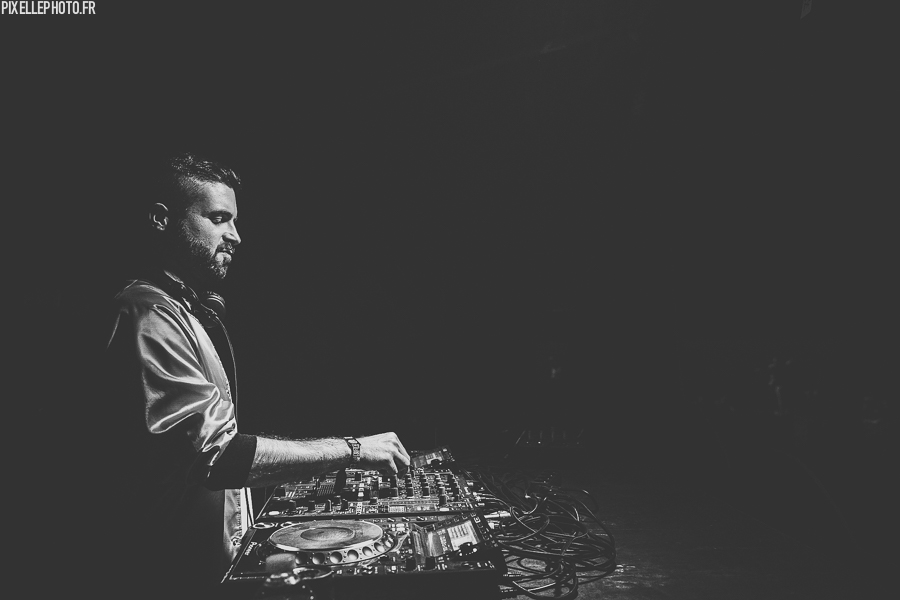
Interview with Bordeaux DJ and producer Costello. A discreet figure of the local electronic scene, he regularly collaborates with major names in the music world, from Laurent Garnier to Chloé, Maceo Plex and Boys Noize.
In this conversation, he shares with Le Type his view of how trends in music are evolving and how nightlife in Bordeaux has changed, and talks about his own artistic practice. The conversation can be read in English below and in French on Le Type, as part of a partnership between the two outlets to promote the Bordeaux music scene.
The French version of the interview with Costello is available on the Bordeaux-based publication Le Type.
Costello is a Bordeaux-based producer and DJ who has been active since the late 2000s. Initially associated with aesthetics somewhere between house and techno, he has gradually broadened his music toward more melodic, atmospheric and hybrid forms, without abandoning his physical relationship with the club. His career has taken him from Bordeaux’s scenes and networks to international labels and dancefloors, while keeping Bordeaux as his anchor and creative base.
After nearly twenty years of production, Costello (real name Rémi Fivet) embodies a generation of electronic artists who have had to evolve alongside the transformations of the industry: accelerating trends, the weight of platforms, new technologies, the international circulation of music and the search for independence, notably through his own label, Costello Recordings.
Esteban Martin Gomez (Le Type): Your latest EP came out last September 18 on Ellum Audio, after several releases on COD3 QR, Diynamic and Lumière Noire. How do you choose the labels you work with?
Costello: It really depends on the label. Some are run by people I know directly: they noticed my work, I was following theirs, and then we crossed paths at a party or a festival, for example. We exchanged contacts without necessarily working together right away. Our artistic paths can cross from time to time.
I’m thinking in particular of Solomun. I don’t know him personally, but I released a track on his label that did very well and that people still talk to me about three or four years later. Chloé, on the other hand, is someone I’ve known for more than fifteen years. It’s the same with Boys Noize, and I’ve been in touch with Laurent Garnier for about ten years. Relationships start around the music first, and then some become more personal.
For Maceo Plex, the contact came through Alex Mendes, a Portuguese artist on COD3 QR. He had heard the demos I regularly post on Instagram and suggested I absolutely send them to Maceo Plex. I didn’t know him and we had never really spoken. Alex passed on his contact, and then I sent the tracks. Sometimes the alignment is immediate; and you don’t necessarily find a way to work together right away. And sometimes it’s years later that the planets align, and you have the right moment, the right music, the right EP to release on a given label.
After those signings, you also created your own label, Costello Recordings. When did you feel the need to structure things yourself?
I launched Costello Recordings just before Covid. The first EP came out in 2019. My music was starting to get some visibility and I wanted to experience the complete process of production from A to Z: making the music, mixing, mastering, scheduling and distributing a release, designing the visuals and organizing the promotion.
I already had experience with other labels, but I wanted a space where I could try things I wouldn’t necessarily send elsewhere. I don’t necessarily release the most immediately effective tracks there; instead, I try to offer more personal projects.
The latest official release was Grand Opening, a collaboration with Huel Lamor, a composer of classical music and film scores. We blended classical and electronic music with a techno approach. On the previous release, TWR72, a figure of Dutch techno, remixed one of my tracks.
So the label is a laboratory for me: it lets me build connections and experiment with things that other labels might not follow. There have been six or seven releases on the label. They haven’t all been hits, but that’s fine: it lets me offer something other than what the public necessarily expects from me.
What place do SoundCloud and Bandcamp hold in this personal laboratory?
SoundCloud has taken on an important role in recent years. I receive a huge number of demos and private promos there, sometimes before their release. It lets you feel the pulse of what’s going on, and it’s also a good platform for visibility.
Bandcamp is particularly interesting for the distribution of independent labels. In terms of revenue sharing, it’s clearly one of the best platforms: the cuts taken are much lower than on other services. It needs to be supported, because it’s genuinely favorable to artists and labels. It’s both a music exchange, where you can look for new sounds and discover little-distributed artists, and a tool for visibility and sales to your own audience.
I use SoundCloud a lot to share tracks through private links. Just this week, Laurent Garnier took one to test over the weekend. If the track works, we might discuss a release. One of them has actually been scheduled on COD3 QR in November!
Which Bordeaux venues, collectives, record shops or artists have been decisive in your career?
I really come from the MySpace era, before Facebook. It was a platform where you could write, post photos and above all music. It created connections between musicians, notably because everyone could feature other artists. I posted my first tracks there, before I was even nineteen. My first contact with a foreign label came from there.
Right after that, I won a remix contest on Beatport, which allowed me to sign with Dust Traxx, a house label from Chicago. Releases then followed one after another in Germany, the United States and elsewhere.
I’m originally from Agen and I arrived in Bordeaux about twenty years ago for my studies, already with a few releases and mixes behind me. At the beginning, I showed up at places like 4 Sans, BT59 or Zoobizarre with mixes recorded on CDs. I didn’t know anyone, but they started booking me. 4 Sans was an extraordinary venue: I had some wonderful nights there, as both a DJ and a clubber. BT59 also booked me a lot.
At 4 Sans, David Guetta, Justice, Carl Cox, Laurent Garnier, Kavinsky played… I arrived in Bordeaux just as I was starting to release records and play out. The environment was extremely stimulating. I met a lot of artists there, including Djedjotronic.
Did other people in Bordeaux play a role in your journey?
In Bordeaux, I’ve always been rather a loner. I never really belonged to a collective and I’ve collaborated very little musically. I get along with a lot of people, but I don’t go out much and I choose the places and people I go to see. So it’s more venues than artists that left a mark on me.
One person was decisive, though: Ziggy, my manager for almost ten years. She helped me a lot and taught me how the different professions of the independent music world work.
I’ve always looked toward the national and international scene. I followed what was happening locally, but I didn’t get close to many Bordeaux artists. I went straight to Boys Noize, Laurent Garnier and the artists I admired as a teenager, whose posters I had in my bedroom. Today I work with them: that was the goal.
What I sometimes hold against the Bordeaux scene (even though I may not know it well enough) is that it works in a closed circuit and lacks international ambition. With the Internet, everything is possible: a piece of music can quickly reach well beyond Bordeaux.
Did your first signing in Chicago immediately show you that this international opening was possible?
Yes. It changes your mindset right away: you realize it’s possible. Everything happened remotely. I was in my twelve-square-meter student room, exchanging with people in Chicago, Paris, Canada, Germany or London.
I only met them later, when I started touring and playing in different cities. MySpace and the Internet let music travel much faster and much farther. I come from the generation that was discovering the power of the Internet: if your music holds up, it can reach far beyond your city.
So from any city, people very far away can easily discover your work…
Exactly. Artists from the Bordeaux region, like Anetha, went on to reach audiences nationally and internationally. But for about ten years, the scene remained mostly organized around collectives made up of very good DJs, who perhaps didn’t want to, or didn’t dare to, aim any higher.
How do you view the evolution of the Bordeaux electronic scene over the last ten or fifteen years?
First there was a period, between 2007 and 2011, with Strip Steve, Bobmo and Boxon Records. It was a kind of French Touch 2.0, in the wake of Surkin, Para One and that whole scene. Bordeaux had important representatives, some of whom later left for Paris or Berlin.
Then there was a more electroclash period, notably with The Bloody Beetroots, while I was heading toward more techno-oriented things. For a good ten years, up until Covid, I didn’t feel that many Bordeaux projects were making a strong impact. For my part, I was touring a lot and was a bit in a tunnel.
After Covid, the cards were reshuffled. When we came back out, we discovered that the majority of young people wanted to hear very fast hard techno in clubs, around 150 BPM. It’s a legitimate movement that has always existed, but it now takes up a much bigger place. I don’t directly fit into it, although I respect it.
Over twenty years, I’ve moved between house, techno, downtempo, minimal and other forms of electronic music. You can’t produce exactly the same music for two decades. You end up getting bored, and you inevitably absorb the spirit of the times. It’s consistent with the DJ’s craft: you dig, you stay attentive to what’s going on, then you blend those influences with what you deeply love to bring them out in your productions.
Have you tried other experiences in music?
After Covid, I tried different things, notably sound design for advertising. I was hesitant about returning to clubbing, because I wondered whether twenty-year-olds still wanted to listen to my music.
Laurent Garnier and Solomun got me back in the saddle, especially Laurent. He encouraged me to keep sending him music. At the time, he was still working with Scan X, another important figure of French techno. Since then, we’ve released several tracks that have done well. Dream Operator, for example, circulated enormously. Laurent Garnier re-motivated me to keep producing, in a sustained way, the music I love, which still finds its audience despite the place now occupied by a more “aggressive” techno.
How do you explain this craze for hard techno in Bordeaux and elsewhere?
In Paris there’s also hard techno, but the offer remains much more varied: hard groove, house, minimal, bass music, UK garage… In Bordeaux, and even in the Southwest in general, the programming is very concentrated on hard techno.
I have a very personal theory: during Covid, many young people kept going out to free parties, in the woods or in the Landes. They formed their ears and tastes in the only places that were still playing music. For them, going out to a party therefore became associated with that aesthetic.
How has your way of producing evolved over the years? Do you use more machines, synthesizers or software than at the beginning? And what place does artificial intelligence have in your creative process?
I started very young, around thirteen or fourteen, with FL Studio, which was still called FruityLoops. I then tried Ableton and other software. At first I worked only on the computer, because I didn’t know how to use machines and only had access to their emulations. All my early productions were entirely digital. Machines intimidated me and were expensive.
Today, I have a compact but very efficient setup. I don’t have a fixed recipe: some tracks are entirely digital, others are 50, 60 or 70% analog. It all depends on how the idea comes. The music has to stay playful. If I feel like turning on a machine and jamming for an hour or two, I record, then I sift through the result like in video editing. I keep what’s usable and build around it with other machines or digital tools.
So my productions are hybrid. With experience, you get to the essentials faster and can focus on the details that make the difference: harmonics, small distortions or degradations of the sound that give a more personal signature.
I’ve also tested several uses of AI. On a track released on Diynamic, I used voice synthesis. It wasn’t a tool writing the lyrics, but text-to-speech, an old principle that has become very powerful. I also tested audio generation with Udio. For the moment, it’s very random: the parameters let you give broad directions, but you have little control over the result. Then you have to search for what might be useful. Honestly, two hours of jamming give me more usable material than a day on Udio.
More generally, on AI and creation, I don’t see the point of asking a tool to directly generate a finished track. For me, music has to remain enjoyable to make. Writing a prompt and receiving a finished track gives me no pleasure at all.
Some people use these tools to generate voices, extract acapellas or separate stems. For now, the voices often sound alike, and the use seems to me mostly suited to humorous content or to illustrating videos.
My music today belongs to a niche. It works, but it isn’t aimed at tens of millions of listeners. More than twenty years after my beginnings, I consider it a stroke of luck to still be able to do what I love and release my music on incredible labels. AI can help occasionally, but I’m not going to make my entire production depend on it.
Algorithms now play a much bigger role in listening habits. We may be less in the realm of word of mouth, visits to the record shop or manual searching. How do you deal with this as a producer and as a DJ? Do you try to counter them or play along?
In twenty years, we’ve never listened to so much music, everywhere and all the time. So there has never been so much music made, produced and distributed. The mass to sort through is gigantic. Since I work in a niche that isn’t particularly trendy, I have to listen to an enormous amount before finding what truly interests me.
Algorithms can help the general public discover new tracks and artists. Apple sometimes offers very good suggestions. YouTube also lets you navigate from link to link and land on very obscure content. This wider access to music is wonderful.
I started mixing on vinyl. You had to go to a shop, wait for it to open, hope the record you were looking for wasn’t already in someone else’s hands, and listen to it quickly because people were waiting behind you. Today, you turn on your phone and all the world’s music is available. It’s considerable progress. The risk, however, is staying locked into the same recommendations when you don’t actively seek to go further.
How do you analyze the evolution of Bordeaux nightlife, especially after the closure of emblematic venues over the years, such as 4 Sans or IBOAT?
I don’t have a very positive opinion of the current electronic music offer in Bordeaux. It’s limited because of a set of factors: prefectural decisions, urban planning, legislation and the accelerating effects of Covid.
Bien Public is, in my view, the last true club to have opened recently in Bordeaux. Its programming is still looking for its identity, which is normal for such a new venue, but the place is alive.
Is opening a new club in Bordeaux only possible on that side of the Garonne?
It’s supposed to bother the neighbors less, even though the terrace seems to cause problems at times. In any case, it’s the last real local club. There are also warehouse-type spaces, but in Bordeaux I’ve known clubs with bars, cloakrooms, heating, scenography and real lighting. A club shouldn’t be limited to a bare-bones space, with poorly tuned sound and no scenography, where you just stand in front of the speakers.
A club should also let you sit down, meet people and discover artists from all over the world. I feel that Bordeaux has lost part of that dimension and has become somewhat closed in on itself.
Beyond Bordeaux, which changes in practices strike you as most significant in the current electronic and club scene? What place do social networks have, for example, in promoting your music?
When I was younger, I thought music sold itself and that it wasn’t very noble to do marketing, talk about your tracks or show your face. I’ve changed my mind. For music to reach people, you have to support it and exist beyond just the platforms or the physical and digital formats.
The challenge is to find a balance between the image you want to project and your music. I’m not an influencer, but I’m less afraid of putting myself out there. I try to do it cleanly, within my limits, without flooding the people who follow me. They’re few, but very engaged. I talk a lot in private, notably through stories, with people around the world who love my music. That’s one of the great positive aspects of social media.
I mainly use SoundCloud and Instagram, although I’m present almost everywhere. With each release, I try to think about what can be done so the music exists in other ways: social networks, collaborations with platforms, videos or dedicated content. For the next release, we recorded some small staged scenes. On the other hand, I’m not going to do TikTok dances unrelated to my music. Promotion has to make sense for the project.
I operate in an independent scene, where this kind of choice is noticed. It would be incoherent to adopt just any trend purely to gain exposure.
What are your upcoming projects, beyond the EP released in September?
Keep playing at independent festivals. This kind of event needs to be supported. Big festivals are now very locked down by large players and the same booking agencies, whereas independent festivals often offer more varied and more demanding lineups.
I have a new track scheduled on COD3 QR in November, with a vinyl edition. We’re also working with a UK label linked to Fabric in London, as well as on new releases on COD3 QR with Laurent Garnier.
The French version of the interview with Costello is available on the Bordeaux-based publication Le Type.



Must Reads
David Holmes – Humanity As An Act Of Resistance in three chapters
As a nation, the Irish have always had a profound relationship with the people of Palestine
Rotterdam – A City which Bounces Back
The Dutch city is in a state of constant revival
Going Remote.
Home swapping as a lifestyle choice
Trending track
Vels d’Èter
Glass Isle
Shop NowDreaming
Timothy Clerkin
Shop Now