Pop-Kultur 2026: What Happens Before the Stage
Most music festivals are built around finished work: artists arrive, play, and move on. Pop-Kultur’s Commissioned Works take a different approach, bringing the festival into the process of making the work in the first place. A closer look at the people behind the strand, and at Alejandra Cárdenas’ commissioned performance, reveals what that can mean in practice.
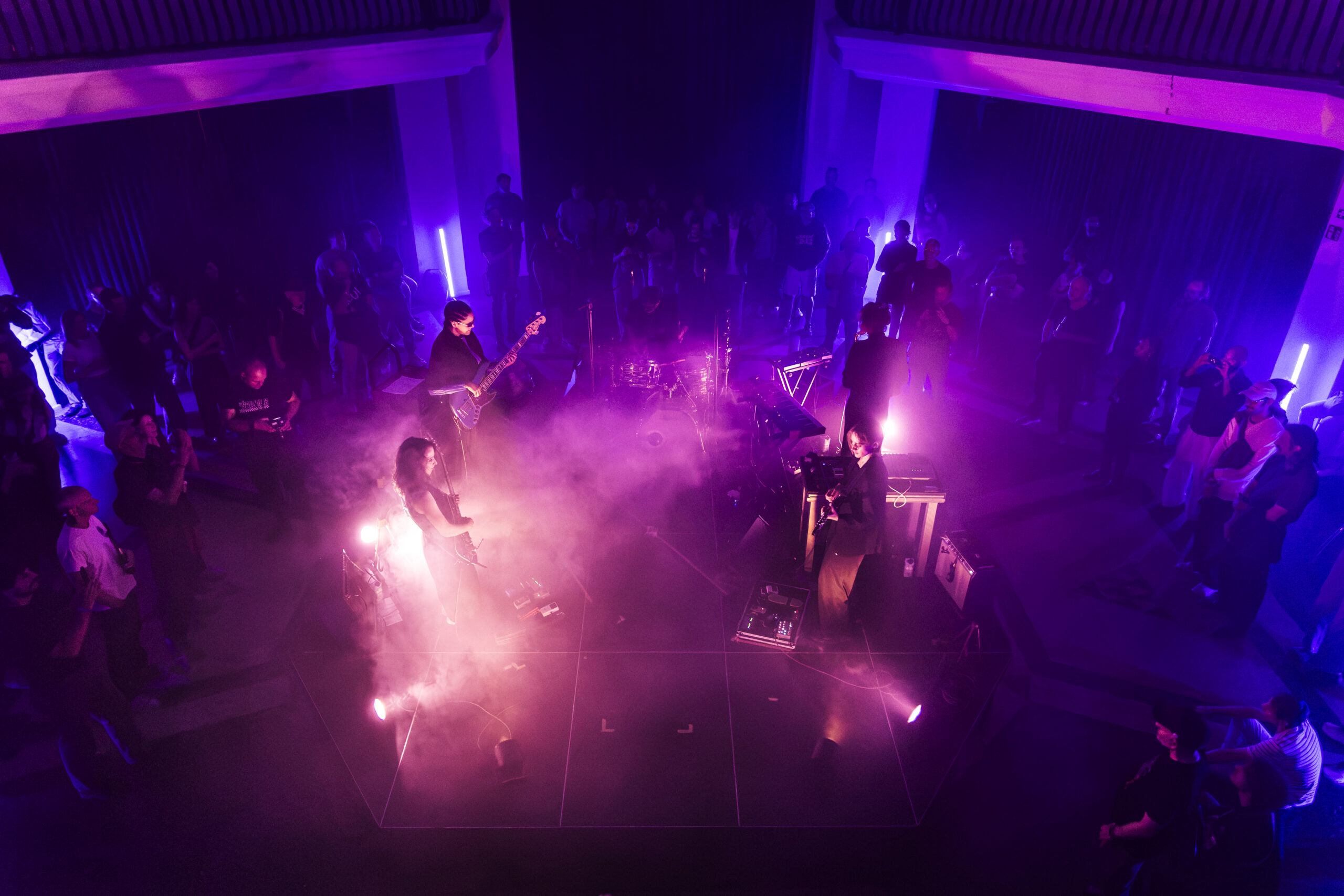
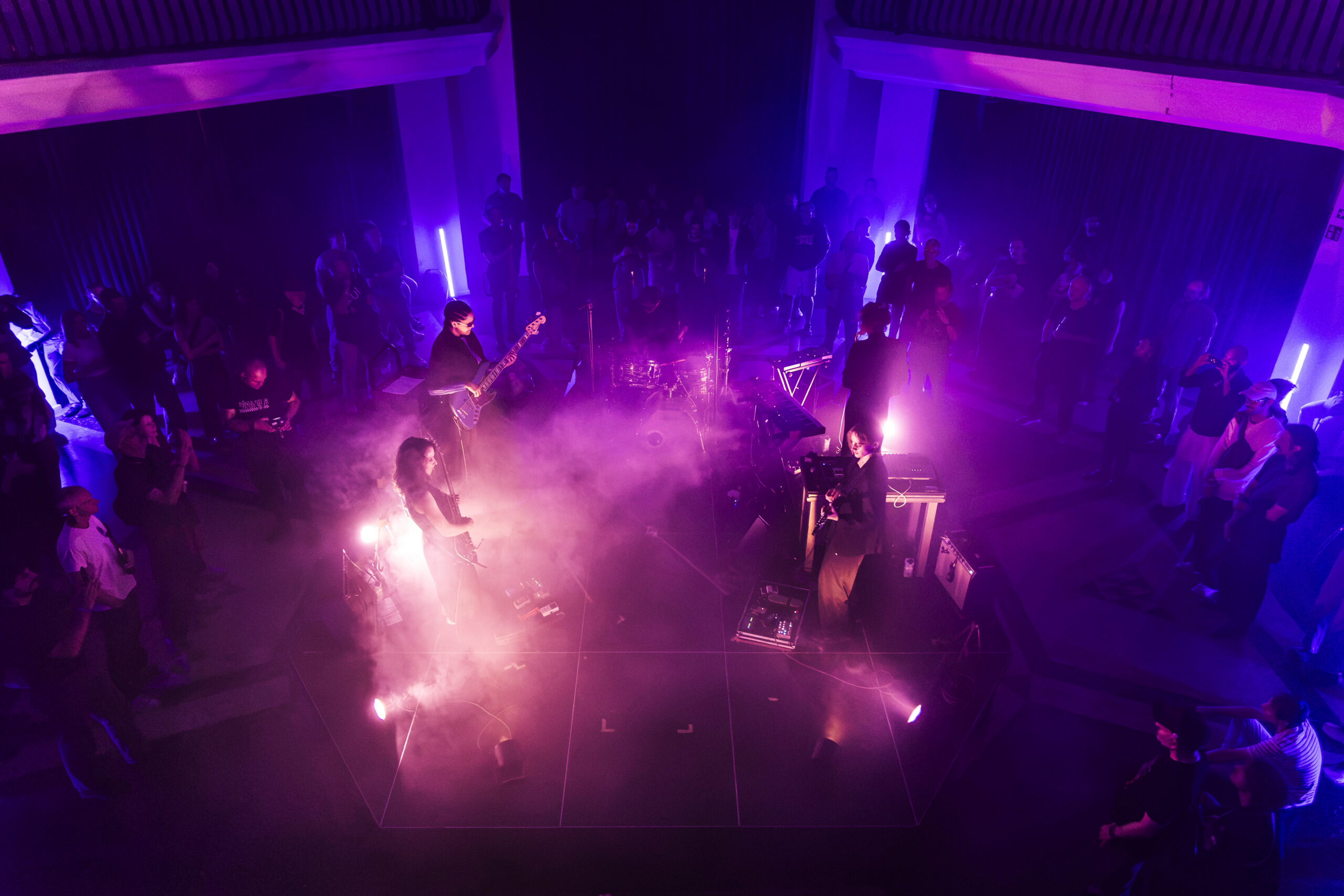
For me, this year’s Pop-Kultur began in the Kuppelhalle at Silent Green, a former crematorium turned cultural complex and one of the festival’s main venues. The stage sat in the centre of the octagon-shaped room, with the audience gathered around it.
Five musicians performed for the audience gathered around them – or rather, for each other. Fee Aviv Dubois, Ralph Heidel, Izzy Ment, Shanice Ruby Bennett and Andi Haberl had come together to perform just once for this night, an occasion fleeting enough to not even bother coming up with a band name. Too ephemeral for a concert, too deliberate to dub it a jam. Either way, its temporary nature was part of the point. Knowing that this particular combination of people and sounds would only exist once made the performance feel somehow more present. By the end of the show, the formation had already ceased to exist.
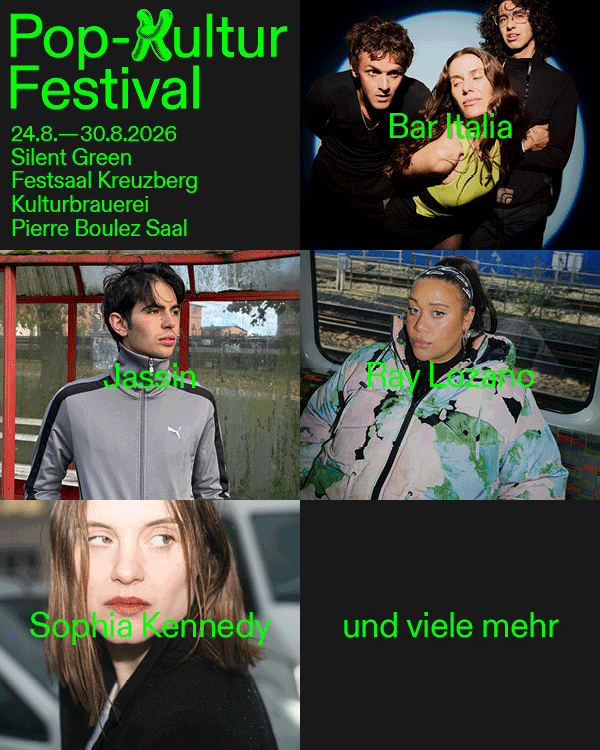
The performance was part of Pop-Kultur’s Commissioned Works strand, a selection of ten works specifically produced for and in collaboration with the festival, usually presented as world premieres. Now in its eleventh year, Pop-Kultur is a week-long festival spread across Berlin, with a programme that extends from live concerts and DJ sets to talks, workshops and more experimental formats. Its programme sits somewhere between a showcase of the city’s music scene and a space for exchange around where pop culture might be heading next. It has long positioned itself as a place to look beyond the usual structures of the music festival: alongside presenting artists, it aims to create room for exchange, experimentation and encounters between different parts of Berlin’s music and cultural scene. The Commissioned Works take that idea a step further: rather than simply presenting work, the festival becomes involved in making it.
“The Commissioned Works are an experimental space where we offer opportunities for artistic development, to try out things that don’t have to be perfect,” Karl Imdahl, who co-leads the Commissioned Works with Bruno Brandes and is primarily responsible for production, tells me. “For most musicians, there isn’t much time between recording albums and going on tour to look left or right and ask: What other ideas do we have up our sleeves? What else might we be able to do across different disciplines? Things that simply require more time, resources and effort, and more brainstorming. We’re creating space for that.”
Usually neither the artists nor the festival’s workflow allows such questions. “For me, the beauty of it lies in facilitating artistic processes and developing stage formats,” Brandes, who is primarily responsible for the dramaturgy of the Commissioned Works, adds. “The festival is not just booking a product.”
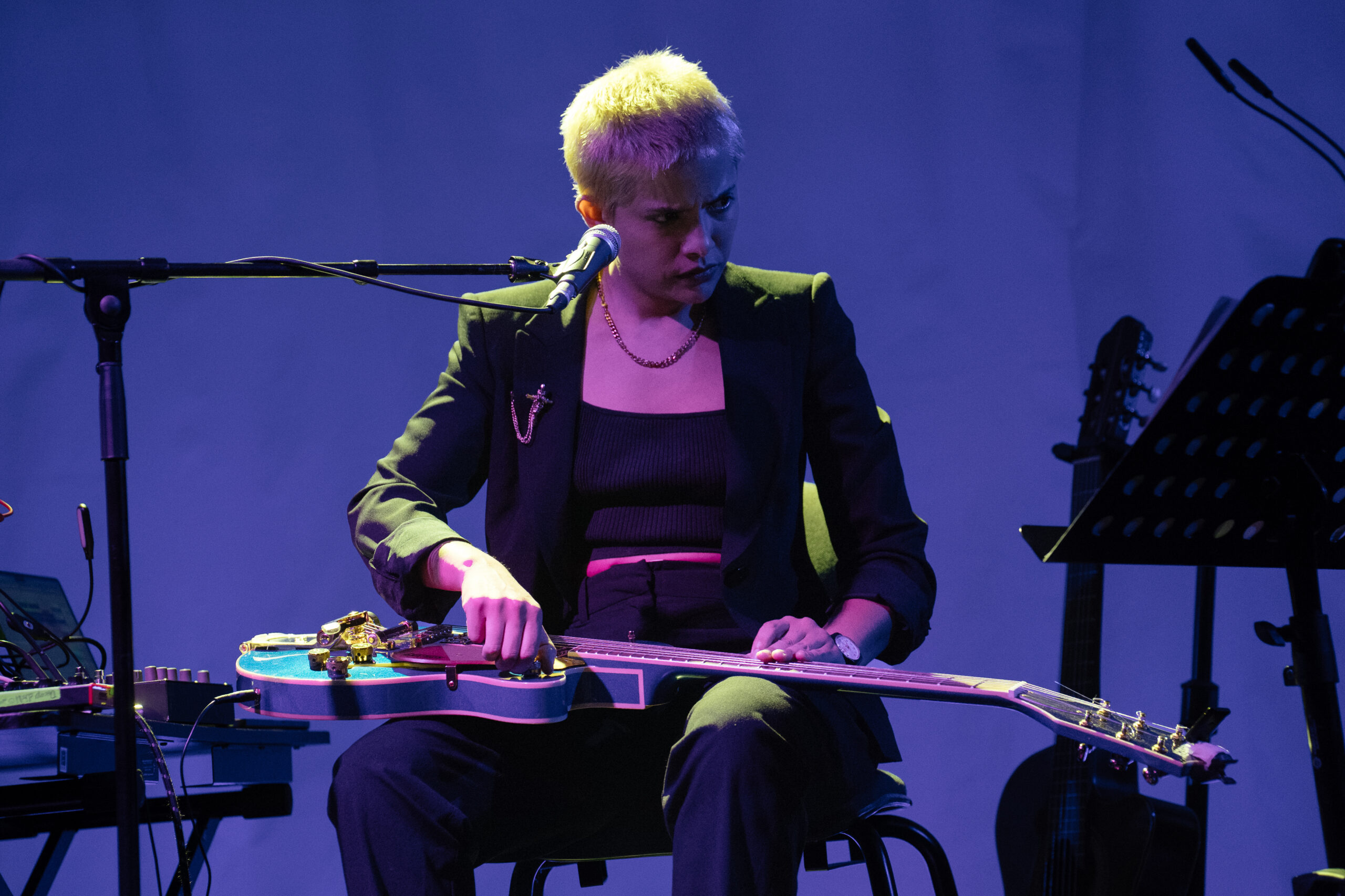
Alejandra Cárdenas, the Peruvian artist and musician also known as Ale Hop, was one of this year’s commissioned artists. Her project, A Body Like a Home, grew out of the album of the same name, turning it into an audiovisual performance that moved between intimate concert, theatre and collective memory.
Cárdenas has been working in Berlin and the wider European experimental music scene for years. Her music has often leaned towards the abstract and electronic. A Body Like a Home also contains fragments of Peruvian folk music. The resulting performance moves between noisy textures and folk melodies, spoken word and field recordings, fragmented percussion, guitar motifs, grooves and electronics, creating moments of tension and release. “A few of my newer songs, in my opinion, have gone more pop,” she says. “I have been attracted to both dimensions, where on one side I’m looking for something more extreme, but then I love songs, I love riffs.”
The album is partly rooted in Cárdenas’ memories of growing up in Peru in the 1990s, during a period of political turmoil – marked by dictatorship, social unrest, and the long shadow of colonialism. Chicha, a form of Peruvian cumbia, appears in the music in altered, fragmented forms. “When I hear the folk line or melody, it transports me to that space of belonging and identity. When I play them, I obviously do it in my style, but even if it’s a little bit deconstructed, it really brings this tradition into it.”
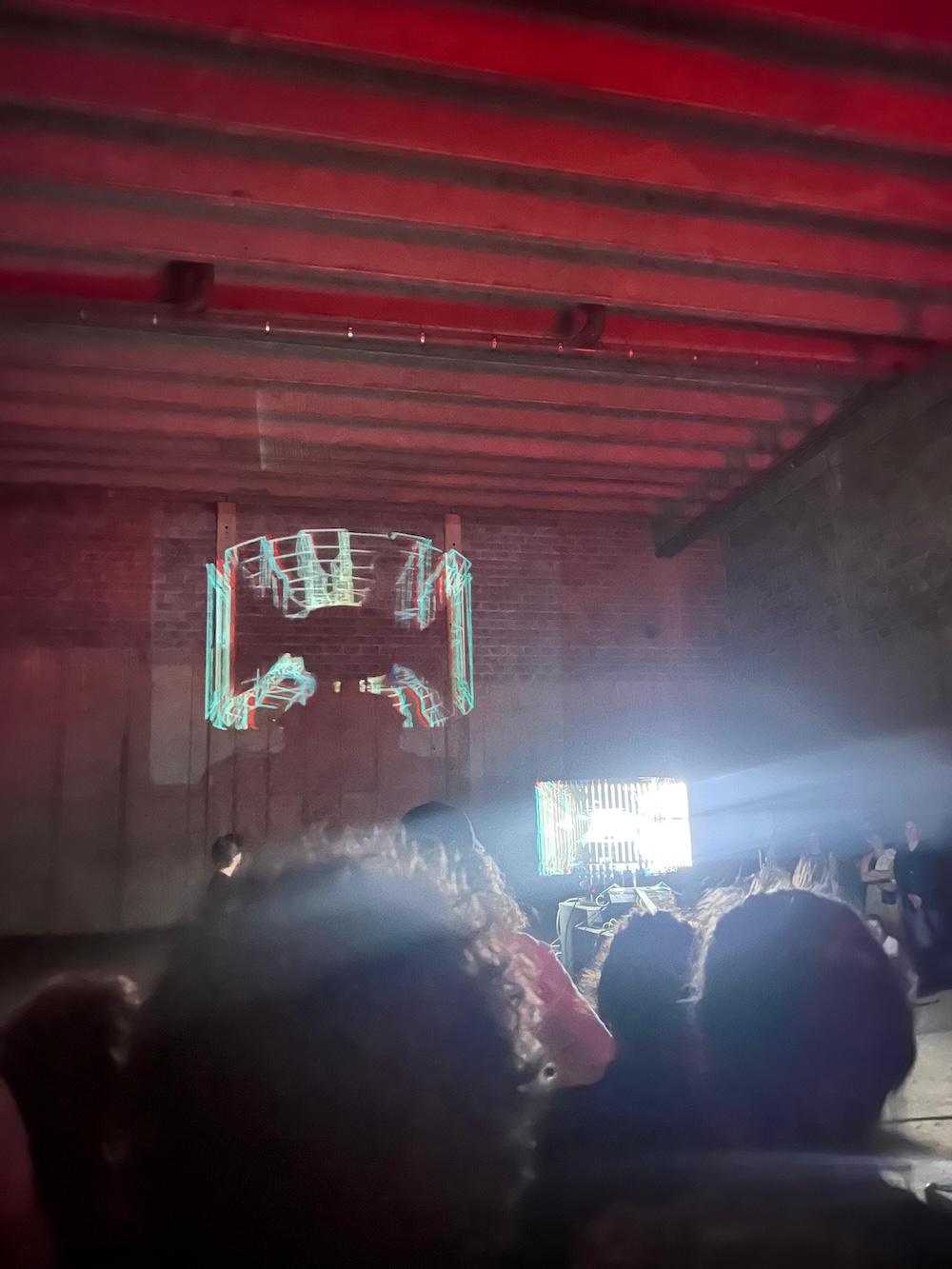
For Pop-Kultur, Cárdenas wanted to expand the live show she had already been performing for around a year. She brought in Gibrana Cervantes on violin, Ignacio Briceño on guitar and Sofía Borges on drums and percussion, adding a drummer to a format she had previously performed without one. She also worked with the festival on a new stage design: a house that would become the surface for video projections, adding to the question of belonging and home. “The framework of the commissioned work was a nice opportunity to do something more ambitious with the show,” she says. The difference was partly one of time. Cárdenas had the opportunity to sit down with the festival team, discuss the stage and think through how the different elements of the performance would work together. “Sometimes you need to play somewhere and you don’t even have time for a sound check,” she says. “So it was interesting to do something a bit more slowly.”
Festivals are built around tight schedules: artists arrive, soundcheck, play, leave. “It’s actually very uncommon for a music festival to also take on the role of producing original performances,” Imdahl says. Commissioned works are a familiar concept in the visual arts, he points out, but much less so in pop music. “People who go to a music festival don’t expect anything like that at all. And yet they might still be delighted when they suddenly come across it.”
For Cárdenas, who often performs in formats focused on experimental music and bridging art forms, the interdisciplinary aspect of the project was no unfamiliar territory. What was different about Pop-Kultur was the context: an explicitly pop-orientated festival. “For me it was an interesting opportunity to play in a different framework and perform in front of people who would not usually come to my shows.”
That makes the Commissioned Works an interesting proposition in two directions. For an artist like Cárdenas, who already moves between music, performance and visual work, the commission offered a chance to bring that practice into a different musical environment. For Pop-Kultur, meanwhile, the interdisciplinary format itself represents something less conventional.
“Especially this year we work with artists who are already working across disciplines anyway,” Brandes says. “As there are hardly any opportunities for this, they only pursue it in conventional ways like creating a music video. There’s still a huge amount of untapped potential there.” You might see a theatre bringing in elements of music but hardly the other way around. “It’s extremely rare for music to be the starting point for this kind of movement. And that’s despite the fact that so many musicians also practise other art forms.”
At Pop-Kultur, these works sit alongside the conventional festival programme rather than replacing it. There are many other concerts to catch, artists to discover, and DJs to dance to. But every now and then, something appears that doesn’t quite follow the usual narrative.



Must Reads
David Holmes – Humanity As An Act Of Resistance in three chapters
As a nation, the Irish have always had a profound relationship with the people of Palestine
Rotterdam – A City which Bounces Back
The Dutch city is in a state of constant revival
Going Remote.
Home swapping as a lifestyle choice
Trending track
Vels d’Èter
Glass Isle
Shop NowDreaming
Timothy Clerkin
Shop Now