Meakusma 2026 – In Praise of Not Seeing Everything
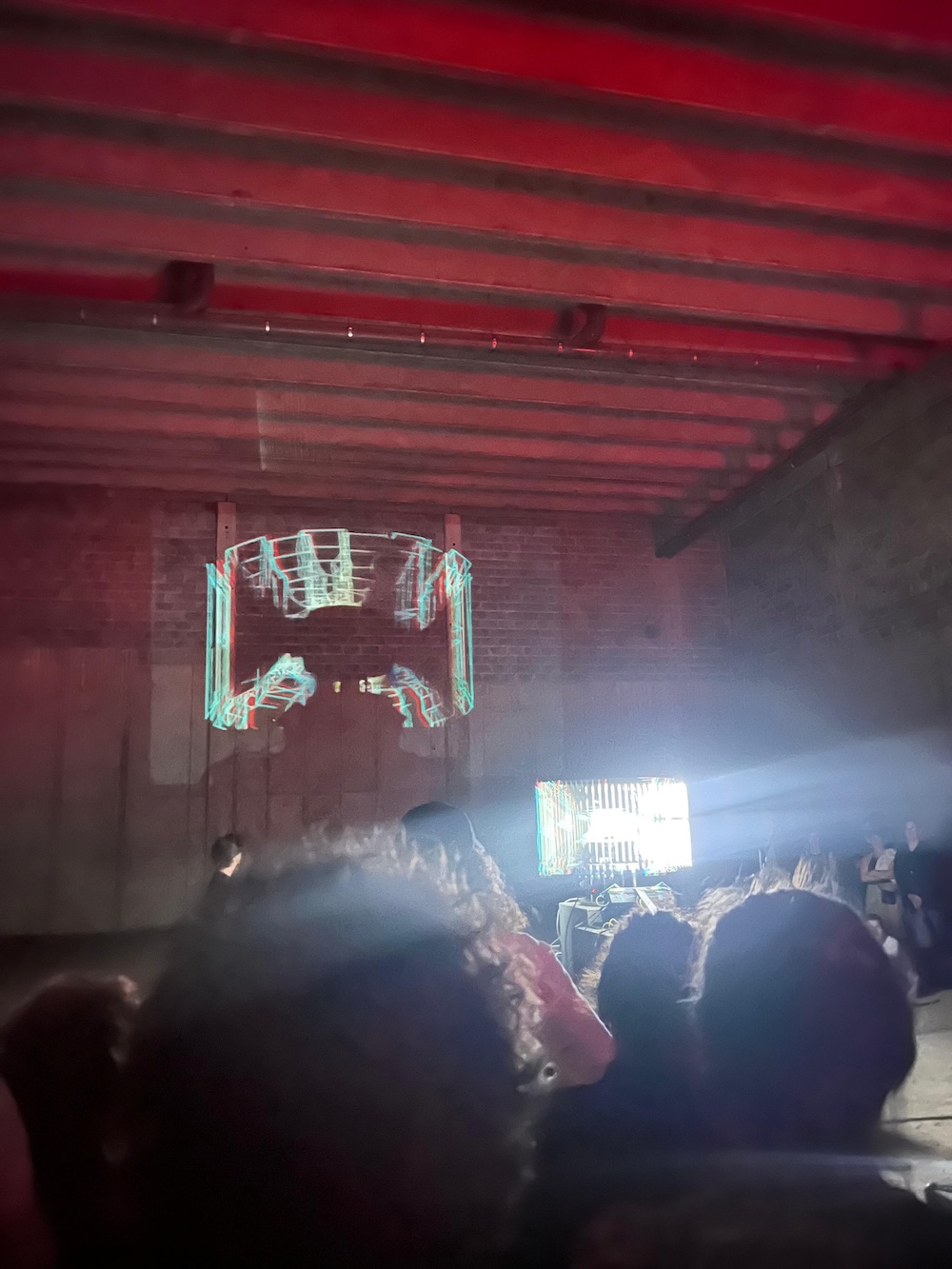
A biennial gathering, spread across churches, a disused shopping centre and a converted slaughterhouse, in a Belgian border town nobody’s heard of – Tia and Wil go to Meakusma and won’t shut up about it.
We’re going to sound like evangelists here, but OMG I LOVE THIS PLACE SO MUCH I DON’T WANT TO LEAVE. In the many years of going to festivals, there’s a strong case that this is the best festival we’ve been to, full stop. Watching Trees excepted, purely so we don’t have to explain ourselves at our next team meeting.
This bi-yearly gathering really is something very special.
It’s home; Eupen is a small, unassuming Belgian town on the border with Germany. Stepping off the train into the sleepy enclave, there’s no signage for where to go – you wander into the town and follow your nose.
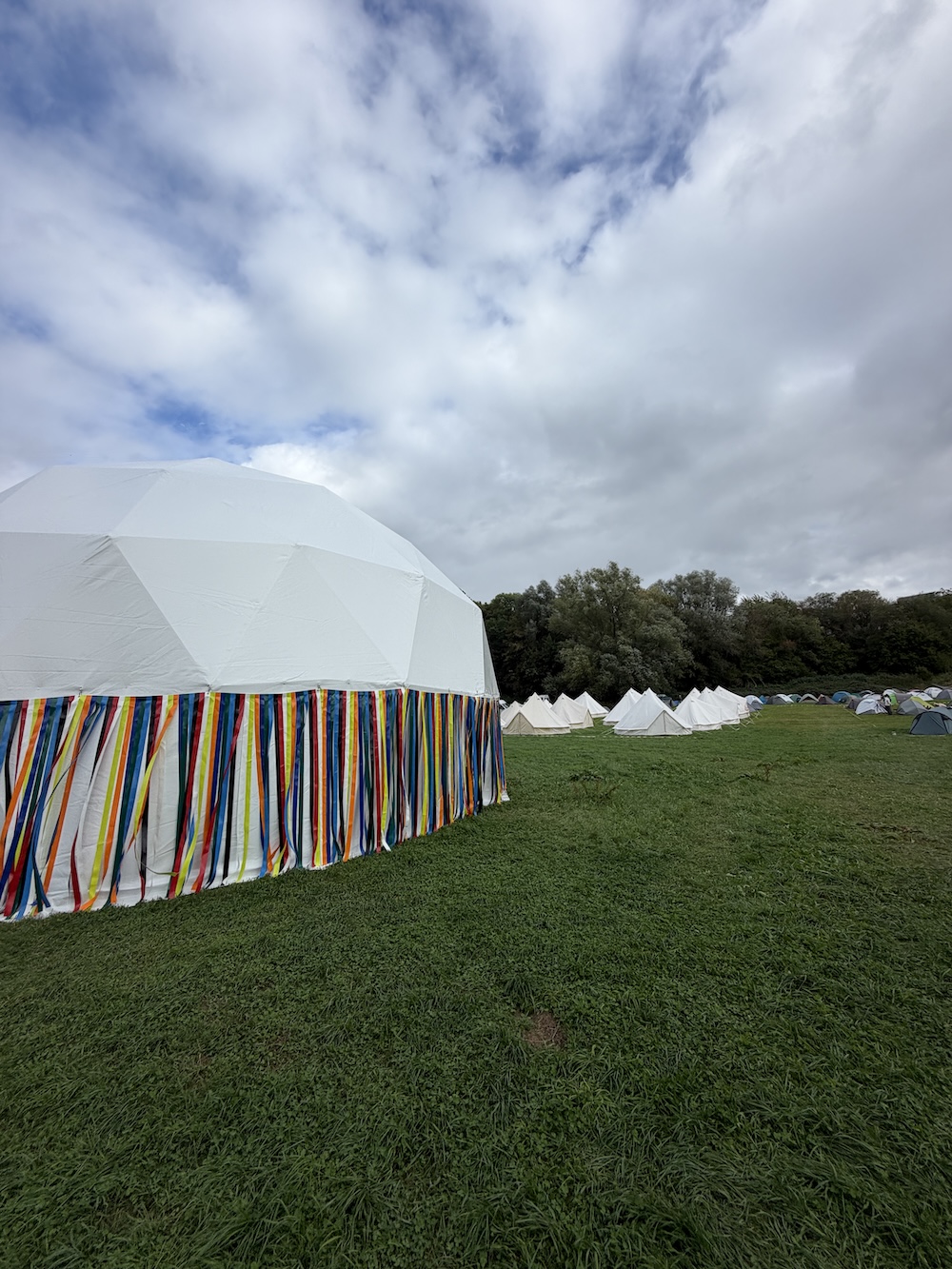
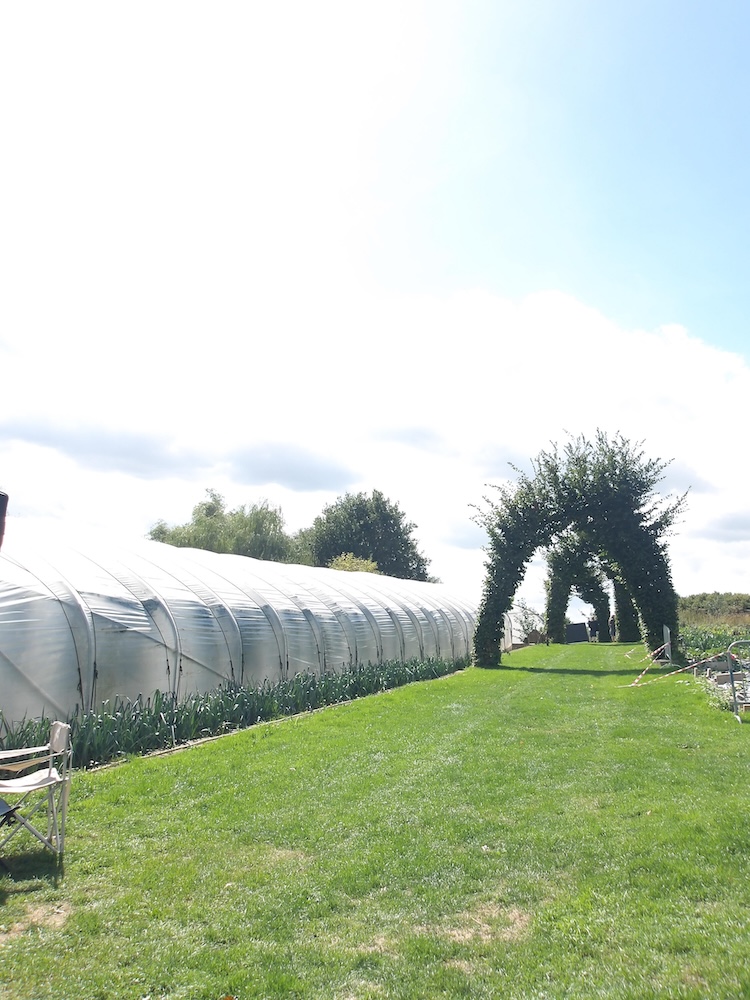
The appeal of a European festival is usually that you can get a room and live something like a normal day; not in Eupen. With every bed in town taken up by artists, you’re “forced” to camp – though even that’s a pleasant experience. Amazing hot showers, a calm, sedate little site that never came across as a campsite at a festival of this size. No one with Bluetooth speakers up all night, as you find at so many UK ones. And a breakfast spot 20 metres from your tent means you’re fed and functioning before you’ve even thought about walking to the venues.
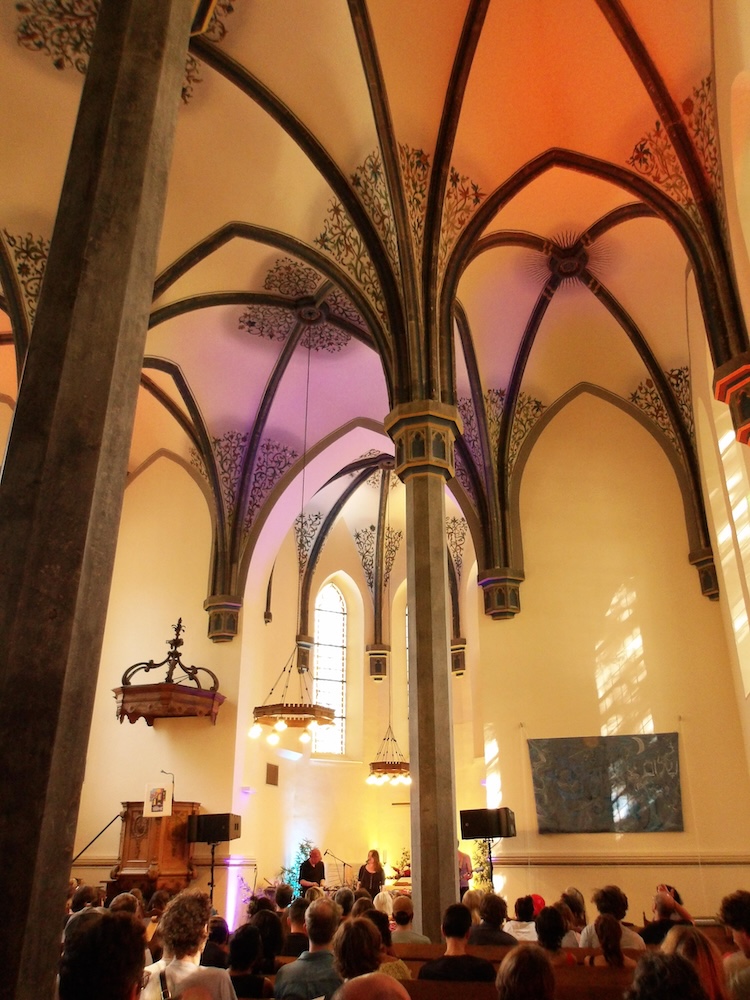
Approaching those venues for the first time, there’s an element of confusion about what’s actually going on. It takes a bit of orientation before it clicks. The main event runs through an art complex riddled with hidden rooms – Heuboden, Kesselraum, Halle, Speicher, Kühlraum, each one its own world – and that’s before you even get to the extra stages scattered round the town itself: churches, a museum, an empty shopping centre, a tunnel. Somewhere north of 140 acts across all of it. You do the maths at some point over the weekend and quietly give up – there is no version of this festival where you see everything, and trying to chase completeness is the fastest way to ruin it. You lean into whatever’s in front of you and let the rest go. That’s the secret of the place, and once you stop fighting it, it’s one of the more freeing things a festival can teach you.
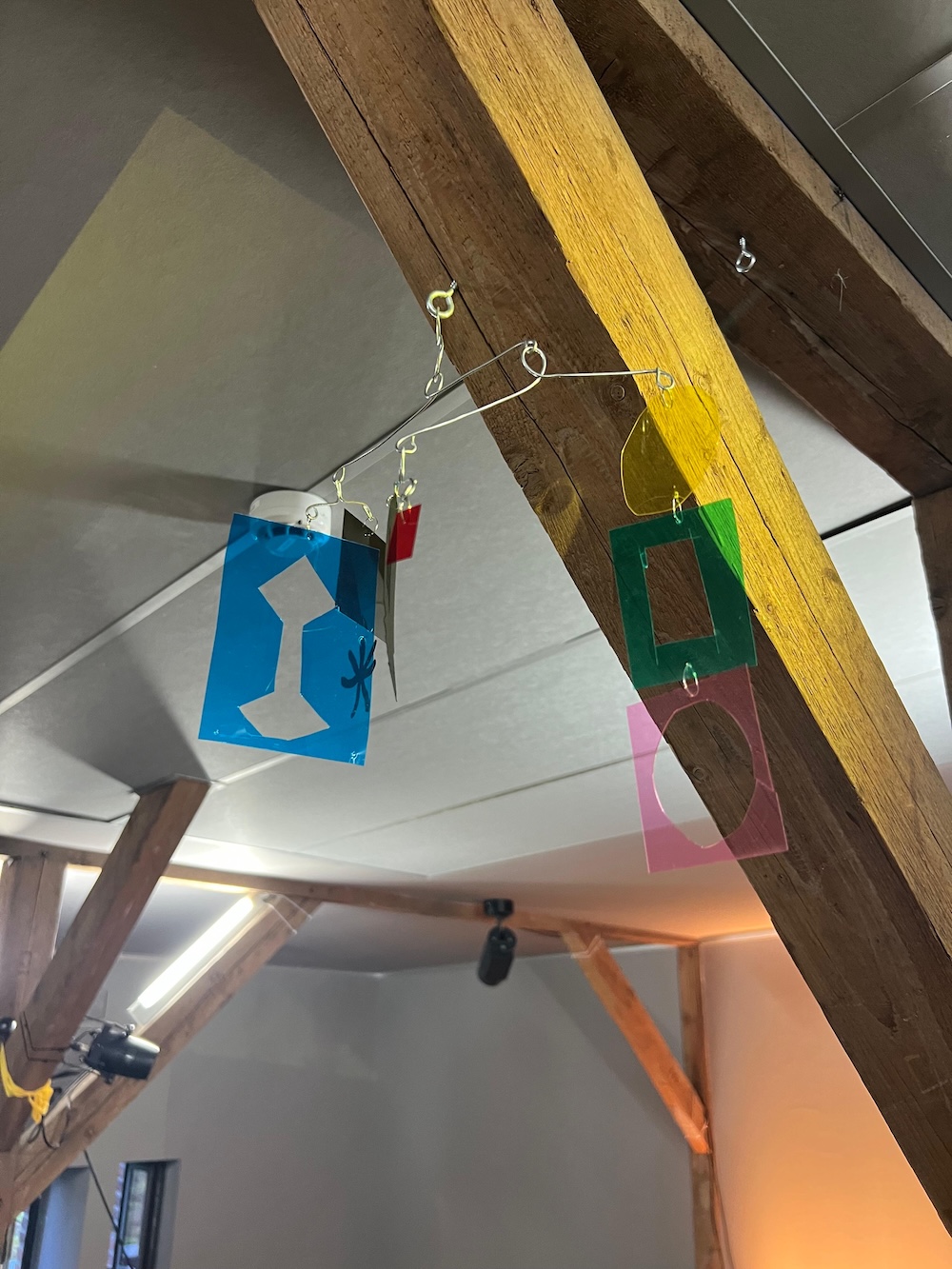
It might be the friendliest gathering of people we’ve been among in years – smiling, easy, no attitude. Even the Brits, historically the demographic most likely to ruin a nice European crowd’s vibe, are sound as anything here. Whatever it is about the place, it gets everyone leaving their edges at the door. There’s a carefulness to the whole thing, too. Not fussy, overprotective, or accidental, but we’ll get into that later.
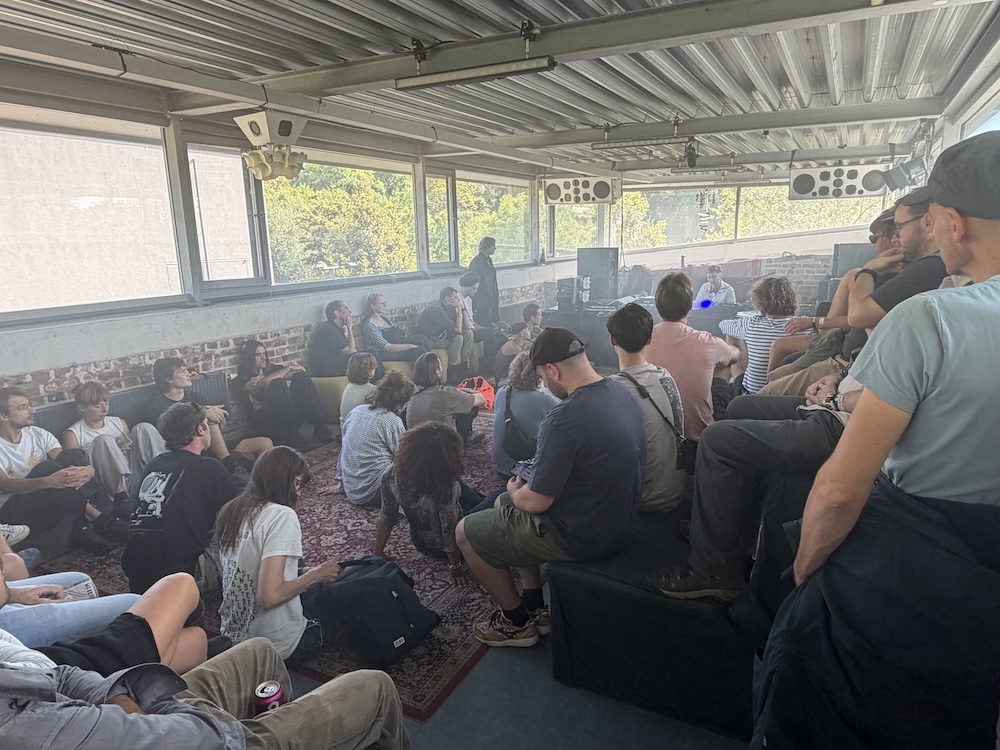
That creates some pinch points for the bigger names, but nothing a trip to the bar can’t sort. Drinks come in glasses. Real ones. With a sensible deposit, you get it back in full when you return them – none of the UK festival “pay for your first cup” routine. Good drinks, too, and genuinely reasonable, especially once you work out that a bit of light mine-sweeping – other people’s abandoned glasses, left on windowsills and picnic tables all over the site – turns your deposit float into a small, faintly shameful side income for more drinking. And yes, we appreciate that that’s the Brit coming out in us. We’re not proud of it, but we’d do it again, obviously purely to stop the glasses getting smashed.
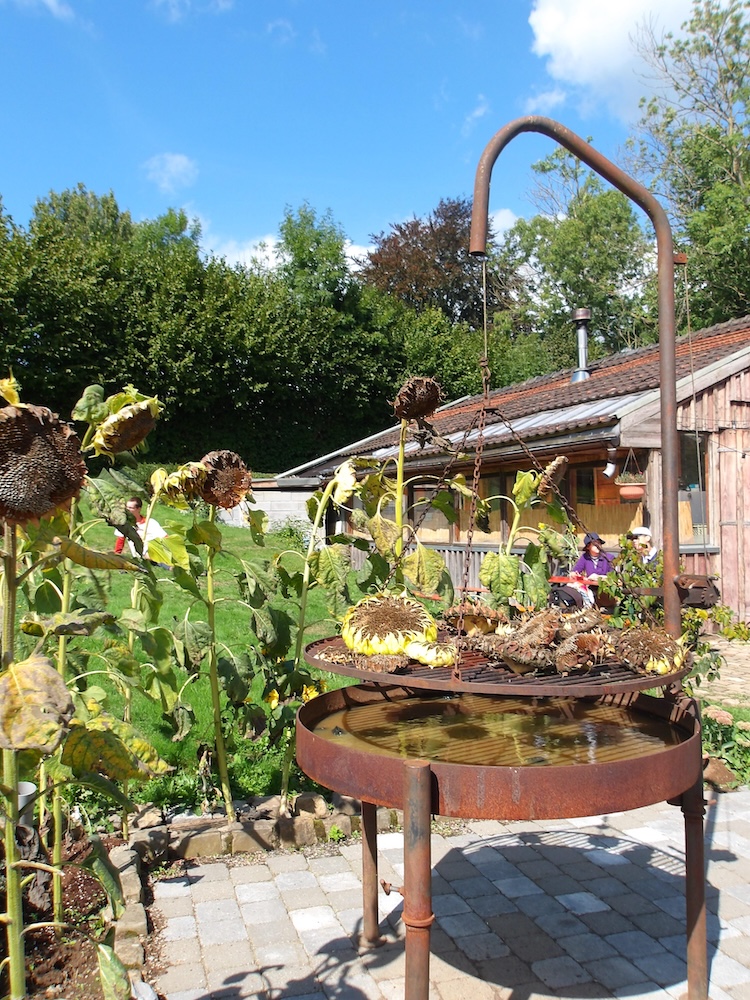
Food’s sorted as well – decent options right there on site if you want them, or a quiet pit stop back into town for something exceptional – we went back to Ratskeller two days running; it was that good – before heading back in. Either way, no festival food-truck queue, no fuss. Good fuel, nourish yourself, and away we go.
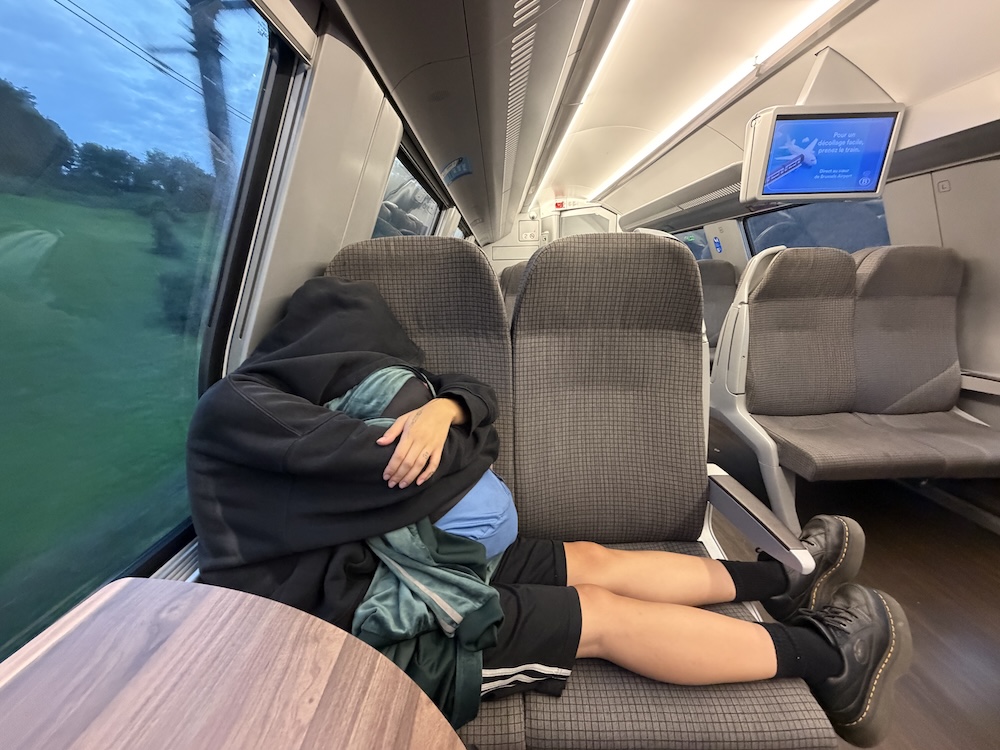
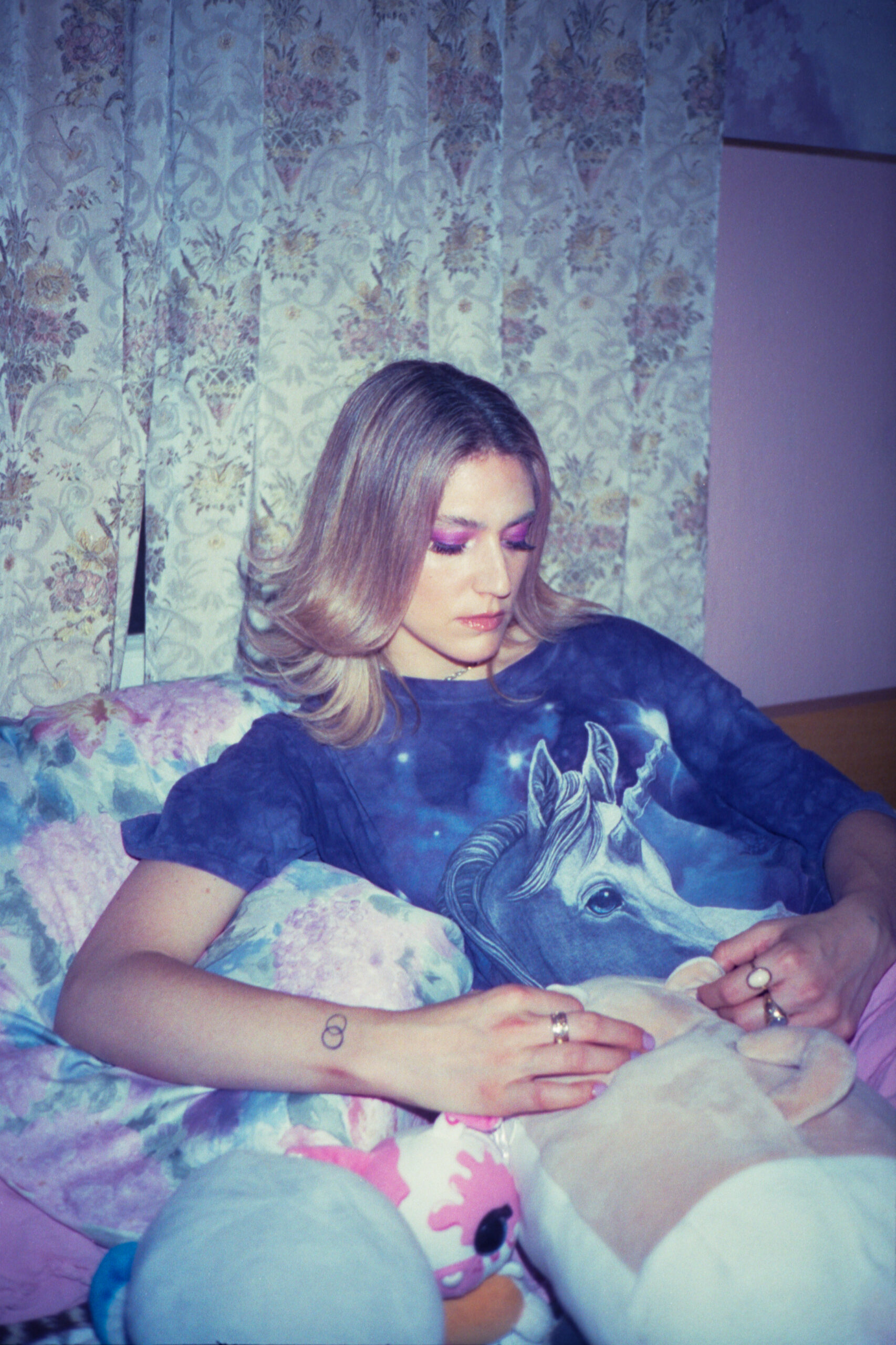
My copilot (and Seeds co-parent) for this one, and the person who suggested we attend in the first place – a certain Ms Tia Cousins, who I end up calling The Student by the end of the weekend on account of how much she can sleep, even in a tent – somehow arrives in Brussels on Thursday, having had thirty minutes’ sleep. So instead of going straight to Eupen, we stopped for a night in the capital and drank some more, which felt at the time like a reasonable solution to the problem of a friend running on thirty minutes’ kip and did not, in retrospect, fix anything. We meet up with Samson A.K. and his cohort at his Kiosk Radio set in the royal park that night, which is also not a good idea. This explains why our Day One is actually Day Two of the festival proper – we roll in on Friday, having missed Thursday entirely. I’m sorry, Meakusma, but perhaps that third night camping might not have kept us as spry as we are when we touch down.
Friday
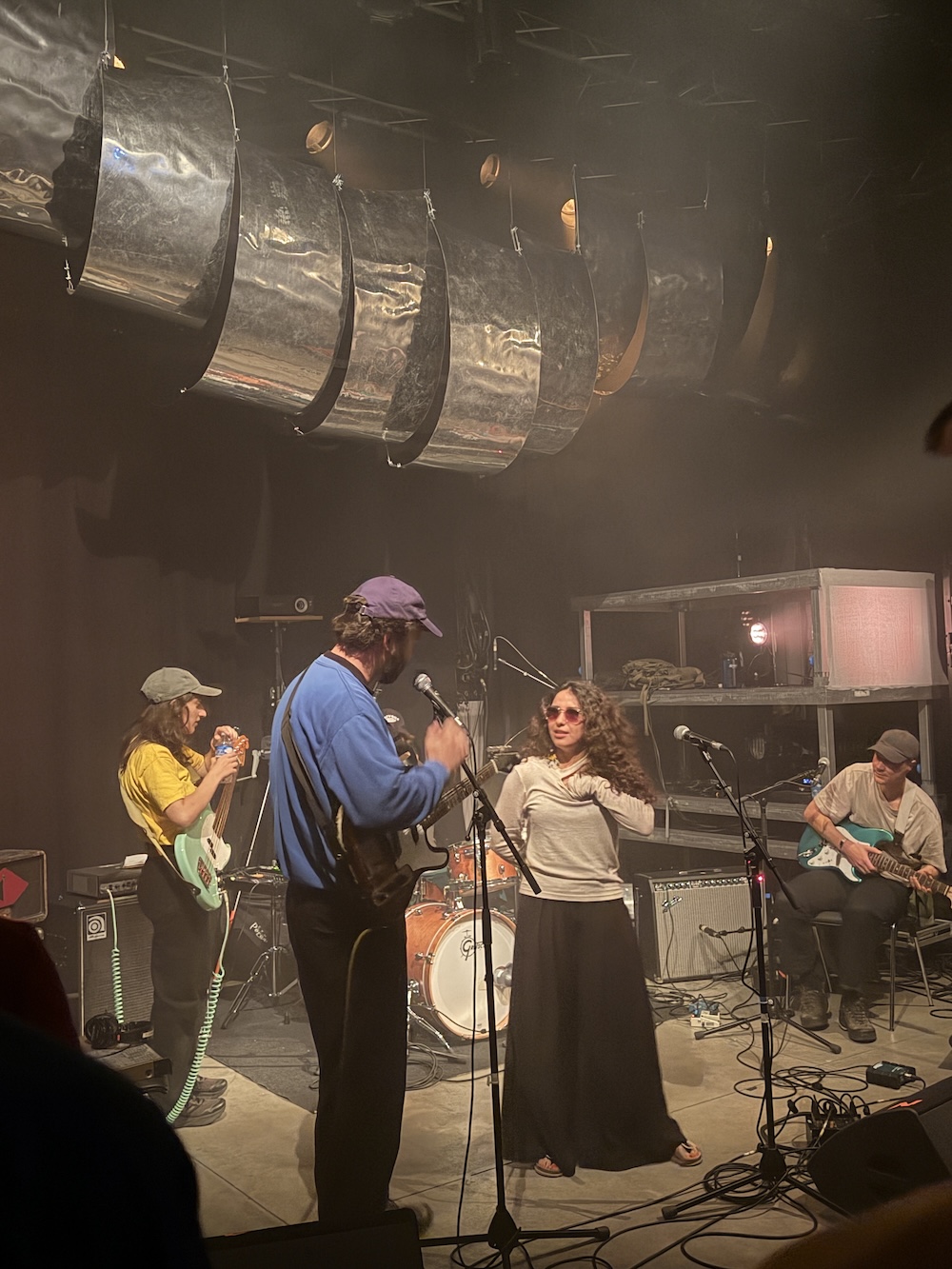
Irisplus open the Halle for us – the full-band extension of Iris, two guitars, bass and drums, brand new long-player in tow, all the awkward angles of Slint and Pavement channelled through Jonathan Richman’s deadpan and a dose of Brian Jonestown Massacre’s fuzz – a beautifully strange and likeable way to acclimatise.
Just up the road in the Jünglingshaus cinema, grisha223 has turned a DJ set into a silent film concert, working her e-violin against the picture with the same restless curiosity she’d bring to any club night. Back at the Heuboden, Gilb’R is quietly one of the best sets of the day; Gilbert Cohen, Radio Nova lifer, Versatile Records boss since ’96, playing like a man with absolutely nothing left to prove. Dave “A Made Up Sound” Huismans keeps that momentum flowing without breaking a sweat under his alias, presenting ex_libris live, idiosyncratic broken-rhythm house and techno, while over in the Kesselraum, Mankiyan threads dub, rave, UK bass and grime together with ease.
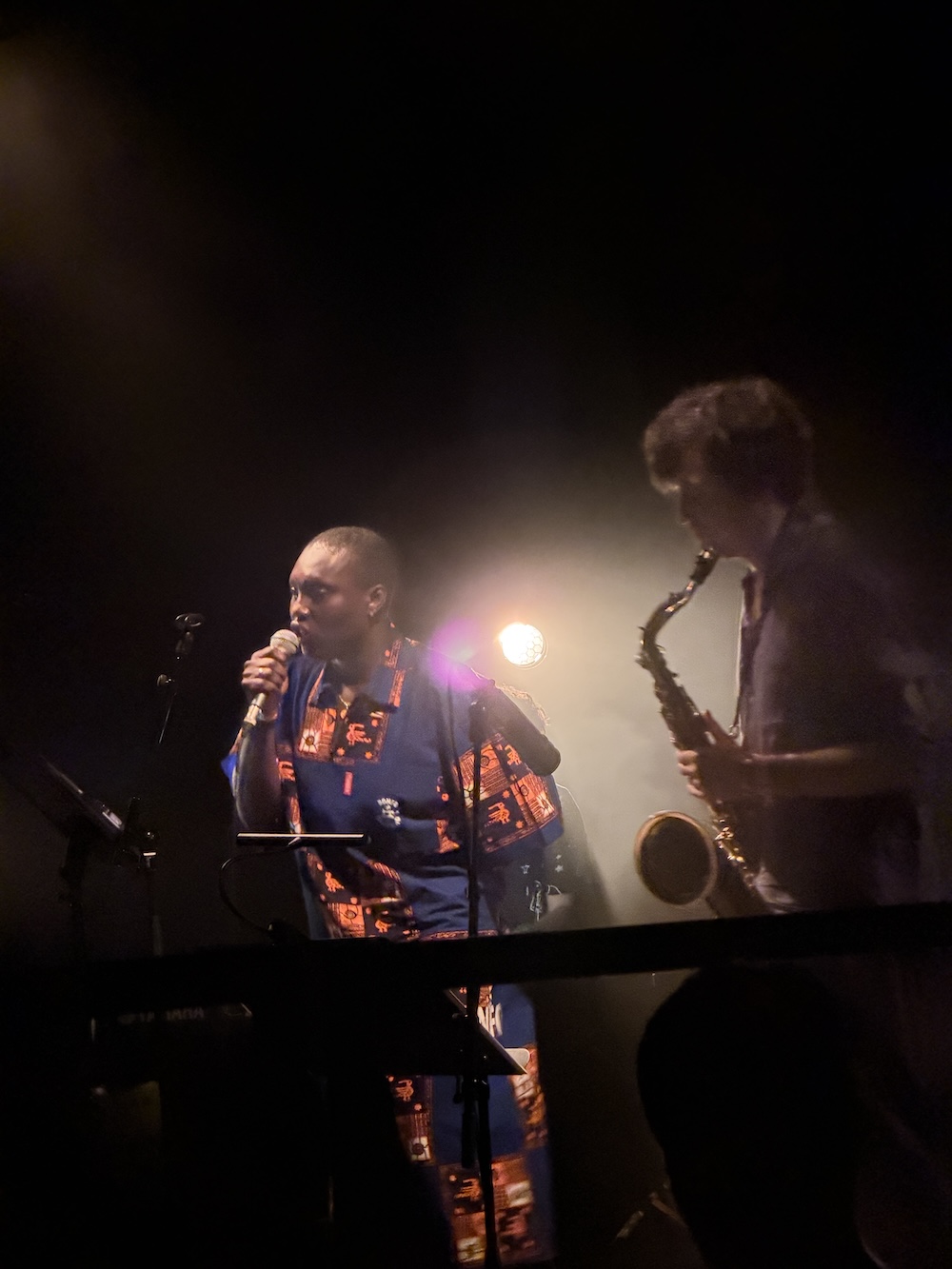
The Kühlraum is the “experimental” room, if you can even use that term at this already stunningly adventurous festival – we catch Adjunct Ensemble there, free jazz madness held together by an incredible and captivating singer at the centre. Jamie Thompson’s group’s last record was The Guardian’s album of the month, and you believe it on this performance. Later on we fail to make it in for Valentina Magaletti and Maria Bertel in the same room – Magaletti’s basically a fixture here at this point, and fair enough; everyone else wants in too.
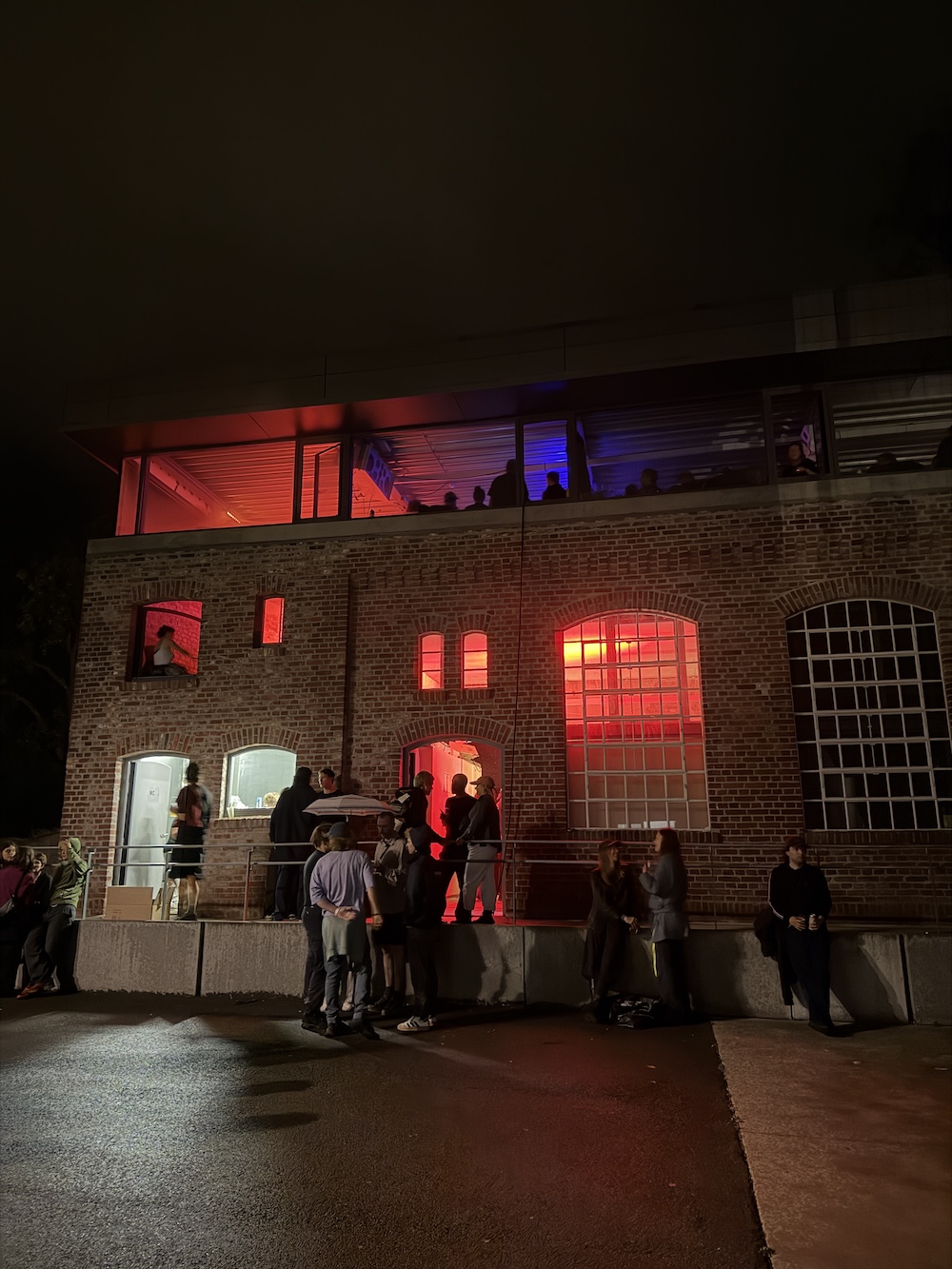
In between, Nosedrip packs the Heuboden so completely we don’t even try; from the courtyard below it sounds great regardless, the sound carrying straight out the windows, so we dance down there for a while instead. If anyone’s earned that room, it’s Ziggy – the man behind Stroom, allegedly the only DJ alive who has nothing but water on his rider. RAP, tucked into the low-ceilinged Speicher upstairs, turn the room into a sauna – Guy Gormley and Thomas Bush, an inventive, genre-fusing thing all their own, soca rhythms tangled up with post-punk introspection – worth every drop of the sweat.
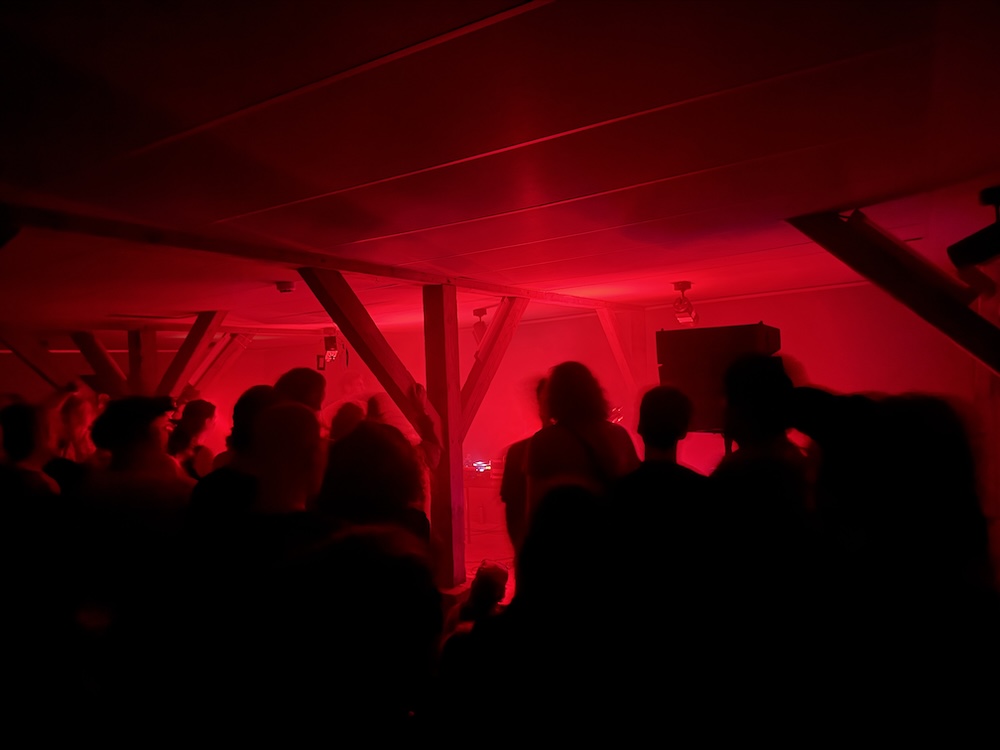
The night keeps giving long after that. Low End Activist digs up something properly dank, and low-frequency in the Kesselraum, all that Bristol breakbeat-into-grime lineage doing exactly what it says on the tin, and Annabel Fraser follows with one of those unfiltered, all-boundaries-off Manchester sets she’s built her name on. By the time Time Is Away drift on – Jack Rollo and Elaine Tierney’s radio-essay thing, spoken word and field recording folded into the music itself – we’ve stopped trying to stay awake for it properly and instead just let it float out of the Heuboden windows and across the field into the tent. Apologies to whoever was in the tent next to ours that night for how loudly we then proceeded to discuss ‘deep life shit’ until stupid o’clock.
We didn’t see a bad thing all day and night, which is either a great sign of incredible programming – it is – or we still haven’t learned how to pick badly – unlikely.
Saturday
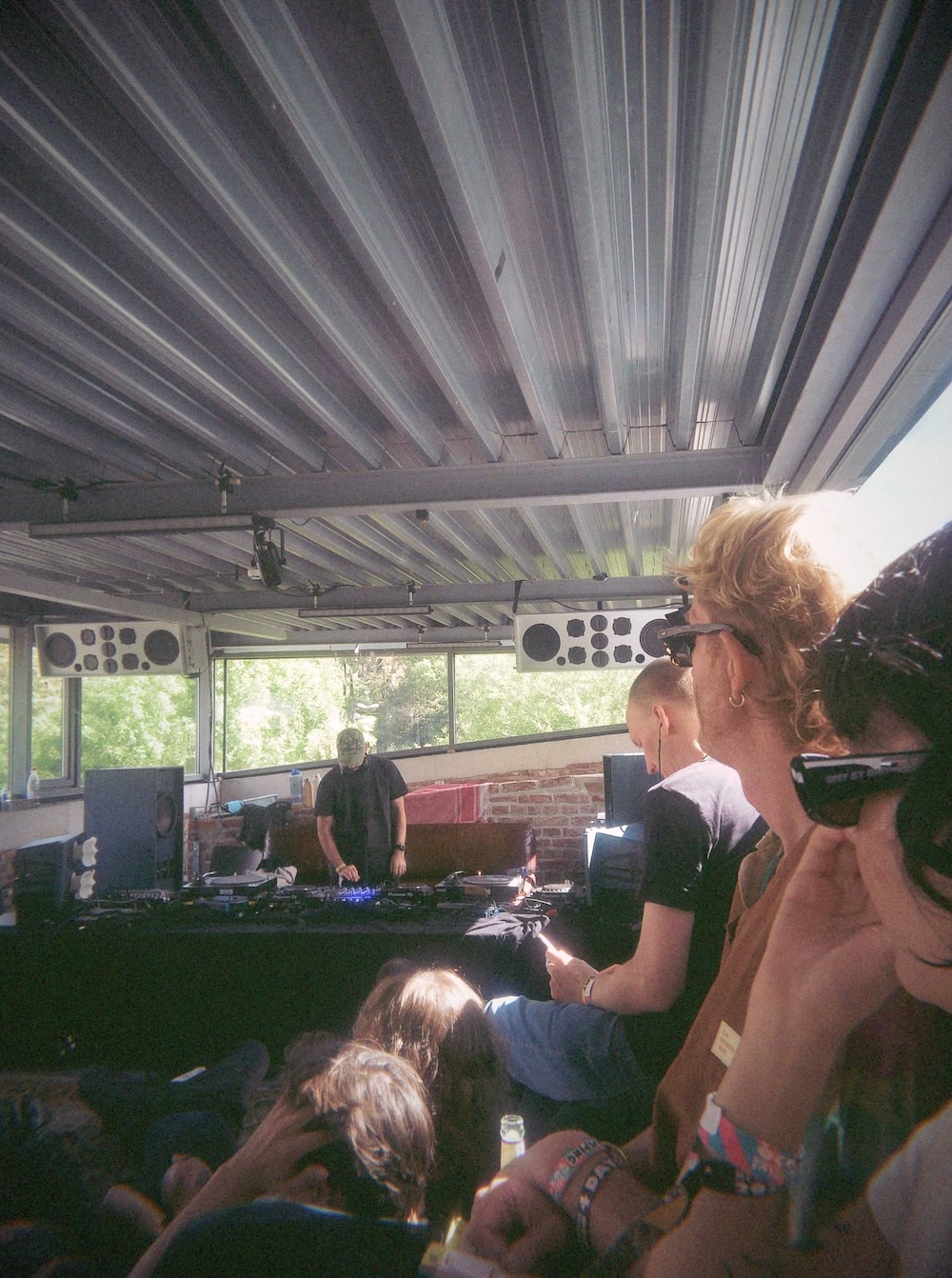
Day two starts gently and ends somewhere completely different. DJ Sukram takes the room out on Eisbär, Markus Detmer twenty-five years deep into this and still playing like it’s his first, while the aforementioned Samson A.K draws another great crowd straight after. With sun rays streaming through the windows, he guides a perfectly pitched hour and a half, dark industrial ambient sliding into beat-led contortions, one folding into the next without you quite noticing the join, before mutating and ending on an edit of Sabres of Paradise’s Nicky McGuire, a Pod & Edward Richards cut, and a Speedy J and George Issakidis collaboration; Sculpture 1986 (Tool 1).
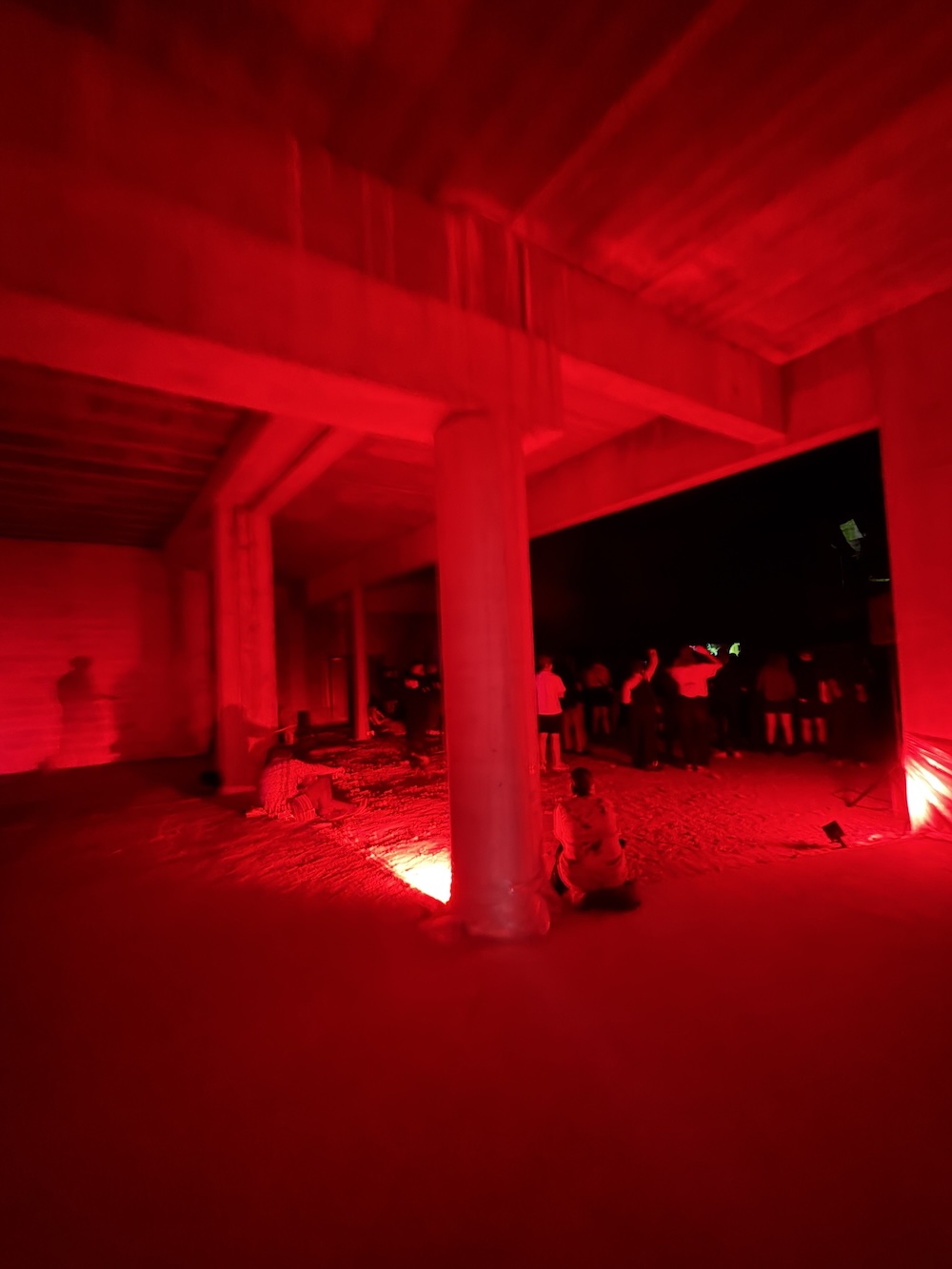
We wander out to one of the town’s outlying church venues for Memotone, but never get close – the queue’s out the door before we’ve even worked out which building it’s for. No matter, there’s an installation from ROTOЯ just round the corner, tucked into the local shopping centre, which feels like a very Meakusma touch – the festival spilling out past its own venues into wherever it can find room, churches and malls and tunnels all pressed into service. The installation itself is intense – an amazingly lit slow, rotating sound-sculpture that starts to seem less like a machine and more like something alive the longer you stand with it. I half thought it was about to spin off and take one of us out; luckily it doesn’t.
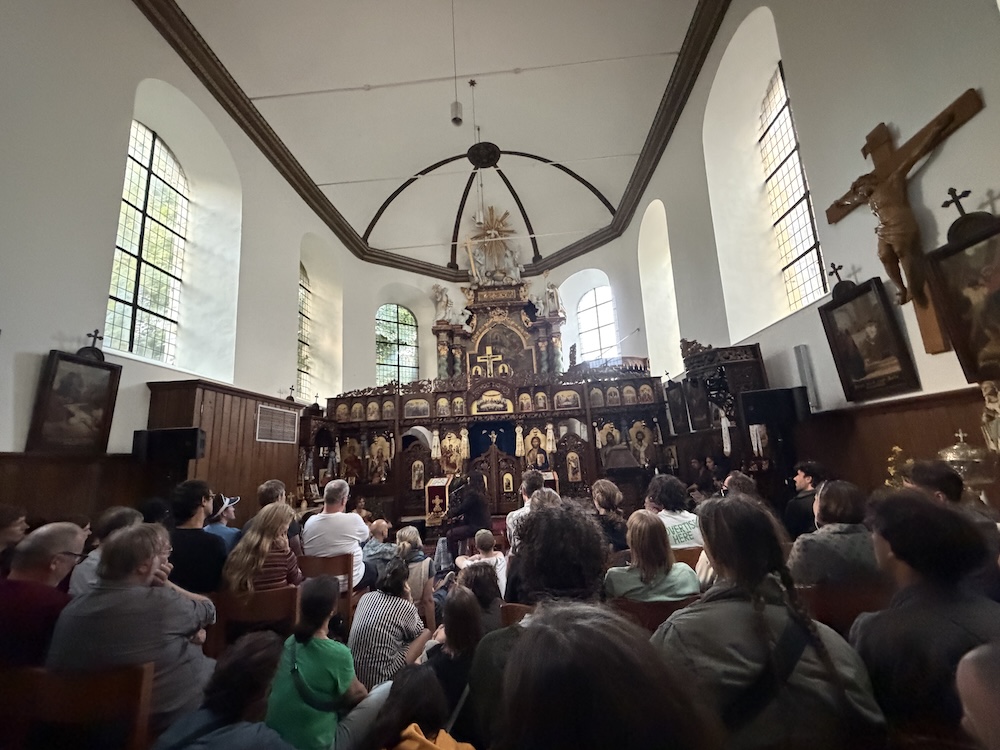
Calcuta is the one bit of friction of the entire weekend: we finally talk our way in, not before getting shouted at for apparently pushing into a queue that, as far as either of us could tell, did not exist. Worth every second of the telling-off, mind – Teresa Castro’s live performance pulling folk and drone and ambient into something altogether further out there within the ecclesiastical confines. Back to the main site where Autumns follows with the same mechanical, industrial-edged percussion as the record we put out together and much more besides. The Mad Laboratory of Anti-Matter are challenging in the way that’s clearly the point – a Beirut duo, free-improvised and none the worse for it.
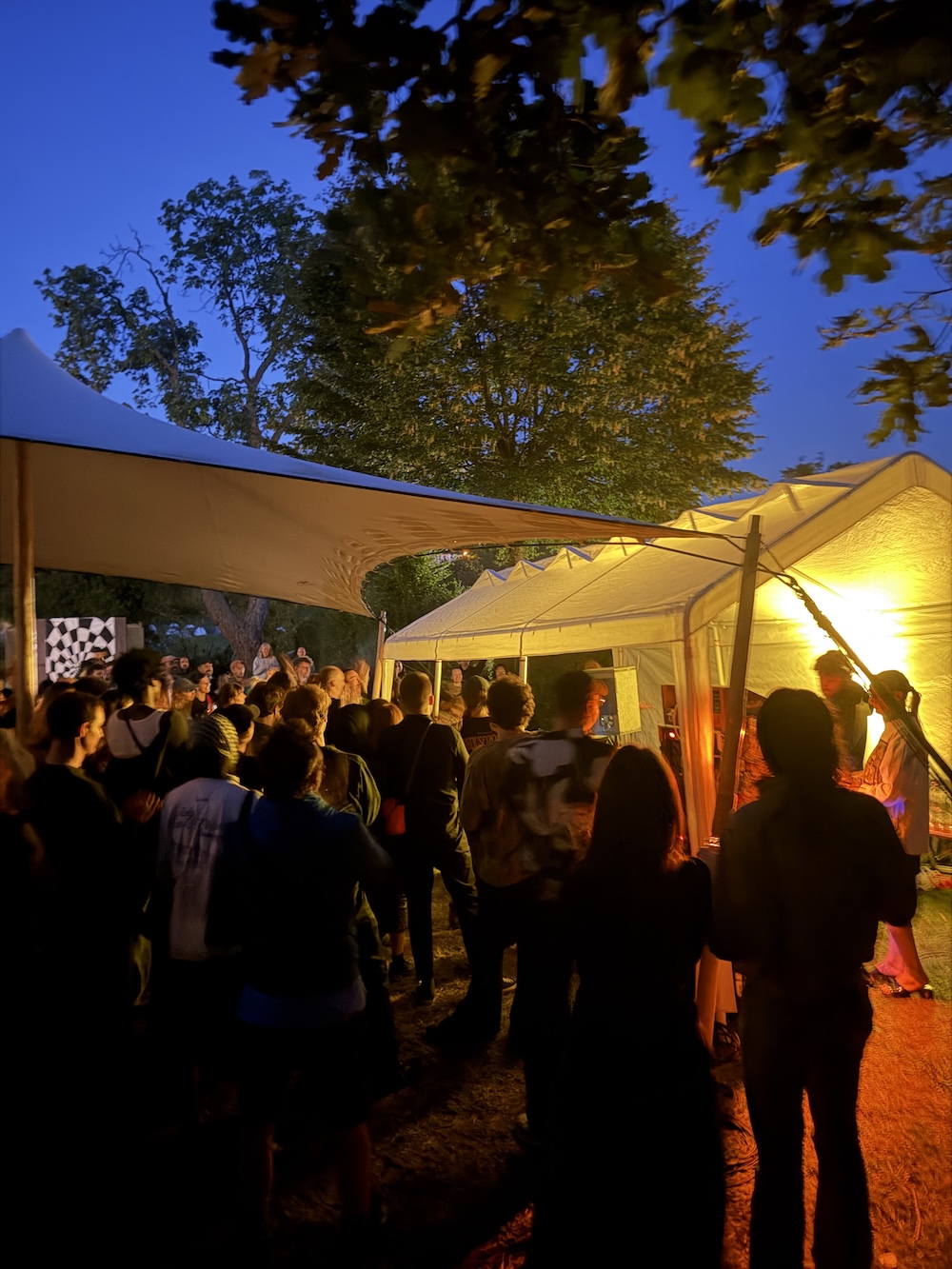
Ambassade keeps the night moving with a set built entirely on haunting Dutch vocals over vintage synths, as if they’ve been handed a very good 80s memory that isn’t yours. A late change brings in Lupini’s replacements, I-sha and Lucien Douglas – still rammed up there regardless- so we end up dancing in the stairwell instead, which works fine, thank you very much. The most excellent Tiago rounds things off into the small hours with a set that bounces between house, techno and left-field with a punk shrug about it, half of the Scam Dust duo with our friend Joao.
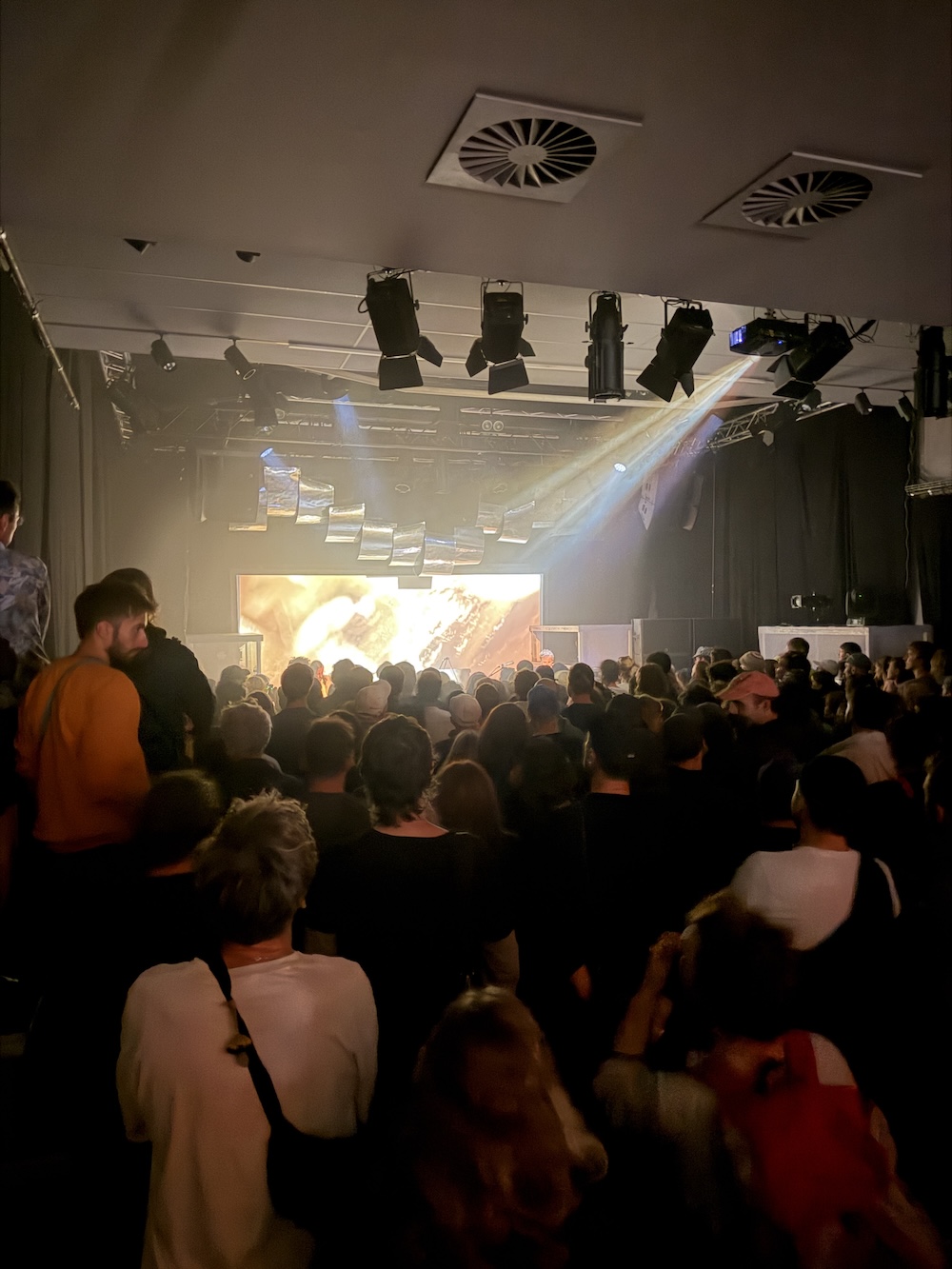
Demdike Stare turn up again in the main Halle, having already floored the Jünglingshaus the night before with their Who Owns The Dark A/V piece. This set tears through a smorgasbord of everything more uptempo than the previous A/V show. DJ Plead is where the real confidence of the festival shows itself, though: putting him on at 2am in the main Halle, straight after Demdike, dropping the tempo down well below what they’d been hammering out, is exactly the kind of call that sets this place and its crowd apart. You don’t often get that carefulness at this scale. It seems as if someone thought hard about what this room actually needs at 2am on a Saturday, rather than just filling the slot with the next name on the list. It’s also an indication of a crowd that engages with such a curveball this late into the evening. He’s amazing, and we all sway to the rhythms of Please, his gorgeous, much gentler new record. JASSS takes it home after that, industrial pop and fuzzed-out R&B stepping half-time or falling over itself in a race to the end, exactly as billed, with Gombeen & Doygen’s smudgy, acid-tinged dub somewhere in amongst those small hours too – a good decision at a good time, whichever hour it actually was by then.
Sunday
I rise early, as I normally always do – The Student is still very much asleep – and go and watch a conference lecture from Androo on DJing, embedded in the middle of the day. By all accounts, a brilliant talk, though my French isn’t up to the job and I only catch the shape of it. Billed as “Conference – Lecture for a DJ,” explicitly inspired by John Cage’s 45 Minutes for a Speaker, which retroactively makes a lot more sense of the bits I did follow. He plays a set of his own later on too, dub and house and experimental pop, “post-hybrid” by his own description.
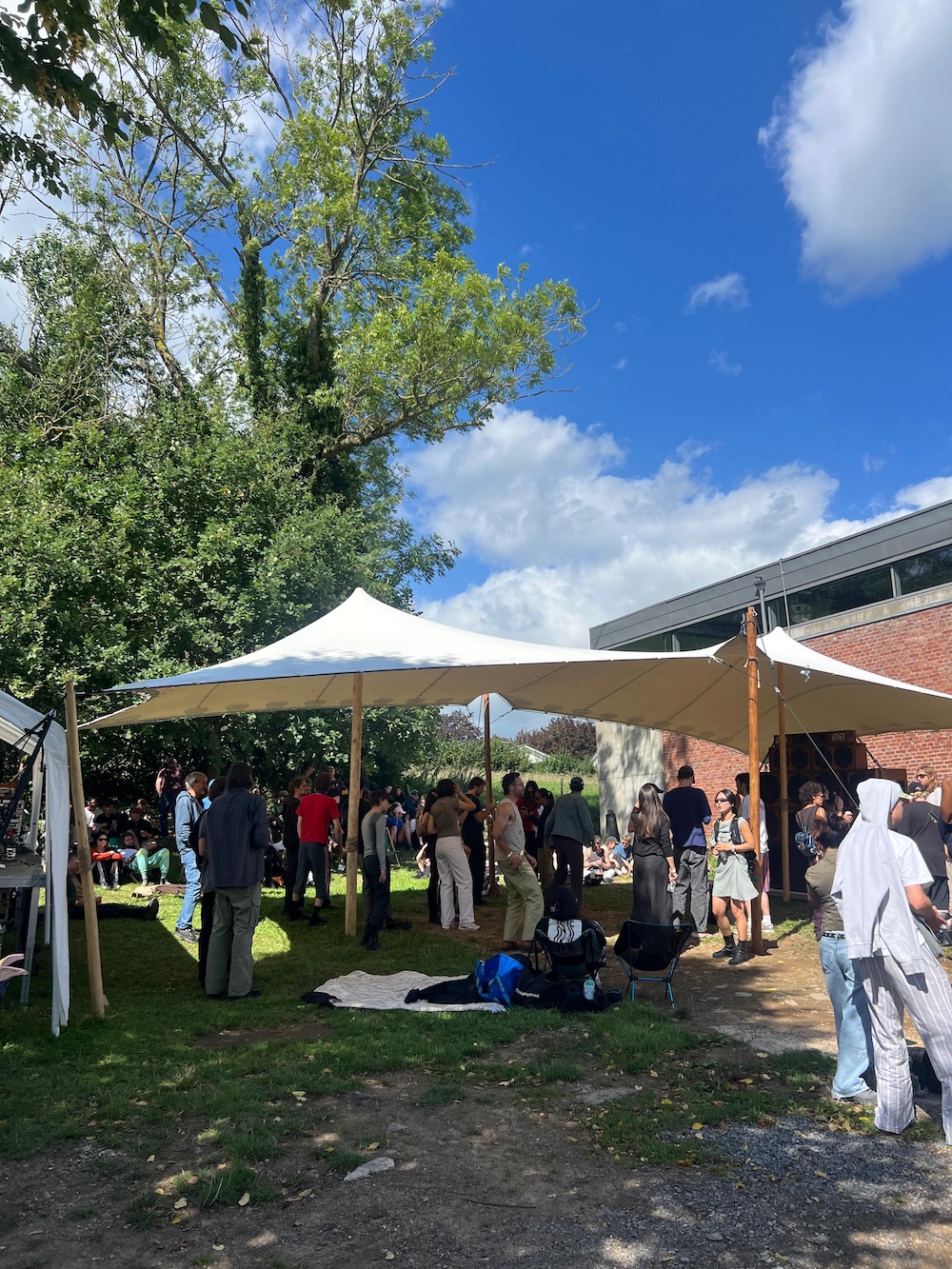
Capablanca opens early on the outdoor Hinterhof stage with an excellent custom-built sound system. The Discos Capablanca label boss folds together something distinctly conceptual – perfect company for a coffee in the bright morning brightness…
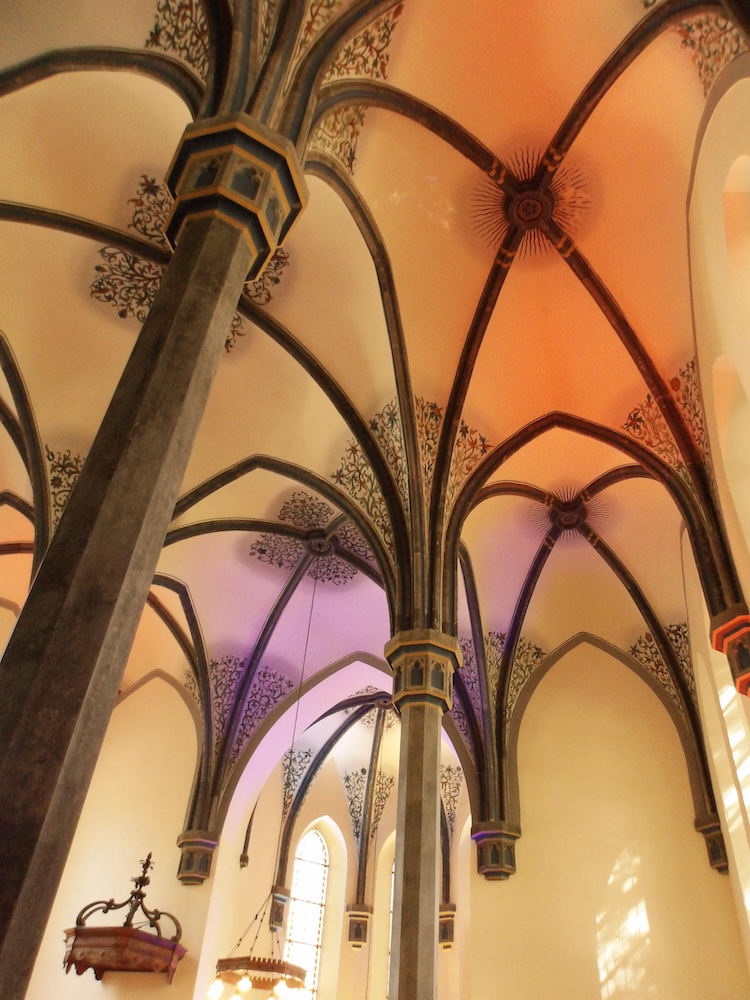
before Elaine Howley turns up at the other church with something close to celestial. Akuma No Numa take it outdoors into the afternoon sun for some digi-dub vibes; their whole thing is apparently a deliberately “rural” sound, which, in the Hinterhof, with the light doing what it’s doing by then, definitely works. Back in the Kesselraum, Klangwart closes out one of the sets of the entire weekend for us with amazing neo-Krautrock, thirty years into a project that still sounds like it’s arguing with itself in the best possible way. They appear and disappear infrequently, so it’s a privilege to catch them this time round the sun.
Somewhere around then it properly sinks in that you’ve seen maybe a quarter of what’s actually happened across the whole weekend, and that’s completely fine. Better than fine, really. That’s the way this place is designed – and it’s worth saying that the design feels entirely deliberate, carried through in a carefulness that runs from the pacing of a single night all the way to the length of a break between editions. Starting life as an annual thing back in 2016, the work of Michael Kreitz and Christophe Houyon, who’d been running the Meakusma label out of Eupen since 2008 before deciding the town needed the parties to match the records. Covid, along with the 2021 floods in the town, forced a two-year break, and when they came back for 2022 they were honest about what it had cost them: “We will be back in 2024, which means we will take a break in 2023,” they wrote afterwards. “Some things need resetting as the festival keeps growing.” It’s stuck to every two years since, and it shows in the best possible way – an incredibly organised small team, who by all accounts are still doing most of it themselves, backed by an army of volunteers holding together a festival stretched across a dozen venues and a whole town. You don’t get a weekend like this without someone, somewhere, deciding that a proper rest between editions matters more than doing it every year and it suffering for it.
Unbelievably amazing, start to finish; we’re still smiling ear to ear from the honour of having experienced it. It’s the kind of weekend that leaves you not worn out, but invigorated, and lights the fuse of obsession to dig and discover more.
Same time in two years, then.



Must Reads
David Holmes – Humanity As An Act Of Resistance in three chapters
As a nation, the Irish have always had a profound relationship with the people of Palestine
Rotterdam – A City which Bounces Back
The Dutch city is in a state of constant revival
Going Remote.
Home swapping as a lifestyle choice
Trending track
Vels d’Èter
Glass Isle
Shop NowDreaming
Timothy Clerkin
Shop Now