Life Is the Palette: Truus de Groot’s Influences
 
WhatsApp Image 2026-02-18 at 10.42.27
Music
 

“It is really hard just to pick 10 song influences. Make it more like 1000s!”

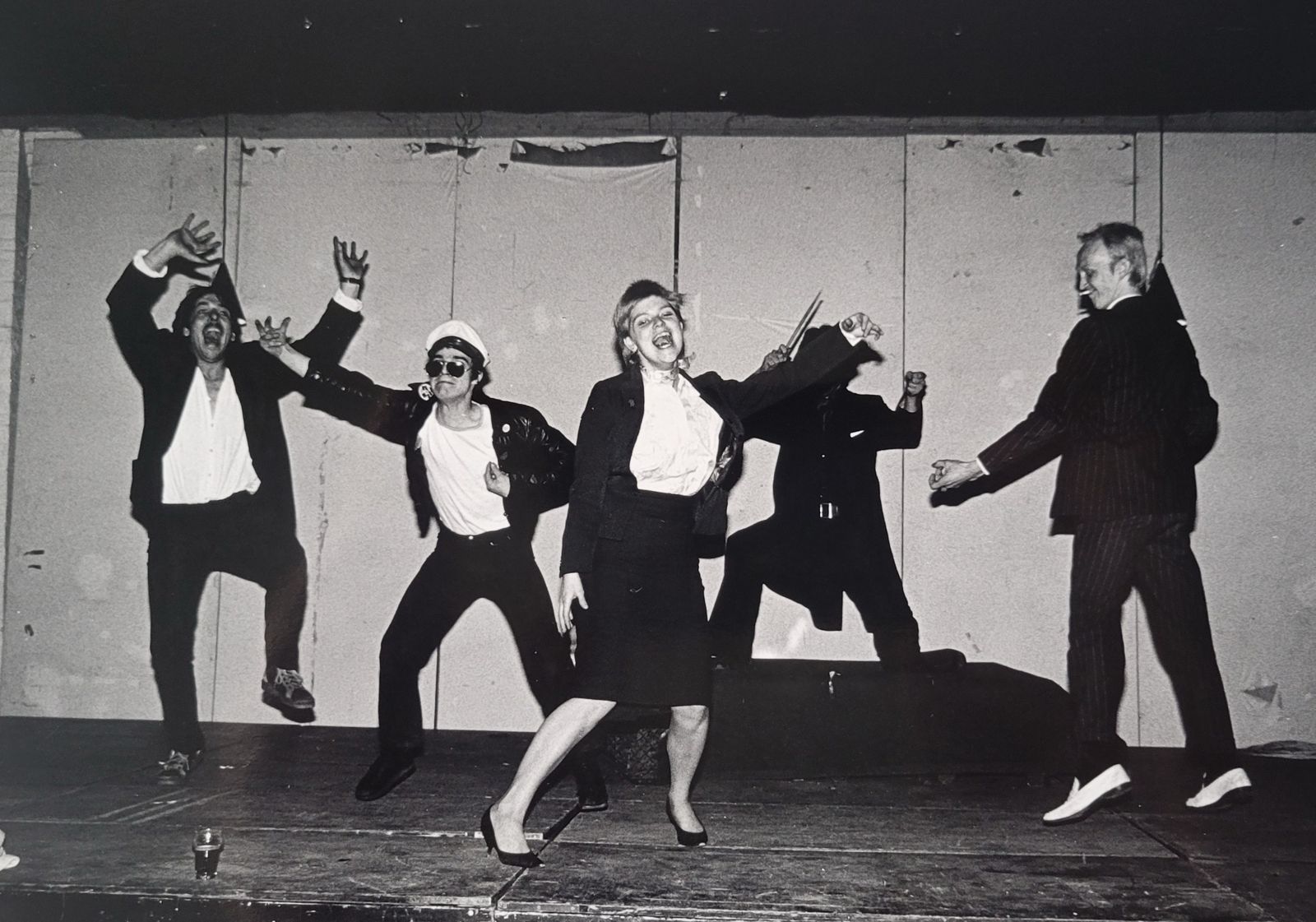
That disclaimer, issued with characteristic bluntness, tells you everything about how Truus de Groot approaches the question of influence. For someone whose career has wound from Eindhoven squats to No Wave New York, Memphis cowpunk, California tiki exotica, and back to the Netherlands over nearly five decades, the very idea of a tidy list feels like a category error. “Inspiration or influence does not just come from music,” she insists, “but from all sounds and circumstances in life. Even a train, a can opener, nature, and music you hear in passing. Things you see, read, endure or relish inspire. That is how it works: when your life is your palette, it all just comes to you.”

WhatsApp Image 2026-02-18 at 10.42.28


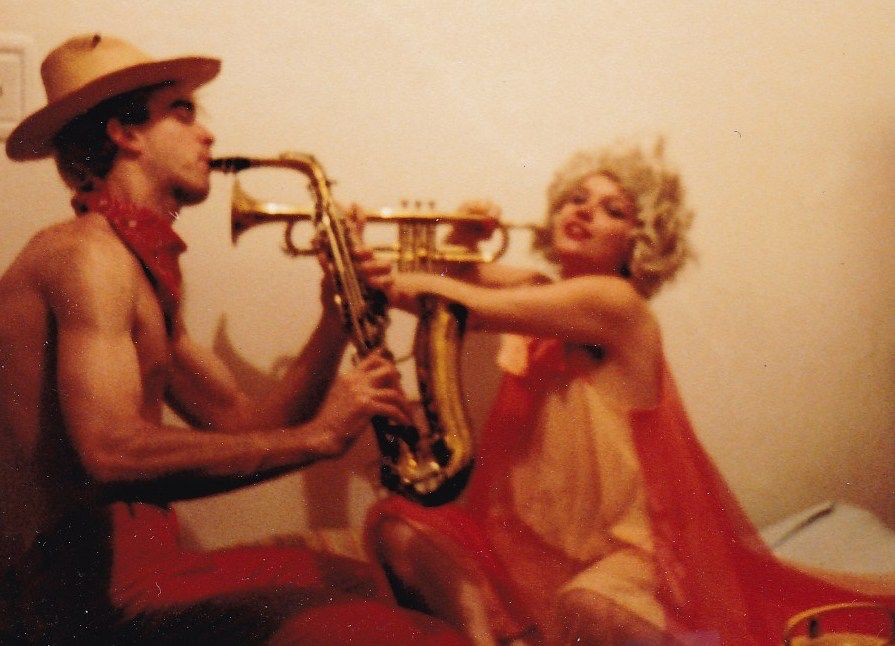
But press her, and the specific touchstones emerge. A constellation of artists that, taken together, form something like a self-portrait: unruly, funny, radical, romantic, and constitutionally allergic to the expected. Ahead of the release of Unnoticed on Ransom Note Records, de Groot walks us through ten of the earliest and most formative.
WhatsApp Image 2026-02-18 at 10.42.28 (3)


Yoko Ono – Open Your Box

“Yeah, wow, when John Lennon put out his single, Power to the People, in 1971, he backed it with this song. I was instantly smitten! Just think of a little child, Truus, barely 12, and this was on the turntable, and yes, it was always those B-sides I gravitated towards. I was not necessarily crazy about the vocal, but the instrumental arrangement and production were pretty out there. We had a little turntable, a pick-up we called it, and a stack of singles. I would also play the singles in reverse, just turning them with my finger, driving my brother insane. He’d accuse me of ruining the grooves. But this stuck in my head, and it essentially enabled me to climb on a stage and perform. Because you did not have to have any musical knowledge, make noise like Yoko!”

The harmonium in the family home didn’t fare much better than those singles. “We wanted to destroy it. We wanted to discover what’s in there. We did get some fun sounds.” Destruction and discovery were, from the start, the same act. Decades later, she describes her approach to synthesisers with the same logic: “I simply search to find the sweet spots without really thinking. I rarely read the manual, unless something really goes wrong, like NO sound.”


The Shangri-Las – Remember (Walking in the Sand)
“It is hard to pick just one of their songs, but Remember is pretty great. That type of voice inspired me, and I probably still use it in choir arrangements. I love the production by George ‘Shadow’ Morton. Morton created a similar ‘wall of sound’ production style and was often mistaken for Phil Spector. Then the outfits! Yes, that too inspired my look, especially late 70’s / early 80’s, where I would wear that type of clothing found at Thrift stores.”
 
 
Lotte Lenya – Seeräuber Jenny (Pirate Jenny) 
“Sometime around 1978 or so, I really got into Lotte Lenya singing her Brecht/Weill songs. This particular song is about a female pirate and how no one knows she exists. She just goes about her routine as a servant, yet she is planning to rob and kill as she patiently waits undercover. She sings it so well, in a natural way that has its blemishes. She is a huge vocal inspiration.”
The Brecht/Weill thread runs through de Groot’s work in ways that are easy to miss but impossible to avoid once you hear it. In the early 1980s, when she and Jim Sclavunos weren’t playing Plus Instruments sets at Danceteria, they were performing Weill/Brecht songs with a Bontempi organ at the Pyramid Club. The next day, they might play a Plus Instruments set, a week later do Carter Family gospel with Sclavunos tapping a bible as a drum. “Nothing much has changed, maybe,” she laughs.
 
 
Suicide – Ghost Rider
“How could you not be inspired by this? For me, Suicide is the template for minimal electronica dance. It is sexy, it rocks, grooves and feels dangerous at the same time. At the time I lived in NYC, Alan was around, I saw him often. Live, they were amazingly aggressive, loved that. They really didn’t give a fuck. Just Martin Rev banging on that synth and the rhythm machine just pounding away and all that attitude of Alan Vega!”
This is also the lineage that shaped Plus Instruments most directly. When she first encountered Michel Waisvisz and his Crackle Synthesizer at Amsterdam’s STEIM, “I was like, ‘That’s it, now we’re talking!'” The “anything can happen” spirit was less a philosophy than a working method, and it still is. “Since most run on batteries, there is always something new happening as the current fluctuates. And that can even be the case with AI, you can use it sparingly for some purposes, it fucks up too, and I embrace those moments.”
 
 
The Normal – TVOD 
“This was one of the first weird monotonic synth bands with a great sound that was pretty much unheard of at that time. It was somewhat primitive, cold and mechanical, yet very sexy! Still inspiring.”
 
 
The Carpenters – Rainy Days and Mondays 
“This song is just the saddest ever and gives me goosebumps every time I hear it. It was on my family’s turntable in my youth, so it was ingrained in my brain. I forgot about it, and then I picked it up again along the way. Karen’s voice is so incredible. So minimalist, controlled, deeply sad and absolutely no frills. I often aspire to have that calmness; I’m not sure if I can even get close, but it is very inspiring. I channel it here and there, and it is certainly part of my vocal basis. Then on top of that, she was a great drummer as well!”
 
 
The Stooges – TV Eye
“As I found myself in the punk explosion, I started searching its roots and quickly came upon Iggy Pop and what he was doing well before the explosion. That raw energy, yet skillfully played, I had this TV Eye in a live album, and it put some fire under my ass. On the studio recording, I love the production too, with the guitar panned all the way to one side and the drums and bass to the other. Nice touch. Iggy’s energy is contagious and still is! His command of the stage has been so inspirational for me, and I know for many more!”
She would learn this lesson herself soon enough. Stepping onstage for the first time as a teenager, she says, “I just immediately knew, ‘That’s it.’ Because I took command of the stage, it was just a very intuitive kind of thing.”
 
 
Porter Wagoner – Rubber Room
“When I formed Trigger and the Thrill Kings in 1983 with James Sclavunos and Jim Duckworth, we spent several months in Memphis, Tennessee at the home of Jim Duckworth rehearsing and getting ready for the road. He was an incredible source of knowledge of everything blues, folk, country etc. That’s where I immersed myself in the country. We played in Memphis and Nashville, and, of course, visited the Grand Ole Opry. Porter Wagoner was one of the regulars there in its day. For me, he was the epitome of authentic country. There is always a psychotic element in it. I feel this song conveys that more than any other. It’s about someone who has gone insane and ends up in the Rubber Room. He has other songs about people’s failures or other sad things. What an amazing voice and his outfits!! Look him up.”
 
 
Hiroshi Wada & Mahina Stars – 回り道(今日は遅くなってもいいの) 
“When I lived in NYC in the 90’s, I worked for 7 years at a huge Japanese restaurant, as the only Gaijin. It was a haven of sorts to escape the reality of NYC. It was all done in the Japanese style, complete with servers in Kimonos, Tatami rooms, Pagoda roofs and a Koi pond. FF to Seattle in the 90’s, I got immersed in lounge & Exotica music and came upon many great artists I didn’t know anything about. But then I picked a few albums of this group at the famous Buddhist rummage sale in Seattle. I was so intrigued by it. I played this album to death and used the vibe on all my Exotica albums. It also took me back to that strange time in NYC, and the Japanese atmosphere I took such comfort in. Very Japanese yet this Hawaiian/Western slide guitar, minimalist Japanese touches, strange falsettos, soprano male vocals, and those harmonies! It made no sense, yet I was mesmerised by it. I was making exotica music, but it didn’t make sense with my instrument choice, which was mostly synthesisers. That is just how I felt the Mahina Stars sounded.”
 
 
Isaac Hayes – Theme from Shaft
“Somehow I got this soundtrack on an LP in the early 70’s and was blown away by its utter coolness! A sound that can transform your entire environment. It has a timeless inspiration. You can actually taste the grit of NYC here. If I want to trigger some ideas, I listen to this. It never gets old to me.”
The ability of music to make you physically feel a place, to transform the room you are sitting in, is something de Groot has chased in her own work ever since, from the No Wave paranoia of Februari-April 1981 to the bleached desert eeriness of Salton Sink. What these ten records share is not a genre or a period but a posture: none of these artists was doing what was expected of them. Yoko Ono performed noise when she could have been a conventional artist. Lotte Lenya sang the dark songs of radical theatre. The Shangri-Las were teenagers making adult heartbreak. Karen Carpenter was a drummer singing about despair. Suicide were a rock band with no guitars. Porter Wagoner hid existential horror inside rhinestone suits.
De Groot has spent nearly fifty years in the same company. “I would pick up any instrument but play it my own way,” she says. “And that’s how I still do it.”
 

Unnoticed by Truus de Groot presents Plus Instruments is out now via Ransom Note Records.