Where Sound Ends and Film Begins: Sagat and e/tape’s audio visual references
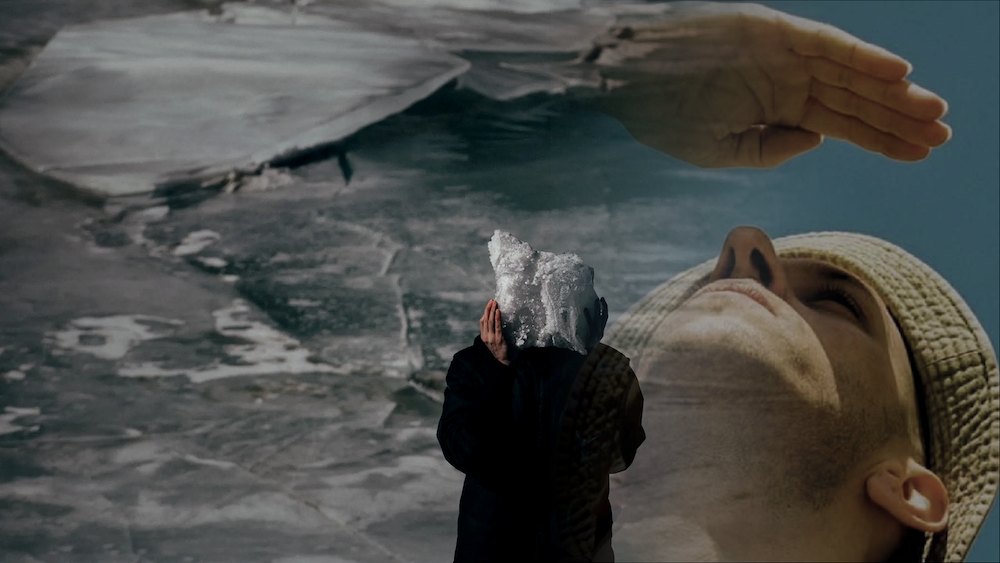
“Sound and image no longer point to anything but themselves,” says Sagat. Ahead of VEIL, his new EP with e/tape rewrkings on Gems Under The Horizon, the two artists talk through the films and installations that taught them to stop treating sound and image as separate language
Brussels-based artist Wiet Lengeler, aka Sagat, has spent years working the seam where sound and image stop being two separate things and start behaving like one. Alongside his techno productions for the city’s cult label Vlek Recordings, he builds live visual shows on analogue video synths – instruments for painting light the way a synth paints tone. A few years back, Basic Moves invited him to score one of these shows to a five-hour DJ set by Slovenian ambient artist e/tape at Face B in Brussels.

Something clicked that night, and it’s taken until now for that synchronicity to become a record: VEIL, out on Gems Under The Horizon, Basic Moves’ chill-out offshoot, with an e/tape remix in tow. Recorded under lockdown in 2021, VEIL’s four tracks unfold the way Basic Moves describes them – like ivy, growing slowly over grainy, textured ambient ground until hidden layers start showing through the electronics. e/tape’s remix, cut together in Sant Mateu over the winter of 2023, doesn’t sit outside that world so much as keep walking through it.
Ask Sagat what he’s chasing in audiovisual work, and he doesn’t reach for technique first — he reaches for the moment technique disappears. He’s after the pieces where sound and image suddenly glue together and start doing something new, where it becomes unclear where sound ends and film begins. Not sound illustrating image, or image justifying sound, but sound origins becoming a central mass that blends with the image on multiple levels — narrative, conceptual, haptic, textural, until the two are one thing, feeding off one another. e/tape comes at the same question from the listening end.
What draws them in is how sound can shape their experience of an image – guiding perception, opening space for reflection, sometimes stretching what’s seen, and sometimes pulling attention to something quieter and more internal. The work they love best is the kind where sound doesn’t explain the image but lives alongside it, and where they eventually lose the sense of following sound or image altogether.
To mark the release, we asked both artists to talk through the audiovisual works that shaped that instinct – from Peter Tscherkassky’s ear-splitting Sergio Leone rework to Norman McLaren’s hand-drawn Dots, from a Toshio Matsumoto film that dissolves Hindu and Japanese symbolism into pure perception, to an installation by Robert Seidel that reads like a half-remembered dream. Below, in their own words, Sagat and e/tape map out where sound and image stop taking turns and begin to become the same substance.
SAGAT
I think a lot about the possibilities of interaction between sound and image, what works and what doesn’t when you add sound to an image or vice versa. I really love it when sound and image suddenly glue and start doing something new together. Sometimes, while watching an audiovisual work, it becomes unclear where the sound ends and the film begins. I really love those. I like it when both sound and image offer room for each other.
In most cases, at least in film, sound is often treated on a very functional level. Sounds can be subjected to an insane amount of transformations. Often it doesn’t really matter what the original source was (if there even was one), as long as an element inside the image a sounds points to or contextualises, “functions”.
What I like is when sound origins become a central matter or mass that blends with the image on multiple levels: narrative, conceptual, haptic, and textural. Those are the pieces that really interest me: When music and sound effects become one thing and feed off one another.
LIGHT AND SOUND MACHINE
For example, the movie Instructions for a Light and Sound Machine (2005) by the Austrian filmmaker Peter Tscherkassky. It’s a dubbed-out, distorted, mashed-up version of The Good, The Bad, and The Ugly, by Sergio Leone. It applies nearly every in-camera and analogue transformation (scratching, solarisation, re-recording, re-editing, scaling) you can think of to image and sound. It’s dark and harsh, but beautiful; a very special experience to watch and listen (yet I would issue a warning to anyone who is epileptic). Sound and image start to work together and your viewing experience becomes transgressive and disorienting. Sound and image no longer point to anything but themselves.
There’s an aggressiveness towards the original material and towards the footage as a whole that is almost shocking.
Pita Get Out 3 (Editions Mego)
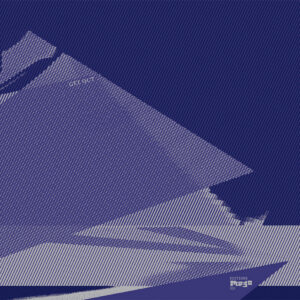
In some ways, this extreme approach and hard-contrast aesthetic reminds me of Peter Rehberg, the late founder of Editions Mego. Coincidentally, the track “Get Out 3” on his album “Get Out” (watch out, the drop will damage your ears at high volume) opens with a sample by Ennio Morricone from the movie “Maddalena” by Jerzy Kawalerowicz. Morricone made the soundtrack for The Good, The Bad, and The Ugly, which is also featured in Tscherkassky’s movie. It’s all connected!
Norman McLaren – Dots (1940)
A completely different work that I love is Norman McLaren’s Dots (1940). Its synchronicity, playfulness, and direct approach are bliss. A very simple idea with a maximal result. Dots was made by drawing directly onto a film strip and an audio strip of film stock. The resulting composition is a playful animated choreography of light and sound that could sound like a skit by Actress or a Hieroglyphic Being track. Both beautiful and brutal at the same time.
E/TAPE
I’m interested in how sound can shape my experience of an image, guiding perception and opening space for reflection. Sometimes it extends the depth of what I see, slows its movement, or dissolves its edges. Other times, it shifts attention inward, drawing me toward memory, sensation, or intuition. I’m drawn to moments where sound doesn’t explain the image, but lives alongside it, creating a space that feels open, alive, and uncertain. In these moments, I lose the sense of following sound or image. I’m simply immersed in their interaction, discovering connections I wouldn’t have noticed otherwise. 🙂
Communion – A collaboration with Matt Pyke for the exhibition Super Computer Romantics at La Gaite Lyrique in Paris.
Encountering Communion and returning to it over consecutive days left a deep impression on me. The installation unfolded as a synesthetic ecosystem, a 360º environment of evolving forms and generative movement, where sound acted as a catalyst for transformation. Gradually, image and audio felt inseparable, as if part of the same living surface. At times, I felt almost transported through different moments, as if meanings were expressed in symbols and sound rather than words. It created a space where perception could drift freely, immersed in a constantly shifting field that felt both organic and computational.
Everything Visible Is Empty / Siki soku ze ku (Toshio Matsumoto, 1975)
Watching Everything Visible Is Empty, I felt fused by a roaming spirit:) moving through cycles of purge and light. Hindu drawings and Japanese symbols dissolve and reform around me, feeling alive and unpredictable. The sound experimentation infused with Hindu/Japanese wisdom doesn’t just accompany the image; it guides perception, it always feels like it’s pulling me deeper into each unfolding moment.
Robert Seidel @ Young Projects, Los Angeles, 2011
I wish I had a chance to see it live, but back then, watching this installation by Robert Seidel through videos reminded me of dreams I used to have, vast, crystalline landscapes where time and space stretched endlessly. Seeing it made those experiences suddenly make sense. I imagined playing sounds into it, as if my own textures could inhabit the space, becoming part of its luminous, infinite flow. It felt intimate yet boundless, a space where sound, perception, and imagination could dissolve and expand together.
VEIL (GEMS003) is out now on Gems Under The Horizon / Basic Moves, on vinyl and digital, distributed by Space Cadets.
A limited run comes with 30 hand-numbered riso-printed posters from the original Face B visual show.
Grab it via Bandcamp or Space Cadets







Must Reads
David Holmes – Humanity As An Act Of Resistance in three chapters
As a nation, the Irish have always had a profound relationship with the people of Palestine
Rotterdam – A City which Bounces Back
The Dutch city is in a state of constant revival
Going Remote.
Home swapping as a lifestyle choice
Trending track
Vels d’Èter
Glass Isle
Shop NowDreaming
Timothy Clerkin
Shop Now