Track By Track: Olan Monk – Songs For Nothing
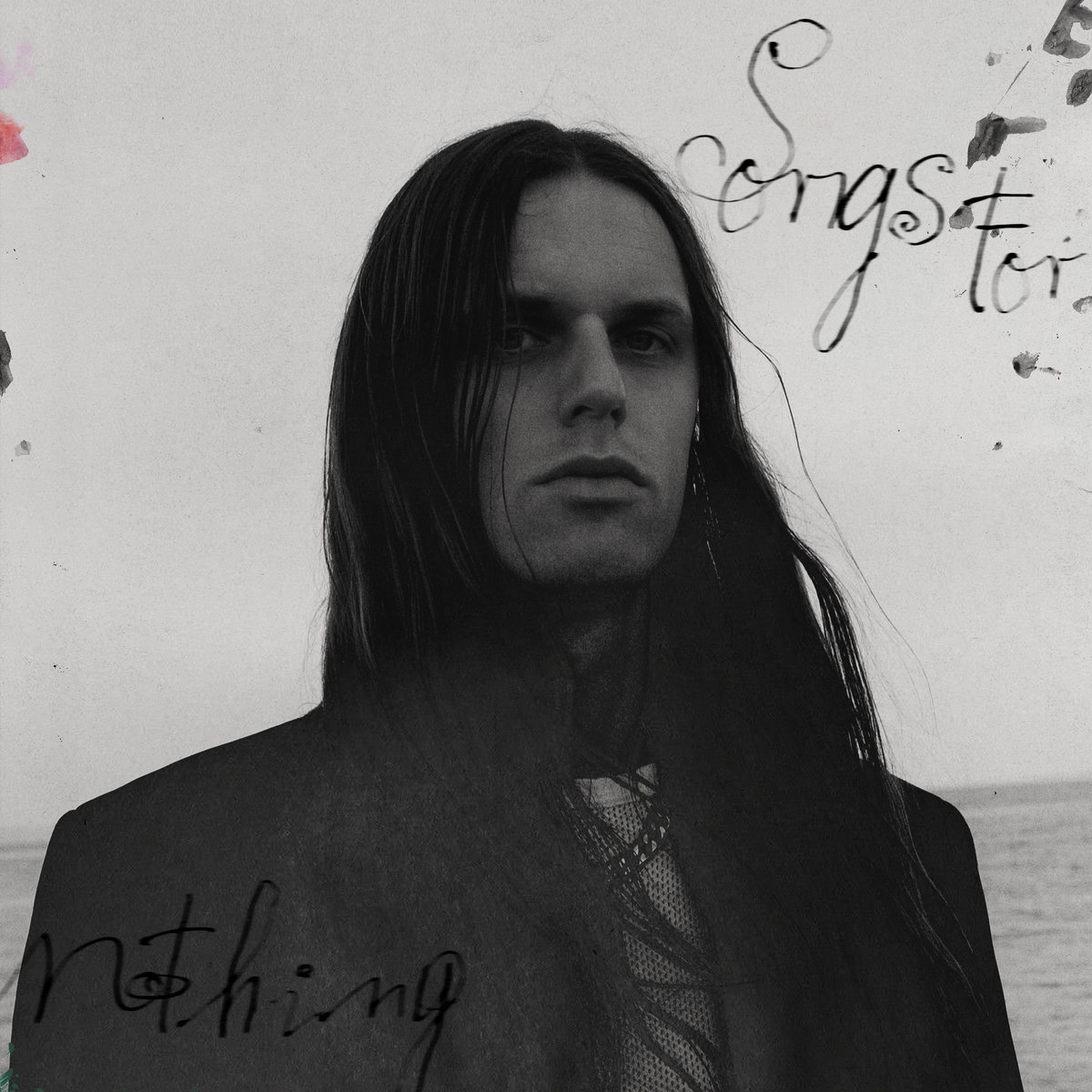
The Irish musician guides us through their acclaimed new album.
Olan Monk’s new album Songs for Nothing could be seen as an ode to the wild, wind-swept landscapes of western Ireland. It is here where the album was recorded and is described as being influenced by “sean-nós singing, Irish language songs in the “old style” that often proclaim tales of love, loss and landscape; and also heavily indebted to the late Sinéad O’Connor’s confessional songwriting.”
The album was released by AD93, the prolific London based label which has become a steadfast bet for abstract, experimental music.
It’s a departure, to a certain extent, from Olan Monk’s previous work which has largely been electronic focussed. However, for those discerning enough you will be able to find comparisons between the noise drenched ambience and elements of shoegaze which have always been dotted throughout their work.
More traditional in a sense, yet futuristic in its approach.
We asked for a guided tour of the album….
CORP
Opening the A-side of the record is ‘Corp’, meaning ‘Body’ in Irish. This was actually one of the last things I recorded for the album. It opens with the piano, which introduces but doesn’t return again on the record. I’m playing my mother’s old piano, which is now in my studio. She taught thousands of lessons on this piano while I was growing up, and I could always here it being played in another room. Somehow, I never really learned to play the piano, but it was important for me to play it on this record, and it ended up being one of the opening sounds. The slow start is almost like a funeral march, on piano and Bodhrán (a traditional Irish drum) played by Aindriú de Buitléir. The bodhrán is layered as much faster-paced cycling sub-loop, before Peadar Tom Mercier joins in on resonating violin. The track drops out to tin whistle and guitar, instruments that will lead the listener through the rest of the album.
DOWN 3
‘Down 3’ is probably the earliest recording on the album. It’s built around a loop of Michael Speers playing on an electric drum kit from an early countryside recording session. It builds on a guitar riff that I’ve paired with driven dub-heavy bass guitar. Maria Somerville layers my lead vocals with hers so we are singing in a duet. I added these melody lines on tin whistle which are then re-sampled at different pitches, creating a kind of surreal orchestral effect, they almost sound like oboes or bassoons at one point. Throughout the record, it’s like there’s an imagined classroom of children playing the tin whistle in the background to some of the songs. In the second half of the song, Peadar Tom Mercier (of Trá Pháidín) joins again on the violin, but it’s been heavily distorted, so that it almost sounds like another electric guitar. It blends in so well I forgot to credit this part in the album credits printed on the vinyl… but for those that listen, it’s obviously PT.

10 DAYS
I think I started making ’10 Days’ in an airport somewhere, as a looped guitar riff I had recorded earlier, adding a chopped breakbeat and some synthesised string arrangements. Later, Róisín Berkeley generously contributed her harp playing to the track, and then in studio we layered several takes of Dylan Kerr playing the flute. I wanted to make a pop song that had orchestral qualities, but the kind of orchestration that crosses over with traditional Irish instrumentation–in this case: the flute and harp, which also don’t appear again on the album. The vocals were recorded as a freestyle an then overdubbed with a chorus I had written, which I think is the only chorus on the record. It’s kind of a sister track to ‘Can’t Wait’ in that these are the only two songs that continue with heavily autotuned vocals, as a stylistic choice carried over from my last releases Auto Life (2021) and Dubplate 08 (2022), which featured a single version of ‘Can’t Wait’.
BLANK PAGE
‘Blank Page’ was written around an acoustic guitar recording, and again, this is the only use of this acoustic instrument on the record. It’s layered with reversed feedback on electric guitars and another heavily dub-inspired bassline. Risteárd O’hAodha’s performance on the ‘cello really makes the track, in the way it allows us to instrumentally introduce the song before the vocals come in, and establishes so much of the feeling of the song and the record as a whole through melody, harmony and texture. In the second half of the song you can hear me trying to play the accordion by opening and closing it on a few chords, like it’s breathing in a layer of harmonic drones.
DRÓN FEADÓIGE
‘Drón Feadóige’, which is the Irish for ‘Whistle Drone’, was a part of my live performances before it was on the record. The bodhrán is performed by Aindriú De Buitléir and the violin is performed by Peadar Tom Mercier, both of these parts are actually taken from a recording of a live performance with the Gaeltacht collective Gliogar in Amharclann Chois Fharraige in 2023. The guitar drones and the tin whistles were overdubbed in studio. As Michael Speers has pointed out when performing this with me, the high-pitched blasts of tin whistle layered in the background should sound like guitar feedback.
OATMILK
Opening the B-side of the record is this electric guitar composition, again with Risteárd O’hAodha on the ‘cello, this time mainly playing a pizzicato bassline, until the bowed ‘cello comes in later in the recording. It opens with some chopped drums that seem to have carried over from the A-side of the record. Later in the track, I’ve layered more tin whistles, playing in harmony, creating a kind of imagined chamber group of guitar, cello and tin whistles.
CAN’T WAIT
I made this from one string loop and a drum beat one day as a distraction from working on something else. Then a few months later I overdubbed the guitars and freestyled the lyrics. This album version features a recording of some seagulls and the sound of me walking along the coastline of Cois Fharraige, recorded on my phone, I did this to ground the song in the environment of the record.
POMEGRANATE
‘Pomegranate’ was the last recording I made for this album, built around a guitar riff being played through a guitar amp and a bass amp at once. The main riff as a looping motif is kind of a continuation of ‘Down 3’. Again, this track features Risteárd O’hAodha on the ‘cello, adding layers to a tin whistle recording I had made to swell in and out throughout the song. The second half of the song is driven by an added layer of guitar noise and feedback that turns into an added layer to the main guitar riff. I think this is one of those things that you can only accidentally capture by endlessly overdubbing in the studio–I hadn’t planned for this, but I’m glad I managed to record it.
FATE (REPRISE)
‘Fate (Reprise)’ is a new arrangement of a song I wrote and recorded for my first LP Love/Dead (2020). I had been performing this guitar version of the song as part of my set for a couple of years before Henry Earnest suggested that I record a studio version. Risteárd O’hAodha adds the emotive string layers on the ‘cello, and Maria Somerville again joins me in singing the song as a duet. Both of their contributions really re-frame the song as a part of this record. A lot of the album is about writing and arranging new and old songs for a different time.
AMHRÁN MHAÍNSE
The closing track is an arrangement of the sean-nós song ‘Amhrán Mhaínse’ for electric guitar and accordion, recorded as a duo with Peadar Tom Mercier (this time, on the accordion). I wanted this song to close the record, and to ground it into the environment and place in which the album was written and recorded: Conamara, a rural Gaeltacht region in the west of Ireland where I live and work. The original lyrics to the song–which are absent here as it is performed instrumentally, but still carried in the feeling of the tune–express the desire to be buried in your homeplace and with your people. I tried to honour this sentiment, in having the melody played faithfully and doing something less traditional with the accompaniment by harmonising the melody line with guitar drones and feedback, playing it live together in one long take, and as slowly as possible, so that it might feel buried in sound, finding its way back into the ground and the air and the water from which I felt it had come to me in the first place.
Buy the album HERE.
London show HERE.



Must Reads
David Holmes – Humanity As An Act Of Resistance in three chapters
As a nation, the Irish have always had a profound relationship with the people of Palestine
Rotterdam – A City which Bounces Back
The Dutch city is in a state of constant revival
Going Remote.
Home swapping as a lifestyle choice
Trending track
Vels d’Èter
Glass Isle
Shop NowDreaming
Timothy Clerkin
Shop Now