Franz Kirmann: On “Almadies” and mind-constructed geographies.
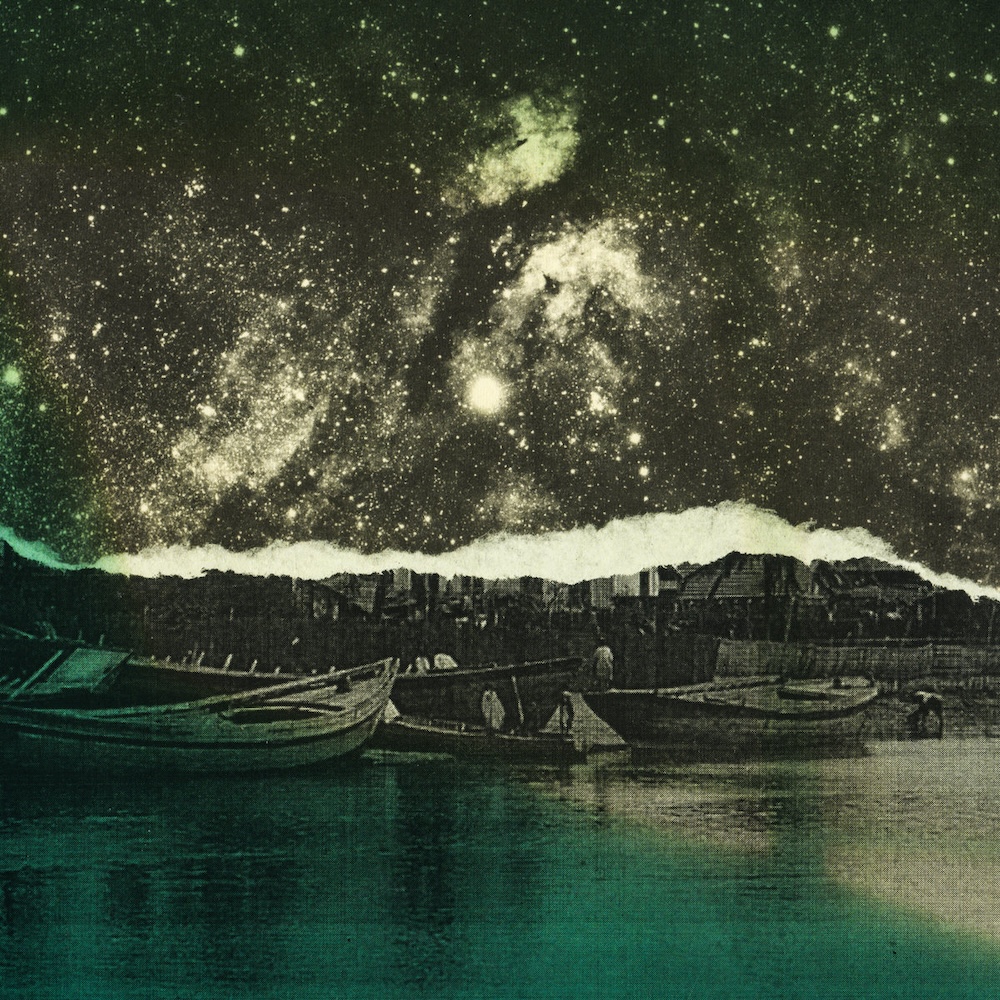
Records, as the name implies, document a moment in an artist’s life, and that is how I have always approached my work, regardless of the final format in which it is released.
My latest record, Almadies, found me by surprise, reflecting on my upbringing in Senegal in the 80s and early 90s.
I was relating that reflection to the works of Jon Hassell and his idea of Fourth World — “music which describes a ‘unified primitive/futurist sound’, combining elements of various world ethnic traditions with modern electronic techniques,” as explained by Wikipedia.
But what perhaps inspired me the most was the title of his 1980 album with Brian Eno: Fourth World, Vol. 1: Possible Musics. That title led me to think about the idea of music for places that don’t really exist — imagined countries, or geographies, in my case, shaped entirely by personal memory.
I realised that the Senegal of my childhood no longer exists in that form. What I carry with me is a very personal, idealised vision of it, shaped by childhood naivety and by not yet being aware of the country’s social and political realities. As a child, it was simply my world: a beautiful place, a friendly environment, a happy time to grow up in.
When I returned there in the early 2000s to work, I experienced it very differently. I was older, more aware, and more embedded in the everyday life of Senegal. I saw things I couldn’t have seen as a child, both literally and emotionally. It became clear to me that this wasn’t a correction of the earlier memory, but an entirely different place altogether. The location hadn’t changed as much as my point of view had.
That shift became central to the album: the idea that a place can exist primarily as a personal construction, something that doesn’t fully correspond to reality. I started asking myself how that could be expressed through music. This is where field recordings became important.
I began blending recordings from very different locations: the sound of rain; the Atlantic Ocean recorded near Almadies in Dakar in 2015; wildlife recorded during a trip to the Caribbean; as well as everyday sounds from my life in London — waiting in the rain outside my child’s school — or recordings made while visiting my family in France, capturing rain against the windows.
These real-world sounds were then merged with the synthetic material I was creating. Through granular processing, the synthesisers themselves began to take on watery, windy, rain-like qualities, blurring the distinction between natural and artificial sound. Together, these elements formed an abstract sonic world — part documentary, part imagined — where memory, place, and invention coexist.
Here are some examples:
1 – La Pointe des Almadies
This piece starts with a recording of the Atlantic Ocean I made near La Pointe des Almadies in Dakar back in 2015. The second recording here is made from a synthesiser part processed by a granular effect, which deconstructs the sound into grains and adds to the water/waves effect of the real sound.
2 – Retba
This piece starts with a recording I made in a garden in Barbados a few years ago, early in the morning. The second recording is made with an instrument called the Buchla Easel, which is a semi-modular synthesiser that makes use of cross-modulation and what is called a low-pass gate. That design is very good at creating organic, percussion-like sounds that feel very realistic.
Extract 3
Extract 4
3 – L’île
Here I’m using a recording of the same Barbados garden, but at night; you can hear all the crickets singing. The Buchla is also used here, but random modulation of the oscillator’s pitch at a very high rate gives a sound close to birds. The synth comes with a built-in spring reverb, which is very useful for creating a background sound akin to a drone and giving space to my “birds”.
Franz Kirmann’s Almadies is out now on Bytes




Must Reads
David Holmes – Humanity As An Act Of Resistance in three chapters
As a nation, the Irish have always had a profound relationship with the people of Palestine
Rotterdam – A City which Bounces Back
The Dutch city is in a state of constant revival
Going Remote.
Home swapping as a lifestyle choice
Trending track
Vels d’Èter
Glass Isle
Shop NowDreaming
Timothy Clerkin
Shop Now