When worlds collide: Tom Sharkett and Raf Rundell in conversation

Musical partnerships don’t always follow predictable patterns. Sometimes they start with a promo email about a track called “Sister Mary Immaculate,” a sweaty day lugging gear across London, and Toby Jones dancing incognito at a Peckham warehouse party.
That’s how Tom Sharkett, of the most excellent W.H. Lung and artist in his own right – ended up collaborating with Raf Rundell, one half of the 2 Bears alongside Hot Chip’s Joe Goddard, artist in his own right and all round stand up gentleman.
Their meeting came courtesy of Keith “JD Twitch” McIvor, who sent Rundell one of Sharkett’s early EPs. Rundell played “Sister Mary Immaculate” at Horsemeat Disco, loved it, and told Keith. Soon enough, Sharkett was on a train to London with his “big orange Peli case,” sweating through a set at a Crack Copies party where the actor was quietly celebrating his birthday…

“Where’s It All Go?” emerged from these beginnings, out now on Ransom Note and a “summer anthem so large and dense, light has to bend around it.” For both artists, the collaboration represents something that might not have happened in music’s pre-digital era. Sharkett, based in Todmorden with our very own Timothy Clerkin’s synths temporarily crowding his flat studio, brings his band background and increasingly more amazing, club-focused production together. Rundell, still working through an MPC and admittedly “a real technological luddite,” contributes years of experience navigating those spaces found between what we used to call ‘indie’ and the dance.
The result is what they describe as “a melancholic but uplifting chuggathon, brimming with analogue delights.”
Let’s get the lowdown shall we…
Wil: So… Life is a constant test of our maturity…
Raf Rundell: Yeah, what a drag. I’d just like to be footloose and fancy-free, like I was seventeen forever. But you can’t. But I mean, that’s kind of why you still do all of this and do what you do – to retain some level of innocence and naivety. Try not to get too hard-bitten and cynical, you know, try at least. But that’s not always easy. Having a beer at three o’clock when you finish work…Is this your studio that you’re in, Tom, that you sent me pictures of yesterday?
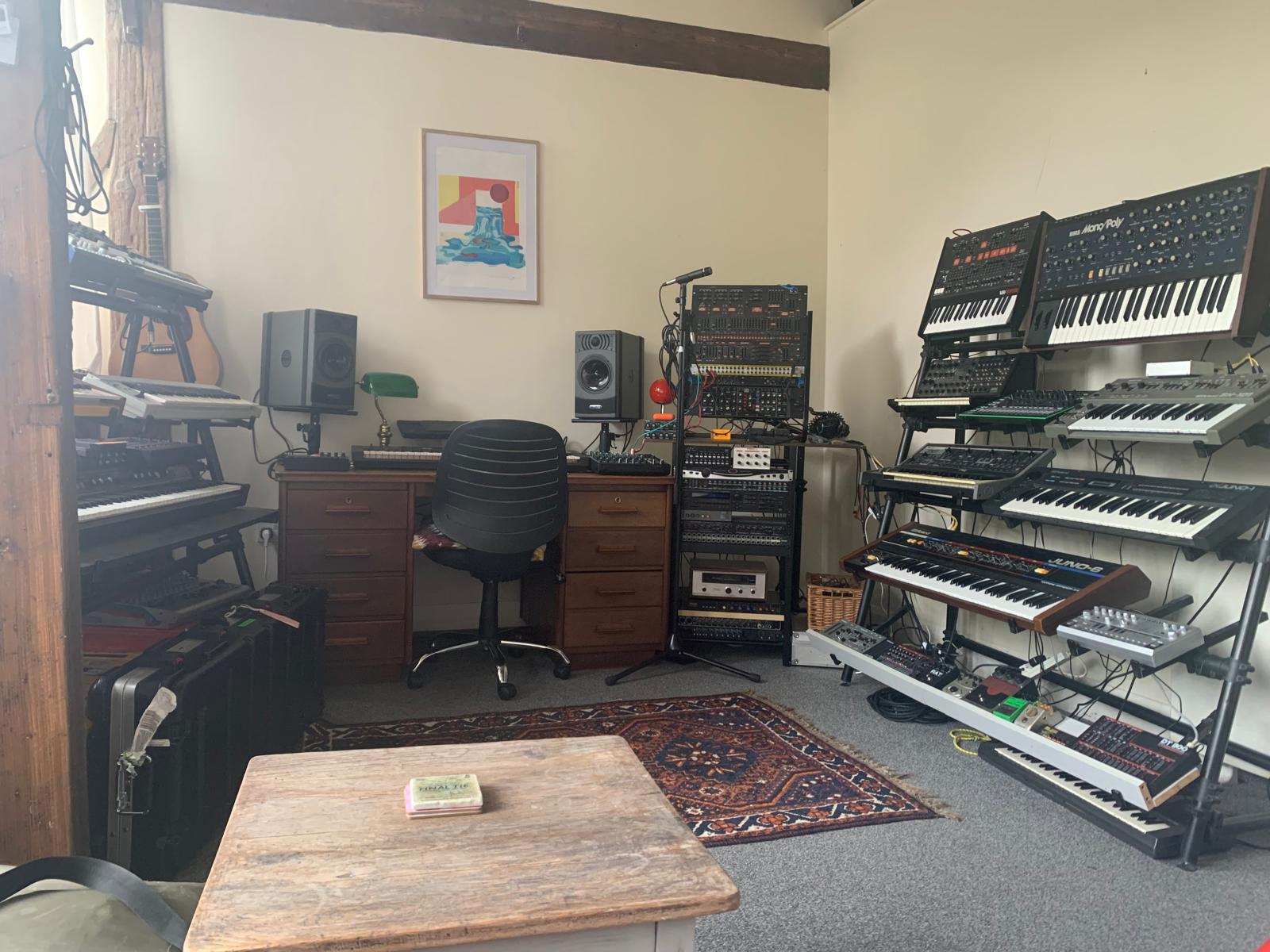
Tom Sharkett: Yeah, it’s just in our flat. I moved out of the place in Salford when we moved to Todmorden, as I just didn’t have the space for it here. I’ve also got all of Tim (Clerkin)’s gear here. He and his partner have just had a little girl, and they’re moving house so everything is in here at the moment. It’s great fun. I’ve not used any of my own synths since his stuff was here!
Raf: I do feel like that with most studio kits – it’s good to just have a lot of options. The same way that they used to have a record pool for DJs, it’d be good to have a kind of gear pool that you just go to, because every time you pick up a new thing, something happens, doesn’t it? And then you use it loads for six months, and then you put it away and don’t use it for a while.
Wil: How did this come about with you two then, in terms of how you did it…What? Where? How? Where’s it all go?
Raf: We have to salute Keith JD Twitch for us getting in touch. I’m on a promo list for Optimo Music +, and he sent me Tom’s first EP. I had a gig at Horsemeat Disco that weekend and was looking through my promos for new music. I found a tune on that one called “Sister Mary Immaculate,” emailed Keith and said, “Wicked, that’s a great tune. Thanks for sending,” and said, “I played it out on Sunday night.” And he was like, “Oh, Tom will be well pleased.” And so I guess he passed the message on to Tom. And I think Tom, maybe you then made friends on Instagram and said hello?
Tom: That was it, yeah. I’d heard Raf’s stuff too, of course, and the 2 Bears and really liked that. So it was nice when Keith forwarded the email on! Then Raf was putting on a party with Crack Copies at the Carpet Shop in Peckham, which he invited me to play. I came down on the train and met you at the market as you’d finished work, didn’t I? I remember – it was an absolutely boiling hot day and I had that big orange Peli case with all my gear in it that I was lugging around London.
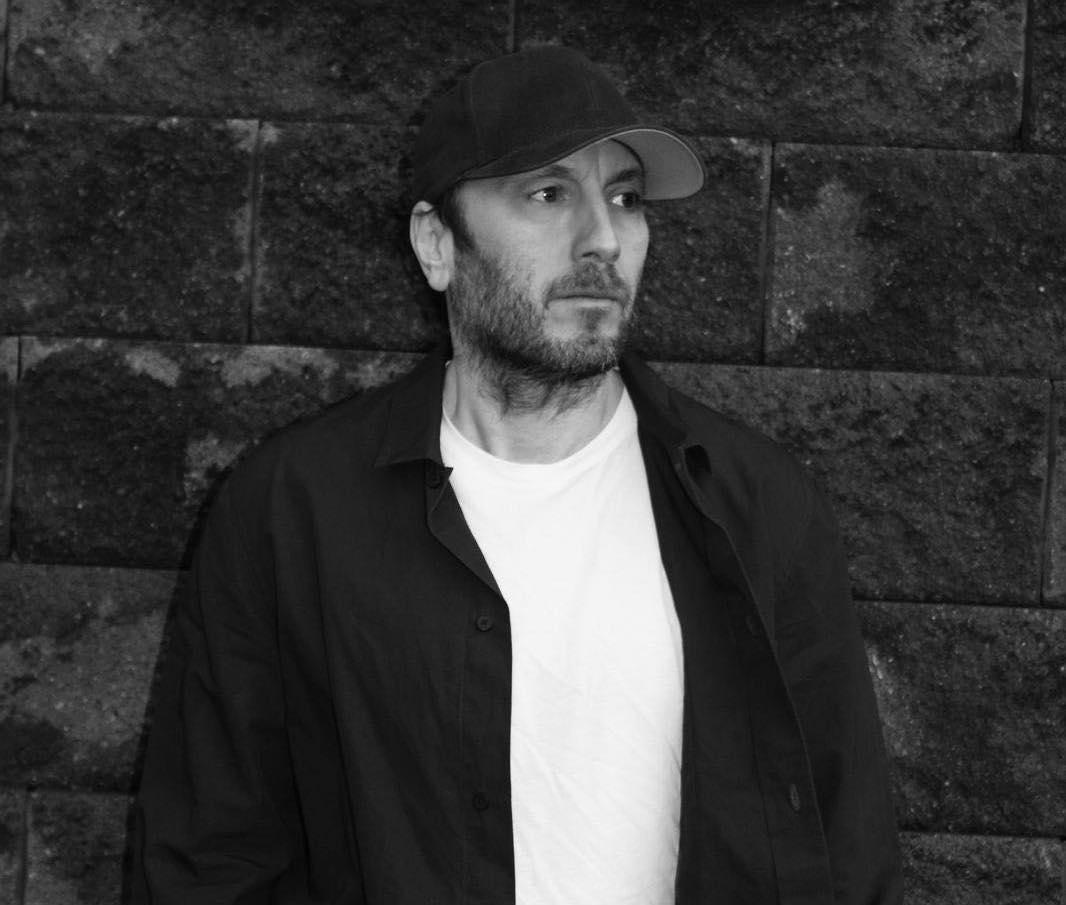
Raf Rundell: That’s right. Toby Jones – Dobby, Dobby himself – was there at that party in Peckham, which was a strange one, wasn’t it? He was there having a good time, kind of incognito. It was his birthday. He was there with his brother, and he was in that kind of like… that thing that actors like – a cap pulled down low. But he was sort of bopping away.
So yeah, Tom came to do that and stayed the night at our place, and we may have gone by my studio. And then we kept in touch, sending bits and pieces back and forth. And ‘Where’s It All Go?’ was a sort of the second or third one we’d sent. It was almost exactly this time last year….the day before I went off on my holidays. I had a loop that Tom sent, and it had been going round in my head for a while, because there’s that bit in the melody that goes [hums]. And I was like, there’s something in there.
I was sitting at home the night before I went on my holidays, and then I was just sitting there like, “I’m just going to go and see if I can get this out before I go away for two weeks and forget about it.”
So that’s what I did. And in fact, that’s the vocal we ended up using, isn’t it? A slightly kind of hairy vocal that I just shouted into a mic that evening when I kind of managed to get it together and write it down. And I think – I can’t remember when – I think maybe that was when I added the vocal samples and all the drums and bits and pieces, or maybe that was later. But the main thing was that the main lyric was written just before I went on my holidays, and then it went back and forth a few more times. And then it didn’t feel like hard work, did it?
Tom Sharkett: No, not at all. And I was very pleasantly surprised when you sent the vocal back, because the other stuff we’d been doing was all instrumental. I remember putting it on in bed and just listening on my phone, and I wasn’t expecting it at all, but it was great! We lived with that loop for a bit, which is why I got so attached to the scratch vocal. But it was perfect to me right away.
Raf Rundell: Yeah, I did a kind of more “proper” vocal after that, but it didn’t end up feeling right for whatever reason. So we slightly tidied up that one. And then yeah, I did add the vocal sample and a bunch of throwing it through effects and stuff. And then that was kind of it, really. I think the genius of that thing is in the drum loop, actually – the way that the drum loop works and all the synths that Tom laid down first of all…
Wil: I didn’t realise you’d done this together. I thought it was just your vocal Raf. Hah sorry, if I’ve missed that.
Raf Rundell: No, that’s all right. I mean, the main kind of chord progression and everything was all there. But no, there was an amount of back and forth. I was adding bits of hi-hats and vocal samples and all of that – the ‘freeway’ bits, all that stuff was what I threw in. And some bits of drums and whatever, you know, little additional stuff. Tom made the instrumental in the most part. And then that was that.
Then you sent it to System Olympia as she was putting a comp together?
Tom Sharkett: Yeah, that’s right.
Raf Rundell: And then she came back very positively. And it was like, “Oh well, maybe there’s something good here.”
Tom Sharkett: Yeah, I knew she’d like that one as it had a romantic and nostalgic feel to me, which I could just sense would be up Francesca’s street. I only sent her a video of the logic session as we hadn’t finished it. Do you ever do that? It just sounds great on a phone video recording sometimes, so if someone wants to hear something but I’ve not finished it yet, I just sent them that!
Raf Rundell: Yeah, I’ve got too many of my demos that exist only in that format, really. I don’t know, there’s something about the mics and the compressors on these phones, or whatever… I don’t know if they’re any good or not, but it’s just what we’re all used to hearing now, isn’t it?
Tom: Yeah, totally.
Raf: Or how we’re all used to hearing things for the most part. They could definitely add something, or in that way, putting something on tape makes it sound more proper. You know, it’s just… I guess it’s a modern equivalent of that.
Wil: The process of actually creating music now is so very different, isn’t it, to how it was previously? Not to bring your age into this, Raf, but just more that you’ve created music before that, in a way. How does it affect the way you create?
Raf: I’m a real technological luddite in the studio anyway. I still run it all through an MPC, and not even one of the terribly new ones. That’s the way I’ve always worked. I never really got very good on Ableton or Logic. I think in the studio I was known as ‘the Les Dawson of Logic’ for quite a long time. You know the Les Dawson sketch where he’s playing “Für Elise” or one of those on his piano, and he just gets every third note wrong on everything? You know, the legs fall off the piano – you sort of touch it and the whole thing sort of explodes. So yeah, Les Dawson of Logic was one of my many names in the studio for a while, and I’ve definitely gotten better with it. But in terms of getting started, yeah, the methods are sadly still pretty ancient.
The way I’ve made music has not changed vastly, but the way it’s all shared, of course, is completely different. And yeah, I mean, it’s hard to know sometimes what it’s for, or where it’s going. It’s so kind of decentralised, which on some levels is totally fine, because there was a kind of tyranny and a kind of gatekeeping to the previous record industry, which on some levels wasn’t helpful. But there was a kind of… There was an investment in talent that was there before, and a kind of quality control that was there before, for good or ill, that is much more nebulous at this point in time.
And on the flip side of that, actually, in its favour, I’d say it’s kind of like perhaps these types of collabs probably wouldn’t have come about, or wouldn’t have come about as quickly, if there wasn’t… if one couldn’t share like we do. I’m not saying this wouldn’t have happened, but in terms of the way that we can just ping ideas and sessions and all of that back and forth, connect like that – that’s a massive boon.
We’re just finishing off the final tweaks of mastering on the new Insecure Men record for Fat Possum that I’ve produced, and it’s sounding terrific. But it’s like there’s been all of these tiny little incremental things that need to get done x dB up here, x dB down there, all of that stuff, which would have taken fucking weeks being sent back and forth and all of that stuff. So those technological advances are fucking incredible, I think.
Tom, what are you up to next? Are you touring with W. H. Lung or…?
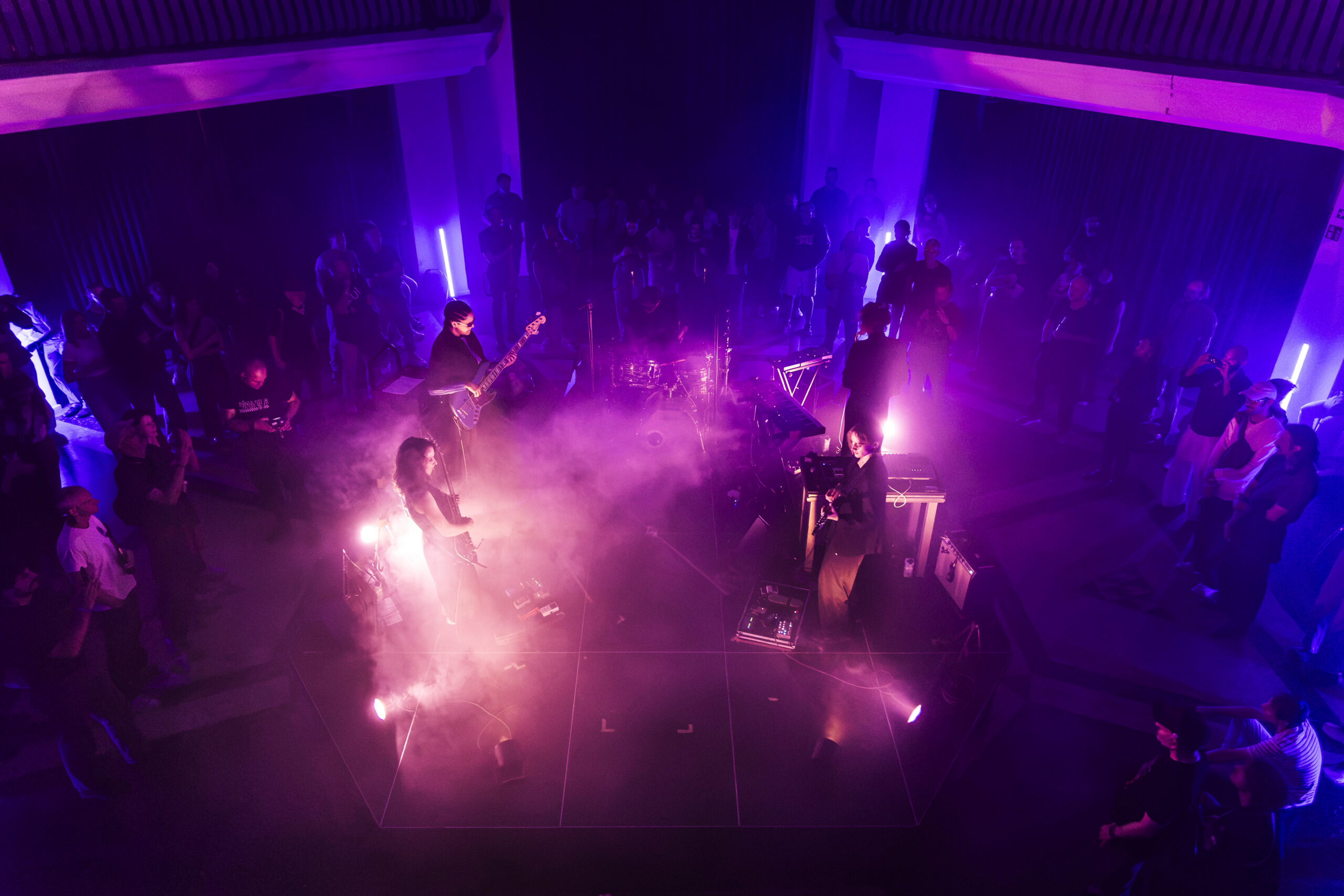
Tom Yeah, we’ve got a few things left this summer. Festivals like Latitude, Green Man, Manchester Psych Fest, and one in the Netherlands called Misty Fields.
In terms of live plans, though I’m wanting to start up my new thing, and this is a good one to ask you, actually, as it’s something that’s been on my mind quite a lot. I guess in my eyes, you are kind of in this category, and like Joe (Goddard) as well, where you kind of straddle the club/dance music world and the more indie spaces. How do you find that?
Raf Rundell: I think, in the most part, you do what comes naturally. I think it gets tricky sometimes, or certainly when Joe and I would go do gigs, when we tour outside of the UK. Sometimes they wouldn’t really know where to put us, especially in America. When we play out, we play kind of straight-up house music. But as we were signed to DFA, we would be put on these tours, and the agent would put us in these places that were basically indie venues, and they’d put a pair of decks on the stage, and it just never really felt like that sort of thing worked that well. I’m a bit more of the opinion that one thing is one thing and the other is the other. Like, if I’m in a club, I want to hear that sort of thing, and I don’t need for that to be sort of mixed in with anything else, particularly. If I’m in another situation, I want to listen to some kind of gentle drones or folk music or whatever, then that’s… I think genre-bending is overrated, probably, or often it just doesn’t work, and often it will make both things worse, rather than something new or something better out of the two things
Wil: On that note, then… this is a conversation Tom and I were chatting about pseudonyms earlier. Raf, you work under quite a lot of pseudonyms, right? And do you think that that has helped or hindered your kind of… I know you’ve not really been one to give a shit about careers, but you know, just helped or hindered your kind of…
Raf: If I’d have sort of found one thing and carried on doing it… I might have been more successful, probably, but I wouldn’t have been able to do that honestly. Like, I can’t really mug it. And there was a point where I just wasn’t really into DJing anymore. I still had a load of gigs to do. I’d just be fucking… it made me miserable. People would turn up, people would go, “What’s wrong with you?” I’d go, “Oh, nothing,” just like, “I’m not really…” You know, because I’m not going to go, “I’m not into this, but I’m here for the money.” I’m not able to hold it down on that level because it’s something that I really care about. And if you’re then… but of course, you know, if it’s the way you’re paying the rent and feeding the kids or whatever, then you kind of go, “Well, this is kind of easy money.” I’ve never been able to reconcile those two things, perhaps.
But the whole thing of having pseudonyms or whatever – it’s just a kind of trick that one plays on oneself in order to get into a different headspace. Do you know what I mean? Like the first Two Bears, or all of the Two Bears things – I never thought that was going to be the thing. I mean, I never thought I was going to be a singer of any variety. The first Two Bears things, me and Joe made some demos, and we wrote tunes, and it was like I sang kind of scratch vocals of the songs that we’d written to send round to people, going, “Do you know anyone we can get to sing this? Let’s get this to Mary J. Blige.” And most people went, “No chance, but that sounds quite good. Maybe you should go with it.” And you go, “Yeah, really?”
Tom: How did you find doing it live when you first had to sing in front of people?
Raf: Absolutely horrible. I don’t like doing that at all. Well, also, because with dance music as well, we had this whole live show thing, which just cost a load of money and was a right pain in the end. I’m sure we had a few shows that a bunch of people had quite a good time at. But just from my point of view, it’s just a massive pain in the ass. I mean, you know what it is to tour with a band and all that, and it’s like I’d been travelling around with a bag of records and headphones for ten years, and then we had to do this live show, and we made no dough, and then you could never really sing on stage.
I remember doing this massive show at Bestival – fucking huge tent, thousands of people there. Yeah, great. And we start, this song started, and you can’t really tune your vocal to a bass and drums, and then so you’re singing along. And then the piano comes, and you go, “Fuck, I’m nowhere near this, but I don’t know where I am at this point.” And so you just feel like your trousers are falling down.
Also, I sort of do remember at that point visiting my pals Basement Jaxx in their studio and saying, “Oh yeah, we’re getting this live show together and blah, blah, blah.” And they were like, “Oh, just play the track and dance around. No one gives a shit.” “No, no, no. I want to do this. I want to do that.” I just remember that thing and just going, “Fuck, I should have listened to those boys.”
Tom: I think what you thought then is right, because I’m kind of of that opinion now, from doing a bit of both of those things. I do think the audience gets more from it as well if it’s built like a live performance. And the performer. If I’m hearing acoustic drum samples in something then I want to see someone smashing the shit out of a drum kit I think!
Raf: We felt beholden on some level of like. We’d been around the festivals three, four times already, and they were like, ‘Well, we’ll book you again, but we need a different show.'” And Joe didn’t have any need to do any kind of live show because he did it with Hot Chip. What we should have done is made something slightly different and quite simple that could have been done from a DJ booth, but fit in a couple of suitcases and then, you know… but you live and learn, don’t you?
Wil: So no more Two Bears live stuff then?
Raf: Not in the way that we did it prior. No, with all the bells and whistles, but definitely, like we’ve talked about how we might do a sort of DJ + thing.
Wil: Well back to you on that Tom, because you’ve started making all these records with vocals in and them. I’ve heard your tunes with I don’t know, like, what, four or five people, different people on them, and I’ve heard you singing on your records now too. When I saw you at Watching Trees it was just a pretty instrumental sort of live show. How do you start to put something with lots of different live members together without totally destroying yourself financially?
Tom: I think Mount Kimbie do it well. Obviously they’ve got a lot of different vocalists on their records but the way they’ve put a solid live band together with Andrea Balency-Béarn doing a lot of the vocals alongside Dom, works so well. And I guess that has become the band now hasn’t it – the last record feels like their first as a more traditional band. I am constantly in two minds though. I also love being able to bung everything into one peli case and get myself to a gig on a train. I do the splitter van with 9 people all the time too, so I guess I get to enjoy the benefits of both.
Raf: I think the way that Tom does is the right way to do it. You fit it all in a suitcase, and you can plug into the back of a DJ mixer, pretty much, can’t you? And it fits in the context of a kind of club night, or of something else where you can kind of go in the midst of other live performers,
Tom: Yeah absolutely. I think it depends on the context for me and where you are. When we were recording the W. H. Lung record last year and had a break from playing live I was fully leaning into the solo performing routine – but then when I came back to playing with 4 other people and a drummer and having our own FOH person I was just like – ‘oh yeah, this is so much fun!’
Tom Sharkett & Raf Rundell’s Where’s It All Go? is out now on Ransom Note Records.







Must Reads
David Holmes – Humanity As An Act Of Resistance in three chapters
As a nation, the Irish have always had a profound relationship with the people of Palestine
Rotterdam – A City which Bounces Back
The Dutch city is in a state of constant revival
Going Remote.
Home swapping as a lifestyle choice
Trending track
Vels d’Èter
Glass Isle
Shop NowDreaming
Timothy Clerkin
Shop Now