Unnoticed: Five decades of flying under the radar with Truus De Groot
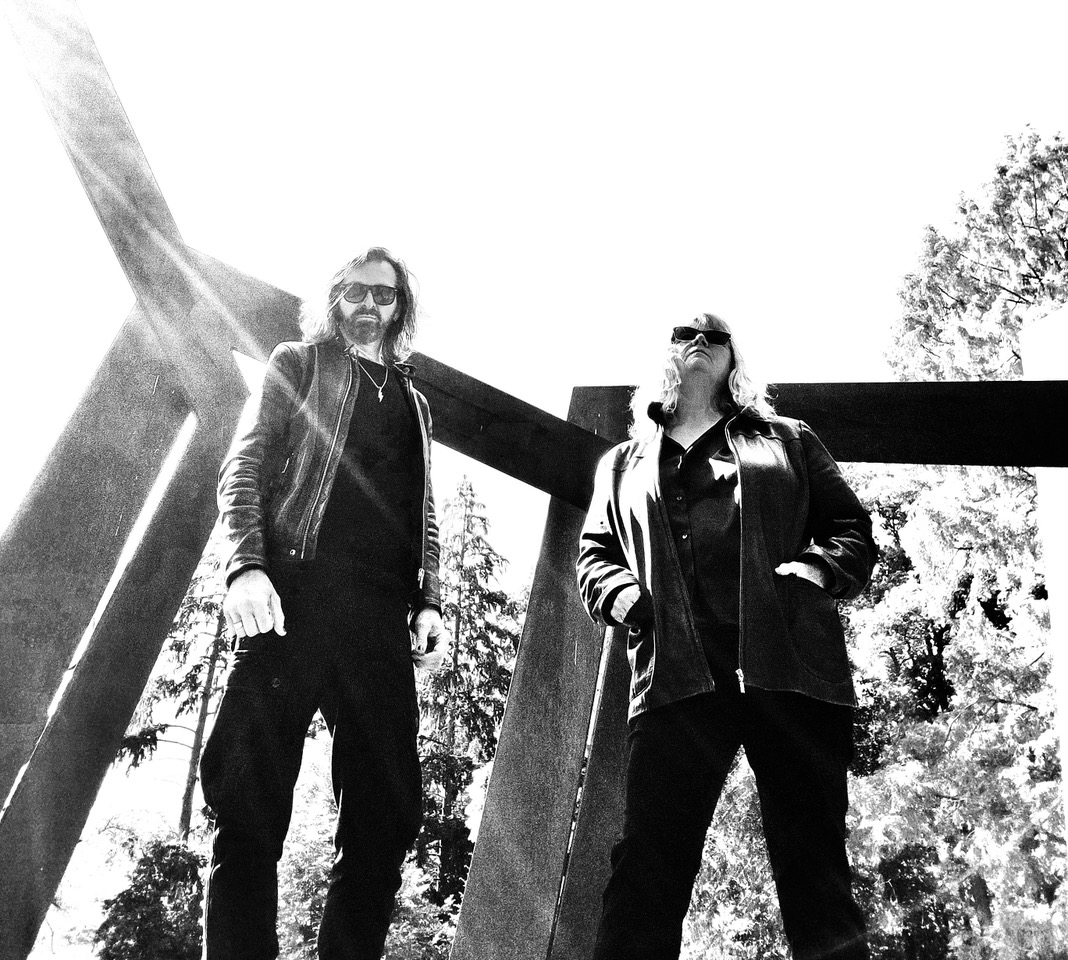
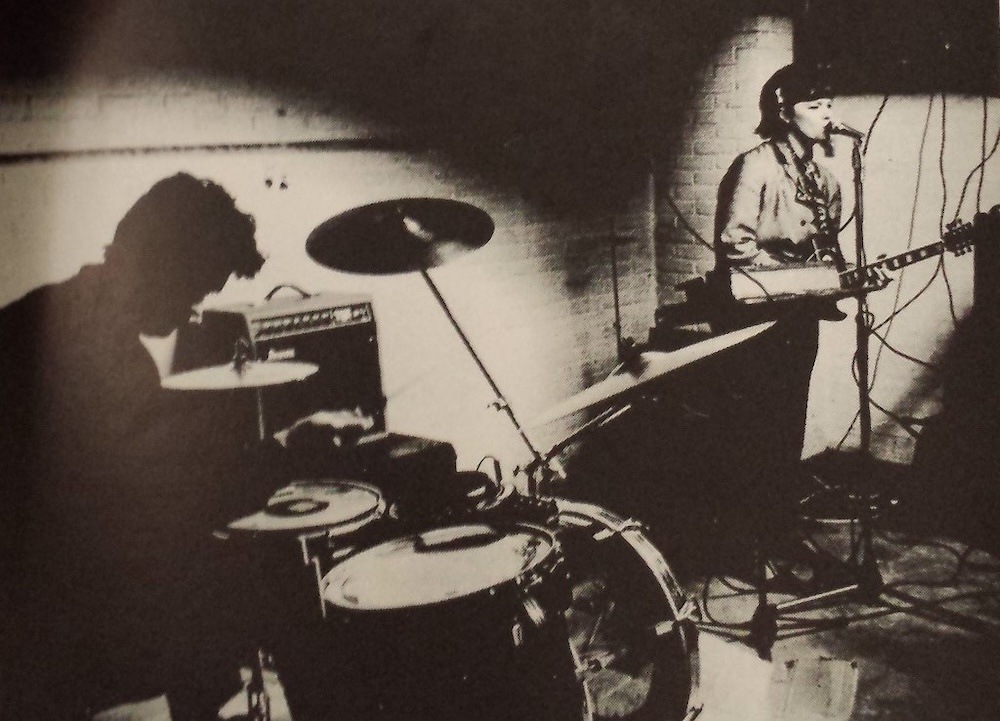
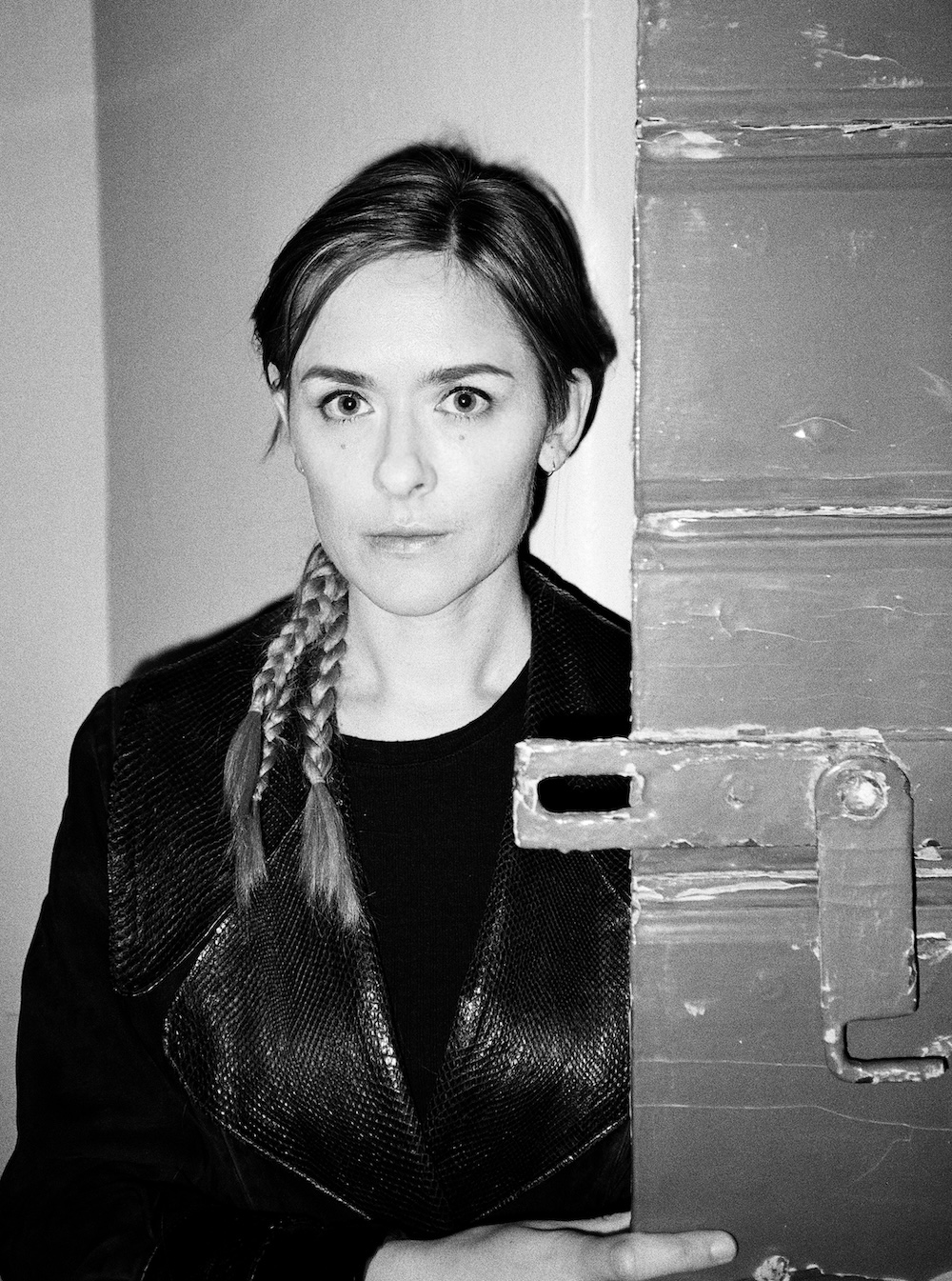
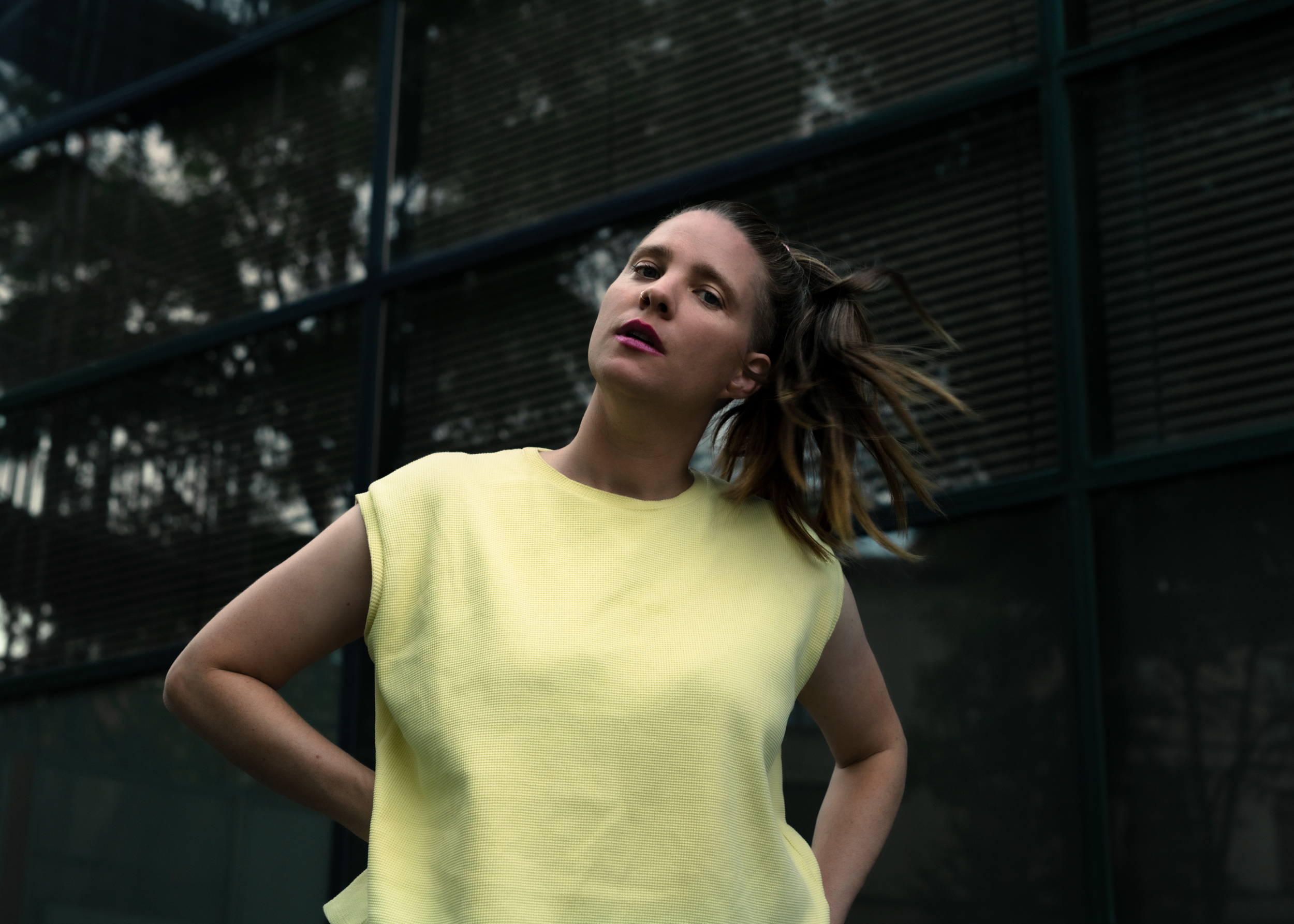
Nearly five decades into a career that’s taken her from Eindhoven squats to New York’s No Wave scene, from Memphis cowpunk to California tiki exotica, Truus de Groot remains gloriously unclassifiable.
There’s something wonderfully stubborn about Truus de Groot. From destroying her family’s harmonium as a child, Truus is still making music the same way she always has – by endlessly turning knobs and searching for sweet spots without reading the manual.
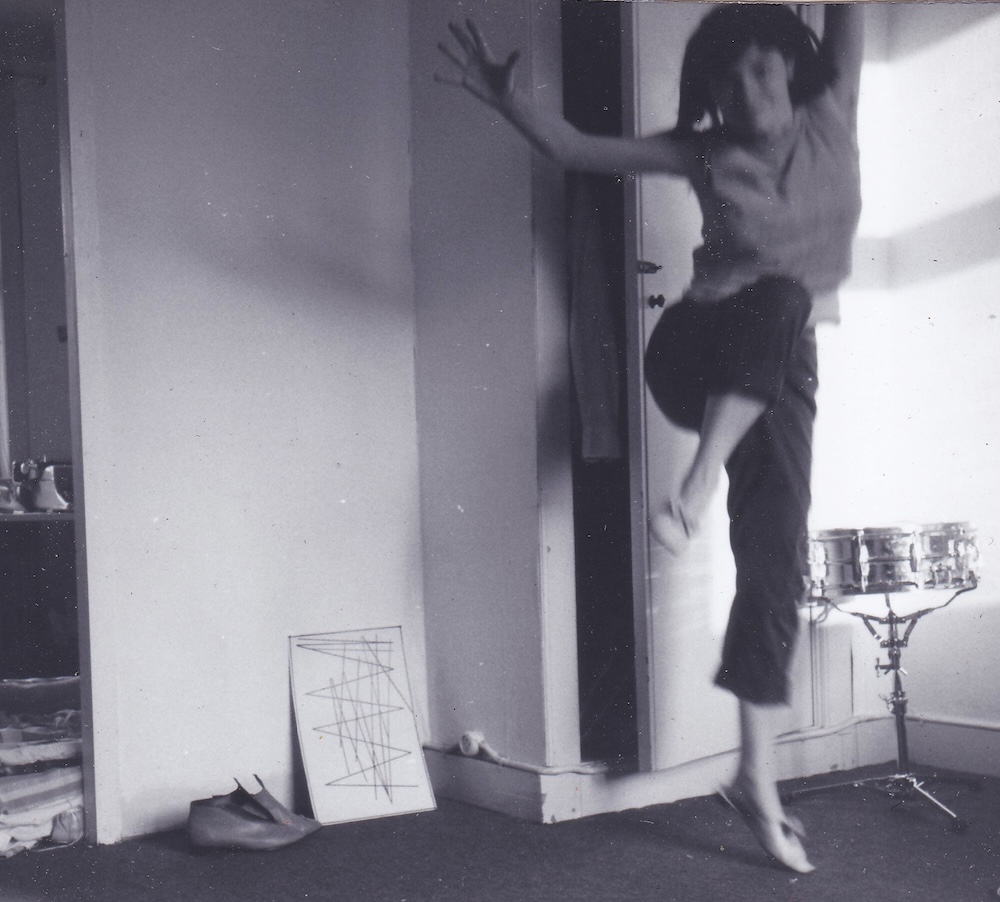
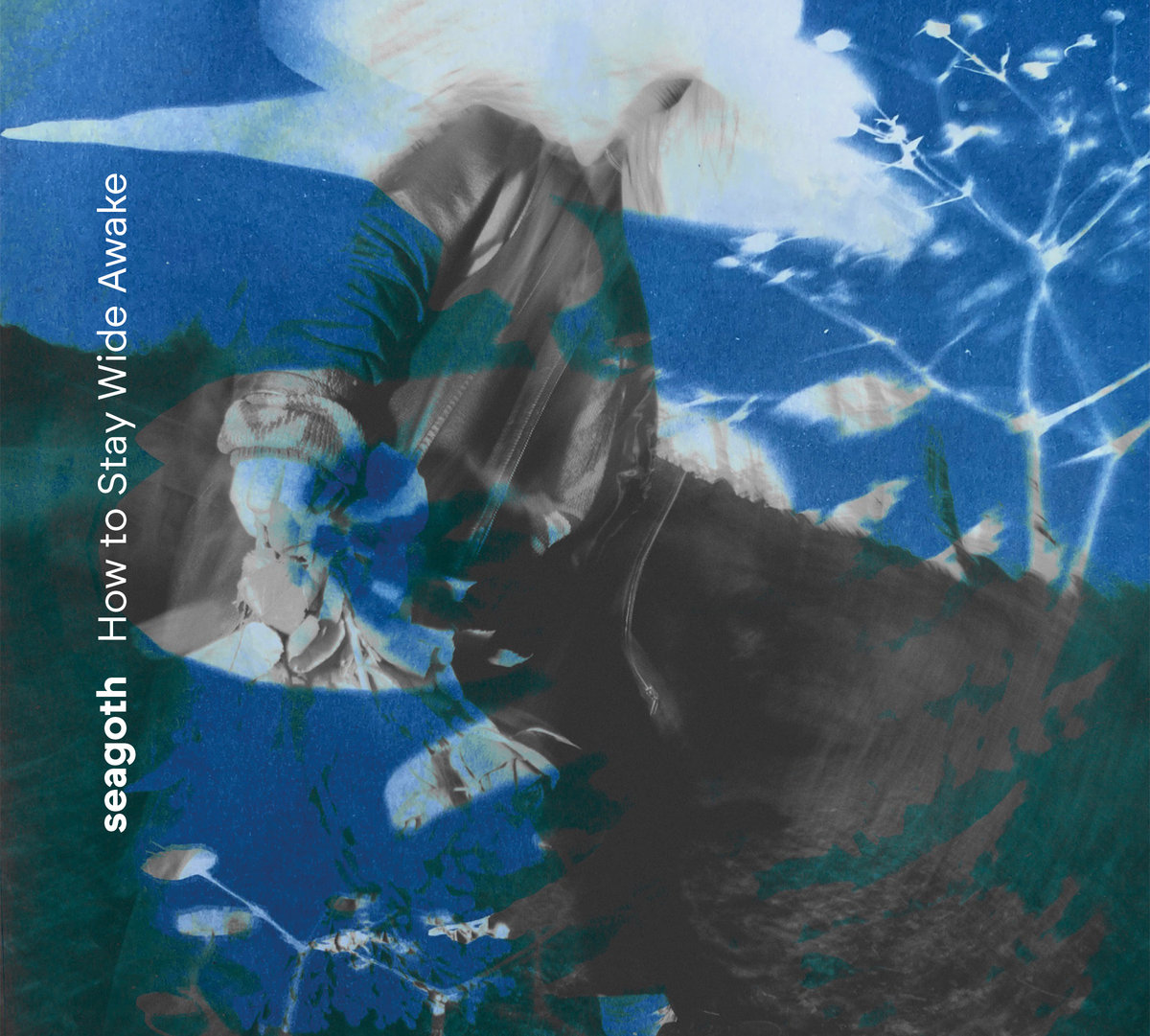
Her ninth Plus Instruments album, Unnoticed, drops next month (February 11th) through our very own Ransom Note Records – what an honour! The album finds the Dutch underground pioneer diving deeper into her experimental synthesiser palette. Twelve tracks of minimalist, analogue, confrontational noise paired with her vocals, recorded at The Ranch in Escondido before she packed up and moved back to the Netherlands. The title itself carries a certain wry irony for someone who’s been called the “Queen of the Dutch Underground” – though de Groot laughs that one off pretty quickly.
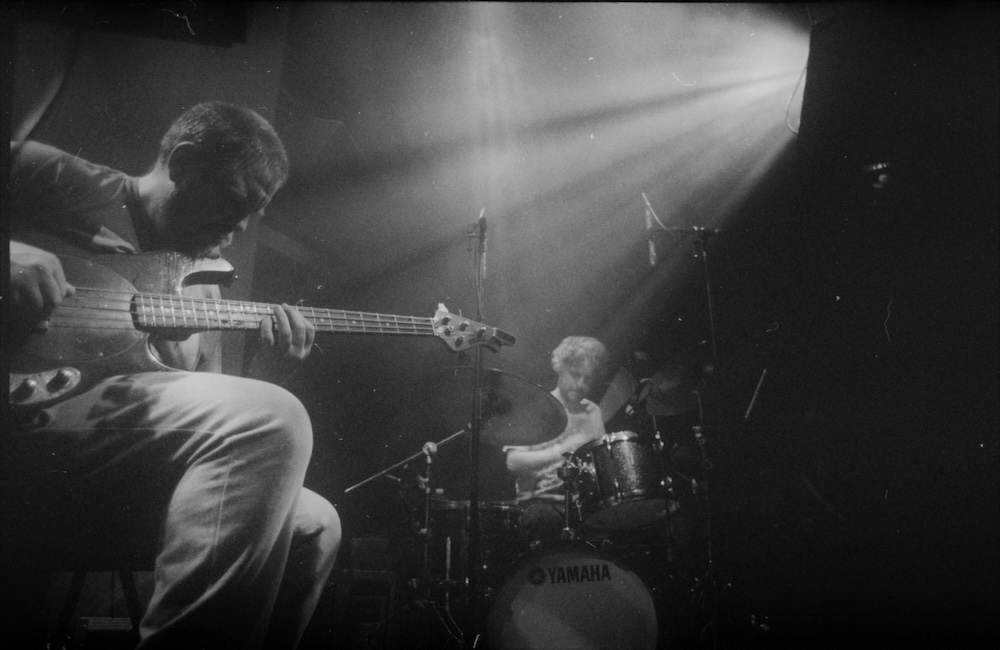
“Oh man, I feel old… and it might be the 10th?” she says when I bring up the album count. “Well, yes, one thing I heard often is that I am always flying under the radar, and how come nobody knows about me. So that is why I came up with Unnoticed. Maybe I am or was. As a child I certainly was, or thought I was. Maybe that is not true but that is how I felt.”
It’s a feeling that seems to have fuelled a career defined by restlessness rather than recognition. From her teenage years in Nasmak and those early Plus Instruments experiments in ’78, through collaborations with Lee Ranaldo, Jim Sclavunos, and most recently Cosmo Vitelli, de Groot has carved out a singular path through electronic music – one that predated and influenced everything from electroclash to coldwave, yet somehow remained perpetually under the radar.
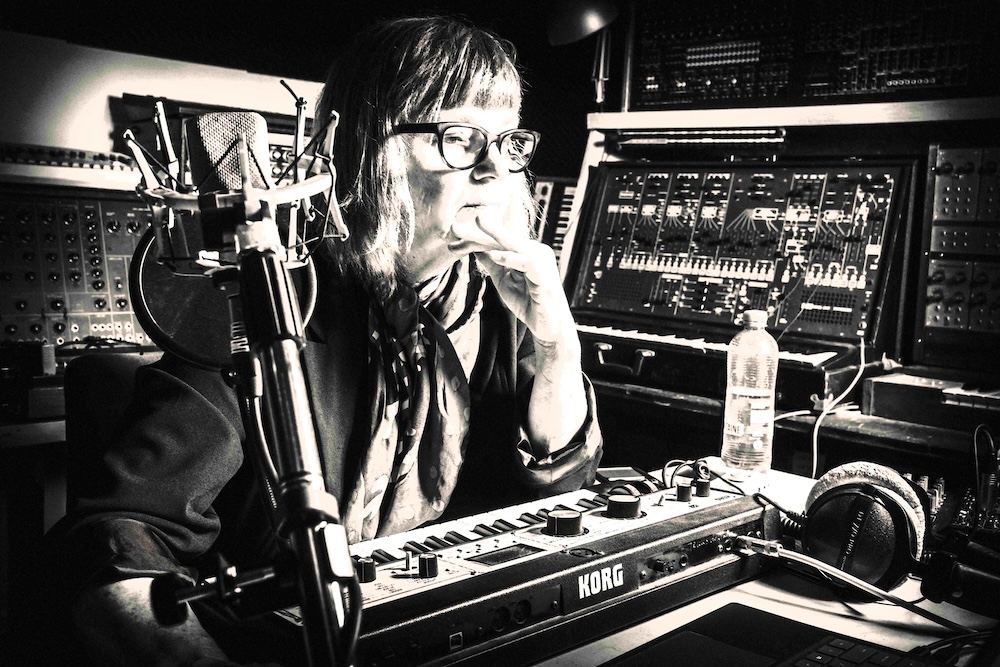
When I ask if she still approaches instruments with the same destructive curiosity that led her to dismantle her family’s harmonium, she doesn’t hesitate. “I’m afraid I approach it the same, maybe not destructive but unconventional. When it comes to synthezisers or any electronics, I simply search to find the sweet spots without really thinking; oh, there’s this sawtooth oscillator, maybe add some low filter, bla bla bla. I rarely read the manual, unless something really goes wrong, like NO sound.”
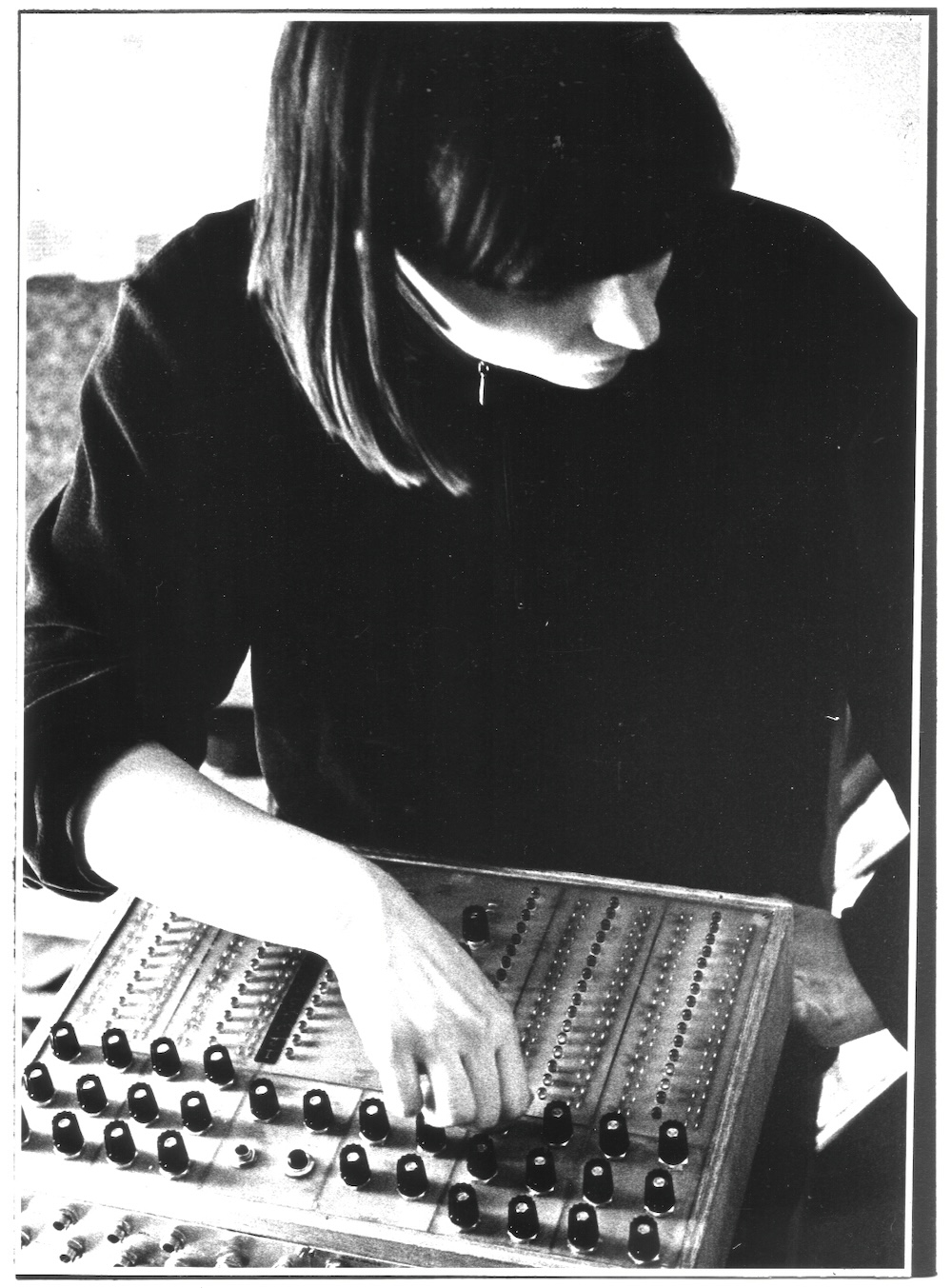
It’s this intuitive approach that defines Unnoticed. She initially conceived it as a very minimalist album, mostly with just one synth and vocals. “I pretty much let the synthesizer’s ‘sweet spot’ dictate where I would go with vocals, the subject of my lyrics, the mood and melody would follow. So the synth became the muse in a way. A true collaboration between myself and a machine.”
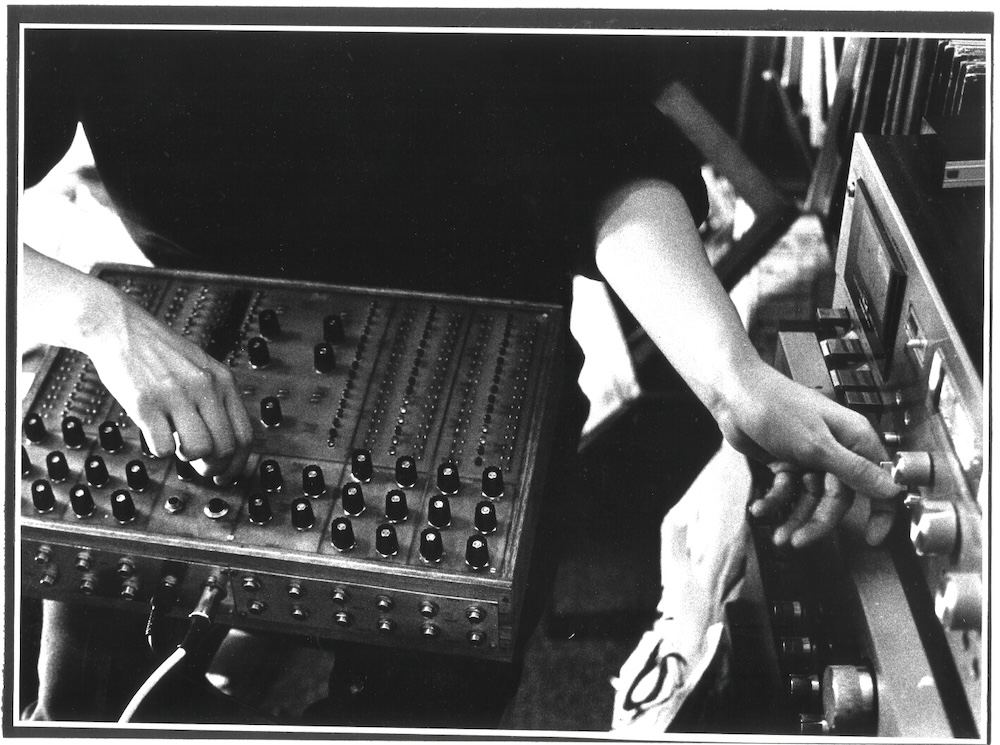
That human-machine collaboration has been at the heart of Plus Instruments since 1979, when she first encountered Michel Waisvisz and his Crackle Synthesizer at Amsterdam’s STEIM. The purposely unpredictable wooden instrument with metal touch plates instead of keys opened up a whole new world. “When I saw Michel making these completely crazy, organic sounds on that insane instrument, I was like, ‘That’s it, now we’re talking!'”
Working with unpredictable instruments built specifically for her, some based on the crackle and other experimental synths, de Groot says that “anything can happen” spirit still very much exists in her work. “Since most run on batteries, there is always something new happening as the current fluctuates. But even with the store bought synths you can do so much. And that can even be the case with AI, you can use it sparingly for some purposes, it fucks up too and I embrace those moments. I find AI often laughable because it is not very intelligent and certainly not creative.”
From Squats to Bandcamp
In 1978, ‘underground’ meant physical spaces, cassette networks, and fanzines. Today, she’s releasing through digital pre-orders and streaming platforms, which naturally raises the question: has the democratisation of music killed the mystique?
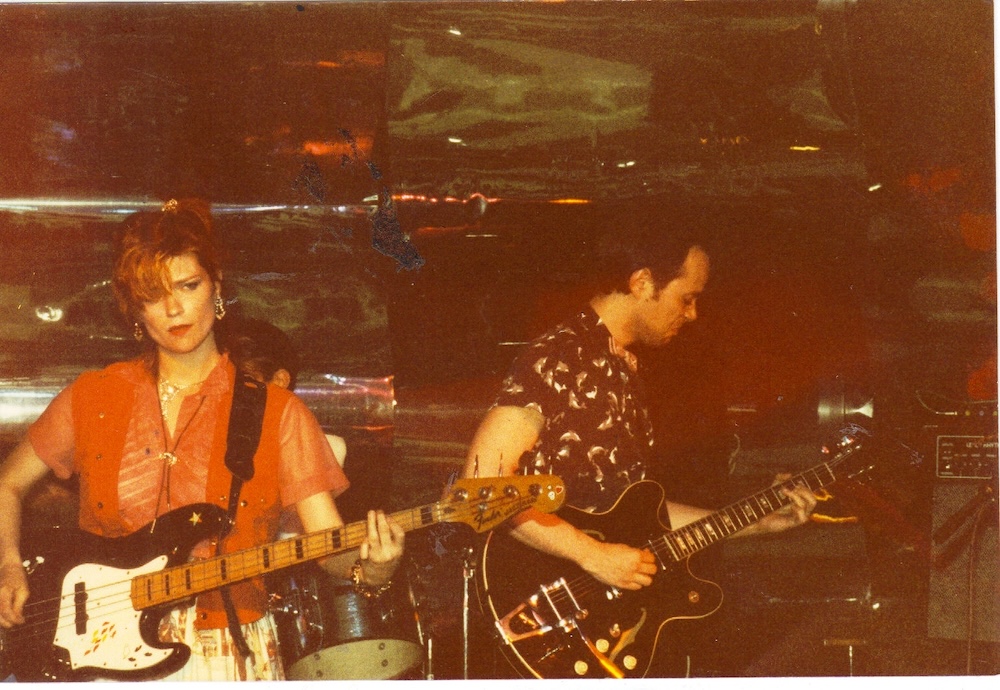
Sahe’s not precious about the old days. “Not only Alien Brains, but I also found all types of channels to mail tapes to, mostly handmade, they made their way around. And you would, of course, send your tapes out to get shows. And don’t forget the Plurex label who would really take risks putting out some crazy stuff, such as the first Plus Instruments EP.”
She acknowledges there was a certain mystique to waiting patiently for your fanzine or cassette to arrive via mail, which took forever sometimes. “The market now is dominated by impulsivity. But that was the tempo of how things worked back then. Now it may be instant but hey that is another reason why people should actually order the physical cassette of Unnoticed!”
As for what ‘underground’ even means in 2026, she thinks it’s still pretty much “not mainstream.” but notes how things have changed in terms of what venues will take chances on. “I would quite often be booked as an opening act with a mainstream band, or you know a band that played some form of recognisable music. I suppose they took chances back then more, now everything has to fit in a box. I refer to the bigger venues of course.”
Love, Pain, and Telly Savalas
The track titles on Unnoticed suggest something visceral – “Lies and Flies,” “Slither,” “Slow Soak Poetry.” De Groot says they often start abstract but always stem from specific experiences, even if she doesn’t realize it at first. “I think my brain sends out these subliminal messages and I don’t even realize it. I am quick to record these melodies or ideas on my phone when they pop into my head and then start to work with them.”
Take “Slow Soak Poetry” – it’s her admiration for the dialogue of Telly Savalas’s Kojak, which she always considered poetry. “In fact I was first enamoured by that when The Minny Pops did their song Kojak in 1979 or so? And then I really started to listen to what he blurted out. I mean, wow! I would literally soak in that. Also, one of these reasons I went to NYC.”
Then there’s one of the album standouts “Pain in My Heart,” which emerged while working on her memoir and thinking about her torturous relationship with falling in love. “How you just fall and then are unable to function, so it hurts! But you want it so bad! You want that pain because it leads to this one little moment of bliss. In my advanced age you start to think about this, how many times have I done this? Why do I do this to myself?? Can’t I just find a way to find a mate and not have these deep desperate and obsessive feelings?? Yet it is a thrill.”
Most songs on the album are quite autobiographical, about love or searching for it, break-ups, betrayal, or whatever plays in her head. “Love in a Nutshell” is about how simple it is to get through life with love and kindness. “Throw It Out” is almost political, where she denounces all the bad things we don’t need in our lives. And “For Safety” relates to all those absurd messages we get from our environment or notices that make no sense or are so obvious. “Like the empty page that states ‘This page is left blank intentionally’, I mean WTF?!”
Learning from the young ones
After working with everyone from Lee Ranaldo to Jim Sclavunos and Miguel Barella over the decades, younger artists still seek her out. What do they want from her that they can’t find elsewhere?
“Maybe my excellent companionship? Ha kidding. I think I possess an incurable enthusiasm and I am very prolific yet curious, so when I work on something try to stop me. Maybe those are good qualities in a collaborator?”
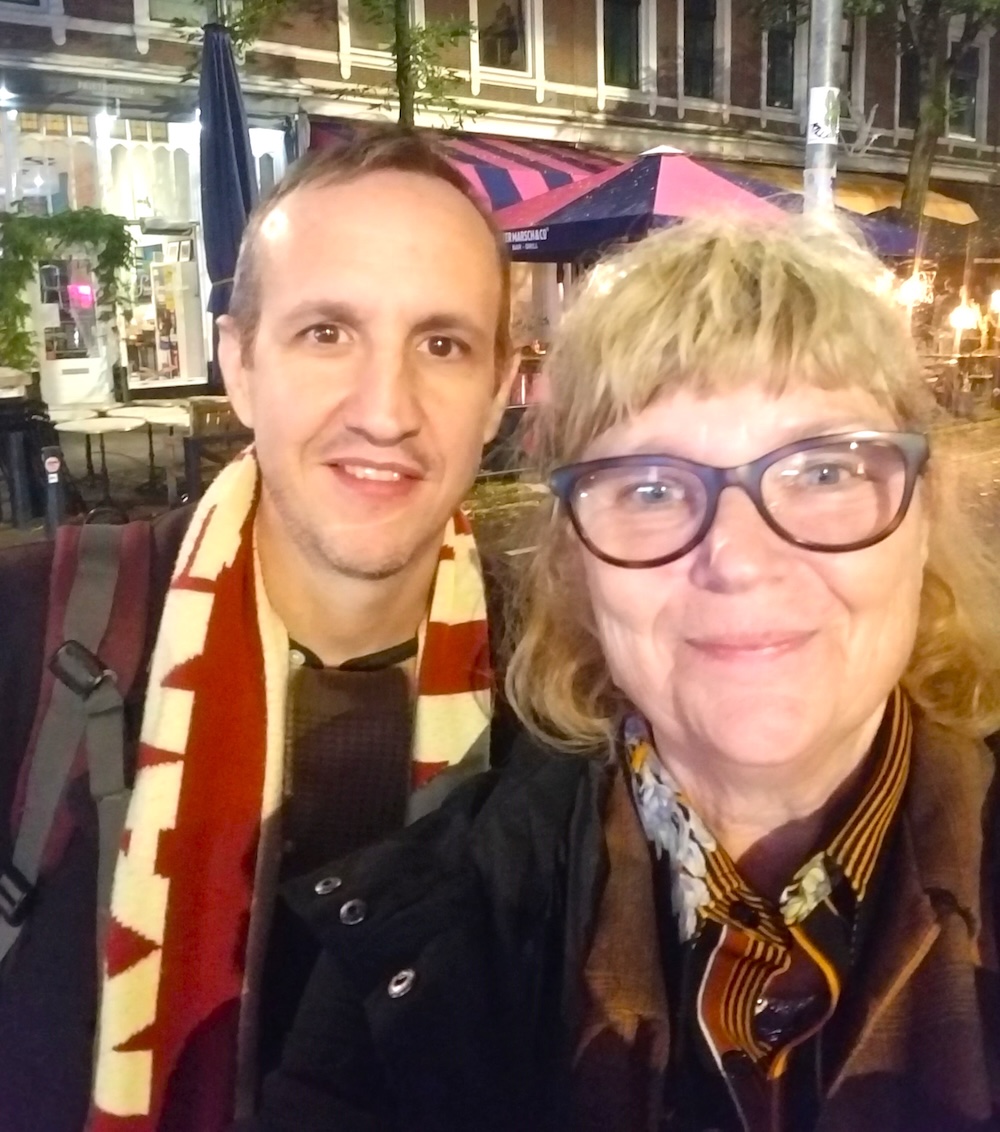
Her collaboration with Cosmo Vitelli, who co-writes, produces, and adds programming to another album standout “Sexy Machine,” has been particularly influential. “I have learned so much from him in every way possible. It broadened my understanding of the subtle touches. Someone like Cosmo is quite unique, it is hard to put into words, you can hear it. Just listen to his work and you understand.”
He was honest about his advice and comments on her vocals, which made sense to her. “So with that I grow too. He advised me to get a good condenser microphone, which can really change the dynamics of a vocal. I was just recording with a Shure SM58. Great mic but not for everything. This is how I have always approached music throughout my life, I love to learn from people I admire.”
It’s this openness to learning that keeps her evolving. “I do feel, because I can, I must. I do feel, being able to do what I do, is somewhat of a privilege / gift and so I should use it. I better!”
On an ongoing journey…
From the Ultra scene in Amsterdam to No Wave New York, Memphis cowpunk to California tiki exotica, de Groot has never stayed in one place aesthetically. Is Unnoticed a summation of that journey or just another detour?
“Most everything I do is a summation of my journey. Not a detour. I think even my most extreme work, like Lineality, was part of my journey. Perhaps Veneman en de Groot could be a detour, but that too can be the journey.”
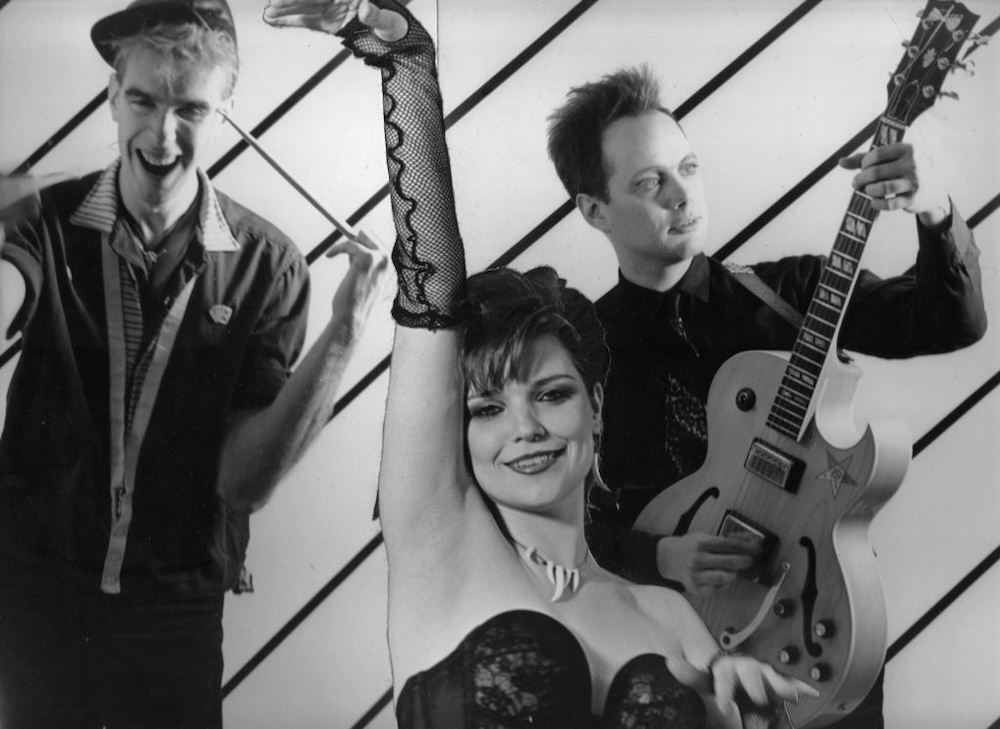
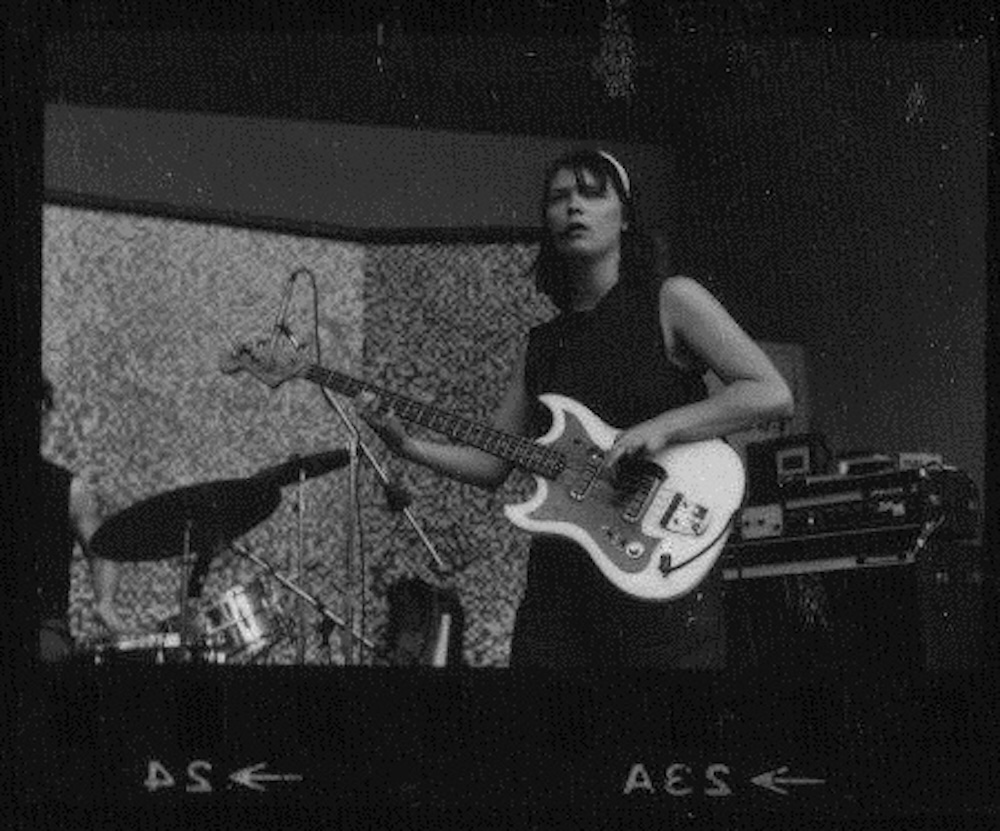
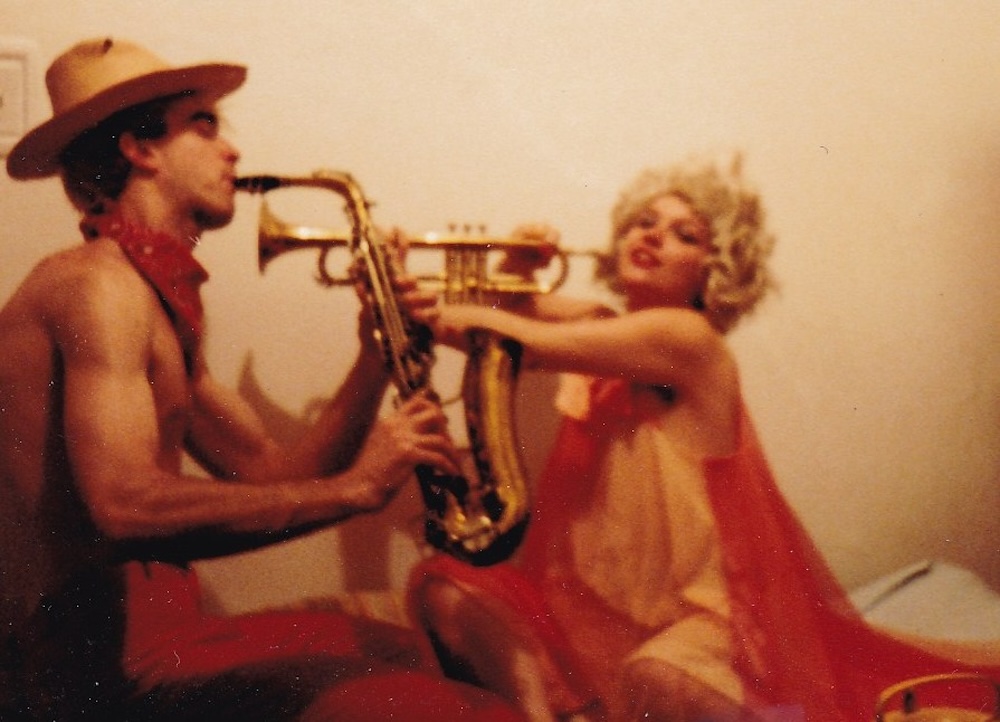
She recalls that in the ’80s, while performing with Plus Instruments and Trigger and the Thrill Kings, they also had side projects – one was doing Carter Family Gospel songs, where James Sclavunos would use a bible to tap as a drum and she would be whaling like June Carter at Folk City. The next day they might play a Plus Instruments set at Danceteria and a week later perform Weill/Brecht songs with a Bontempi organ at the Pyramid Club. “…nothing much has changed maybe… It’s a journey alright!”
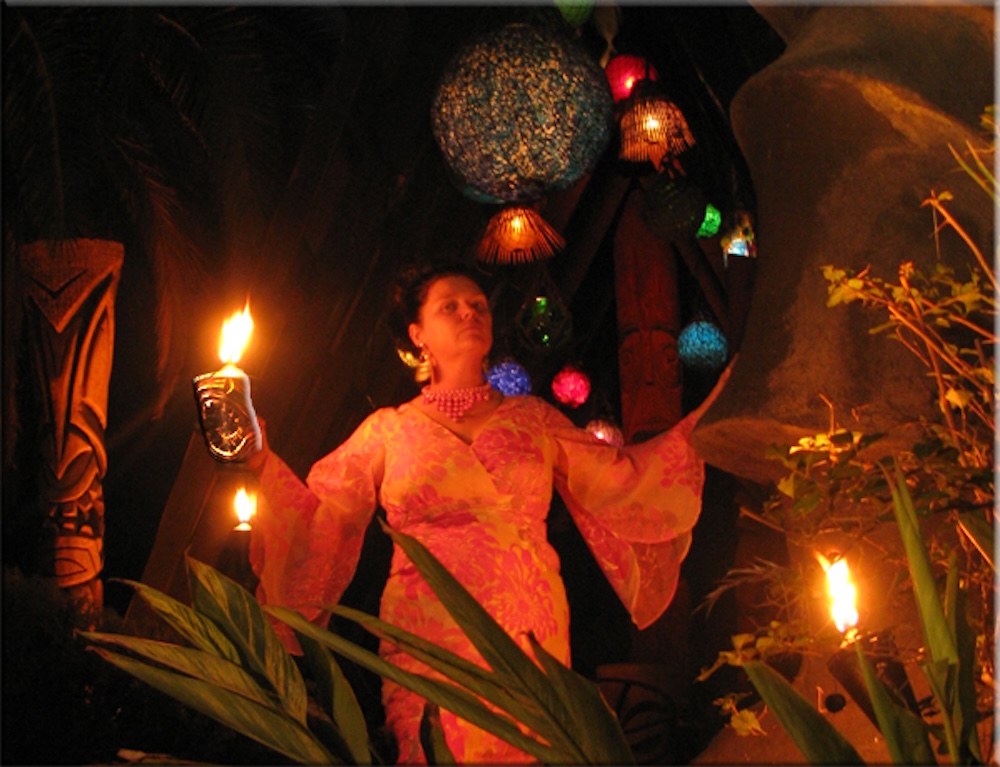
After 27 years at The Ranch in Escondido, surrounded by lush tropical growth and tikis where ancient Indian tribes once dwelled, she’s now back in the Netherlands, working at a tiny table in a flat. A huge community was built right next to that lonely ranch, decreasing its mystical value. But the change of scenery doesn’t stop her. “It does not stop me either way.”
When I ask what keeps her restless after nearly five decades, what she still feels the need to prove or explore, she’s matter-of-fact: “This is what I do. I do not have to prove anything, I would do it no matter what. I feel I continue to learn, which is really important! However it is also great I can put it out and even better that I can perform and bring it to an audience. I get immense pleasure from that.”
What surprises her lately is that the audience is often quite young, in their 20s, and they come up after shows with very nice words about how she inspires them. “Stuff like that surprises me, and it is good to hear.”
She’s performing at Paviljoen Ongehoorde Muziek in Eindhoven and Sameheads in Berlin, leaning towards “a dance vibe” for these shows – quite a shift from some of her more abstract work, but Plus Instruments has always had a lot of songs that are danceable. Richard van Kruysdijk joins her on drums, and she emphasizes he’s not just some drummer. “He really had a deep understanding of the electronic pulses and he is a great composer in his own right.”
As for whether contemporary electronic music has the same hunger for reinvention she experienced in her early days moving through punk, No Wave, exotica, industrial, and EBM, she admits it’s hard to judge. “I do not listen to a lot of new music simply because I am making music and I need to keep my head clear and not have too many outside influences to stay pure / original, does that make sense? Although I am seeking out collaborations to enrich my creative path.”
Unnoticed, Unstoppable
The title Unnoticed might suggest someone bitter about lack of recognition, but talking to de Groot, it’s clear that’s not the case. She’s been doing this for nearly fifty years because it’s what she does, because the music keeps coming, because her hands just go for it when she turns on those unpredictable synths, because walking and driving and riding her bike, melodies pour out and words present themselves.
She hopes the album has grit. “I feel it has grit, I hope it does! Otherwise I better add much more grit on the next one!”
And there will be a next one. She’s not stopping. As she said in a previous interview that I reference: “This is how I’m put together… I’ll keep doing this until I drop dead.”
When we wrap up, I mention the “Queen of the Dutch Underground” title. She laughs. “Good question! I wish my fees and ability to score were fit for a queen! So yeah, being a queen only gets you so far. I laugh about it. I guess it is meant in a flattering way? But it is silly. At least they don’t call me a legend because then it’s like you are already dead or almost.”
Very much alive and still searching for those sweet spots.
Unnoticed is out February 11th via Ransom Note Records.



Must Reads
David Holmes – Humanity As An Act Of Resistance in three chapters
As a nation, the Irish have always had a profound relationship with the people of Palestine
Rotterdam – A City which Bounces Back
The Dutch city is in a state of constant revival
Going Remote.
Home swapping as a lifestyle choice
Trending track
Vels d’Èter
Glass Isle
Shop NowDreaming
Timothy Clerkin
Shop Now