Chaos triumphing over order: Coma World discuss Deep Star
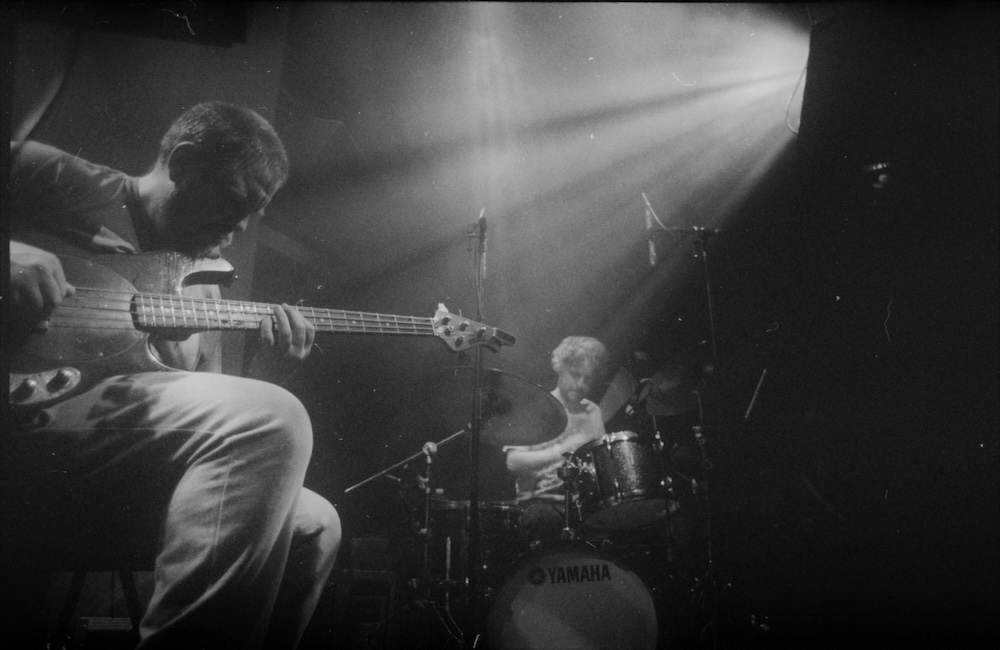
Deep Star emerges from layers of echo and distortion, taking listeners on an immersive journey through Coma World’s signature blend of experimental dub and psychedelic soundscapes.
The duo of Maxwell Hallett (Betamax) and Pete Bennie craft a sound that moves between meditative underwater drift and sharp, rhythmic pressure – a sonic language developed over years of creative partnership that began during jam sessions and late-night conversations about apocalyptic scenarios and the precariousness of our reality.
Out last month on Sundial, Deep Star captures Coma World at a point of lucid refinement, translating improvisation into form without losing its raw edge. For Hallett and Bennie, the creative process begins not with equipment but with a cup of tea and wide-ranging discussions that touch the zeitgeist before a single note is played. This philosophical groundwork feeds directly into their musical explorations, with Bennie’s sprawling pedalboard – a nest of spaghetti cables that can shift from tonal control to full chaos mode – meeting Hallett’s rhythmic precision in an open dialogue where any idea, no matter how left field, can be explored.
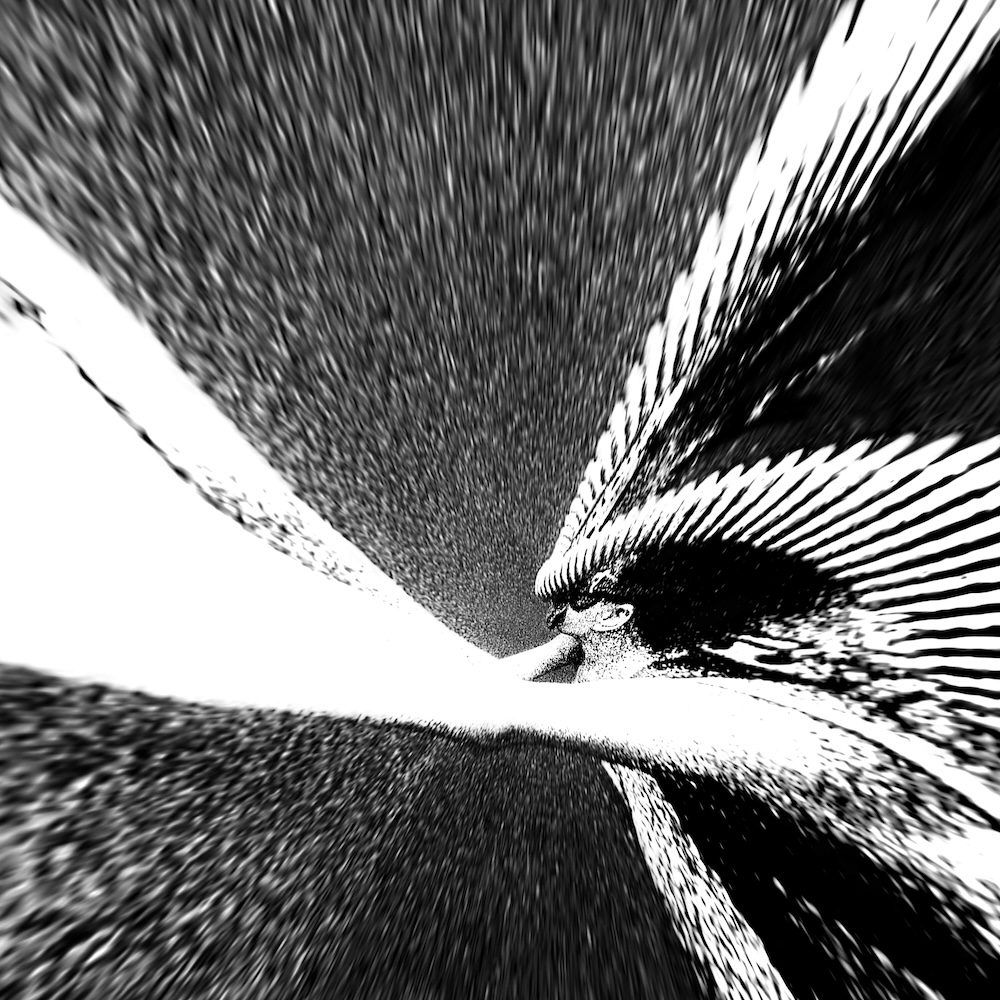
The album was captured using an 8-track 1/4″ tape setup, with the duo performing the mix in real time, reacting musically to each moment. As Hallett explains, the vibe is “all about chaos basically triumphing over order,” inspired by the wild production approaches of Scratch Perry and King Tubby. It’s a method that mirrors their improvisational approach: what Bennie describes as a flow state where both Brazilian Jiu-Jitsu and music become “almost meditative as the dialogue progresses.”
Here, the two musicians turn the interview format into a questioning of each other about their creative process, the technology that shapes their sound, and what lies ahead for the Coma World project.
BTMX: I know you are a disciplined student of Jiu-Jitsu and I feel like there is some connection between the physical tussle of combat and the unsteady terrain of improvised music. How do these two practices relate to each other? In both domains, which are the moments that are most meaningful to you?
P.B.: Both Brazilian Jiu-Jitsu (BJJ) and music are forms of language. Made up of single letters that combine to words that combine to sentences etc. The process of sparring in BJJ and improvising in music is the same. It’s a dialogue between the participants that is ever evolving.
There are meaningful moments in BJJ and music that crossover. One is where you have been trying to execute a technique and finally one day you master it in a ‘live’ situation. The meaning here comes from the joy of finally being able to execute something you have been practising, especially if it’s been a long time working on it. (Sometimes months or years)
Another example is when you are improvising or sparring in either BJJ or music and you and the other participants get into what I can loosely describe as a flow state. Both disciplines become almost meditative as the dialogue progresses.
P.B.: We start our creative process with a cup of tea and a discussion. We love to chat about multiple dimensions, apocalyptic scenarios, inverting human ideas on their head, politics etc. We do this before we play a single note or even set up. How do you think this influences our subsequent musical explorations?
BTMX: I definitely believe that by examining the world in this way we come into contact with the zeitgeist, and our musical explorations serve as a kind of nonsensical conclusion or perhaps a spiritual remedy. I also think conversations kinda get us onto the same page as it were. The vibe is synchronised and then we can both intuitively pinpoint the most relevant sounds to that moment with a mutual understanding.
I also think by extending our imagination, broadening the contemplation we probably draw in larger energies and possibilities. Sometimes after our conversation I feel the precariousness of our reality. I almost feel closer to death, there is a nervous energy but also a kind of bravery to look at the world this way. The recording process allows at least the satisfaction of ‘doing something’—I suppose this counteracts any sense of powerlessness that can often arise when simply following current events.
BTMX: I’ve not played with many musicians with so many pedals in the chain. They always arrive nestled within a big nest of spaghetti cables. How does your brain relate to this pile of technology? Are you trying to control the sound or are you trying to evoke chaos?
P.B.: It’s funny really, I am quite an organised person in terms of how I live my life, especially with everyday things like documenting, filing or how I organise tools etc. That does filter into my pedalboard. The spaghetti chaos really comes from always wanting to try something new to keep the creativity fresh. The last time I tried to clear the spaghetti I ended up customising my board with a second layer for more pedals 😂
Controlling sound or evoking chaos? I am trying to do both at different times. It’s set up in a way that I can change the tonal qualities of the actual bass sound using things like filters, octave pedals, modulation like chorus and triggering synth bass sounds. But I also have the ability to go to full chaos mode as well (normally using pitch shifting and delays that often aren’t in sync with the tempo we are playing at, as that normally leads to really interesting musical ideas that groove in a really nice loose ‘human’ way).
When playing with you (Betamax), I have the complete freedom to drop into some sudden chaos, knowing that it will likely inspire a new direction in our creative exploration. Much like what happens in society following a period of chaotic change within the world order.
P.B: We met many years ago whilst I was studying music. For me, the moment we began playing, we instantly hit it off. It always feels like a very open dialogue where we can explore any idea, no matter how left field, even when in higher pressure situations where there is an audience observing this moment. I would say that we are quite different personalities, with pretty different backgrounds and different opinions on how the world works. What do you think are the key elements that laid the foundation for this long musical relationship (and friendship!)?
BTMX: I remember that when we first met we were both frantically playing as much as possible—lots of bands and jam sessions, and we even played a bit of background music at a comedy club in Greenwich. I remember admiring your big sound and you had this rhythmic precision and you could play intentionally behind the beat and stuff like that. I was always excited that we could interact with off kilter stuff, it was super fun.
Then there was the time I had an operation on my shoulder and was out for 6 months. I remember you drove an hour to come and jam when I could only play with one hand. I really appreciated that. But also I think that was the moment I realised that we could make music just the two of us. We seemed to share a mutual artistic direction that required no discussion.
I always seem to make music with friends and make friends with music. I guess there is more meaning in what we make when there are personal connections around. I think we play in a very personal way, and when I listen back, I believe in what we played.
BTMX: A large part of how we are able to play as a duo comes from your ability to hold down several layers at once. I feel like there is a melodic intuition in your playing and also a natural awareness of the macro structure that means everything always feels inevitable and yet unpredictable at the same time. I imagine for a bass player, you enjoy a bit of that harmonic control and lyrical space that opens out for you when playing as a duo. Do you feel liberated, or is it actually a headfuck to hold it all down?
P.B.: It’s a total liberation. As the bass player, I am sitting somewhere between making sense of the rhythms coming from the drums, which dictates so much of the identification of the style and context of the music, and the harmonic and melodic instruments that sit above me. With only 1 person (me) to steer the harmonic and melodic direction, I can drastically change it within an instant. With all the available technology in music now, there’s pretty much no limits to this. All hail MIDI !!!
P.B.: Both your parents are incredible musicians. How have they influenced your career?
BTMX: My mum was very hands-on, teaching me piano and music theory, and gave herself the unenviable duty of reminding me to practise, etc. She plays so many instruments, and I was always inspired to give everything a go. My dad was someone who would guide my listening over breakfast—he always had a mixtape or CD for me to check out. Most of all I think just listening to them moan about their work or gigs they went to, it gave me a clear idea of being a musician and that culture and the passion and respect. I know a lot of musicians who had to really carve their path towards music from non-musical parents, sometimes rebelling in the process. I always admired that in people because I was always having my parents’ encouragement, it was clear to me that being a musician is possible if you learn the skills. Also, because they come from the London left field 80s free improv scene, everything I make always feels like pop music when I play it to them, no matter how crazy it sounds. Improvising makes me feel closer to them somehow.
BTMX: People might not know that with the Speaker’s Corner guys, you have been building musical robots. What is your personal relationship with technology, and what is the ideal musical robot of your dreams?
P.B.: Technology for me has always been a tool for enhancing humanity’s will to create things. In the context of me as a musician, it allows me to expand my sound in the way I spoke of with regards to my pedals. It also allows me the possibility to set up a sequence of events that will trigger new creative ideas. I really love exploring the different tonal and textural qualities of bass sound. With Speakers’ Corner, the robots function in a very similar fashion. Expanding our sound palette and, in turn, the creative directions that we can take when playing together. What’s super interesting is how ‘human’ the robots feel when they play, likely due to the minute differences in the physical movement of the mechanical parts of the robot.
Dream robot is a hard one!! It would be a robot that has as much tonal, harmonic and percussive variation as possible whilst remaining small enough to easily take on the road.
P.B.: As we’re delving into technology here, I thought it appropriate to ask ChatGPT to generate a question for you. Here’s what it came up with: When you record improvised material, how do you feel the balance between spontaneity and production/processing affects the final sound—and do you think that changes your relationship with the drum kit as an instrument?
BTMX: Yeah, well, actually, what’s quite unique to this project is that the production/mix is also very spontaneous, with everything running from 8-track 1/4″ tape onto a little desk. We basically perform the mix and chuck extra effects all over the place and react musically. This is definitely chaotic and challenging, but I think the vibe here is all about chaos basically triumphing over order. Mixing these days is seen as more of a precise science, calibrated perfection, everything massaged and controlled with pin point accuracy. But actually it doesn’t have to be like that. I wanted the mix to be wild and I wanted to hear the sound of musicians at the controls. I was definitely inspired by Scratch Perry and King Tubby.
Yeah recording in general really does change the way I play the drums. I become much more aware of the sonic detail and dynamics—as well as the frequency spectrum. I don’t use crash cymbals in the studio as I find they create problems in the mix—I also play quieter knowing that the tone is actually deeper when you do that. I try and record close to the limit where the sound is approaching the edge of distortion, so I can use that in an expressive way, but it’s a dangerous balance here and sometimes things get overcooked.
P.B.: We love an overcook here in the Comaverse.
BTMX: I’ve listened to Deep Star a load of times since we made it. Just wondering what your favourite moment on the record is?
P.B.: The last track on the album is my favourite moment. The world is in a transition. The superpowers are all making their moves for dominance and control of resources. We’re in the wake of a completely new technological intelligence which threatens to completely alter the existence of every person on the planet. ‘Choppers’ for me leaves you with a sense of positivity and gets me motivated to keep going regardless of this feeling of impending doom.
P.B.: What do you think is coming next for Coma World?
BTMX: Ah yes going forward the machine element will surely evolve as we must introduce sampling. We both got into using samplers around the same time, so we have to find a way to integrate these techniques of temporal manipulation into the process. My personal experience of using a sampler has consisted of slowly assembling a wide range of sounds into rhythmic forms. So I think the challenge for us will be how to reconcile this with the fluid pace of improvisation. But sampling will bring a whole new process, as we might resample ourselves and fold the whole process across itself. So I think we will be departing our beloved analogue cave of raw tape and venturing into the city walls of sonic mirrors.
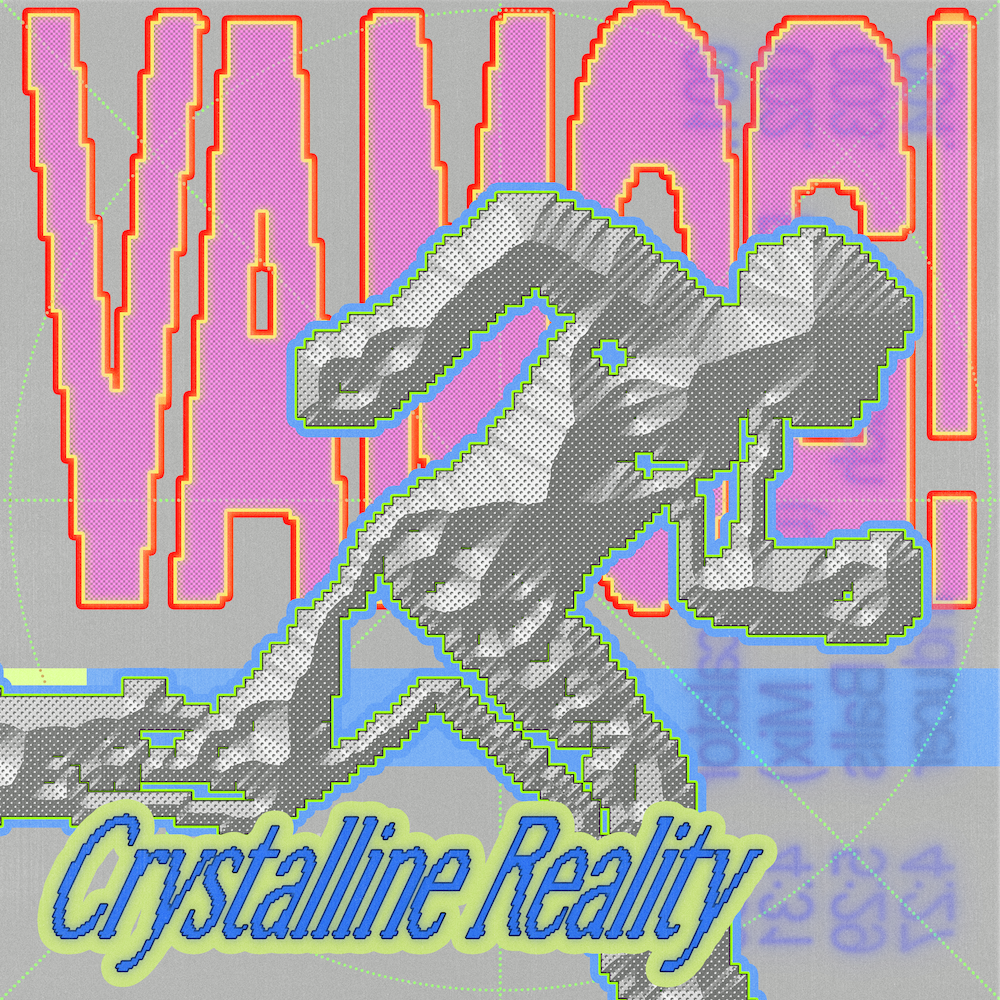
Deep Star is out December 12th via Sundial. Pre-order at sundial.bandcamp.com





Must Reads
David Holmes – Humanity As An Act Of Resistance in three chapters
As a nation, the Irish have always had a profound relationship with the people of Palestine
Rotterdam – A City which Bounces Back
The Dutch city is in a state of constant revival
Going Remote.
Home swapping as a lifestyle choice
Trending track
Vels d’Èter
Glass Isle
Shop NowDreaming
Timothy Clerkin
Shop Now