Artist to Artist: dudal & Adriaan de Roover
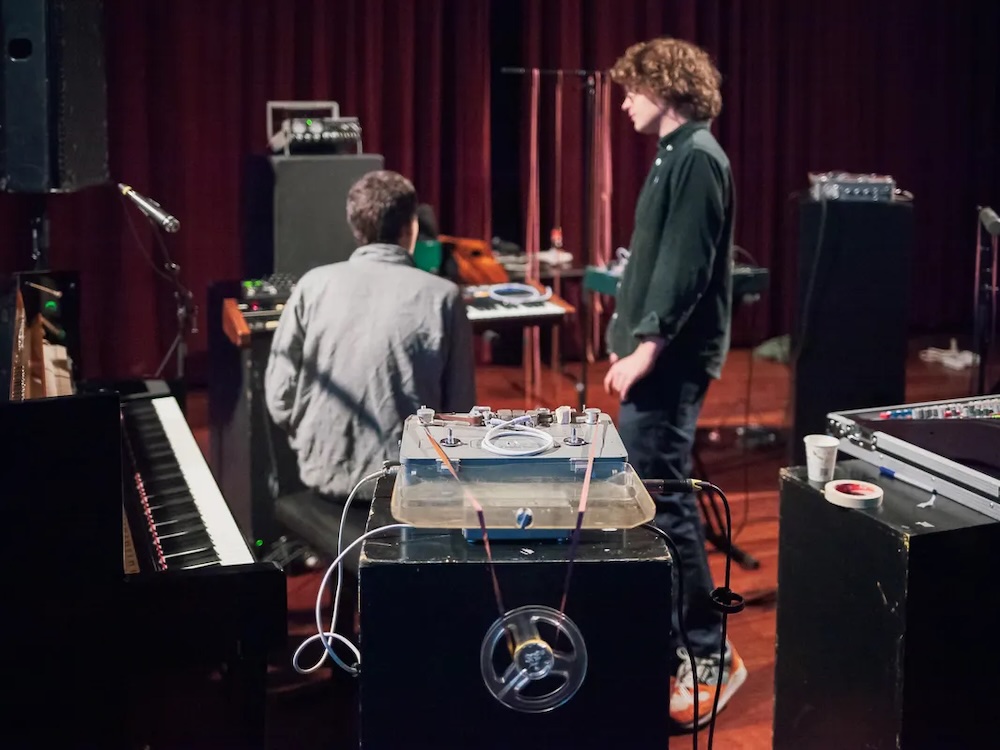
The Belgian duo discuss tape loops, fatherhood, Dany Verlinden, and the art of surrendering to sound ahead of their new album pivot rotations
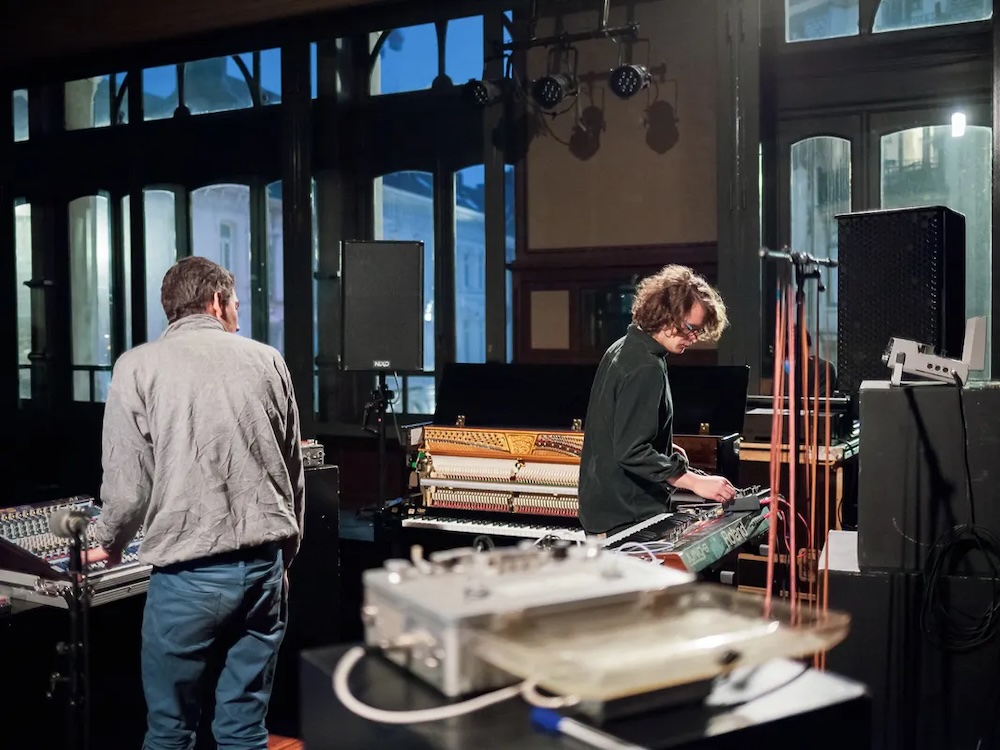
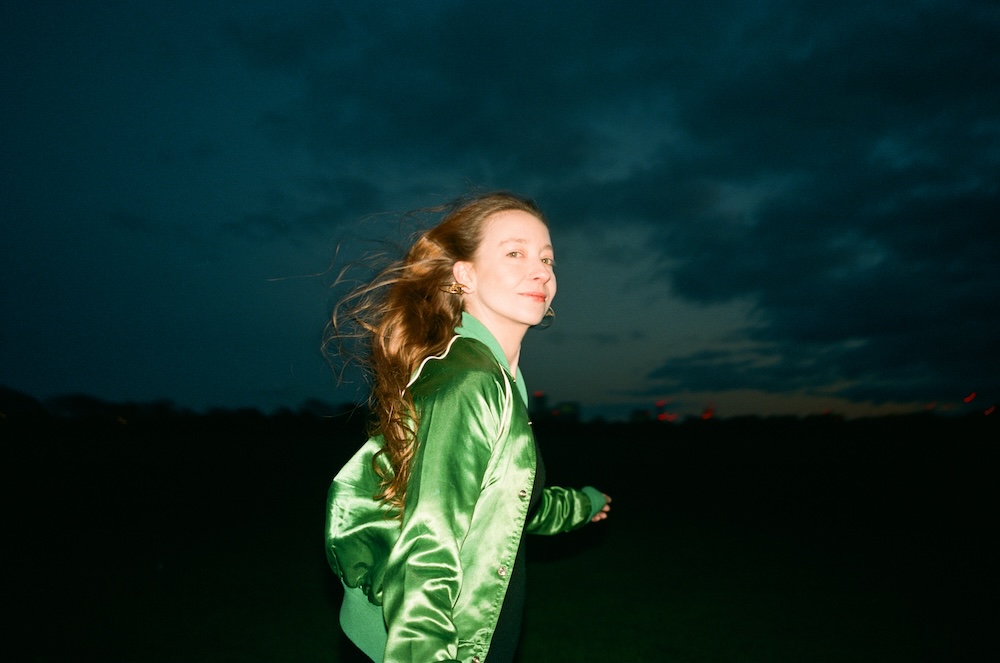
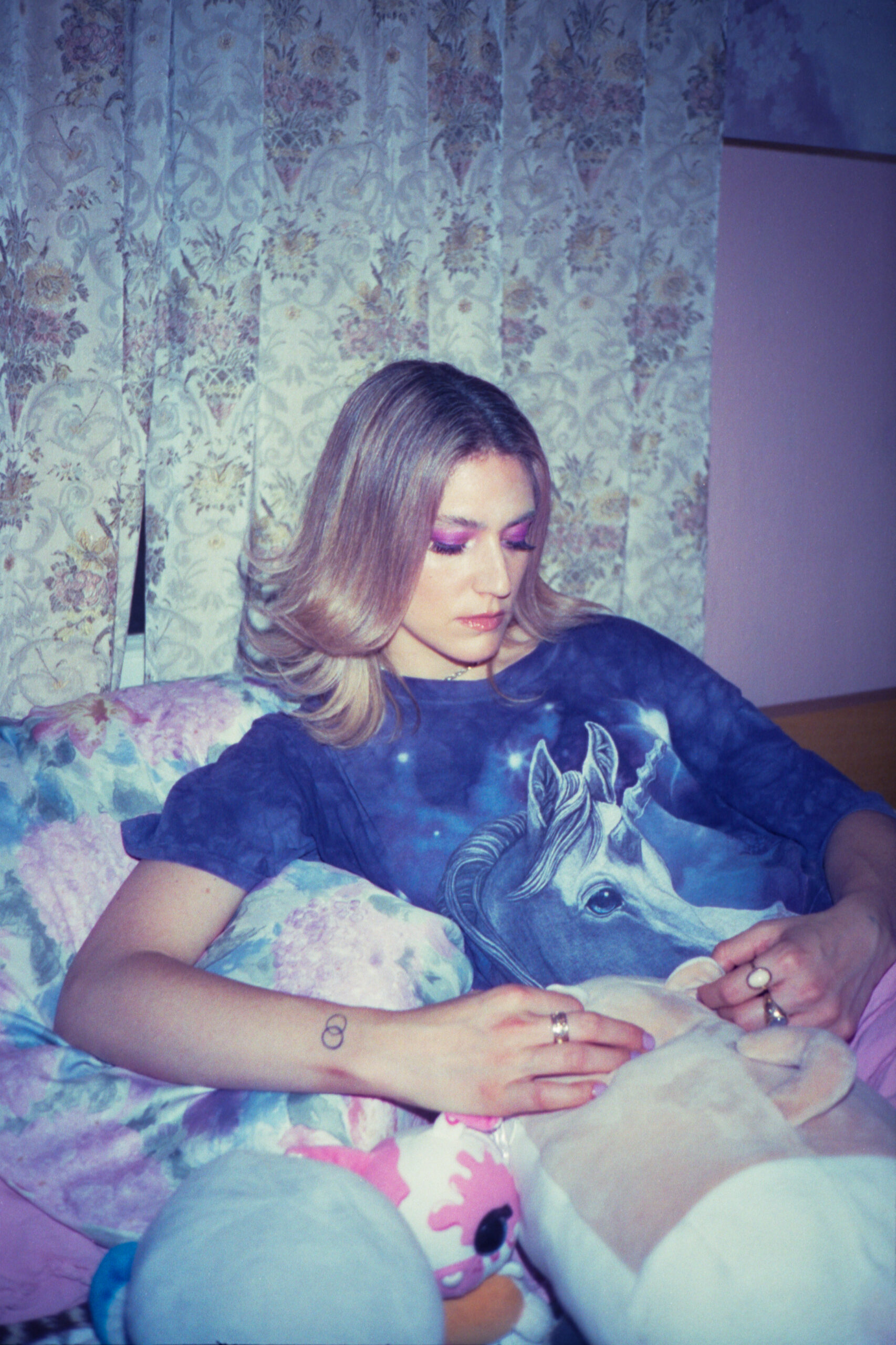
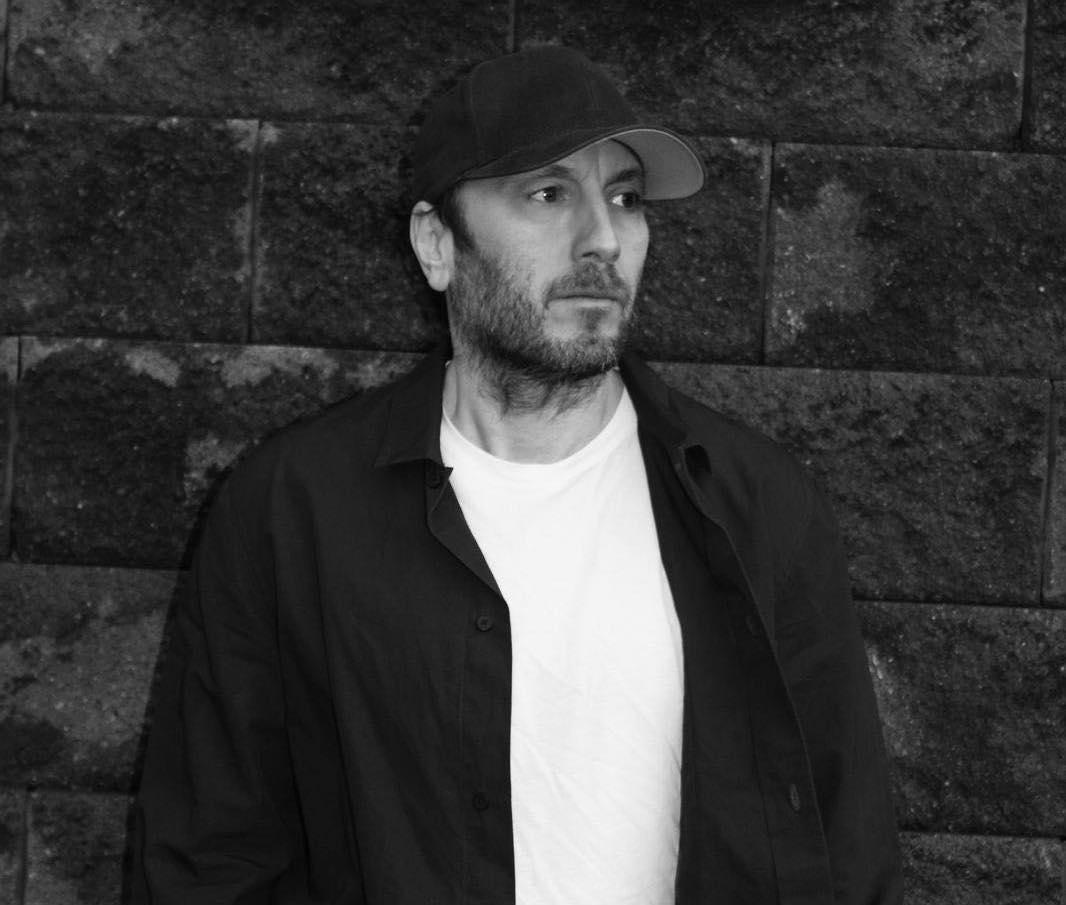
There’s something quietly profound about watching tape loops turn on their axis, the way they fold time into themselves. For Belgian musicians dudal (Pieter Dudal) and Adriaan de Roover, this circular motion became the foundation of their collaborative practice – a two-year exploration that has culminated in pivot rotations, out on VIERNULVIER Records.
The duo’s relationship began back when Adriaan first encountered Pieter as the curator behind Ghent’s Dauw label, a platform that has released over 100 albums rooted in experimental and ambient spheres. What followed was a partnership built on shared fascinations: the tactile grain of worn magnetic tape, the meditative pull of repetition, and the beauty found in machines that breathe and creak with organic life.
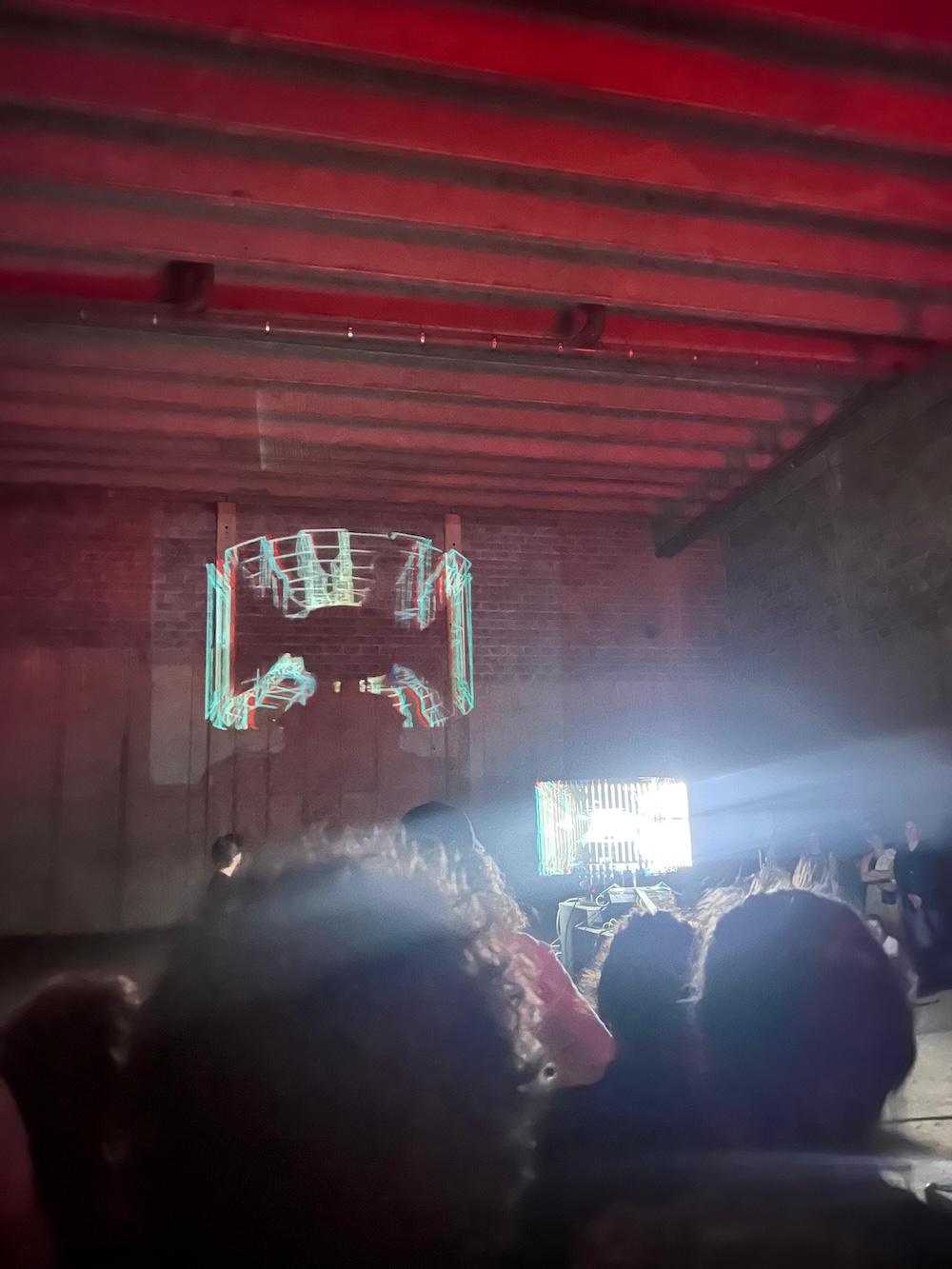
Recorded live at Meakusma Festival, VIERNULVIER, and Volta between 2021 and 2022, pivot rotations is a study in patience and imperfection. Working with tape machines older than themselves – including one with a deliberately off-speed motor -dudal and de Roover embraced drift and accident as compositional tools. The result is a slowly turning constellation of sound, where loops glide past each other, room air becomes texture, and the forgotten ghosts of earlier recordings bleed through.
For this conversation, the two artists turned the interview format itself into a dialogue, each taking turns asking questions that ranged from the deeply personal to the technical. Pieter reflects on how fatherhood has heightened his awareness of the importance of sound, while Adriaan explains why he stops watching screens to work with scissors and tape. They discuss Basinski’s dlp 1.1, the fish-shaped cookies they discovered in Tokyo, and why Pieter still thinks about legendary goalkeeper Dany Verlinden. Throughout, there’s an openness and warmth that mirrors the music itself- grounded in human experience while reaching for something just beyond words.
As Pieter notes about Adriaan’s work, it sounds “off and outside of this world but is also very much grounded and rooted in human aspects of life.” The same could be said of their collaboration. pivot rotations invites listeners into that space between control and surrender, where the most interesting things happen when you stop thinking and simply let the sound carry you away.
Adriaan: I got to know you first as Pieter, who runs a label, and after that as Pieter, who makes music. How do you divide your attention between the two?
Pieter: Well, since I tend to release around 14 albums per year (divided over 2 labels), the label work easily gets the most attention. Not sure if it’s a conscious choice, but I’ve been doing it this way for around 11 years now. I really love this work, so it always comes first quite naturally. However, for a few years, I feel the needeath, to take some br and a creative urge is also knocking on the door. I guess it’s time for half-speed label life next year, finally.
Adriaan: Can you describe how your life looked 11 (?) years ago, when you were starting Dauw or when you started making music? What music were you listening to? Which other things were happening in your life? What made you decide to record/release music?
Pieter: Ha, it was totally different! I started the label during my master’s degree and continued it when working on my PhD and a (short) postdoc. It’s easy to imagine how tight and full those days were. In hindsight, it was horrible and definitely not recommended for one’s mental health. Hmm, ‘horrible’ might be an overstatement as the label also came with lots of joy, and it took me to places I could never even imagine. Luckily, I was able to switch to a part-time job, which makes the label work more doable.
The label started from pure passion for music. I dived deep into DIY labels focusing on experimental and ambient music from an early age on. I collected lots of small releases from their Bandcamp, placed orders through Boomkat weekly and so on. It was when I met Femke Strijbol – a visual artist based in Ghent – that I realised it was possible to do the same as those labels I followed for all those years. A few talks later, we decided to take the plunge and now we’re here; 11 years and more than 100 releases later.
Adriaan: I also got to know you as Pieter who wanted to be a father, was becoming a father and now is a father that is very much adoring his child. How is that? And did your ideas about sound change? In which ways? What is a sound that connects you and Pina?
Pieter: As you already said, I’m adoring her and seeing how happy she is, is the most wonderful thing. So her laugh is the sound that connects all the dots. It confirms our mutual love and appreciation.
Raising a child does not necessarily change my ideas about sound; it rather shows and confirms the importance of it. And this goes not only for sound but for senses in general I would say. You’re constantly aware of what you’re exposing your kid to: what kind of music do you play, what books do you read for them, what are the prints and books she’s seeing in the house… Being a sociologist, I now see in practice how social inequality gets shaped and how it can be reproduced.
Adriaan: Or, what is Pina’s favourite sound?
Pieter: I assume it’s the sound of me and my partner’s voice. It’s calming her in the most organic and beautiful way.
Adriaan: We went to Japan together in spring. What was one of your favourite moments/places and why?
Pieter: I often think about how I liked staying in Setagaya, the area in Tokyo where we started our tour. It felt like a quiet space in the vast city of Tokyo. The moment when we came across a small shop selling fish-shaped cookies (Taiyaki) still puts a smile on my face. The culture seems full of funny and positive symbols which contrasts our grey, cold and rational streets.
Adriaan: I also got to know you as being obsessed with Dany Verlinden, a name that I never heard of until spending time with you. Who is Dany Verlinden and what does Dany mean for you? Why him?
Pieter: Dany Verlinden is a former goalkeeper from Belgium who played most of his career for Club Brugge. I used to watch their games for roughly a decade with my father who passed away many moons ago. For a long period our fixed places were straight behind the goal so we could almost touch him. Every save or goal (and the accompanying emotions) happened in front of our eyes. As a kid, this was very impressive. I still have very vivid memories on some legendary Champignon League nights. So all in all, Dany Verlinden is pure sentiment and one of the nicest memories I have of spending time with my father.
Adriaan: Do you have an album that you return to to slow down your head? I’m asking because for me, Cascade by Basinski, is an album that I look for when I need to rewire my brain if chaos takes over. And I also feel like this album that we made has a bit of this ability to streamline thoughts/noise.
I tried really hard not to mention Basinski but his ‘dlp 1.1’ is a constant here. It perfectly shows the strength of loops and repetition. Playing this track loud at home helps me to calm down while it also gives me renewed energy.
And of course, there’s also Jan Jelinek, which I have listened to a lot in the last few years. ‘SEASCAPE – polyptych’, for instance, grabs my full attention from the very first second and gets me in a very comfortable and closed zone.
Pieter: I got into your music quite a while ago through your Oaktree project which had quite a nice momentum in Belgium back then. You were released through PIAS and were playing in more popular (saying commercial would be an overstatement) venues. I would say that the field you’re working in now (both with your current solo project and other collaborations) is more rooted in experimental/underground spheres, which work in different ways compared to the one you come from. Is this something you recognise? Were you longing for a new or different environment? Do you see things happening in one field that could benefit the other, too?
Yes, at some point I felt a clear attraction to smaller, more intimate, artist run places where I was going to as a listener, because I feel like we skipped that part with my early releases as oaktree. But my process of music making never changed – and although now there’s not a band around me, I am still doing the same thing, sitting there with a laptop and a synthesizer. It’s just me exploring different things that excite me. I go in waves in my enthusiasm about certain scenes / squares. Also, I would not easily call my own music experimental. Compared to other things I listen to my music sounds like sweet lullabies.
As interesting as I find all the worlds, when it comes to the music, I don’t want to live in the squares, I want to be part of all of it. And if music is really great and able to communicate strong ideas and feelings, you don’t think about if it’s experimental or not. Some of the big pop stuff sometimes sounds fresher, more challenging/exciting than what happens in some experimental music concerts. At the same time, we earlier talked about Suzan Peeters for example, who released a record on your label Blickwinckel, if you see her performing, you could call it experimental music but it transcends that idea because she’s communicating something stronger and bigger than that itself, its captivating beautiful music, my parents love it too, and my parents don’t care about how experimental something is, or being part of a certain scene.
That being said, when it comes to environments of music, I love places where love, care, excitement for music is there in every layer of an organisation/building. Many festivals for example are big money machines more than anything else, and their moral compass feels more like a PR-thing than anything else. When I am in between fences with advertisements, walking in fixed paths from security to the vestiaire to the place to get drink tokens, I feel like I’m in some animal slaughter house. When it comes to that side of music worlds, I have a clear idea about where I want to be a part of, but when it comes to labeling artists for what they create, I think it would help all music and culture if we were thinking less in absolutes.
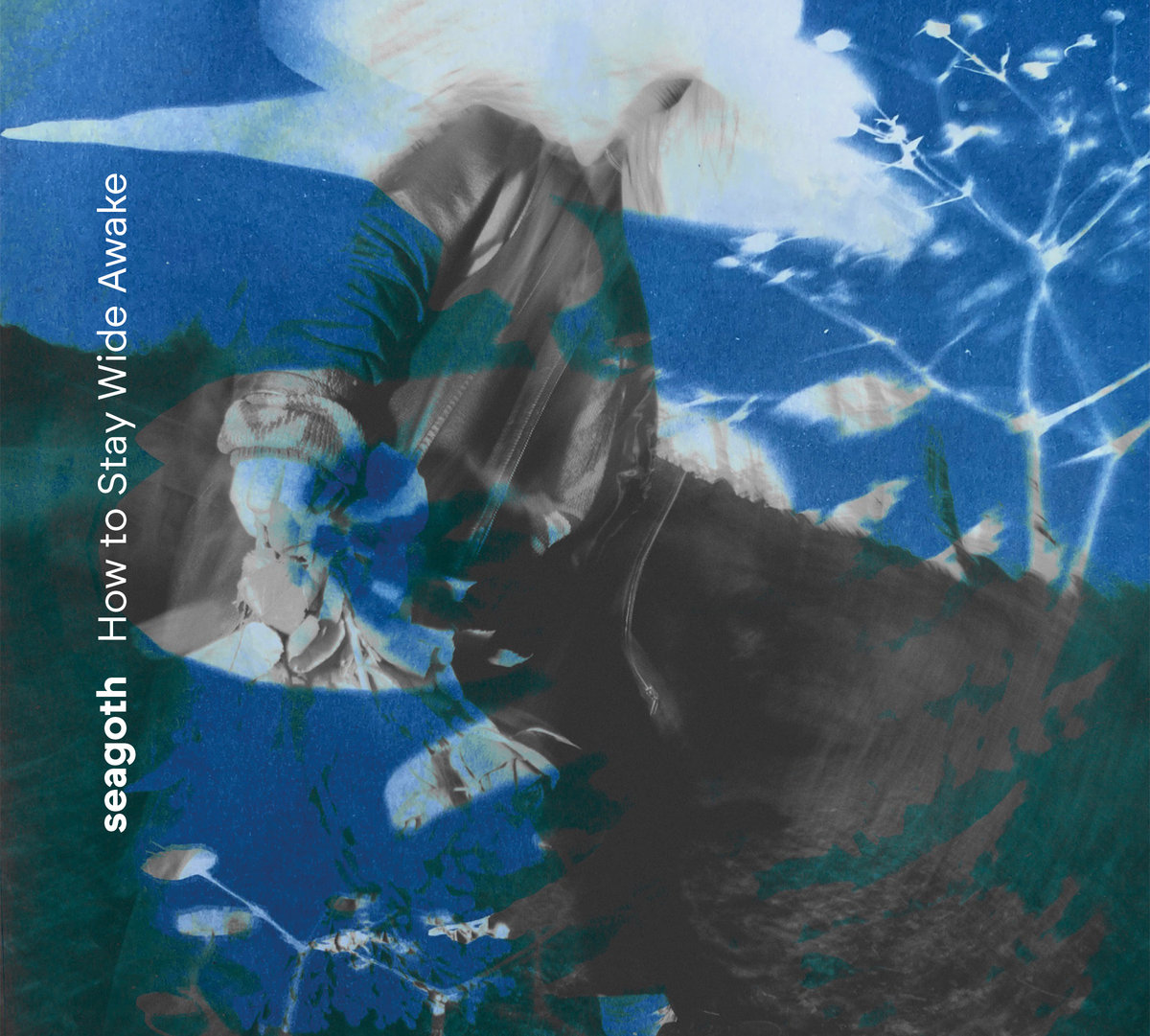
Pieter: During the artwork process of this album, I sometimes felt that we have different opinions or views on this subject. I’m curious to hear how you envision artwork for an album? Is this something that goes along in the making of the music? What’s a good balance between artwork that confirms the music or adds something to the music?
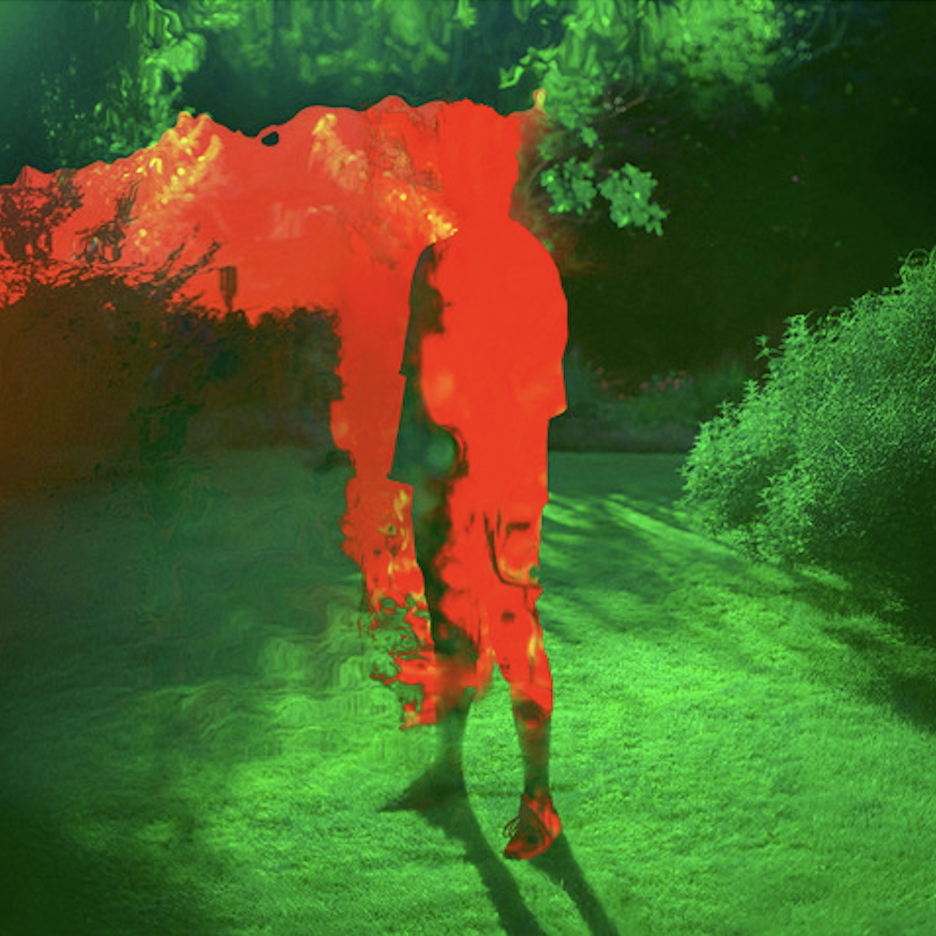
It needs to feel connected but it does not need to portray the music for me. It’s great if an artwork can shine light from a different angle on the music. I want an image to speak to me. Most of the times, I share a bit of ideas but I don’t have a specific outcome in my head. Or when I do, people just come with better ideas than mine. I learned to be more open, I’ve had times in my first records where I would be like; ‘maybe you can use this font’, but I would not do that anymore. Now, I feel like I make the choice to work with someone and try to be open from there, rolling the dice.
Pieter: I know you foremost as a digital composer working all your magic out in a DAW. Working with tape was quite new for you when we started our first residency. During the process, I noticed you got really into it for several reasons. I’m wondering if you’re eager to integrate it further in your solo work? Do you see ways you could combine the analogue with the digital?
Yes I loved it, to stop watching a screen and just listen, and to be puttering with scissors and tape, and the sound of the tape. I have ideas about music that I would want to make with tape machines. I already have a title for one of them, although I don’t have my own tape machines, hehe. And yes, the sounds that i get out of my laptop are a big part of the language that I speak, it would be a combination.
Pieter: I quite like your Kiosk Radio sessions because it’s often a well-curated mix of different genres. I know your ears (and mind) are open to everything, and I’m wondering if you’re dreaming or longing for a specific album to produce yourself? Any ambitions to ever produce something totally different than what you’re doing now?
Ah, yes, I do. My radio mixes feature what I love, and I want to dip into that myself too, club music, singing, .. I hope to find my own way of doing that, too.
Pieter: I once called you Belgium’s best electronic music producer, and I still think you’ll hold this title for a while. For me this is mostly because the music sounds off and outside of this world but is also very much grounded and rooted in human aspects of life. I often wonder what’s happening in your mind when you write these pieces. Can you shed some light on that? How do you start a track, for instance?
Between all the nonsense that is part of our conversations in general, I’m not sure how seriously I take it now or if this is you having another laugh, but it’s flattering to hear you still connect with it from the early days till now.
What happens in my mind, that I don’t know, and it’s one of my favourite feelings: I stop thinking, I forget who I am, just doing, being present to the sound, getting carried away. That’s when I feel like I’m making music. Of course there’s also the overthinking and trying to finish songs, which connects with a different part of my brain but I’m not sure if that is actually where the music is really made.
A lot of music starts with ‘what happens if I touch this button?’ and when I’m lucky a few hours later I suddenly have a thing that sounds like the seed of a song that is giving the instructions on what to do itself. At the same time, in and outside music, I’m constantly distracted and get carried away in details, so I might go very deep in a small sound that’s there for 5 seconds and have no more oversight on what the actual song is. But all these little moments, and the total lack of some kind of efficiency are part of the sound and people seem to pick up on that.
And when do you decide something is finished?
When I can listen to it from beginning till end without wanting to change anything.
Pieter: Lastly, and this is not a question, I just want to say that I’m happy that you’re part of my life.
Ah! Love you 🙂
‘pivot rotations’ compiles two years of tape-loop performances by Pieter Dudal (Dauw) and Adriaan de Roover (Fog Mountain, Dauw, Consouling). Recorded live during concerts in Brussels, Ghent and at the Meakusma Festival, the album is a slowly revolving constellation of layered loops, analogue imperfections and warm sound textures.




Must Reads
David Holmes – Humanity As An Act Of Resistance in three chapters
As a nation, the Irish have always had a profound relationship with the people of Palestine
Rotterdam – A City which Bounces Back
The Dutch city is in a state of constant revival
Going Remote.
Home swapping as a lifestyle choice
Trending track
Vels d’Èter
Glass Isle
Shop NowDreaming
Timothy Clerkin
Shop Now