Track By Track: Carrier – Rhythm Immortal
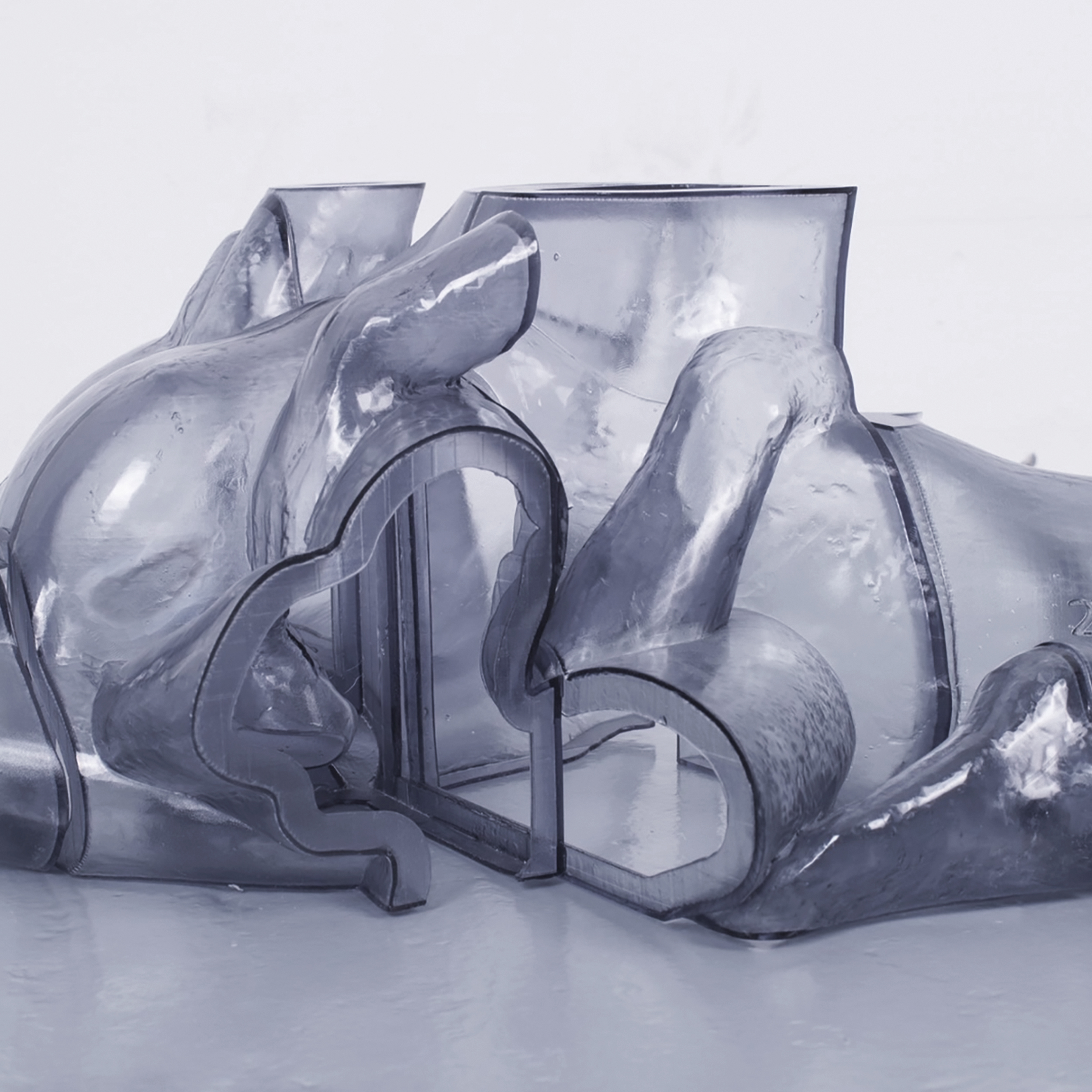
A further reinvention leads to a dark, broody new sound.
Carrier has been a prominent figure amidst electronic music for several decades now – whether you know him as Carrier or not. Guy Brewer is perhaps one of the most diverse artists on the circuit, whether it’s in his early days as part of the duo Commix or under the heavy hitting techno moniker Shifted, it’s almost certain you’ll have come in contact with his sound in some way or another.
This latest chapter see’s him focus on a darker, abstract sound. The album is called ‘Rhythm Immortal’ and lands on the suitably out there imprint Modern Love which has released material from the likes of Andy Stott, Demdike Stare, Vatican Shadow and more.
Carrier has previously released material via the likes of The Trilogy Tapes and Felt but this is the first album, the first statement of intent if you will. He describes the influence as follows:
“I’m interested in what happens when different materials strike each other. The way an object sounds depends a lot on how you excite it,” says Carrier. “When I use samples, it’s about making them react with another sound. You might have a simple source, but it’s used to strike something more abstract. It becomes more about reverberation or resonance, the shadow cast by a sound.
I wanted it to feel like a dream you have where you’re somewhere familiar, which feels nevertheless otherworldly.”
We invited him to go further, taking us through track by track:
Buy HERE.

A Point Most Crucial
I think this was actually the first thing I wrote after deciding to start working towards an LP. I’ve found myself reducing the number of elements at play more and more throughout the course of the first few records I’d done as Carrier, but this felt particularly reduced and skeletal even by my standards.
Like almost everything I write, it started with drum programming. In this case that was using a modular sequencer triggering a sampler made by Rossum Electro-Music. Once I had a basic rhythmic framework, there was a lot of computer processing involved. Not just in terms of tone, but using sidechaining with gates to make some sounds cut when others hit. It’s a technique I use often to help create a sense of reactivity between sounds.
Aside from the drums, what’s there is very simple. The “pads” are actually heavily pitched flute samples. Woodwind, or sounds that at least try to mimic it, feature quite heavily across the record as a whole, albeit subtly.
Outer Shell
With this record I was very interested in the idea of the synthetic sounding almost organic. There’s a very interesting wave of experimental percussionists and drummers operating right now. From my point of view a lot of what they’re doing draws strong parallels with certain drum and bass producers from the late ’90s, particularly people like Paradox, Equinox, or even some Photek records.
I guess this track was my take on that. It’s certainly not a drum and bass track, but I wanted it to have that push and pull feeling you get from programming breakbeats, while also feeling like it was actually being played rather than programmed. Again, the percussive elements make up most of what’s happening.
The intro and breakdown feature some pitched, feedback-like sounds. If I recall correctly, this is a Max for Live instrument from Fors called Pluck, which is being pitched right down by an Eventide harmoniser, then run into an instance of Valhalla Delay. The use of short delay times, either for feedback-type sounds or Karplus-Strong synthesis, is something I use a lot. It has this organic yet otherworldly quality to it.
That Veil of Yours (feat. Voice Actor)
This was actually the last track completed for the record. Often when recording an LP you reach a point where you’re still missing that intangible something. It can prove quite elusive figuring out exactly what that is.
We were about a week out from mastering when the idea of approaching Noa came up. There was an instrumental version of this that was very different. I basically stripped it down and started again with the kick and a couple of percussive elements.
The main pad sound is just a basic detuned oscillator played by hand with no sequencing involved. It’s so heavily processed that not much of the initial sound remains. Much of what you hear is actually a reverb reacting to its input. I played it loosely over the beat, didn’t quantise the recording, and just left it feeling loose and human. After that I recorded some other notes and reversed them for these sucking sounds that play around the main melody.
I received the vocals from Voice Actor maybe 48 hours before we mastered. I ran them through an Overstayer Modular Channel to clamp down on dynamics and add some grit, then into the computer where I applied some subtle ring modulation and reverb. As soon as it came together it felt like something had clicked into place for the record as a whole.
Carbon Works
Across much of this record there’s a strong focus on the genesis of a sound not being as important as the output. You can feed, for instance, the transient of a snare into a chain of processing, and what comes out the other end can be some kind of reflection of the sound you started with, but viewed through an old mirror with cracks and blemishes.
I find this idea really interesting. It’s like the seed of a sound falling and growing into something that shares its DNA but is a mutation of it. Carbon Works is a good example of this. Much of the work on this track came from experimenting with a set of sounds, throwing them into various devices and seeing what came out the other side.
In places it almost feels dubstep-like in its sense of groove, but definitely quite alien. Aside from the kick drum, I made sure to place all the percussion sounds off-grid, just nudging things around until it felt right.
Wave After Wave
The drums for this took a long time to get right. Some tracks for me can feel so natural and instinctive that they almost write themselves, and other times you just have to stay true to a vision or an ideal, and not get thrown off course even when something is a struggle to complete.
First off, it’s in 5/4, and I’m not used to working in alternative time signatures. Secondly, what makes it work is far more about what isn’t there than what is. A lot of things are suggested or implied, and this kind of programming can be quite time-consuming to pull off correctly.
I like grooves that are open to interpretation, that can make a listener lose track of where they are before pulling it back with a sound that anchors everything again. The result is something that feels quite ambiguous in terms of tempo. It feels a lot faster than it is, but it’s also got that half-time and double-time push to it.
The main synth sound, once again, isn’t actually a synth. It’s processed woodwind samples fed into dense granular processing and heavy reverb. I love these kinds of haunting textures that wash over you and make you lose your sense of time.
Amber Circle
I wanted to try and achieve something here that had a sense of propulsion, even though the groove itself is very slow. I think the kicks and subs work over 16 bars even. When you have that much space around things without an anchor point it’s quite hard to keep a sense of pace and urgency, so that was the challenge here, having sounds around it that push the groove through and stop it feeling laborious.
I often feel when I’m writing music that I’m basically trying to fit a square peg in a round hole. It’s about taking something that inherently shouldn’t work and pursuing it anyway.
I did a long session just messing around with the FM algorithm on a Synthesis Technologies E370 here too. The sounds that are almost vocal-like are actually synthetic. I recorded them purposefully out of key, then used heavy pitch correction quite sloppily, so you can hear the note being dragged back into scale. They’re also quite heavily distorted and resampled after that, and fed through Ableton’s Echo effect, which has actually become my go-to delay recently.
Lowland Tropic
Again, this is me chasing something that feels organic yet not. I wanted the rhythmic elements to feel almost as though they’re on the edge of collapsing. I programmed it all straight, then each sound was fed into its own signal chain and processed to such an extent that the timing became very loose.
The chords are very simple sine waves from an Elektron Digitone, fed into a pitch shifter and some distortion with ramped modulation pushing and pulling the drive amount around. Then I added these subtle feedback-type sounds from a physical modelling plug-in made by Madrona Labs, again heavily processed and resampled before being played back in with no quantisation.
This was written early in the process of doing the LP. At one point I had imagined a vocal around it, but in the end it was used as is, and feels almost like a pause in proceedings before the final section of the record.
Offshore (feat. Memotone)
I originally asked Will to write some parts around another track I had written for the record. But when I got it back from him I felt like, although I loved what he’d done, it felt like too much of a shift in aesthetic quality. I scrapped the original idea, took his parts, and worked with them much as I’d work with a sound source I’d recorded myself, trying to pull his recordings into my own zone.
For the drums I wanted them to have a kind of jazz-like swing to them, but skewed and glitched out, slightly out of focus. I’m not musically or rhythmically trained in any way, but I do read about rhythmic theory and try to interpret it in my own naive way. For this I’d been looking at the idea of nested tuplets, little sections within sections of a measure. Once I had that down and had managed to get a cohesive groove going, I started placing Will’s heavily processed parts around this rhythmic skeleton, and it came together very fast.






Must Reads
David Holmes – Humanity As An Act Of Resistance in three chapters
As a nation, the Irish have always had a profound relationship with the people of Palestine
Rotterdam – A City which Bounces Back
The Dutch city is in a state of constant revival
Going Remote.
Home swapping as a lifestyle choice
Trending track
Vels d’Èter
Glass Isle
Shop NowDreaming
Timothy Clerkin
Shop Now