Fire, Fantasy and the Long Way Round: Tristan Allen and David Moore
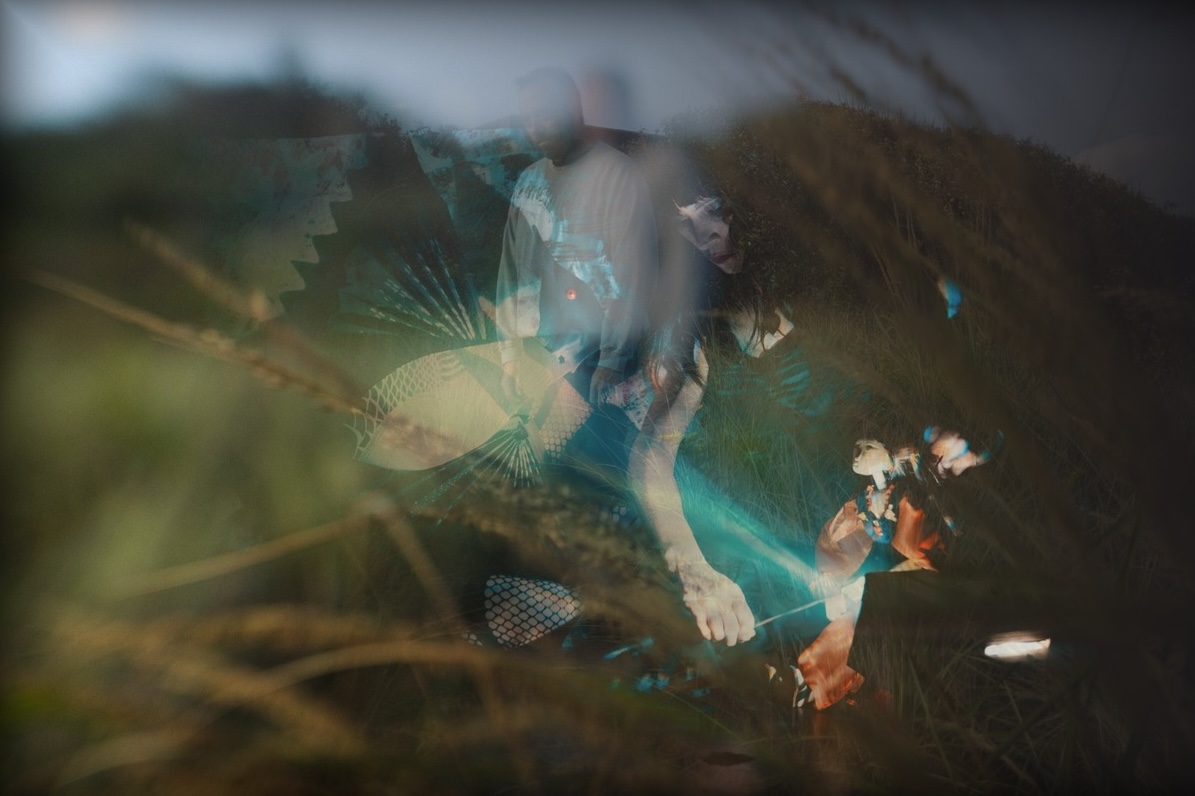
Brooklyn composer and puppeteer Tristan Allen and pianist David Moore trade notes on fire, fantasy, and the art of staying unfinished, as Allen’s mythic new album Osni the Flare and Moore’s Graze the Bell arrive in the world within weeks of each other.
Somewhere between the Cypress Hills cemetery in Brooklyn and a La MaMa puppet ballet, Tristan Allen has been quietly building a mythology. Osni the Flare is the second chapter of a trilogy that traces the birth of fire through a cast of mortals, deities, and dragons, rendered in ocarinas, dying Casios, slowly wound music boxes, and wordless humming borrowed from Pan’s Labyrinth. It is, on every level, a singular piece of work.
David Moore is a pianist and composer whose most recent album, Graze the Bell, was made in its own image: cross-stitched cover included, six months where a week might have done. The two found enough common ground in their approaches to make the conversation worth having. What follows covers active listening, the discipline of staying unfinished, muscle memory as a kind of surrender, and what it means to stay open for business.
Tristan Allen: Yes, absolutely. With acoustic instruments, the moment you press/hit/strum it, it makes sound. There’s always some funny business involved with getting electronic instruments to do their thing. For this reason, I stay clear from synthesis and make my music almost entirely from acoustic sources. I’m not as much of a gadget fiddler as I am a player. I also love the physicality of moving a mic up, down, and all around.
I’m trying to get my music to feel like it’s made by a distant, off-world culture. I want to make fantasy music. There’s enough people in electronic music making sci-fi. Another reason to stick to acoustic instruments.
There are very specific narratives that this new album of yours is organised around, but it’s instrumental music. I’m curious where that all starts for you, with the concept or with the music, or do they evolve side by side as the piece is built?
The concept is super vague at first, something like: this project will be about the origins of fire. I start with piano and improvise until something special happens. I imagine what I can add that I can’t play yet and then practise until I have it. This is how I get better at piano. Once I have some of these detailed bits I try and think of the setting the ideas should exist in. Are they wet or dry, vast and barren or narrow and congested? This points me towards the orchestration, replacing each note I play on piano with a different instrument. I’ve collected a bunch of odd acoustic instruments to do this. Then sound design. I love combining things to make sources unrecognisable.
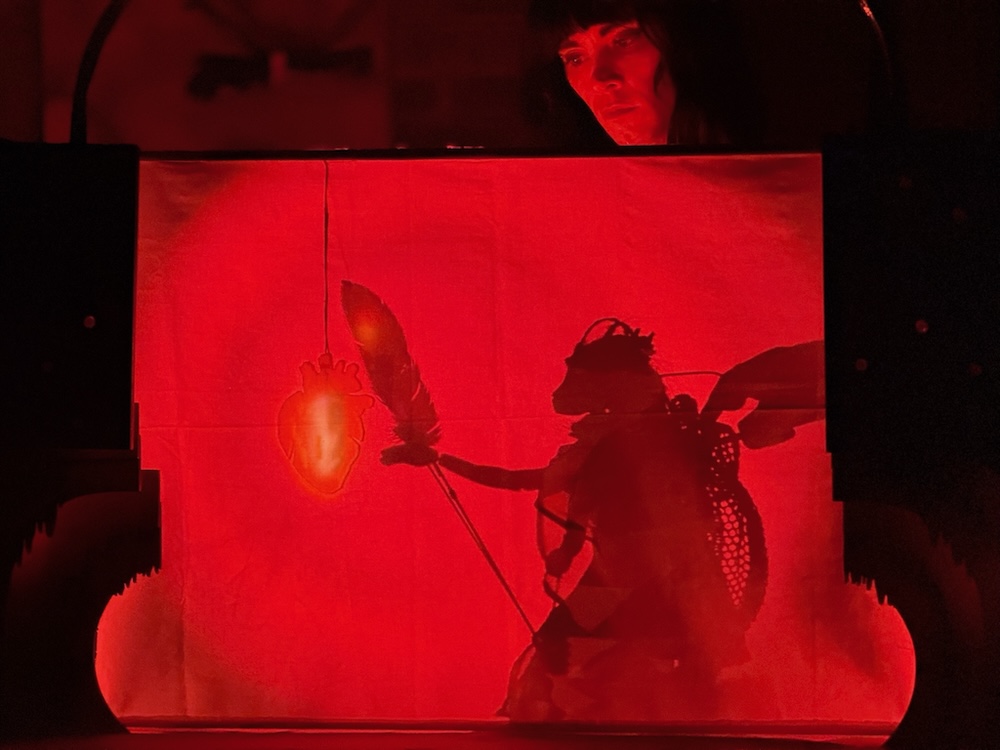
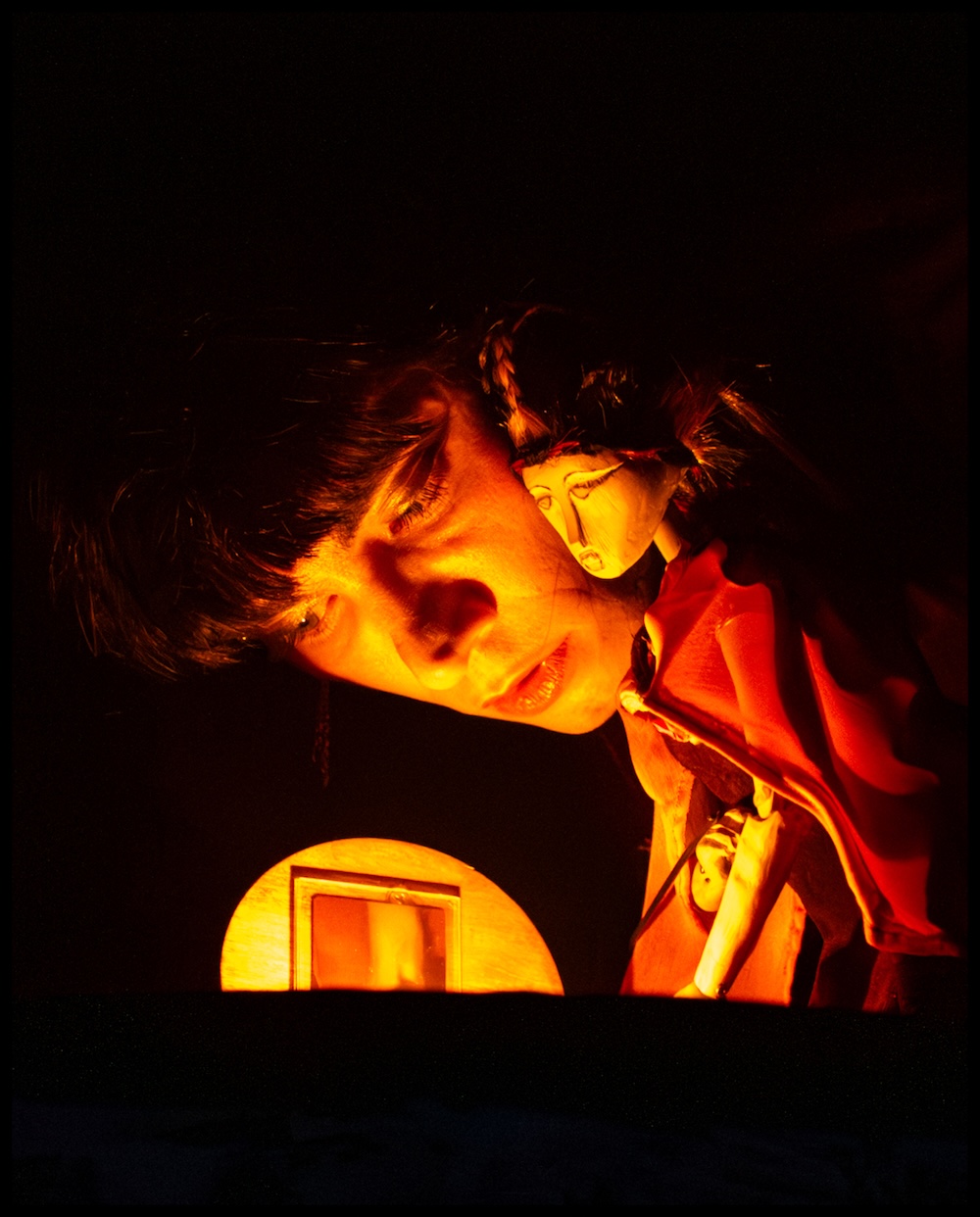
Once I have the music I move onto building puppets. Then I work on puppetry. When the puppetry stops feeling separate from the music, a story magically appears.
You mentioned moving onto the puppets after the music is done, but are you thinking about the puppetry aspect as you work on the music too? I know I’ve found a lot of help in imagining visual elements while I work on music, whether or not they will ever be realised. It seems to help me see the music and understand it from a different angle, and I’m curious if that’s also true for you.
I work on puppetry after the music because the music creates time constraints (blocking) for the choreography and narrative. I don’t like working on movement or story in a vast soup of endless possibility. It really helps to have timing more or less set in stone otherwise I get lost in the sauce of worldbuilding.
That said, I do decide what kind of puppetry I’d like to use early on. I knew I wanted to use shadow puppets for my first album. For this one, I was set on rod puppetry before working on any music. Building takes a very long time so I try to make the main puppets for each project as I’m working on the music, not knowing what they’ll end up doing.
Bonus puppet question: do you know whatever happened to the Brooklyn Puppet Library that was in the Grand Army Plaza arch?
Those puppets are still around! You can find them at the Arts Lab in Brooklyn College.
Something I think about a lot is active listening, and how so much instrumental music has been relegated by default to a passive listening activity. I’m curious to know if you have any thoughts on this, or if you think about how a listener will engage with your work as you’re making it. Or any way you hope a listener will engage?
I think music that lacks a clear protagonist, no singer or featured soloist, often gets treated as if it exists only to accompany something else. It takes imagination and curiosity from the listener to become the protagonist moving through the world instrumental music creates. It’s such a bummer that more people don’t realise this adventure is available to them. The overuse of the word “ambient”, and the way instrumental music has become synonymous with soundtracks, hasn’t done us any favours.
I’m partly leaning into the tendency for people to only experience weird music as accompaniment, hoping it might bring experimental music to puppet people and puppetry to music people. Ultimately, I hope that what I make takes someone on some sort of adventure.
I love what you said about instrumental music, and about how it can be an opportunity for the listener to become the protagonist. How does melody fit into this idea for you? Your music is so melodic and textural and tactile, which is not always so easy to achieve.
Thank you! I like to think of melody as the thoughts and emotions of the adventurer. I want to get better at writing leitmotifs to introduce characters clearly in songs without words.
Electronic music makers tend to have more of an ear for timbre and textural things. In classical music there’s a set of instruments to choose from so the process is more focused on melodies and harmonies. Obviously this isn’t always the case, but I often get frustrated with the specialists. I’ve recently been a bit obsessed with wilderness survival media and think it serves as a great example: like when someone spends all their calories building the biggest, warmest shelter ever but doesn’t think to set a gill-net or snares to procure food, they’ll die out there. That’s honestly what a lot of songs sound like. To the best of my ability, I want to do both.
Are you precious about ideas, or do you find it easy to abandon something if it’s not working? What do you do with something that you both love and feels incomplete?
I’m super precious with my ideas. If I start a song, I often finish it. Everything takes me forever so I have very few songs. I’m not the type to start a bunch of ideas, make a bunch of songs, then choose from what I’ve got. I’d love to make music more like a journal but for now, my process is very incremental, like the cross-stitching on your album cover or the ink dots on mine.
My songs feel incomplete for months, sometimes years, but if I keep adding and trashing little itty bits day by day, they’ll eventually be done.
Osni the Flare by Tristan Allen is out March 27 on RVNG Intl.
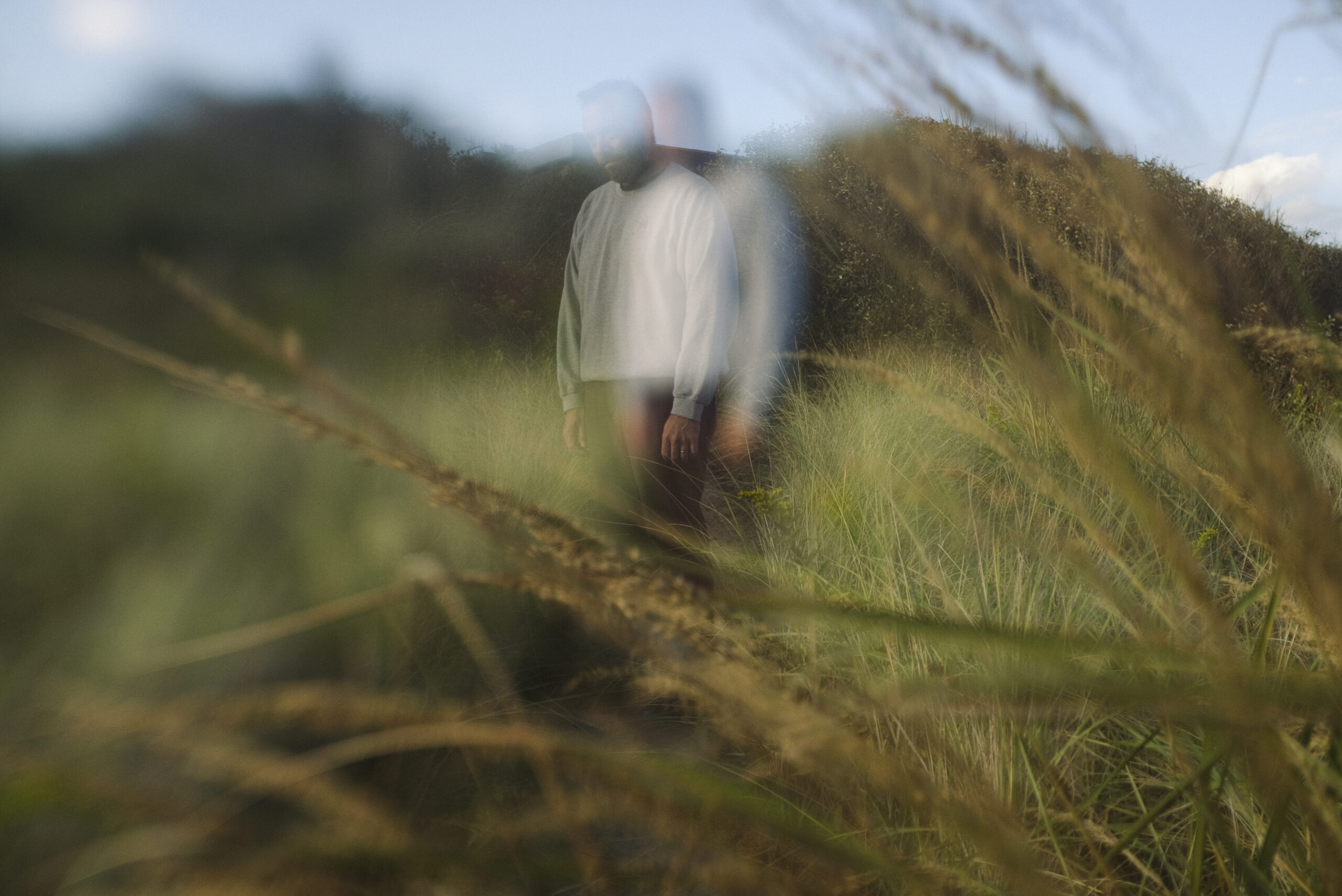
Tristan Allen: Do you have a practice regiment that is separate from improvisation and composition on piano?
David Moore: To be honest I can’t say that I do, at least not a very consistent one. There was a time in my life where all I did was practise the piano, but those currents have given way to a bit more of a wider, holistic approach. These days if there is something I want to learn I take the time I need to learn it, or if I discover something I’d like to do better, I figure it out. But time spent on focused daily piano-specific practice is far less frequent unless I’m preparing for a show or a recording. It doesn’t mean I’m not practising something every day though. Lately I’ve been working a lot on ear training, and you don’t have to be at a piano for that. You can be at a grocery store or in a waiting room. I’d like to level up at recognising pitch and intervals and harmony on a more instinctual level, so that’s the blade I’m sharpening at the moment.
2. Any wild piano moving stories?
Many! The most recent was when I moved to Black Mountain, NC for a year. I knew my piano was coming with us from New York, but the house we rented was at the literal top of a mountain, at the end of a barely-there, single-lane gravel drive with plenty of steep drop-offs. We had the piano in a U-Haul and I was just white-knuckling the steering wheel up the side of that mountain praying this instrument didn’t finally end me once and for all. Eventually we arrived at the house, and some local movers came to help carry it down the steep yard and get it into the back door, which looked far more impossible to do in person than it did in the house photos we’d seen on Craigslist. I was in the yard just pacing like crazy watching these two guys dip and turn down a rocky trail with my baby, one out-of-balance step away from casually destroying the thing. My wife eventually asked me to go inside and chill out, and as per usual, that was just the ticket. They got it in eventually though!
3. Do you ever lose time, like you’re playing or making and you completely lose track of who and where you are? Something similar? These, for me, are the best moments but happen so rarely. I’d like to have more fun making things and would like to know: do you have a routine that allows for this to happen as frequently as possible?
Yes, time is everything until it’s nothing. I wouldn’t say I have much of a routine around it, but I have repeatedly made the somewhat obvious observation that the less I have to think about how to accomplish something on a technical level the more I’m able to just float away, so that becomes the goal of all preparation. It’s not under my fingers until it’s IN my fingers and the muscle memory unlocks everything.
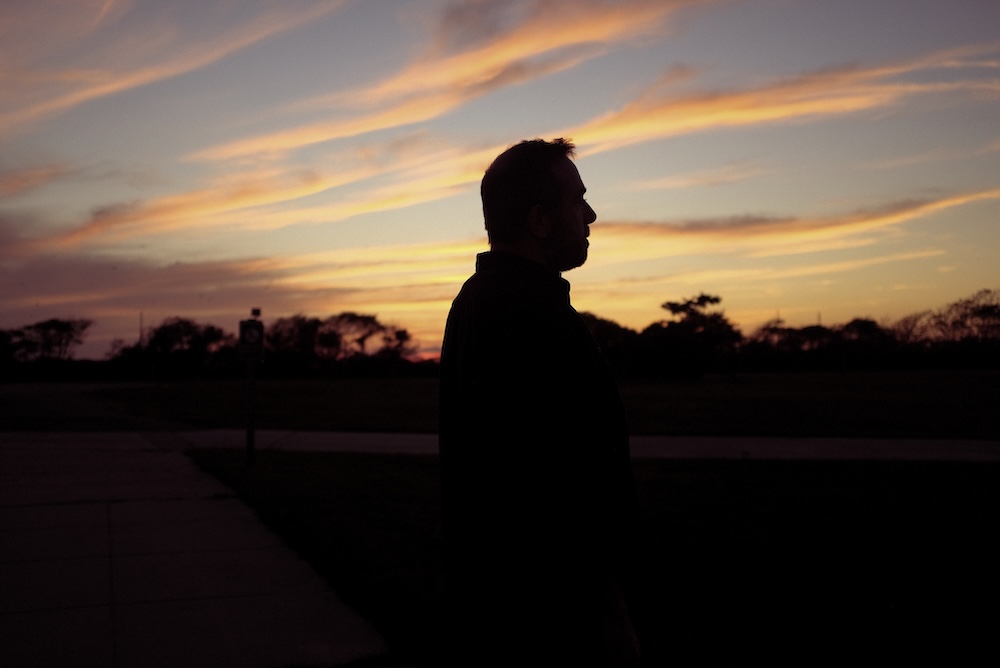
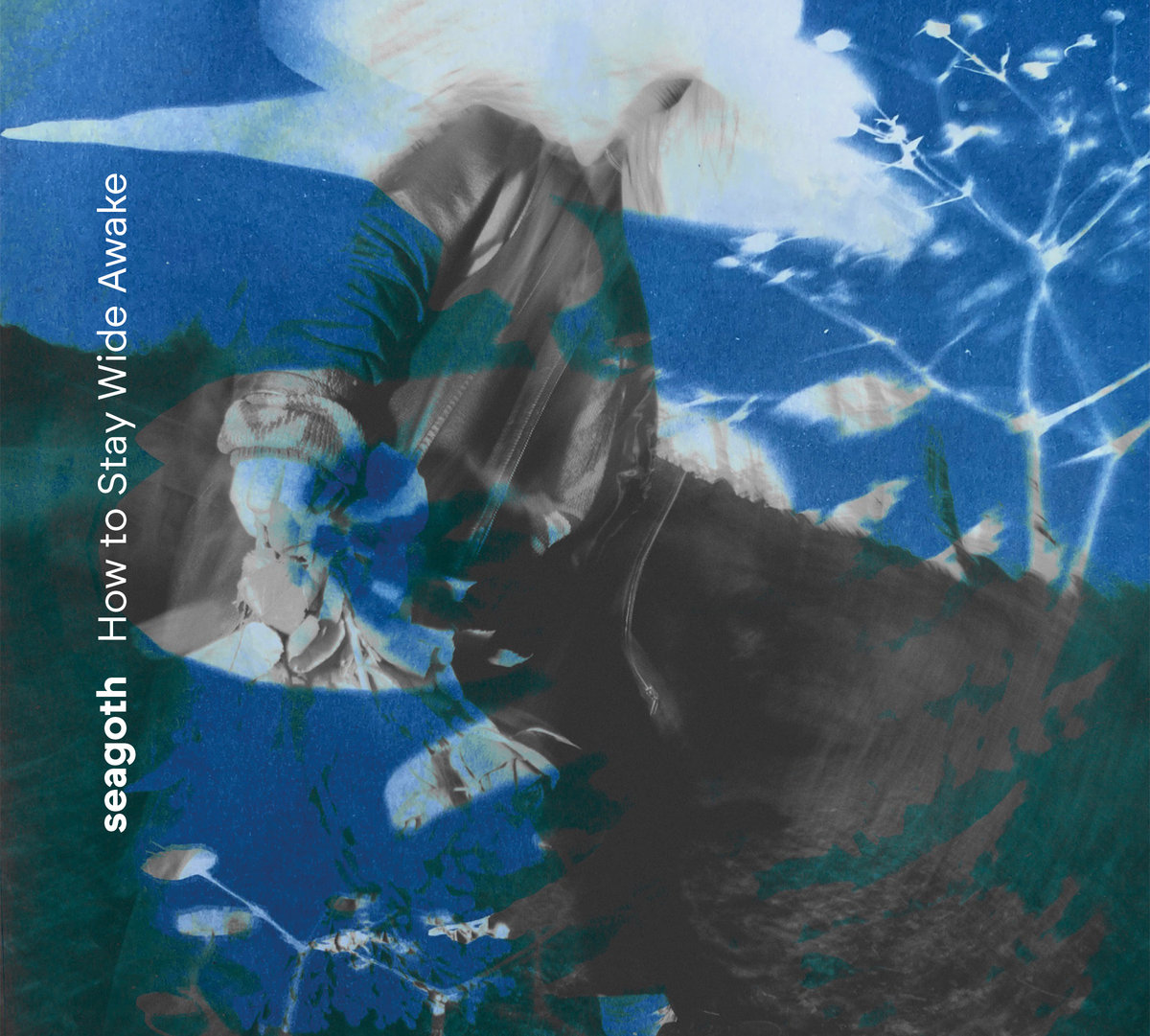
The phrase “Graze the Bell” makes me think of brushing against something important and beyond. The album art shows what looks to be someone flying a kite up against an ocean. Am I onto something? Does a concept link the music to the visual to the title?
Oh I love that. You are absolutely onto something. As we spoke on already, instrumental music can present some challenges to the idea of narrative, so I try to leave things as open as possible. There is what the title and artwork mean to me, and the web of possible meanings for anyone else. That said, it warms my heart to hear your interpretation, because that was also mine. Someone I love playing with the wind on the edge of a great and seemingly endless expanse. It’s not that it’s pointing back to the music, but the artwork and the music are both pointing back at the same thing, the thing beyond it. I cross-stitched the cover too. It took about a year to finish, and that process just fed back into the big thing too.
Can you talk more specifically about your “preparations to float away”? Do you have a clean or messy desk, a photo hanging over your computer, a journal for ideas, a mic always pointed at the piano?
I heard someone call it “staying open for business”. I keep the piano in tune and mic’d up. I hang instruments on the wall around my home. I keep a pile of blank staff paper on the dresser. In my experience, the difference between doing the thing and not doing the thing is often just having the materials in front of you. For performance, the most important preparation is on the technical front: making sure I can execute what techniques the music demands of me without having to think about it. Muscle memory is a fascinating and insanely powerful force, and usually the key that unlocks whatever door I’m trying to get through.
Have you learned anything new in creating Graze the Bell (cross-stitching, engineering, playing)? Have you discovered anything new about yourself in the process?
Many, many things. I think the most pronounced lesson would be this fresh embrace of the magic of inefficiency. We could have probably finished recording and mixing the album in a week, but we took six months to do it, because it felt important to have down time between decisions to let the next set of solutions form. The cover could have been machine embroidered over an afternoon (or created digitally in a few minutes), but I did it by hand and it took way longer. The result of these decisions, of taking time, winds up meaning everything in the end, and I arrive at that end a different person than I otherwise would have been.


![PREMIERE: Nandele – Viola [Awesomakossamusic.]](https://www.theransomnote.com/wp-content/uploads/2026/08/Screenshot-2026-08-27-at-17.21.58.png)

Must Reads
David Holmes – Humanity As An Act Of Resistance in three chapters
As a nation, the Irish have always had a profound relationship with the people of Palestine
Rotterdam – A City which Bounces Back
The Dutch city is in a state of constant revival
Going Remote.
Home swapping as a lifestyle choice
Trending track
Vels d’Èter
Glass Isle
Shop NowDreaming
Timothy Clerkin
Shop Now