Track By Track: Woo – Whichever Way You Are Going, You Are Going Wrong
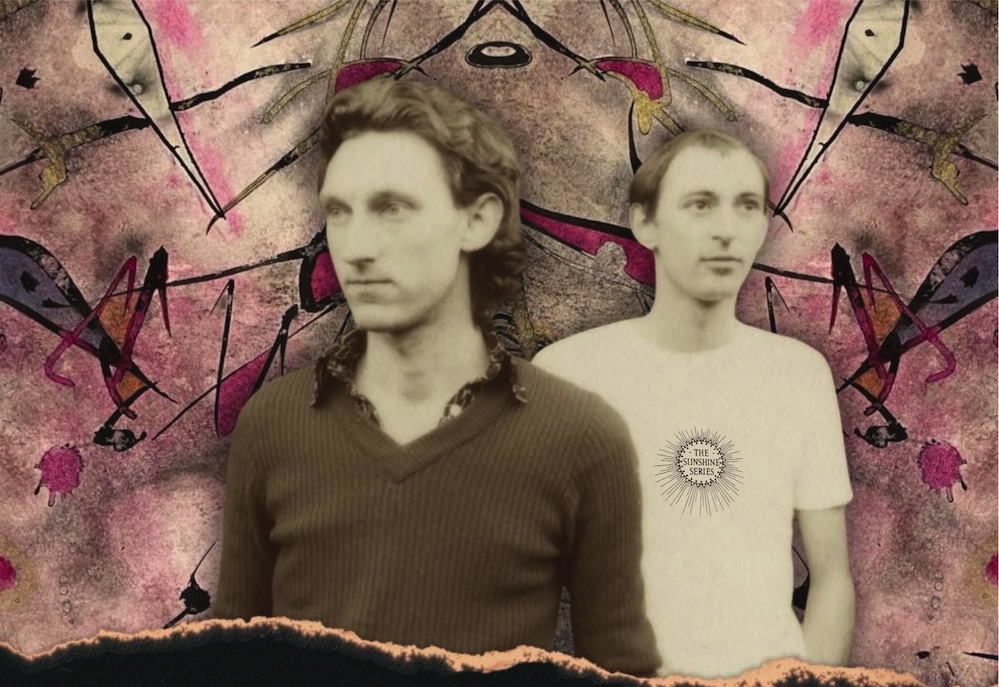
The neighbour’s broomstick hitting the ceiling is, somewhere in the grooves, part of the record.
Some stories take forty years to fully tell. When brothers Clive and Mark Ives released their debut album in 1982, they were working out of a flat in South London, keeping the volume down after midnight to avoid complaints from the neighbours below – a constraint that, as Clive now reflects, gave the music “a very subtle and sensitive feel.” The neighbour’s broomstick hitting the ceiling is, somewhere in the grooves, part of the record.

Woo’s music, if you’ve not been paying attention at the back there, draws from folk, jazz, ambient, psychedelia and what they call healing music, filtered through the peculiar alchemy of two brothers who’d been at it since they were kids – the whole thing kicked off with Beatlemania, a grandfather’s drum kit, and Mark on guitar while Clive bashed pots and pans. The name itself came from Uncle Fred, an old RAF man with a moustache who one day pulled out a musical saw and drew a bow across it. It went Woooooo. That was that.
Whichever Way You Are Going, You Are Going Wrong marks the first time the outside world could lean in and eavesdrop on what the Ives brothers were dreaming up — irreducibly British and fully formed, carrying traces of pastoral folk, post-punk, dub, jazz and ambient without quite belonging to any of them. The NME and Melody Maker reached for the Durutti Column and Penguin Cafe Orchestra, with Brian Eno producing – a reasonable enough shorthand, though Woo had arrived at their sound largely in isolation, having never heard most of their supposed touchstones. As Clive puts it in his notes for this expanded edition, that parallel evolution raises a strange question: was it the collective unconscious at work, or just a consequence of the same new technology everyone was reaching for at once?
Now reissued through Independent Project Records – the same label that first gave the album a second life in the US back in 1987 – the expanded edition adds ten bonus tracks drawn from the archives spanning 1977 to 1990, presented as a standalone mini album running alongside the original. The Ives brothers never stopped recording; Woo became a sort of cult band, their vibe drifting toward New Age while their sound kept its idiosyncratic edge, eventually enchanting a new generation of fans and artists including Yves Tumor, who sampled them twice. But this is where it began: a flat in South London, a four-track, a few singing bowls from Nepal, and two brothers with complete freedom and nowhere particular to be going.
Here, Clive takes us through the album, track by track.
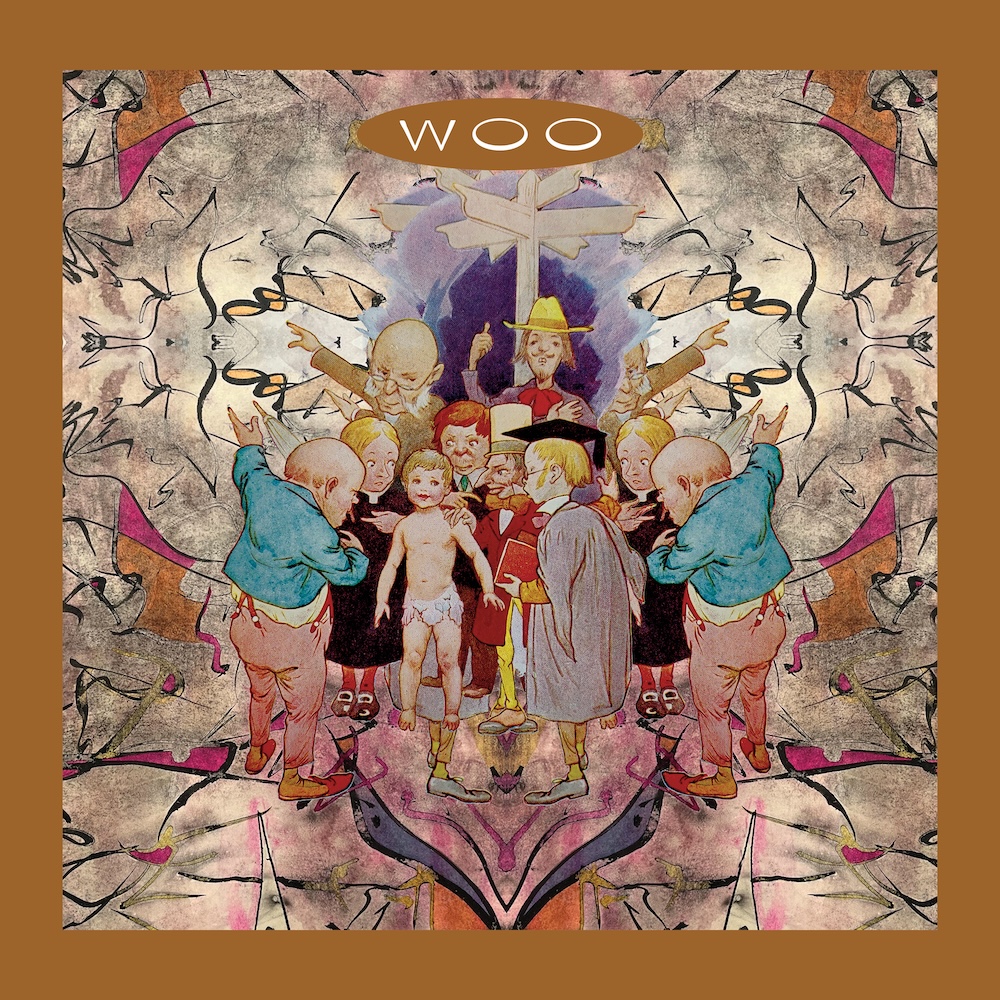
In 1982 my brother and I released our first Woo album, Whichever Way You Are Going, You Are Going Wrong.
The original 13 tracks of the album were selected from hundreds of recordings from a five-year period.
Over these years, we had been working in a home studio in a flat in South London. We were experimenting with different ways to make music, and had complete freedom to explore every genre of music. We developed distinctive ways to recreate styles we admired, using electronics and acoustic instruments. The limitations of early monophonic synthesisers and 4 track tape recorders were, a gift which opened the doors to creativity and innovation.
The new expanded edition of Whichever Way You Are Going, You Are Going Wrong includes ten bonus tracks taken from our archives from 1977 to 1990.
Swingtime
The opener to the album is a very simple two-chord groove, based on an E minor chord that Mark learnt from an old schoolmate. He combined the E minor chord with an A7, which contained some drone notes that worked on both chords, making it easy to improvise over.
And that’s what we did!
The euphoria we were feeling is evident in this spontaneous four track jam. One of my favourite moments is about one and a half minutes in, when I push the dials on my synthesiser to 11, and it lets out a high-pitched screech
Pokhara + CH Revisited
Mark had spent several months in the Far East, and had visited Pokhara in Nepal, where he bought a few singing bowls. On this track we combined a simple drum loop and drones played on guitar with a slide. Then we drummed on the singing bowls with our fingers. The singing bowls have such a fantastic harmonic and metallic ring when played like a drum.
The second section was originally a standalone track, the initials – CH, referred to a place Mark was working for… obviously not his dream job at the time! (If you listen to the track you will understand.) Halfway through the track we fade the rhythms and let the drones merge with a high velocity beat created with guitars through the sequencer. A
recent review by ‘Post Punk Monk’ describes it ‘as if a swarm of insects had taken over the track’.
A Wave
I’m going to sound old now!
The main way we could discover new music in the 60’s and 70’s was by listening to the radio, or to LPs that our friends played. The BBC was playing mainstream pop or easy listening. But the pirate radio stations, especially Radio Caroline which was based on a ship on the North Sea, were a source of more alternative experimental music.
My friends introduced me to the following electronic LPs in the 70s:
1971 Zero Time by Tonto’s Expanding Head Band
1974 Phaedra by Tangerine Dream
1977 Mirage by Klaus Schulze
+ Before and After Science by Eno and 1978 Music For Airports by Eno
These albums were an influence and gave us permission to let the music flow without needing too much structure.
On ‘A Wave’, Mark’s guitar chords have a melodic shape which forms the basis of the music, but what dominates the listener’s attention are the
various overdubs.
There are, in fact, many waves in this track, all overlapping, ebbing and flowing, like the waves on a beach.
The Cleaner
During the last few weeks of Mark’s Far East trip, he became seriously ill. When he came back to England he was still unwell, so Mark and I went to see an esoteric energy healer in North London. While we were in the waiting room of his clinic, a man came in carrying a broom. Mark asked me if that was the healer? ‘No’ I said ‘he’s the cleaner’ – It was funny at the time!
Funny or not, it became the title of this Spanish guitar track with the addition of a few Indian chimes, also from Pokhara.
Wah Bass
In recent reviews of this re-release, journalists have likened this music to The Durutti Column, The Young Marble Giants, Neu, and Can. I am very happy to see these comparisons, but what is fascinating is that we had never heard of any of these bands during the years of making this album in the 70s!
Musicians can’t help but be influenced by the music they hear, which is either inspiring them to emulate, or informing them of directions to avoid.
But when you discover close parallels with musicians that we had never listened to, the question arises, how does this occur?
Was this tapping into the collective unconscious?
Or maybe it was a consequence of the new technology we were all using?
Clinton at Norman Records wrote:
‘Wah Bass’ heads into dub territory with a blend of delayed synths and low end bass patterns. This is where the album is at its most impressive – it really sounds like almost nothing that has come before unless King Tubby ever met Brian Eno and Pharoah Sanders uptown.
The Attic
Woo are mainly an instrumental band, but on most of our albums we like to include a song or two. It adds a more tangible content to what is
fundamentally an abstraction.
The song on this album is called ‘The Attic’.
We found this short poem by Roger McGough, about an art student who having lost her dreams and true passion in life, has ended up in a
mundane job.
The last line of the poem, “Portfolioed, your dreams lie now in the attic”, really resonated with both of us. At this time, I had just finished three years at art school, and I was working in a graphics studio, cutting and pasting other people’s designs. Like so many other ex art students I had my portfolio tucked away in the attic!
Razorblades
This is the opening track on side two of the record.
Mark had borrowed a Flying V guitar, and we created the intro inspired by its raw and powerful sound. Mark felt like a rock star playing it!
While we were recording the track, a friend came to visit and we played the intro to him.
He didn’t say anything, he simply mimed someone slitting their wrists with a razorblade.
We had found our title!
White and whiter still!
This is definitely one of our late night recordings.
I was living in a block of flats and had to keep the noise to a minimum
after midnight. Looking back, this restriction on our volume resulted in a very subtle and sensitive feel to many of our recordings. (And of course some of them contain the sound of our neighbour below hitting their ceiling with a broomstick!)
The title WHITE AND WHITER STILL was borrowed from the DAZ and OMO washing powder
advertising slogans.
White And Whiter Still
Wapping
After I left art school, I rented a studio together with two colleagues,
Jeremy and Columba. We were painting murals. The studio was in
Wapping, in the old docklands on the Thames in the heart of London.
It was an amazing space with big barn doors overlooking the river.
The rents were cheap, because the redevelopment of the docklands was in full swing. It was a short window of time before all these warehouses were transformed into luxury flats. The locals were being squeezed out, and developers were moving in.
With its more jagged electro-industrial atmosphere, which morphs and warps unpredictably, this track captures the feeling of Wapping during this time of huge transformation.
The poet Columba Powell who I worked with in Wapping went on to write the lyrics to several Woo songs:
‘Magic In The Dark’ on the A La Luna album, ‘The Garden Path’ from When the Past Arrives
and the title track from ‘The Poet’s Progress’
Life in Shadows
The word shadow has many meanings:
A shadow cast by light on a form.
A dark figure
A spector or ghost
An indistinct image
Carl Jung used the term ‘Shadow work’ in his practice of exploring the unconscious parts of his patients psychology.
I like the fact that this word can be interpreted in so many ways.
I have always associated this track with Carl Jung’s meaning of
exploring the unconscious parts of yourself.
Although the music has a softness, it also has an ominous feeling,
like a deep neurosis stirring up from the unconscious.
It also has one of my favourite bits of Mark’s clarinet near the end, which brings some warmth and real world form into this meandering nebular.
Life In Shadows
The English Style Of Rowing
Mark has a particular love of jazz music, especially Stan Getz, Lionel Hampton and Django Reinhardt.
The English Style of Rowing, with its bolero rhythm and simple piano chords, gave Mark the opportunity to improvise with several harmony clarinets.
Sometimes it’s hard to find a title we both like.
I remember the day we were on a train to the graphics studio to complete the artwork for this album. We had the titles for all the tracks, except for this one!
Sitting opposite from us on the train was a lady reading a book called ‘The English Style Of Rowing’. We both knew this was the perfect title for this track.
1. Because the track sounds quite proper and old fashioned
2. Because the word ‘rowing’ has two meanings:
The English style of rowing… a boat, and
The English style of rowing… as in having an argument.
But of course the English way of having an argument is keeping a stiff upper lip and ignoring the person you are annoyed with!
Whichever Way You Are Going, You Are Going Wrong
The long and thought-provoking album title can easily be interpreted as having a negative meaning, however, the complete opposite is true!
The illustration from the LP cover depicts an innocent little boy,
surrounded by people from different walks of life: an artist, a vicar, a teacher, a craftsman and a businessman. In the illustration, all of them are pointing with their fingers in a different direction than they think the little boy should take.
The moral of the story is that the boy learns to trust his intuition and to
listen to his inner wisdom, so that he won’t be swayed by other people’s opinions and beliefs.
My brother could spend a couple of weeks working and reworking a composition like this. When he was finally ready to put it on tape, I was more than happy to take a back seat and just add a little reverb here and there, in real time, as he played.
Lovelorn
Bruce Licher at Independent Project Records suggested that we added bonus tracks to extend the original album. He initially wanted us to
explore tracks from our archives for the same time frame from 1975 to 1982.
During the past forty years we have released about forty albums from our archives, averaging about one a year!
But the music archives from these early years were almost exhausted, or were even too lo-fi for us to enjoy!
So we decided to open up the time frame and chose tracks from the 70s and 80s that had not been on vinyl before.
Lovelorn had been shortlisted to be on ‘Into The Heart Of Love’, our 1990 cassette release. It has such an optimistic and welcoming atmosphere that it was an obvious choice to open this mini album.
I recently looked up the meaning of lovelorn in the dictionary, and it said ‘miserable because of unrequited love’.
So I asked my brother why he had chosen this title. He replied that he probably was feeling lovelorn at the time!
Ruby Ruby
Ruby Ruby was named after Mark’s girlfriend and singer with the band in the 80s and 90s.
She was a sensitive and esoteric being, who inspired both of us.
The atmosphere of the music reflects her subtle and mystical vibe. She features on two of our albums: ‘Light of The World’ and ‘Please
Remember To Breathe’
Anyone who knows their syntherzisers, will recognise the sound of the Korg M1, which dates the recording to the late 80’s.
Rosehips
If this was a Spinal Tap interview, they might say this track was about some wild rock chick called ‘Rose Hips’!
But… this ain’t rock and roll…This is a home studio band!
I asked Mark about the title:
“Late summer is the rosehip picking session, he said
you pick’em,
you boil’em
you sweeten ’em up and drink ‘em”
So… this ain’t rock and roll, this is vitamin C… in excess!
Tibetan Trains
In the late 1980s we joined a collective of musicians called the New Age Music Association – NAMA for short.
We would regularly meet up, share ideas, play music together and
collectively performed a few concerts in Cecil Sharp House in North
London.
Woo played Tibetan Trains as the opening act at one of these concerts.
We were definitely inspired by the minimalist composers of the time, Philip Glass, Steve Reich, Robert Rich and the like.
Tibetan Trains 1990 Nama Concert
It’s Love Reworked
If Woo have a hit, the original version of ‘It’s Love’ from ‘Into The Heart Of Love’ is it!
It has had over 2 million streams on Spotify, and has been sampled twice by avant-garde pop artist Yves Tumor!
The original played on Spanish guitars is slow, sweet and heartfelt.
With this reworking, we took the tempo up, and added drums, vocoders, clarinets and some cool echo effects to achieve a more euphoric and
celebratory vibe.
Baa Lamb
I think Baa Lamb was recorded in 1977. There were several years before we got a drum machine. I would arrange an assortment of drums, tambourines, tom-toms, scrapers, wood blocks, bells, cymbals, and triangles on the floor and play along with drumsticks and brushes…
a poor man’s ‘Keith Moon’!
Twinkle Toes
We both felt this little sequence had an innocent playful vibe which echoes the feeling of the children’s book illustration on the cover.
Looking back at my own childhood, I still have a few memories from my very early years, when I felt innocent and my imagination was full of fantasy and magic.
Making music and being creative has always helped me to regain my playfulness.
As a child, it is very obvious how we learn from our (so-called) mistakes. Any creative process is, by its very nature, a journey into the unknown, where mistakes will happen, and the voice of the inner critic will find
pleasure in recounting all past mistakes. Recording music offers the
possibility to hear this critical voice and learn to overcome its influence.
Dobbins Lost His Coconuts Revisited
The original version of this was on: Source – The Independent Project Records Collection CD.
We came across this remix, which slows the tempo down, strips back the rhythm section, the melody lines… well almost everything, leaving a shadow of the original mix. Over the understated remains we added some Spanish guitars that are softly replacing the original melodies.
We think this might have been a remix that Ruby worked on. She would often do remixes and reduce the drums to create more subtle and
mystical versions.
A Western Sunset
Western movies were a big part of our childhoods. We watched Bonanza, Gunsmoke and the Lone Ranger on TV.
We went to the cinema to see Spaghetti Westerns and the Magnificent Seven being magnificent!
On our second album, ‘It’s Cosy Inside’, we had ‘The Western’ which was intended to be music for a western movie, where the hero is riding at full speed on his trusty steed, either chasing the baddies or being chased by them!
In this version, the action is far less thrill packed.
Our hero is cantering along into the sunset, the adventure is over and
justice is done.
The final dialogue from ‘Blazing Saddles’ says it all:
“Where you headed, Cowboy?”
“Nowhere special.”
“Nowhere special… I always wanted to go there.”
“Come on!”
The sun sets behind the mountain and the closing credits roll…
The Very End Of The Attic
The track ‘The Attic’ was originally nine minutes long.
We had to cut it up to fit the song on the original album. Then a short
instrumental section went on: ’It’s Cosy Inside’.
To close this mini album we have included the remaining unreleased section which features a clarinet solo.
So it is literally the very end of The Attic.
It feels a fitting completion to this re-release, 43 years after the initial conception.













Must Reads
David Holmes – Humanity As An Act Of Resistance in three chapters
As a nation, the Irish have always had a profound relationship with the people of Palestine
Rotterdam – A City which Bounces Back
The Dutch city is in a state of constant revival
Going Remote.
Home swapping as a lifestyle choice
Trending track
Vels d’Èter
Glass Isle
Shop NowDreaming
Timothy Clerkin
Shop Now