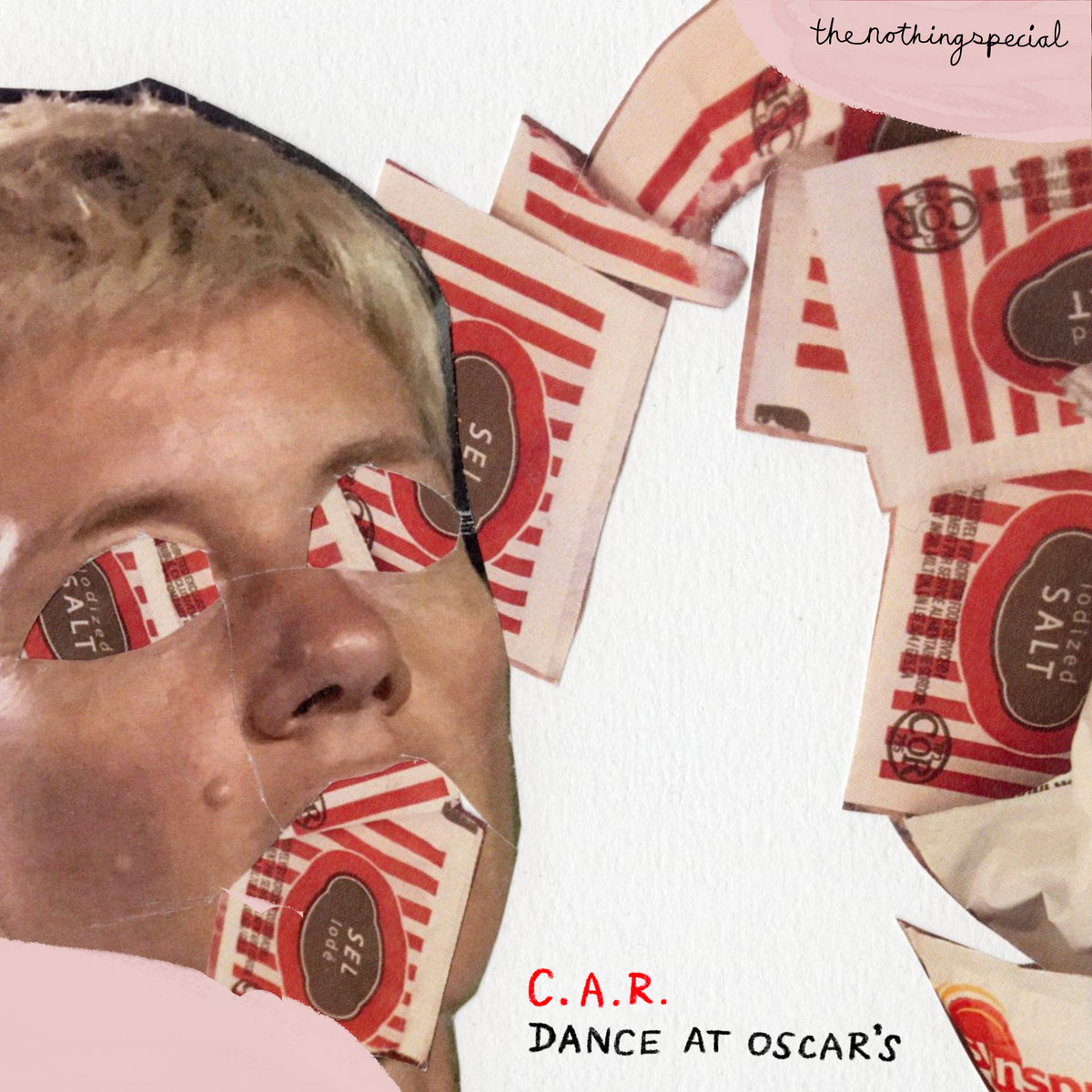
Track by Track: C.A.R. – Dance at Oscar’s

There’s a specific kind of freedom that comes from lowered expectations. After a pandemic detour into documentary filmmaking and a near-permanent exit from music, Chloé Raunet found herself standing at what should have been the end of C.A.R.
Instead, with collaborator Joni Green by her side and producer Nathan Ridley behind the desk at Hermitage Studios, she stumbled into something unexpected: a second act that refuses to behave like one.
‘Dance at Oscar’s; is the sound of that refusal. Written and reworked over two years, it’s an album built from the detritus of modern life – RV parks, rundown motels, rotting boardwalks – filtered through Roland TR-808s, Lexicon Prime Time delays, and a lyrical sensibility that sees absurdity and beauty as two sides of the same tarnished coin.
Released on The Nothing Special, it marks a tilt away from the shadowy introspection of Raunet’s earlier work released through both Kill The DJ and these four walls that is R$N, toward something more physically alive, though no less slippery.
What follows is a guided tour through the album’s crooked architecture, where monarchy meets machine-funk, consumer stupor gets its own warm synth bath, and two women dance through the half-lit spaces where joy and unease keep swapping masks. Each track is a room in Oscar’s peculiar establishment – step inside, and don’t expect the floor to stay level beneath your feet.
“I’m drawn to slip roads, and here’s no exception – stray images caught on tape, bent and blurred until they become sound. Music is subjective; there’s little point describing what every ear might interpret differently. What I can do is shed some light on the words, share a story, a meaning, maybe coax someone into listening.
This album has been simmering for a while. Most of the songs stem back to a trip to Montreal in 2022. It’s a city firmly rooted in my past, one still carrying more concrete signs of what was than a lot of places. Revisiting the sites of adolescence, camera clutched to hand, memories collide with the present. I’m thrown into a kind of flux, where the structures of history dissolve. Everything that happens today is drenched in yesterday.” Chloe Raunet aka C.A.R.
The Pageant
Queen Elizabeth II is dead. My father — once a Trotskyist, later a staunch Quebecois separatist — surprises me by mourning her passing. I was in Montreal when Diana died: learned of it from the morning papers, picked up on my way home from a rave. Back then he didn’t care much for the British monarchy. Now, watching today’s news spill out through memes on rectangle screens, the absurdity of spectacle feels inescapable. So do the contradictions.
Gentle Sunsets
Motel Oscar hugs the motorway between Longueuil and LeMoyne. Built in 1947 and barely changed since, it’s as kitsch as they come — a proper classic of the cinema. When I rock up with my miniDV cam, I’m fully aware I’m falling prey to cliché. The place has definitely seen better days; half abandoned and I can’t help swooning over Lily Simone, the boarded-up strip club, and the dusty, deserted diner. My heart races as I poke my nose into a dark and dingy bar. There’s a sign of life: a couple of lonely souls, impeccably bathed in flickering TV glow, linger over sluggish, boozy chat. I’m tempted to order a drink, but my nerves say otherwise. I don’t belong here. Upstairs I sneak along the balcony, imagining decades of sordid secrets, locked behind closed doors.
Shade in Me
The Strauss–Howe generational theory casts Western history as an eighty-five-year loop, ruled by four archetypes — more pseudoscientific astrology than hard fact. Prophets grow up in eras of stability, when a new order takes root. Nomads come of age in upheaval, when ideals collide with institutions. Heroes are shaped in times of unraveling, steeped in rugged individualism. Artists emerge in crises, where survival demands collective sacrifice. Caught on the cusp, I can’t help wondering why I’d rather claim Gen X than Millennial.
Set You Down
Scribbles lifted from my journal, penned intoxicatedly in a place I wasn’t meant to be — physically or otherwise. They mighta put a man on the moon, but these days there’s little room for them in my life.
Shyana
It’s 1961. Teen idol Paul Anka sings to seas of screaming girls on North American boardwalks. At 19, he’s technically underage, but ushered into the Copacabana — a nightclub barred to the very teenagers who made him famous. Beatlemania has not arrived, but the pop machine is already running full tilt, lining the pockets of its puppetmasters while tossing scraps of fantasy to the masses. Seen through the grain of Koenig and Kroitor’s black-and-white vérité, the frenzy feels layered, even nuanced. By contrast, today’s full-colour saturation — the reality feeds, the influencer glare — flattens everything into binaries, spectacle dressed up as depth.
29 & Falling
After weeks of heatwave, the wind picks up and the mercury slips down the pole. My mood turns autumnal. I shed love like leaves, but I’m not sure I’m ready for the cold.
Hi Vis
It’s no secret that C.A.R. was born from catharsis. A decade earlier, a diary found in the basement of an Essex Road pub inspired my band Battant’s song Kevin (1989). Fifteen years on, I’m riding a bus along that same strip, staring blankly out the window. Lots has changed, but suddenly an untouched kebab shop flares into view and Kevin leaps off the page. Past and present, life and death collapse into one, a reminder that I’m forever brushing shoulders with ghosts.
Anzu
In bygone days, life revolved around a now-lost pub in a sewn-up pocket of town. This song is packed with memories and references that might scream from the sleeve, but we’re not swimming in nostalgia. These waters are deceptively dark, and whatever sweetness we chased at the time ain’t to be sugar-coated.
On the Line
The journey closes in a dream state, and for once, words are stripped of disguise. We’re running up and down the line, I can see you clearly. We’re running in and out of time. Faraway never felt so near.











Must Reads
David Holmes – Humanity As An Act Of Resistance in three chapters
As a nation, the Irish have always had a profound relationship with the people of Palestine
Rotterdam – A City which Bounces Back
The Dutch city is in a state of constant revival
Going Remote.
Home swapping as a lifestyle choice
Trending track
Vels d’Èter
Glass Isle
Shop NowDreaming
Timothy Clerkin
Shop Now