Happiness, Delays & Drum Machines: Golden Bug & Truus de Groot in Conversation
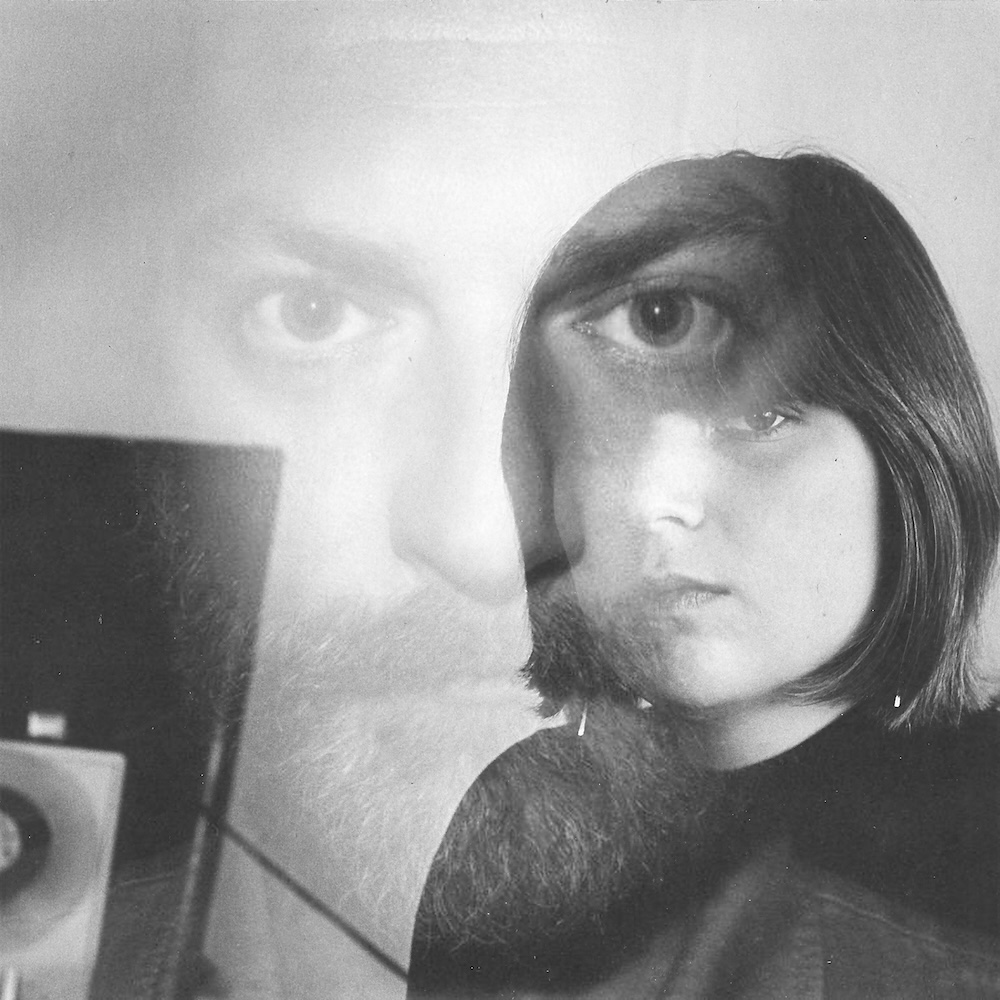
A sonic UFO suspended in slow motion – that’s how Antoine describes “Sans Soleil,” the centrepiece of his new EP Happiness, Delays & Drum Machines.
Released as a limited-edition cassette, it was born from a shared and genuine desire to make music, drawing together Panamanian musician Anggie Obine, Brazilian bassist Max Blum, and Dutch electronic pioneer, Ransom Note friend and cohort Truus de Groot of Plus Instruments and iconic figure of the punk and electronic scenes. Woven across Barcelona, Cadaqués, Paris, Eindhoven, and San Diego, the EP moves through electronica, dub, krautrock, and experimental textures in a living conversation shaped by improvisation, memory, machines, and raw emotion.
The two artists sat down to ask each other everything.
Antoine asks Truus
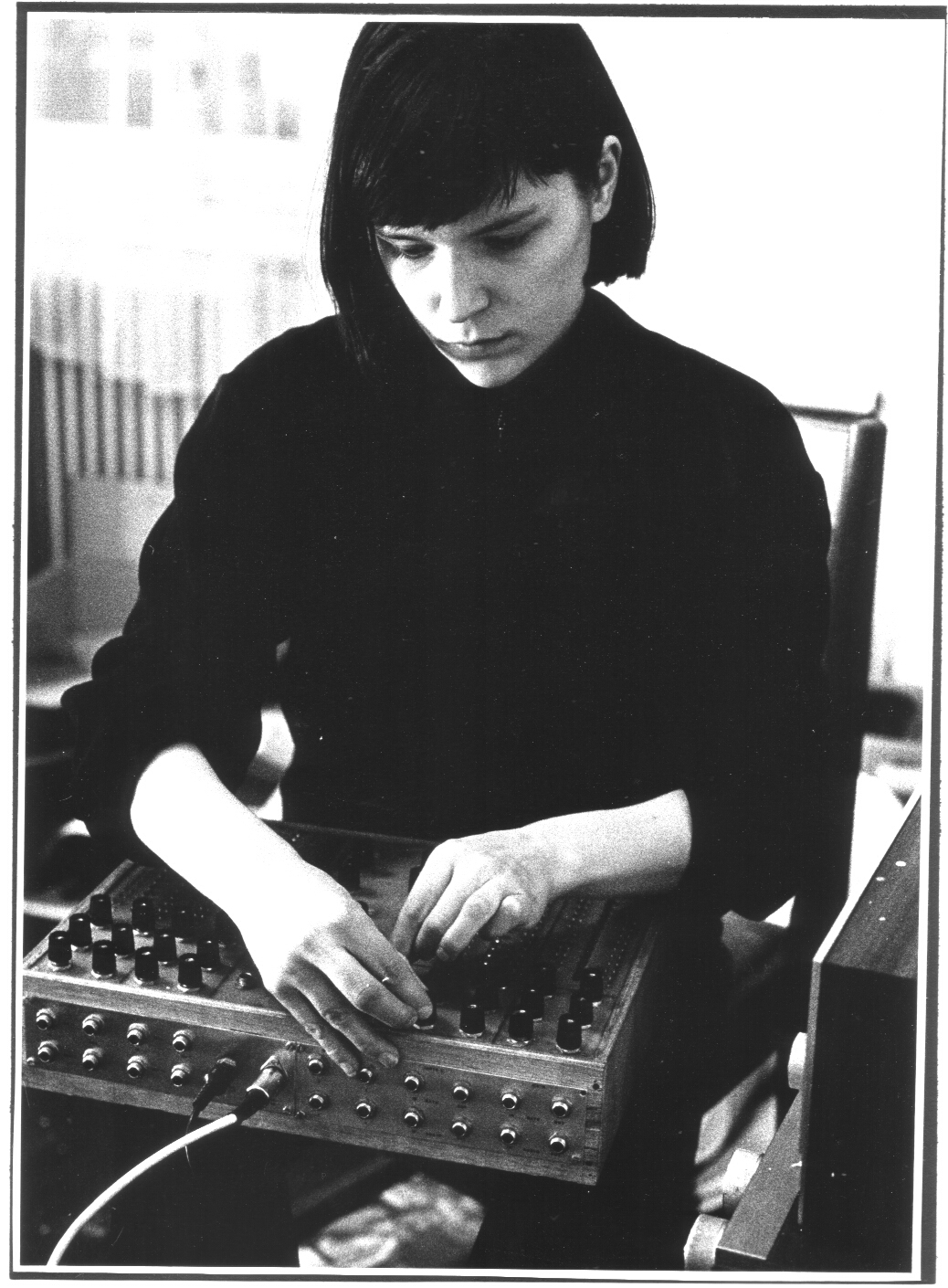
If a sound could instantly bring you back to Eindhoven, which one would you choose?
Edgard Varèse — Poème électronique (1958). It just reminds me of Philips, which was based in Eindhoven, so everything was Philips. It conveys the industrial, desolate streets and the stillness of the city when I left in 1981. Yet this was made before I was born — it’s the kind of work that was happening at Natlab, where Dick Raaijmakers was experimenting with sound. So mind-blowing, because these sounds course through my veins.
You say the current scene lacks imagination — does composing today require more courage or more disobedience?
More courage. Disobedience just gets messy.
When you discovered Brian Eno, Yoko Ono, and Roxy Music, did you feel like you were hearing doors opening… or walls falling down?
More like a biblical parting of the sea.
You mention very different artists — Suicide, Wire, DAF. What did all these worlds teach you in common about sound?
Minimalism, yet a lot of power, attitude, and sexiness.
Did working with musicians from Sonic Youth or The Gun Club change your sound, or rather your way of listening?
I think we inspired each other. I came from the European scene and they always pointed that out as a thing of interest. I lacked a technical ability for music, which they found refreshing because it ignored all the norms — and that made room for innovation. They in turn gave me a dose of the American music culture they grew up with. It was a very fair exchange.
In your work with Plus Instruments, are influences starting points… or things you try to lose along the way?
Always try to lose them and make something original. Yet I pay some homage to my idols by taking certain elements.
You moved from Eindhoven to New York, Memphis, then California. At what point does a city start composing you as much as you move through it?
I might have asked you a similar question. I feel that each city has influenced my compositions — or even the memory of a particular place. On the other hand, I sometimes exist and compose in a realm all its own: a particular room, a studio.
Does your musical journey look more like a highway, a crumpled map found in a coat pocket, or a song you compose while walking a tightrope?
A tightrope sounds like a lot of tension. I’d say highway.
Would you say your writing process is more like a cooking recipe, a séance, or DIY without instructions?
A séance.
Have you ever had the feeling that a song was writing you a letter you never asked for?
Absolutely.
When a track is finished, does it feel like it was composed by you… or simply passed through you?
Simply passed through me. I really can’t explain it sometimes.
Are there sounds you consider “forbidden” in your musical universe?
No.
Have you ever been afraid that a track was too honest?
No.
If you had to choose between precision and accident, which one would you accept losing forever?
Precision.
If you had to choose between a cat that barks and a dog that meows, which one would you choose?
The dog that meows.
Is there a version of you that only comes alive on stage or in the studio?
On stage, yes. I put on a show to entertain — at least I try. In the studio I do my best to channel whatever I can to get results, but I think of creating music every second of the day.
And finally: how would you describe our collaboration in three words… or in a sound?
Thrilled to bits.
Truus asks Antoine
How did I come on your radar?
I discovered your voice through the track How Is To Be You by Cosmo Vitelli — a real gem that made me want to explore more. I’ve been hooked ever since, and Stratumseind and New York New York have been on repeat in my living room.
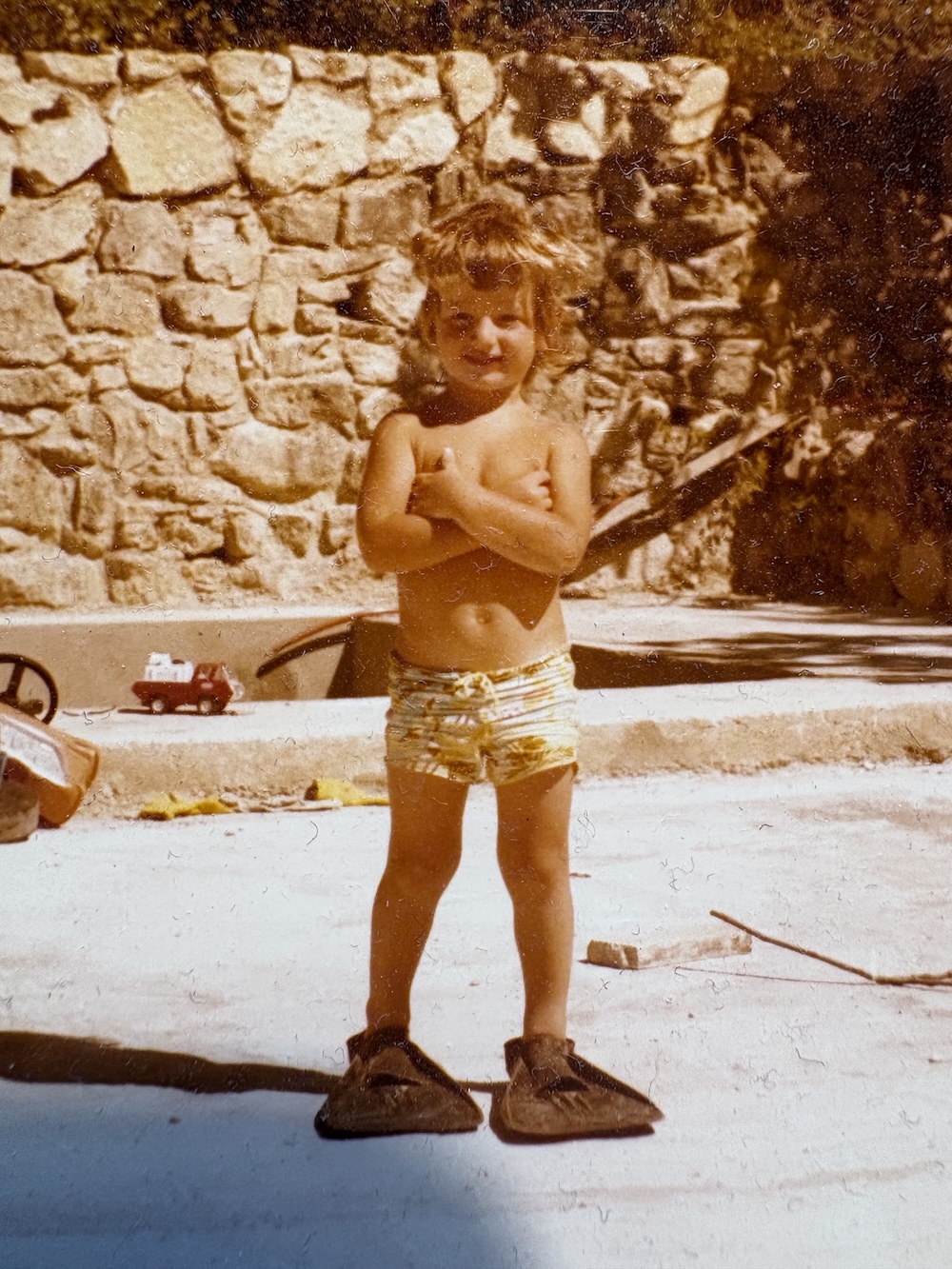
Do you have a favourite musical childhood memory?
My grandmother in her studio in Montparnasse, painting while listening to Brassens — with the volume often far too loud.
What do you like best and least about collaborating?
Collaborations are a huge breath of creative fresh air for me. Bringing together different personalities and cultures very often leads to cool and unexpected results. The Limiñanas brought a unique tone — they have a truly singular sound. The Japanese artist Vega Voga contributed very personal melodies and textures. Simone Marie, bassist of Primal Scream, also sang on a track, and it was great to take her out of her usual role and hear her voice instead. Creating these hybrids — musically and humanly — is always exciting, even when it doesn’t fully work. In general, I love it.
As for what I like least: sometimes it doesn’t work as well. But that’s part of it.
Do you always navigate by BPM, or can it flow naturally?
I work by ear, so BPM never becomes a dictator.
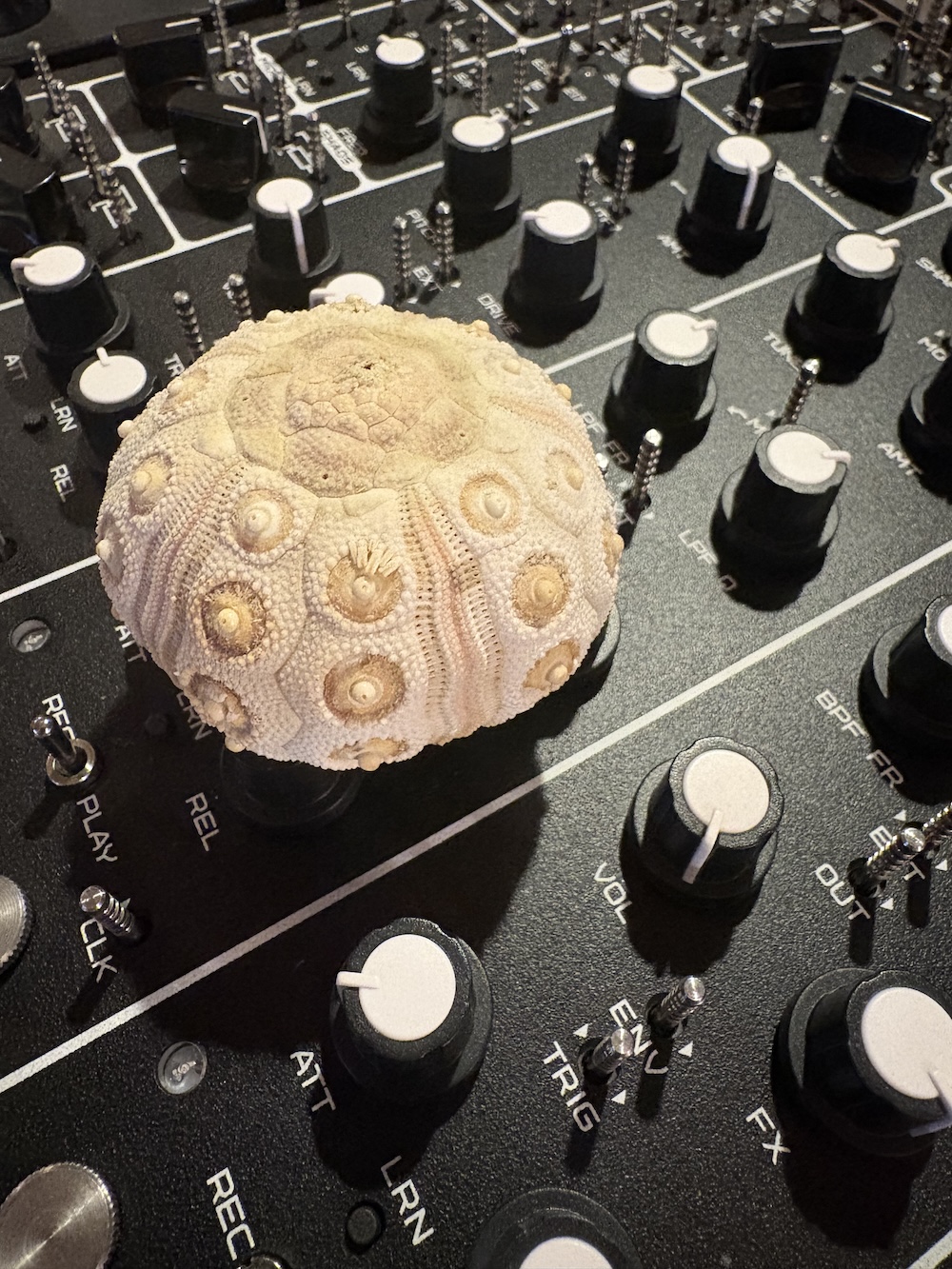
Do you collect things?
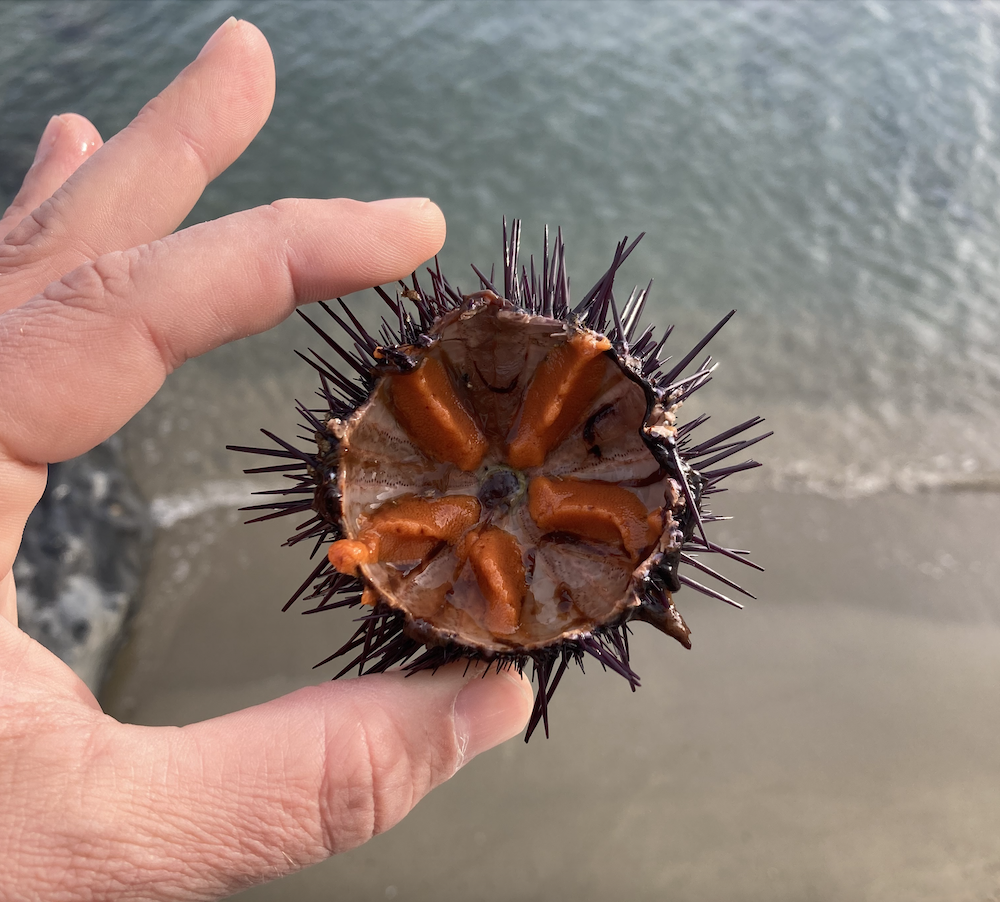
Posters — wherever I go, I dig around to bring back a graphic souvenir. I also collect sea urchin shells and Venus’ ears that I find when I go diving.
You’re from Paris and live in Barcelona. Do cities influence your music emotionally?
Each city has its own vibration, and Barcelona suits me perfectly: both dense and light, almost “medium” — it allows me to make music in a relaxed state and to live with the same fluidity. Paris feeds me positively too, but I rarely produce music there and tire of it quite quickly. After just a few weeks, the urge to leave always comes back.
Do you hear a specific soundscape for each city?
Klaus Weiss — Survivor for Barcelona. The Sick Man of Europe — I’m Alive for Paris.
You fill many roles — label boss, DJ, producer, composer. If you had to pick just one, which would it be?
I enjoy spending time in the studio, tinkering and playing with my machines. My other activities stimulate me differently and let me breathe and discover new music — but the studio is where I always want to return.
Truus: I read you were raised by a robot; what lessons are to be learned from A.I.?
Antoine: Even though it’s a great tool, AI shows us that what moves us, at its core, is imperfect and that’s a good thing.
Truus: Do you have a physical accomplishment you are particularly proud of?
Antoine: I’d say going up five flights of stairs ten times a day, because I haven’t seen an elevator in 20 years 
Truus: Sometimes it seems I navigate by crushes on things, people, animals or humans. Do crushes inspire you in a certain way?
Antoine: I mainly function through crushes and strong impulses. When something moves me, it immediately takes up a lot of space. Because I’m quite obsessive, I tend to dive into an intense consumption of that crush fully, without moderation. But that intensity also has a downside: I get bored quite quickly, and I naturally move on to something else.
Truus: Is there such a thing as failure in music?
Antoine: I’m in a constant state of failure in music, and that’s perfectly fine: it gives me the freedom to explore, try, fail, start over, and keep making music in a very instinctive way.
Truus: Do you believe in magic?
Antoine: I mainly believe in magical moments, in that simple and unpredictable kind of magic. And it’s already a privilege to experience them or to have experienced them. I also love those moments in the studio when I work late into the night, then wake up in the morning, press play, and can’t quite remember how I managed to create certain sounds. That’s why I enjoy working with machines so much: they generate moments of pure sonic magic that I don’t fully control.
Truus: Dark or milk chocolate?
Antoine: I often fall into a jar of Nutella, but connoisseurs would hang me if I dared call it chocolate.
Truus: Do you like snow?
Antoine: Yes, and eat it.
Truus: What are your favorite top 5 movies, old or new?
Antoine: Sans Soleil, Plein Soleil, Perfect Days, Phantom of the Paradise, Kill Bill, Le Cave se rebiffe, …
Truus: What’s with the sea urchins?
Antoine: I spend half my life in a village where sea urchins are king. I love their shape, their colour, their way of moving, and above all eating them while drinking white wine, sitting on a rock.
Truus: Is there something special about me?
Antoine: A voice, lyrics, and above all endless kindness and good vibes.
Truus: When is bedtime?
Antoine: It’s 4 p.m., so it’s nap time here.
Pre Order Sans soleil HERE



Must Reads
David Holmes – Humanity As An Act Of Resistance in three chapters
As a nation, the Irish have always had a profound relationship with the people of Palestine
Rotterdam – A City which Bounces Back
The Dutch city is in a state of constant revival
Going Remote.
Home swapping as a lifestyle choice
Trending track
Vels d’Èter
Glass Isle
Shop NowDreaming
Timothy Clerkin
Shop Now