Slap and tickle – Bristol’s radical spirit makes it Britain’s most exciting city for film culture
How Bristol’s fiercely independent spirit has created one of the UK’s most vibrant and collaborative film cultures
Welcome to Bristol. It’s a city steeped in film culture – ever since Archibald Leach, better known as Cary Grant, was born here more than 120 years ago – and is also characterised by a unique radicalism and a fierce spirit of independence; few other places have seen riots sparked by opposition to the siting of a Tesco store.
These elements combine to give the city a thriving film scene, one imbued with independence. Its ever-busy Watershed is one of the country’s leading independent cinemas, and while there are also multiplexes offering mainstream cinema experiences, there’s more to it too.
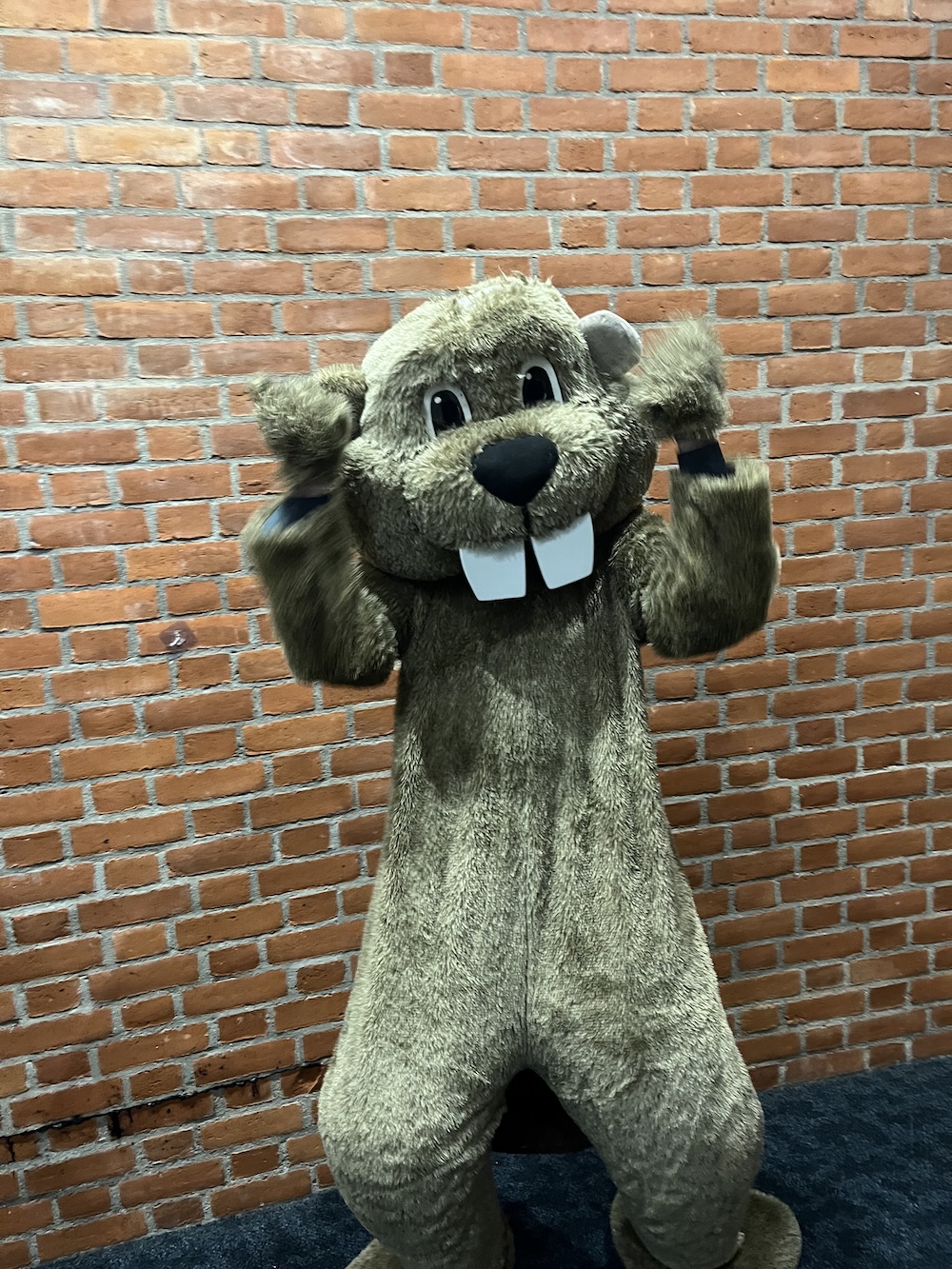
The beaver was wandering around at the Slapstick film festival, an annual event (the 2026 iteration takes place from February 4-8), which plays at venues around the city, including the repurposed and revived giant IMAX screen, the Megascreen. One of last year’s hits was the wildly daft and suitably independently spirited (and very cheaply made) Hundreds Of Beavers, alongside classics from Charlie Chaplin and Laurel and Hardy. The Megascreen, in the Bristol Aquarium building, was saved by local cineastes, film fans, festivals and others, and now plays host to all manner of weird and wonderful films and events.
Slapstick is now a Bristol institution, playing at the Megascreen, the Watershed and other venues.

"We are still proudly independent and vaguely solvent. I think art in general is a massive part of the lifeblood of Bristol and that it is identified as a slightly leftist enclave in a sea of blue is a source of civic pride, as well as a lure to young people who keep making it their home."
Founder Chris Daniels started the event after moving to the city to study film. He saw F.W. Murnau’s Sunrise and was so enthralled (“I hadn’t really watched any silent films… I grew up thinking, ‘thank God the talkies came in because [silent movies] were shit and now we’ve moved on technologically proper films'”) that he fell in love with silent films. Noting the trend for DJs to create their own scores to silent films, often with terrible prints (“I thought it was killing what was left to silent film. So we started a society called Bristol Silents”).
He ended up handing over the reins of what is now South West Silents and focusing on the strand that evolved into Slapstick (it started with Paul Merton hosting some Buster Keaton shorts).
The festival has grown over the two decades from a handful of events over a weekend to a packed programme with 7,000 people a year, with people travelling from the US and numerous European territories, from Sweden and Denmark to Germany and Italy.
“It’s become more international now,” says Daniels, “but it’s also a Bristol thing. The legacy is that it started as a hobby, grew into a proper project and now it’s something that’s sort of owned by Bristol people.”
He eschews the phrase silent “The problem with silent is that a [silent film restoration expert Kevin Brownlow said, it makes people think there’s something missing. But there isn’t. It’s like saying that ballet’s not good because people aren’t speaking.”) but with Slapstick the aim is to present comedy new and old with a rich seam of, well, daftness.
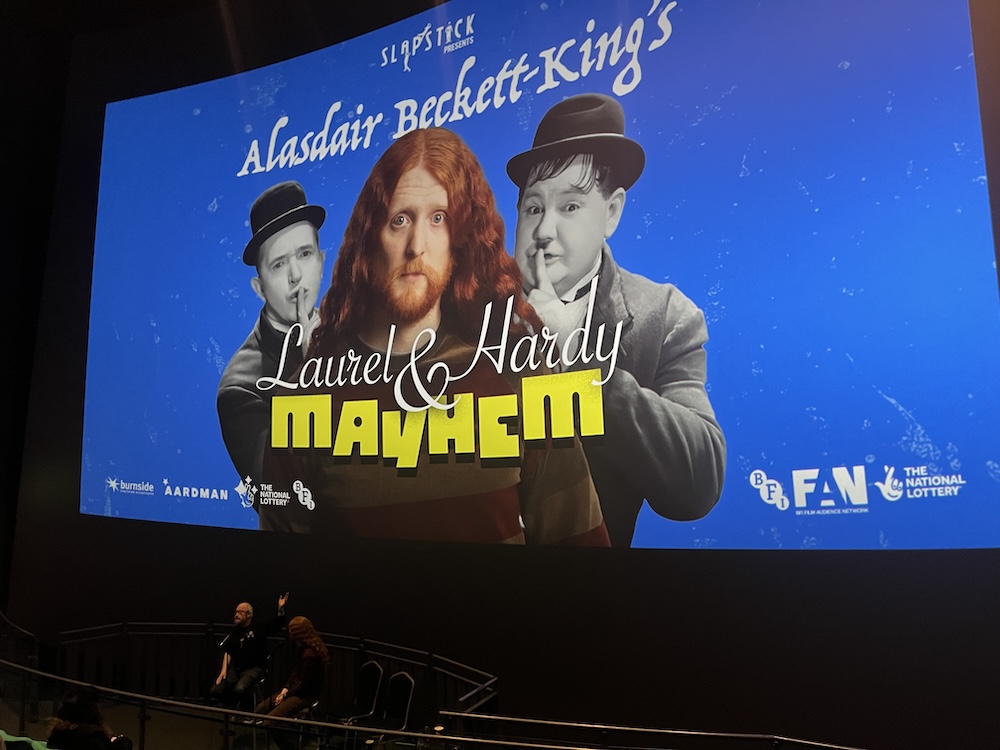
There’s a certain pride in Daniels’ achievements in seeing the way the local community – and beyond – has responded. “You need to see them as they’re meant to be screened for you to have a connection with them,” says Daniels. “At the gala (in 2025) 1,450 people were screaming at three silent comedies from 100 years ago on the biggest screen in the whole of Bristol. There’s just this laughter in the room, that heartfelt thing, about connection, about remembering these performers and what they mean to us and sharing it with other people. It’s just a joyous occasion, really. I don’t want to sound like a Luddite. YouTube is brilliant for all sorts of things, and I love it, and we’ve got a YouTube channel with 5000 followers, but it’s just that tangible real world sitting in your seat. People do want connection and they want to see films on the big screen, even these very rare old films. It’s a real privilege to be part of that community of Bristol putting those films together.”
The council and local institutions have realized too – the former backed the festival during COVID, while legendary animation house Aardman has given office space to Slapstick.
Projectionist at the Megascreen is Dave Taylor, owner of 20th Century Flicks, one of the country’s longest running video stores. It’s also now a tiny cinema in its own right, with two screens on the premises showing films from its vast library.
He marked the store’s 40th birthday in 2022 by buying an old projector and installing it into the Aquarium’s disused IMAX cinema and, hey presto, with the help of the Aquarium itself, as well as the Cube and the Watershed, it was up and running. “It was brilliant fun and such a pay off when we finally got to watch our first films in there,” he says. “We couldn’t have even contemplated taking on something like that, let alone achieving it, without the collaborative nature of the Bristol film community.”
The store itself survived the near collapse of the rental market in the late 2000s and early 2010s through its small, in-store cinema, which makes up much of its revenue nowadays (“amazingly enough it’s proved resilient enough an idea to see us through this long,” he says).
It’s also down to that indie spirit. “We are still proudly independent and vaguely solvent,” says Taylor. “I think art in general is a massive part of the lifeblood of Bristol and that it is identified as a slightly leftist enclave in a sea of blue is a source of civic pride, as well as a lure to young people who keep making it their home.”
The shop itself is, Taylor says, more than just a rental store or cinema. “It’s a practical resource for accessing film history. With shrinking selections available on streaming sites and their jacking up their prices, it’s becoming a joyless, scant and mercenary landscape for cinema. Once we have a film, it’s here for keeps and if we don’t have it and you want it, I’ll get a copy in for you or find a way for you to see it.”
He says the main obstacle to further development now is rent, which may prevent new contributions and events, but continues: “That said, places like The Bristol Radical Film Festival, Be Kind Rewind at the Ill Repute and small film clubs like that are doing great work in keeping the underground screenings culture alive. I just wish there could be some intervention in property ownership and rent control in the city so vacant premises could be used more creatively and things were affordable enough that you can take risks without the real fear of bankruptcy! But it’s not a city too up itself not to have several multiplexes kept busy! Bristol does pretty well balancing the indie scene with decent cinemas to watch the bigger, brasher stuff too.” He praises Cinema Rediscovered (“probably my cinematic highlight… a week of wall to wall screenings, chat, drinking, thinking, sleeping and starting again the next morning… I love it”) and the aforementioned Forbidden Worlds Film Festival, which he helps organise and does projection for.
Forbidden Worlds Film Festival founder Timon Singh ran the Bristol Bad Film Club more than 10 years but wanted to expand his vision – so ended up launching a genre-based festival, with a video store feel. Its first event coincided with 20th Century Flicks’ 40th anniversary at the revived Megascreen, complete with films from the year of the store’s birth, 1982.
“We like to say that Forbidden Worlds Film Festival is Bristol’s leading genre film festival dedicated to screening repertory fantasy, action, science-fiction and horror films from around the world, and celebrating the people that made them,” Singh explains. Although it’s on a giant screen, it is dedicated to that old video shop feeling. “Basically we’re trying to recreate the video shop experience, but on the biggest screen in the city,” he notes. “Weird titles you might have seen in the video shop or on TV growing up, that aren’t readily available on streamers today, and now not just on the big screen – but an IMAX screen.” He says it fits in neatly with the city’s other events. “Bristol has an incredible cinematic community with loads of film clubs and festivals from Slapstick to South West Silents to Cinema Rediscovered to Cary Comes Homes – however none of them really celebrate action, sci-fi or horror. Sure, they might individually do the odd screening… but none of them are ever going to programme Basket Case or The Hitcher, and so we fit in nicely and don’t tread on anyone’s toes.”
After the Megascreen opened with Forbidden Worlds, it has now become a home for other events. “It’s now a community space that Bristol Aquarium rent out to assorted film clubs and festivals as well as to bigger firms such as Apple TV and the BBC,” says Singh.
Meanwhile, a bit further away lies indie cinema and arts space The Cube. “Bristol has just always had a strong connection to cinema,” says, fittingly for a collective effort, a spokesperson for The Cube.” It was the birthplace of cinema pioneer William Friese-Green, and has always had a good number of cinemas across the city – particularity in the original Cinema boom in the twentieth century.
There is a culture of imagination and grassroots resourcefulness in Bristol. Cinema affords a space for shared imagination. Not only in fiction and fantasy but in political and radical film with the ability to imagine a different – and possibly even – better world.
“The mainstream is, in the main, about promoting and propagating capitalism and the for-profit model. Being outside of that is the sort of basic imaginative leap we encourage.”
Truly independent (it’s not for profit, with no external funding. Income comes from ticket and bar sales and hires, but all are kept low to “encourage maximum social engagement and experiences that are uncommon elsewhere”.
“Discussion is really important,” the spokesperson says, “part of the Cube’s original mission statement was to provide a ‘social cinema’. In a commercial cinema the most important thing is getting the money out of people pockets and getting them out the building as quick as possible after that. The Cube is more about creating and maintaining a shared space where relationships and ideas can blossom, and possibilities open up. Part of the ethos is to encourage and support not-for-profit, co-operative and independent practices in the other businesses and artists we chose to work with.

Back at Slapstick, Daniels pays tribute to Bristol’s many different grassroots events at the likes of the Watershed Megascreen and The Cube, such as South West Silents, which also hosts Film Noir events at the Megascreen and beyond, Cinema Rediscovered, the Cary Comes Home Festival and more under the Film Hub South West banner. He also namechecks natural film fest Widescreen; Encounters, the short film festival; Switch, which, among other things, organises screenings with “a focus on gender, sexuality, and the trans/non-binary experience”, Queer Vision and the Bristol Black Horror Club. The list is endless – there’s also Afrika Eye (mostly showing films from Africa); the Palestinian Film Festival and Queer Vision (focused on LGBTQ+ subjects and filmmakers), not forgetting the Bristol Radical Film Festival, Be Kind Rewind. Bristol is not only home to Aardman, but a UNESCO City of Film; site of Bottle Yard, the biggest film and TV studios in the region; and is the most productive location for natural history film and TV anywhere in the world as well as the birthplace of IMDb.
“There’s an open-minded collaborative feeling that works,” concludes Daniels. “Politically, I think there’s something to be said too, we are very left-leaning, green-leaning. There’s a sort of punk rock feel about, we’re gonna do this and make it happen.
“We want to bring it to the people, and it’s not mainstream; there’s a bit of a pushback against the more schmaltzy-led, contrived stuff. There’s a passion for that independent cinema space and it seems to be thriving. There’s this diverse exploration, where almost anything with a passion can flourish here, because it’s a fertile ground and the community is responsive to it, which is brilliant. I think if you’re in a more conservative, reactionary space geographically, that would be a different sensibility.”
Slapstick runs from February 4 to 8, details on slapstick.org.uk
Forbidden Worlds Film Festival is in April: forbiddenworldsfilmfestival.co.uk









Must Reads
David Holmes – Humanity As An Act Of Resistance in three chapters
As a nation, the Irish have always had a profound relationship with the people of Palestine
Rotterdam – A City which Bounces Back
The Dutch city is in a state of constant revival
Going Remote.
Home swapping as a lifestyle choice
Trending track
Vels d’Èter
Glass Isle
Shop NowDreaming
Timothy Clerkin
Shop Now