Pop-Kultur 2025: Sonic Crossings and Spaces in Flux
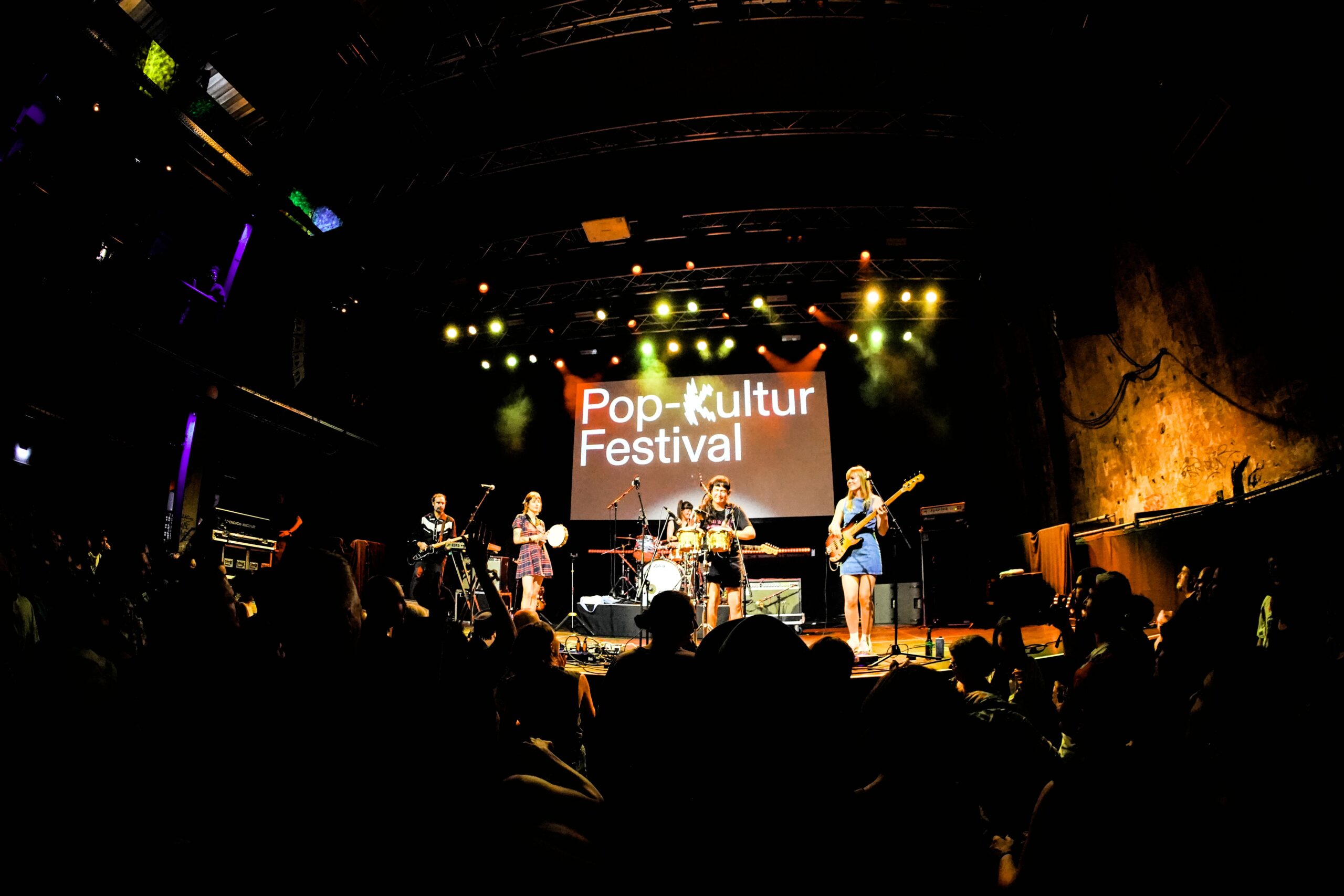
For its eleventh edition, Berlin’s Pop-Kultur Festival stretched out into a slightly different outfit.
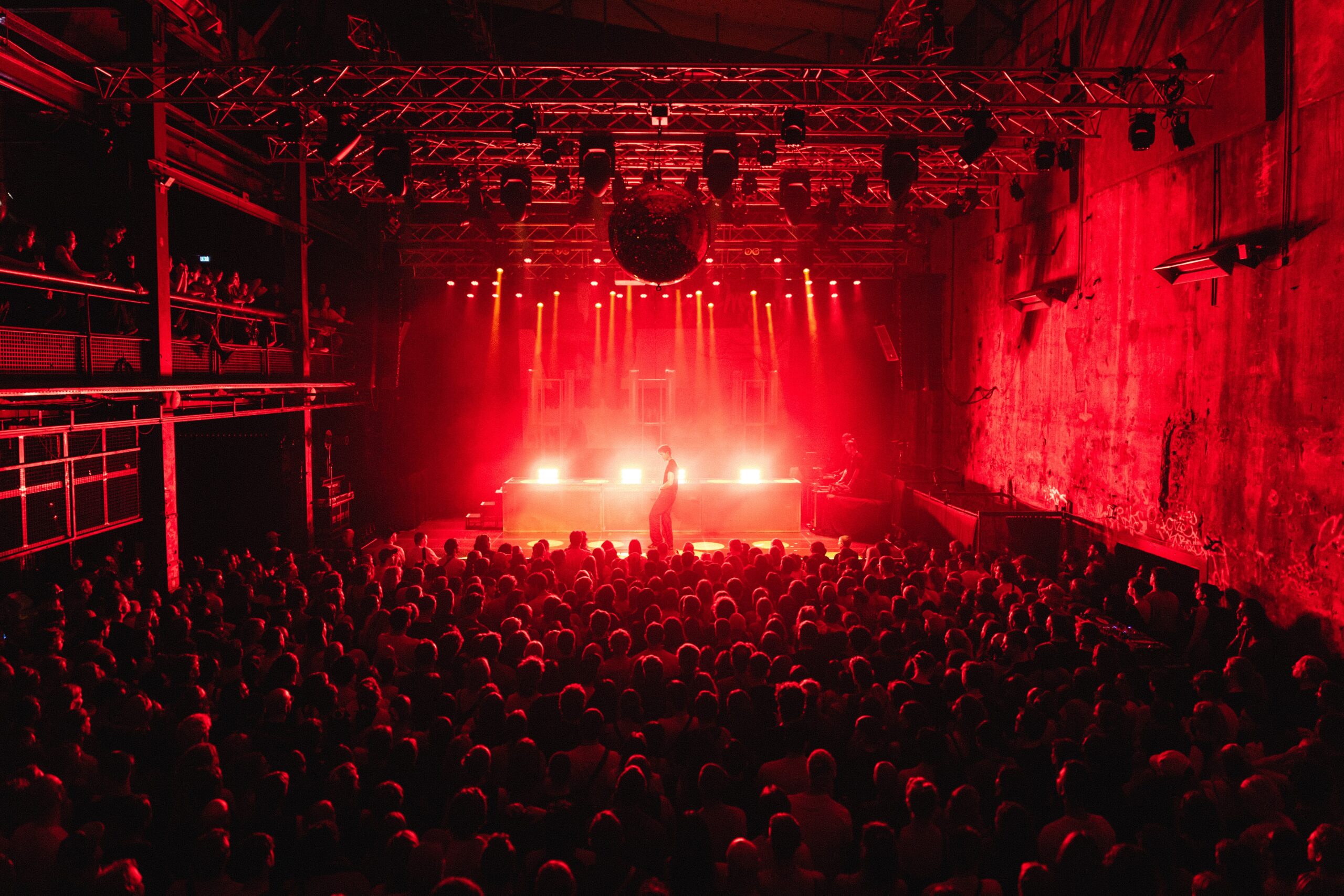
While the main chunk of the music programme was still held at the familiar courtyards and cellars of Kulturbrauerei in Prenzlauer Berg, this year also saw the first days of the programme hosted at Silent Green and its surroundings in Wedding. The expansion into more venues, over more days, gave the festival added space for conversation and reflection. With a strengthened focus on discourse formats, Pop-Kultur continued to underline its reputation as a place where the nature and significance of pop culture are explored and debated. More time, more rooms, more contexts – meant more opportunities to experience and dwell.
The festival is known for its unique approach for bookings, that – thanks to government funding – goes beyond the aim to sell as many tickets as possible and strives for artistic exploration and connecting emerging artists to new audiences.
That means no big names on the poster (literally), but artists whose work quietly redefines what pop can mean. With affordable ticket prices, you might attend for one specific artist and discover five new ones.

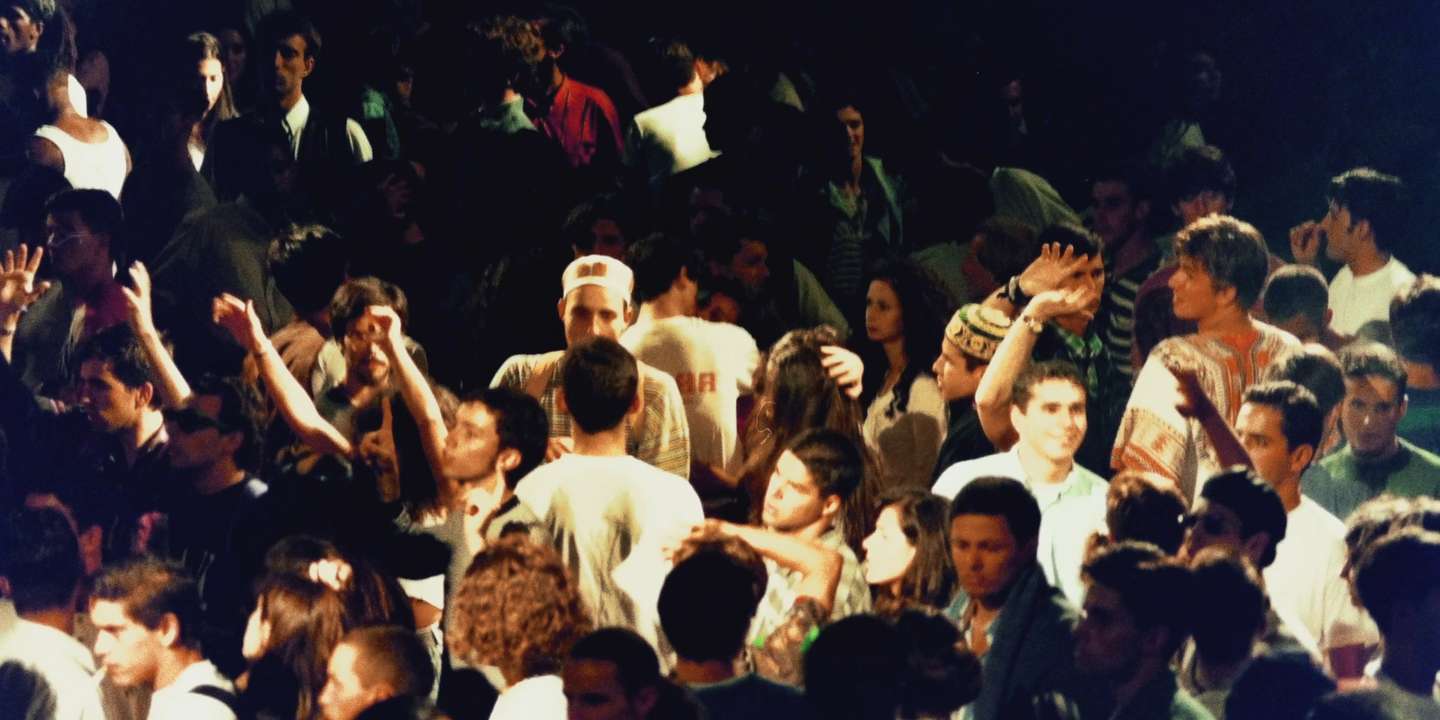
This creates moments of beautiful whiplash. One minute I’m sitting on a carpet sipping tea and listening to Monica Mussungo’s angelic voice accompanied only by saxophonist Ollà as part of the commissioned work Afro x Pop Unplugged, and the next I’m nodding my head to Eli Preiss’s short and snappy TikTok bangers. While most concerts had an audience that came and went, only a few acts managed to pull in enough people to reach full capacity. Berlin-born Apsilon was well worth putting up with the packed, steamy room for listening to his well articulated narratives of post-migrant realities. Los Bitchos brought a beachy vibe to the industrial concert venue with their instrumental pop, drawing from cumbia, mariachi, and surf. This was balanced out by Die Nerven with their raw, powerful blend of post-punk, noise rock, and indie rock.
Beyond the mix of sounds, what threaded through the festival this year was the blunt question of survival. Germany’s club and music culture, including Pop-Kultur itself, sits in the crossfire of rising costs and shrinking public arts budgets. Celebrating music outside the box in public spaces feels less like indulgence and more like resistance these days. Pop-Kultur – itself affected by funding cuts – is a celebration and a reminder of the importance of these spaces. And that urgency only sharpened when I stepped into Sonic Crossings, a new strand of the festival launched this year in collaboration with the music department of the Goethe-Institut and the Berlin-based Goethe-Institut in Exile. In its inaugural edition, the focus is on artists from the Caucasus region, inviting them to Berlin for a short-term residency to foster exchange and build new creative connections. I got the chance to chat to some of them after their concerts at SİNEMA TRANSTOPIA as part of the festival programme and got reminded of the overwhelming choices and comparatively big freedom of expression Berlin provides – and the importance of fighting to keep these things alive and continuing to strive for safer spaces.
Imagining Different Futures
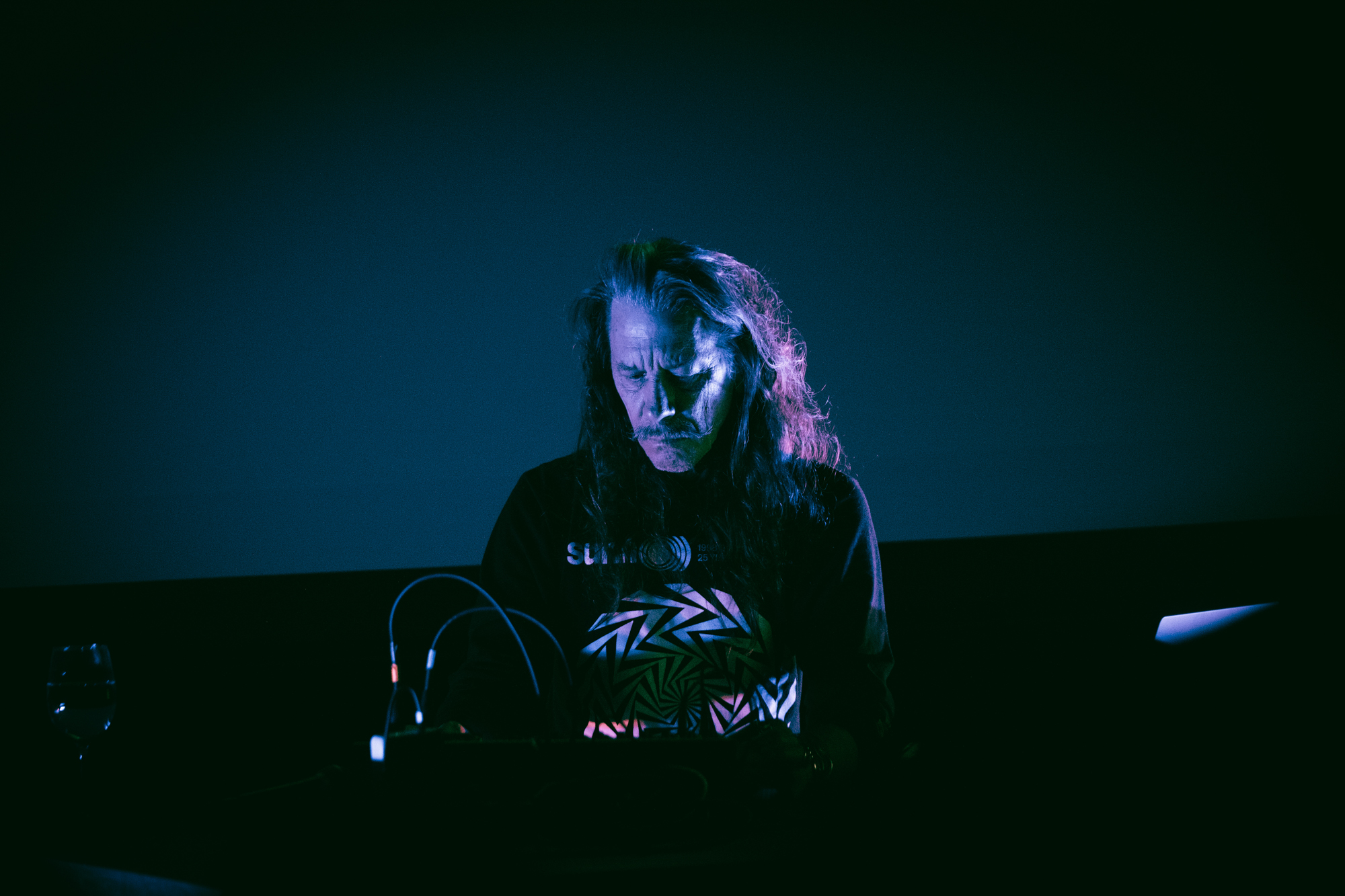
It was here that Nazrin, performing as Inherroom, played her first-ever live set – shimmering, meditative ambient that lifted an entire room into stillness. Coming from Baku, Azerbaijan, where few spaces exist for experimental music, the reception here struck her deeply. “The Berlin crowd is very open to many genres, even experimental music. Knowing that gave me comfort. In Baku, I don’t really get that,” she told me afterwards.
Nazrin’s story rattles against my own Berlin fatigue. Here, I grumble about oversaturation – too many gigs on the same night, too many competing collectives on my Instagram feed. Back in Baku, Nazrin talks about her idea of hosting listening sessions for ten to twenty people, to create space for sound and community that yet does not exist. “Unless I organize it myself, there is no stage for this.”
Spaces in Peril
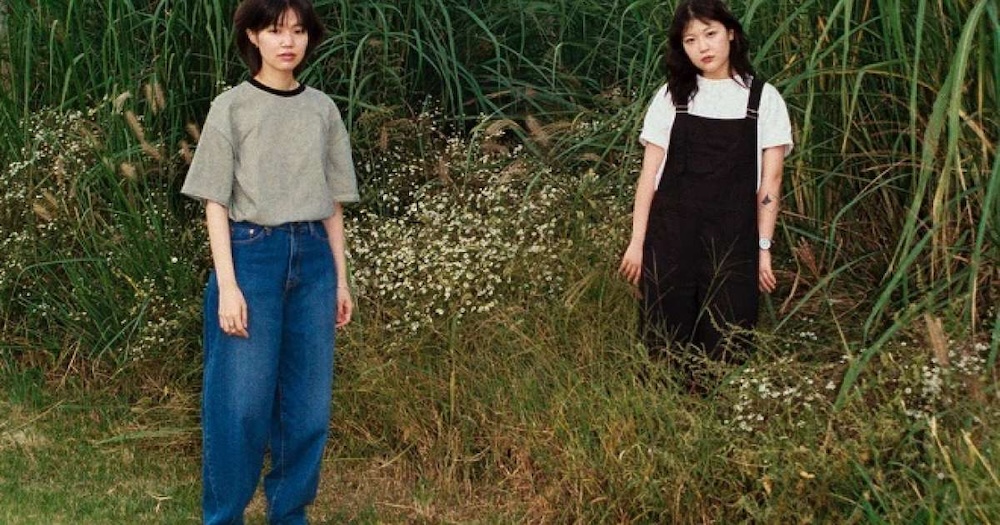
The Armenian duo Symptom Error – Sona and Amassia – share a similar resolve. What began as a high-school punk experiment has morphed into a multidisciplinary project: “We soon understood that the sounds of guitar and drums are not enough for us. We needed more sounds or instruments, and then our teacher introduced us to electronic music. Suddenly we could express all the emotions, all the stuff we had in our head.” At Pop-Kultur they performed a tense yet playful set that wove together pulsing synth layers with punchy lyrics and reimagined fragments of old Armenian songs, right up to a cover of ‘Barbie Girl’. The performance carried the rawness of a basement show: It was less about polished spectacle and more about holding space. Described in Pop-Kultur’s programme as “the voice of their LGBTQ+ community,” the two resist that framing: “We never wanted to be presented that way. But we have been a safe space for vulnerable groups – that is true. Our work is feminist, queer, and connected to current realities.”
In Yerevan, those realities prove volatile. They described how underground clubs that had tried to provide safe spaces for marginalised people had all vanished in recent years after a brief period of growth in the late 2010s, amid whispers of government pressure, tax crackdowns or plain homophobia. At one of their own events, the duo was threatened with police involvement, then slandered on local TV as “satanists.” While this would have set many back, they persisted, continuing to perform in random places outside of clubs and music venues, such as on the rooftop of a vintage store. When asked if they feel a responsibility to stay in Armenia despite the threats, Sona says no: “It’s more that we see a potential. But it is really important to us to stay here, to grow here, and to create spaces for people who are younger than us. We created Symptom Error because we couldn’t find a space where we simply could explore ourselves as artists.”
Setting foot in Berlin’s Silent Green, a repurposed crematorium, they were visibly struck: “The repurposing of a space has always been interesting for us because in our city we have a lot of spaces that are abandoned. Seeing people coming here for a completely different purpose than what it was supposed to have in the past is really nice and surprising for us. If we think about all the parking lots in Yerevan that could become concert places.”
What Berlin Offers, What Berlin Risks
Hearing these stories in Berlin can feel like holding two realities against each other. On the one hand, the artists from Baku and Yerevan describe survivalist strategies and a true DIY strategy: improvising venues and carving micro-scenes in hostile terrain. On the other hand, Berlin – with its seemingly endless venues and open-minded audiences – can feel oversaturated to the point of dullness. Yet, taking this landscape for granted risks overlooking the real difficulties that smaller collectives face in putting on events. With rising rents and operating costs, budget cuts, shrinking subsidies and political neglect, those struggles are only set to intensify.
That’s what Pop-Kultur highlighted most forcefully this year. The presence of Sonic Crossings artists reminded us how fragile cultural ecosystems are, and how much responsibility is baked into having them at all. Berlin’s freedoms – however limited in their own way and occasionally overwhelming – are not guaranteed. They are fought for and held, just as they are elsewhere, sometimes under far heavier weight.
When I left the festival, I kept circling back to something Nazrin told me: “If you don’t like something, you have to change it. My responsibility as an artist is not to stop sharing.” In that light, Pop-Kultur felt less like a festival to binge events at and more like a reminder: the space we occupy for progressive sounds and emerging artists is still a fragile common. The least we can do is not take it for granted.
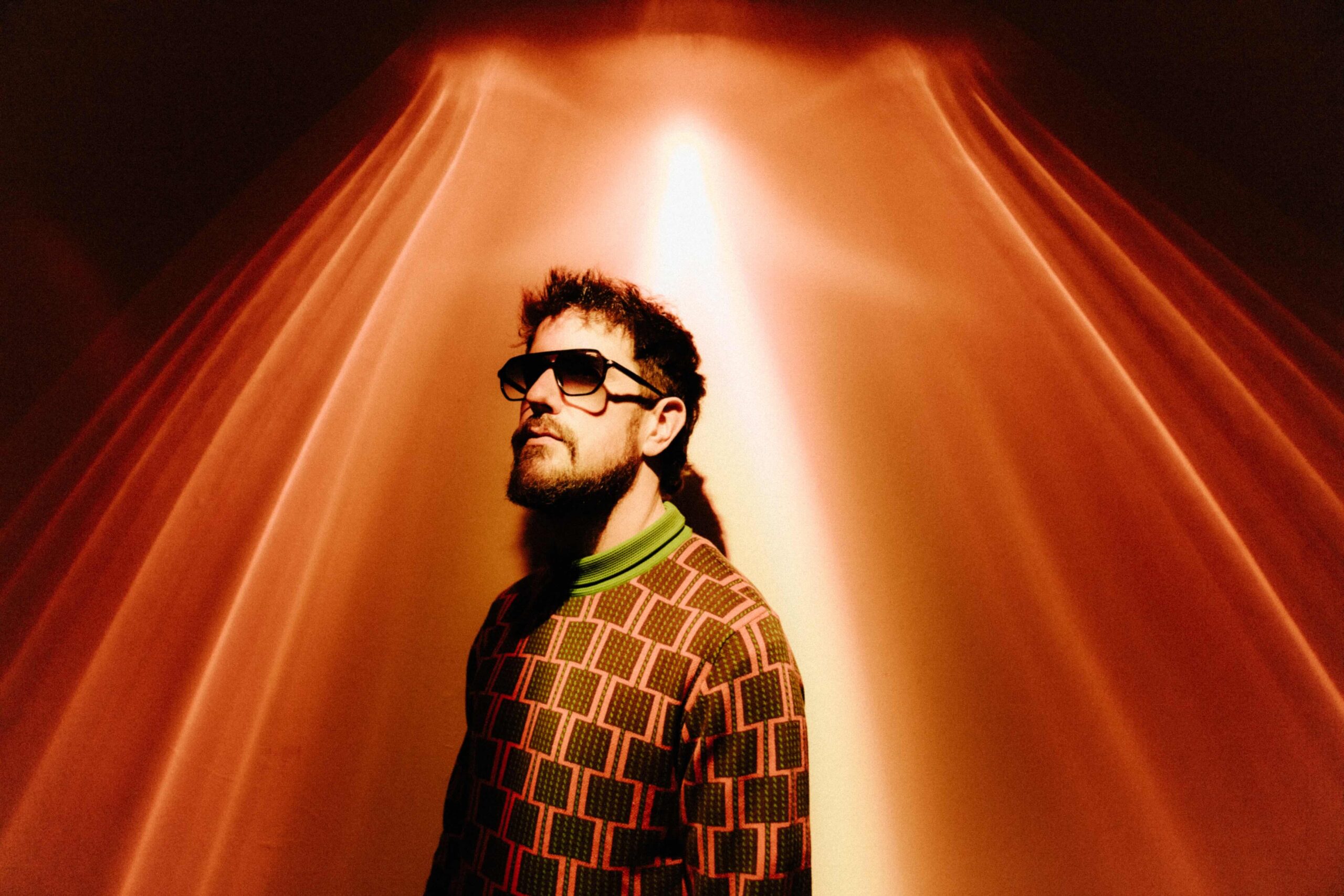
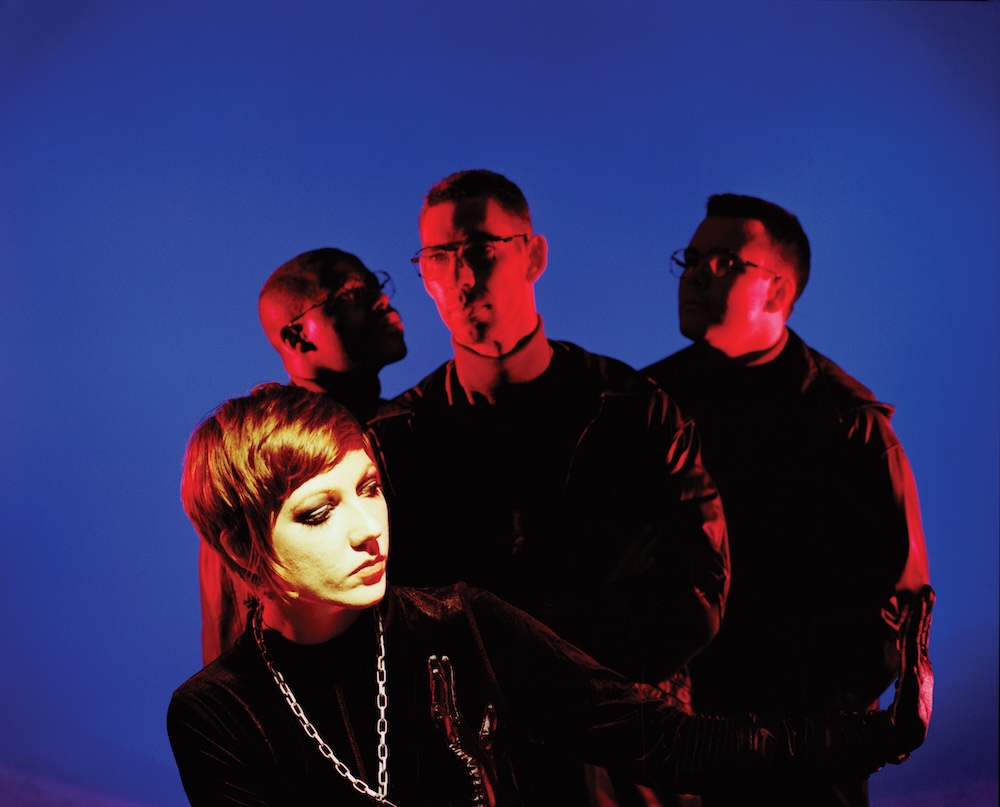
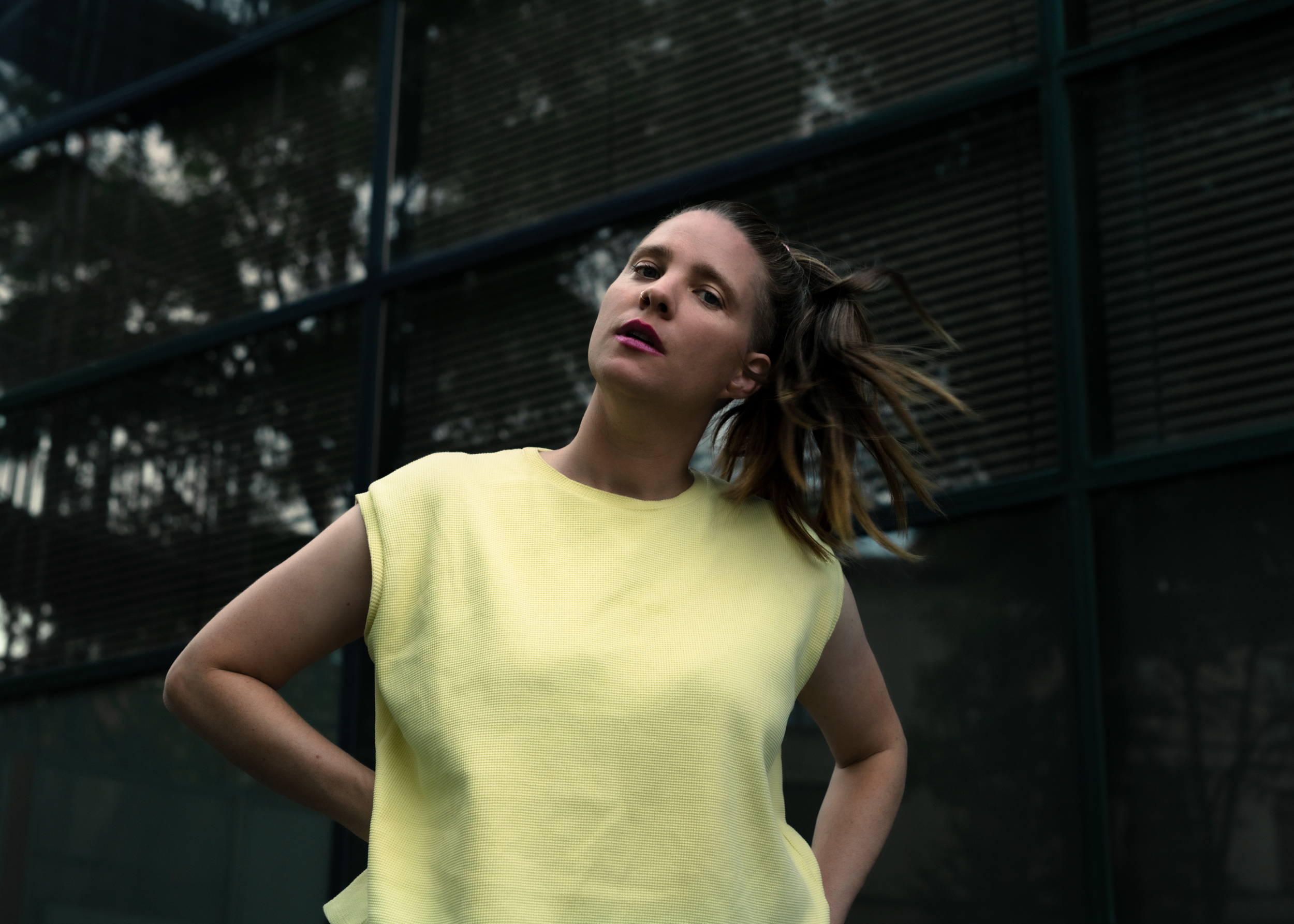
Photography courtesy of Camille Blake, Yvonne Hartmann & Marie Lehmann/mariellemilia




Must Reads
David Holmes – Humanity As An Act Of Resistance in three chapters
As a nation, the Irish have always had a profound relationship with the people of Palestine
Rotterdam – A City which Bounces Back
The Dutch city is in a state of constant revival
Going Remote.
Home swapping as a lifestyle choice
Trending track
Vels d’Èter
Glass Isle
Shop NowDreaming
Timothy Clerkin
Shop Now