Grup Ses – The Ransom Note Mixtape
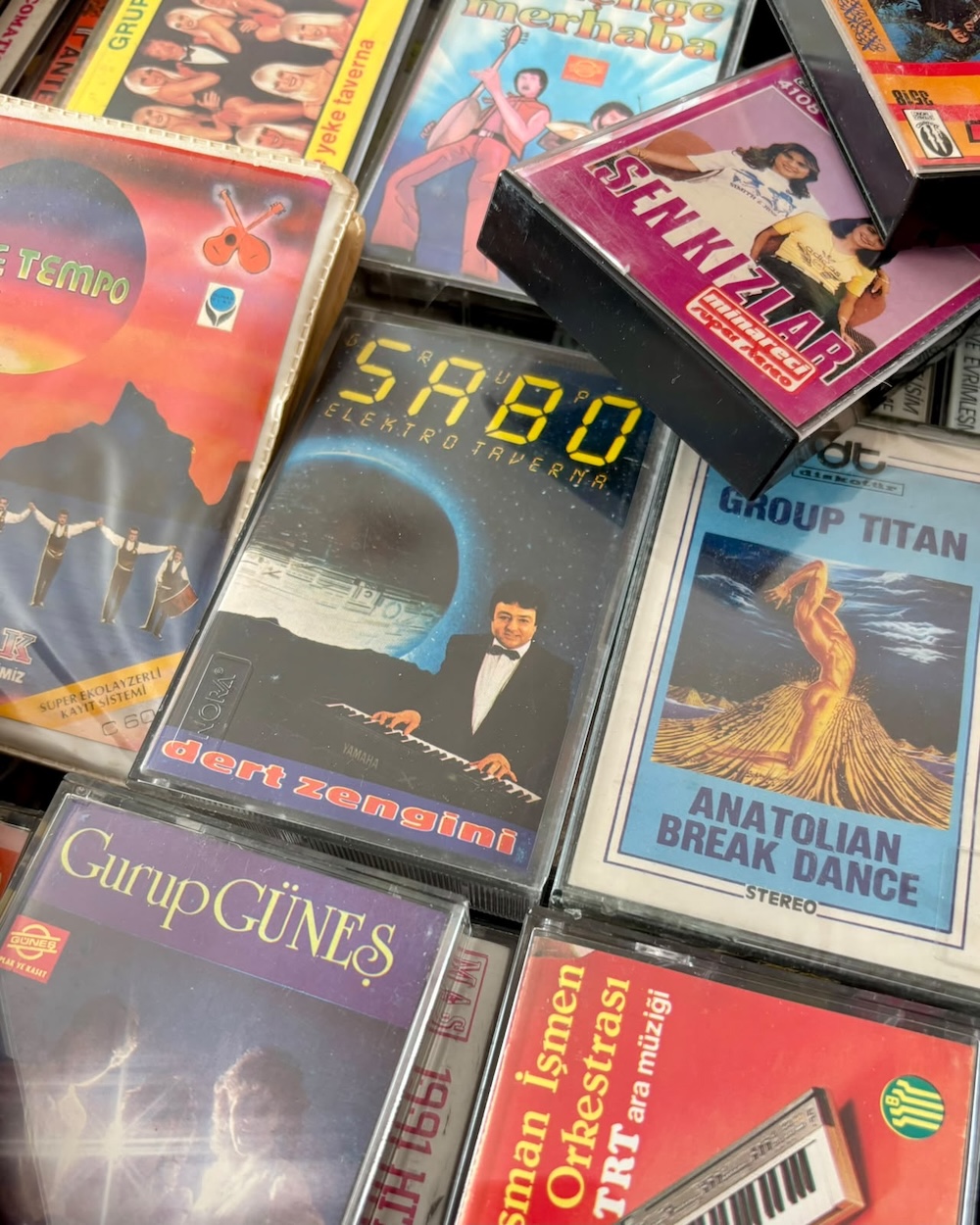
Istanbul-based digger and producer Grup Ses’s mix for Ransom Note is a trip through the cassette underworld of 1980s Turkey, when drum machines and synthesisers went from novelty to the centre of the arrangement.
It opens with a sampled tape skit asking whether you’re stressed or tired, then prescribes the cassette as the cure, to be played anywhere from the hamam to a minibus. From there it moves through electronic pop, arabesque hybrids and Anatolian-tinged studio pieces, with a Turkish cover of Mory Kanté’s “Yé ké yé ké” along the way, before closing on two slow jams.
The backdrop is the 1980 military coup. In its wake, the studio, rather than the band, became where Turkish pop was made, and the new machines spread fast. The records here are full of Junos, DX7s and Yamaha RX11s, but also stranger local tools like the Bojidar RB Alaturka Ritm-Box, a rhythm box built around traditional Turkish rhythms. Some producers used the gear to chase the international pop sound of the moment. Others pushed it towards arabesque or Anatolian pop, and plenty of these records never travelled beyond a small cassette or vinyl run.
Many of them are gathered on DALGA – A Selection of 80s Pop Oddities from Turkey, compiled by Grup Ses for Zel Zele, the Istanbul and London-based label and NTS Radio show. Neriman and Füsun Önal show the glossy, global-pop side, while Mehmet Pekün and Zor Beyler fold electronics into arabesque. Tele Tempo, a studio project arranged by Özkan Turgay with drums by Koral Sarıtaş, takes the Anatolian route. Vedat Biçkin’s “Darbuka Bongo Kavgası” splits darbuka and bongos across the stereo field over a drum machine groove, and Grup Ses calls it the most inventive production on the record. Six of the tracks have never left their original cassettes until now. The mix sets a few of them beside lesser-known finds from the same years, so the compilation sits in a wider scene.
The title is Turkish for “wave”, and the sleeve uses Antonio Cosentino’s painting “69 Volkswagen” (2003), which comes from the same everyday Istanbul imagery the compilation celebrates. For Grup Ses it also goes back to childhood. His earliest musical memory is MFÖ’s “Peki Peki Anladık”, which was constantly on at home when he was three or four. He has been digging and releasing records since 2007, with six albums of his own and archival work for Ironhand Records, Sucata Tapes and Zel Zele, including the label’s Café Türk and Bahtiyar Taş reissues.
DALGA is vinyl-only and comes out on October 30, 2026 via Zel Zele Records. “Anca Gidersin” is already out as a digital single, and Bandcamp pre-orders include an instant download of Zor Beyler’s “Bir Mumdur”.
Listen below:
What was the first 80s Turkish record where you really noticed a drum machine or synth taking over the arrangement?
“Peki Peki Anladık” by Mazhar Fuat Özkan (MFÖ). I was only three or four years old, and we had the record at home, so I was exposed to it almost unconsciously. It was played all the time, and the chorus was incredibly catchy. It’s one of my earliest musical memories.
Talk us through the mix. How did you sequence it, and what’s the thread running through it?
The mix kicks off with two tracks from the compilation, then moves through different moods and styles. Along the way, you’ll even hear Turkish covers of tracks like Mory Kanté’s “Yé ké yé ké”. I decided to wind things down with two slow jams at the end.
Alongside the DALGA tracks, the mix includes lesser-known recordings from the era. What did you want those sitting next to?
I wanted to give the DALGA tracks broader context and show how different styles and sounds crossed over during that period. Some of these recordings might seem quite different on the surface, but they share a similar production approach, particularly in their use of drum machines and synthesisers. I also wanted the mix to flow naturally between different moods rather than stick too closely to one particular sound.
Which drum machines, samplers and synths can you pick out by ear on these records?
On DALGA, you can hear machines like the Roland JUNO-6 and JUNO-106, Yamaha DX7 and TX7, alongside drum machines such as the Yamaha RX11 and electronic drums from TAMA and Pearl. But I think it’s hard to capture the diversity of Turkish music in the 80s by naming just a few machines. More unusual rhythm boxes were also around at the time, like the Bojidar RB Alaturka Ritm-Box, designed around traditional Turkish rhythms. Some albums were recorded abroad, like the Mazhar Fuat Özkan album I mentioned earlier, which was recorded in the Netherlands using equipment common in Dutch studios at the time. The early 80s were also a transitional period, so productions from those years often used older equipment carried over from the previous decade alongside newer technology.
Tele Tempo was a studio project working with Anatolian pop. What do you know about who was behind it?
Both tracks were arranged by Özkan Turgay, who also composed music for many classic Turkish TV series and films. The drums were performed by Koral Sarıtaş, a drummer and composer who was also one of the founding members of Dostlar, the band that accompanied Anatolian rock legend Edip Akbayram. The duo also worked together on the theme music for the cult 1980s Turkish TV series Perihan Abla.
“Şu Samsun’un Evleri” appears here as an edit. What did you change, and why?
It was originally part of a medley, so I simply separated it into a standalone track.
Vedat Biçkin’s “Darbuka Bongo Kavgası” puts hand percussion up front on a drum machine era record. How does it sit against the rest of the selection?
Vedat Biçkin’s “Darbuka Bongo Kavgası” is one of the compilation’s two instrumental tracks. The title roughly translates to “Darbuka and Bongo Battle”, which is quite literal: you hear the darbuka in the left channel, the bongos in the right, and a drum machine rhythm running down the middle, with plenty of effects throughout. In terms of production, it’s probably the most inventive track on the compilation.
Which track on DALGA sounds furthest from what people expect of 80s Turkish pop?
It’s hard to pick just one, since that’s pretty much the whole idea behind the compilation. But if I had to choose, I’d go with Mehmet Pekün’s “Anca Gidersin”.
Six tracks have only ever existed on rare cassettes. What condition were the sources in, and what did it take to get them ready for vinyl?
Thankfully, we sourced half the tracks from the original tapes. For the rest, I had collected multiple copies of the records and cassettes over the years, so we could compare them and use the best-sounding sources available.
DALGA is vinyl-only, with just “Anca Gidersin” and “Bir Mumdur” going digital. Why those two?
It mainly comes down to the licensing agreements with the labels. The other tracks have already been digitised and made available on streaming platforms by their original labels, so we’re only releasing these two digitally.
How does DALGA connect to your earlier work with Zel Zele on Café Türk and Bahtiyar Taş?
Both Café Türk and Bahtiyar Taş were extraordinary, under-the-radar recordings from the 1980s that reflected different sides of Turkish music at the time. Bahtiyar Taş, whose musical journey took him between Turkey and Germany, developed a distinctive DIY sound blending arabesque melodies, quirky synthesizers, unusual arrangements and dark humour. Café Türk, a Turkish-Swiss band, blended Anatolian and Azerbaijani influences with new wave, disco, reggae, and rock, reflecting the multicultural experience of Turkish musicians living in Europe. With DALGA, we turn our attention back to Turkey and explore another overlooked side of the same decade. In a way, all three projects share the same curiosity about music outside the mainstream, where different genres, cultures, and technologies came together in unexpected ways.
Where should someone be when they listen to this mix, and what should they definitely not be doing?
Actually, the mix opens with a skit I sampled from a cassette tape that answers this exact question: “Are you stressed? Yes! Are you tired? Yes! Then listen to this tape at home, in your car, at an inn, at the hamam, in the bathroom, on the road, in the street, in bed, in the kitchen, on a train, on a plane, on a bus, on a minibus, while running, escaping, wandering around, eating, drinking, feeling restless, lying down…”
So I guess you can listen to it pretty much anywhere, whatever you’re doing 😊
What’s next after DALGA: more archival work or your own productions?
A bit of both, actually. I have another archival release coming out this year with Ironhand Records. A couple of years ago, we put together a 7-inch single featuring Mustafa Kuş and Grup İmece, a Turkish-German band playing Anatolian pop in the early 1980s. Now we’re following that up with a full compilation drawn from their LPs.
On the production side, I also have a collaborative album coming up with KEKEKE, a Japanese horror mangacore group. I produced the beats, and they rap over them. It’ll be released on cassette through their own label. There’s also a remix EP of my collaborative album with Gökalp K coming soon, featuring remixes by Valfi and Pharid.
DALGA: A Selection of 80s Pop Oddities From Turkey



Must Reads
David Holmes – Humanity As An Act Of Resistance in three chapters
As a nation, the Irish have always had a profound relationship with the people of Palestine
Rotterdam – A City which Bounces Back
The Dutch city is in a state of constant revival
Going Remote.
Home swapping as a lifestyle choice
Trending track
Vels d’Èter
Glass Isle
Shop NowDreaming
Timothy Clerkin
Shop Now